Posted by Mustafa Abbas on August 22, 2026 | Views: 263 | Ratings: 155
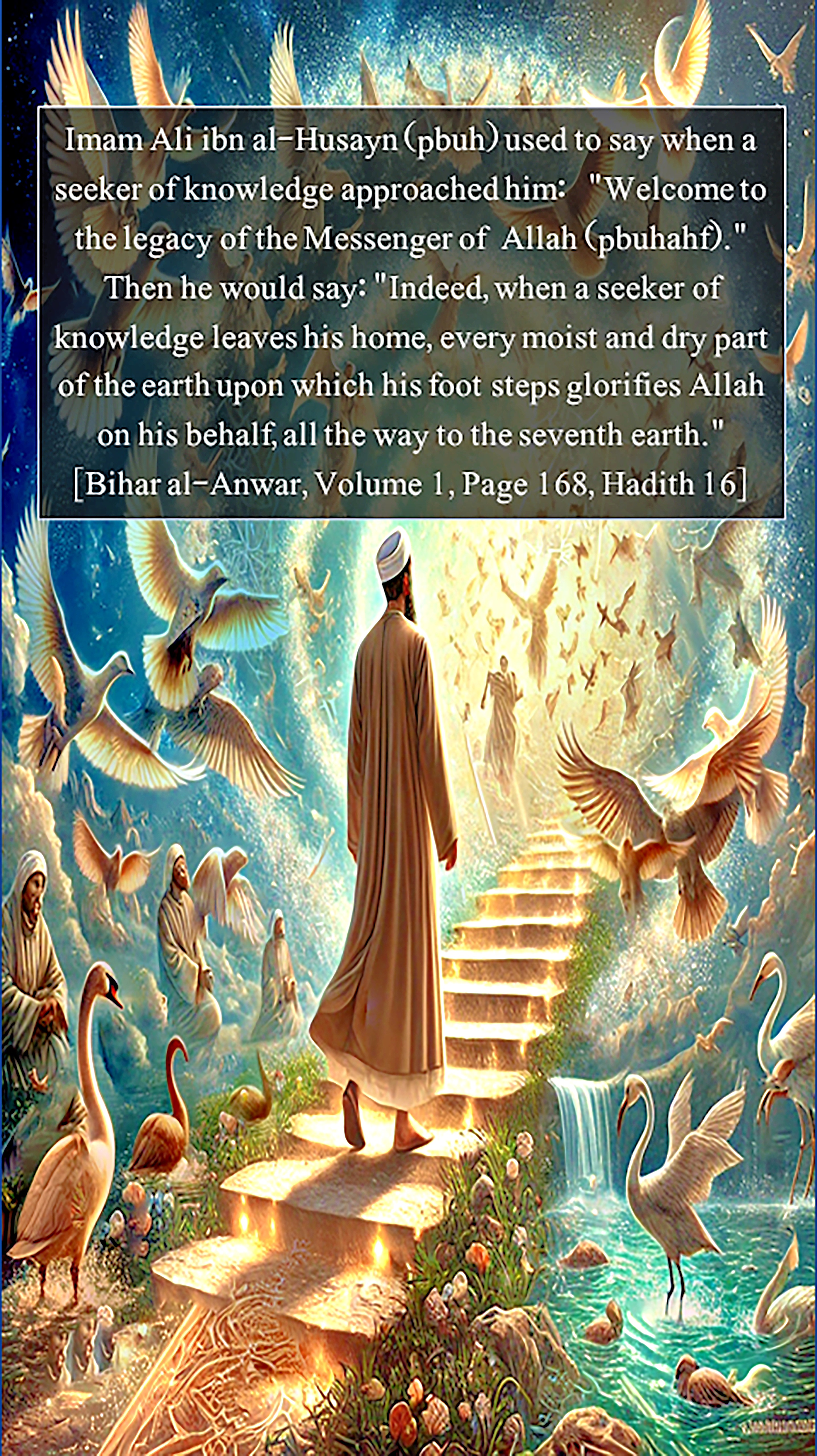
Download article from link below at the end
The Comprehensive Islamic Framework for Knowledge: A Guide to Learning, Teaching, and Spiritual Growth
Introduction: The Foundation of Faith and Civilization
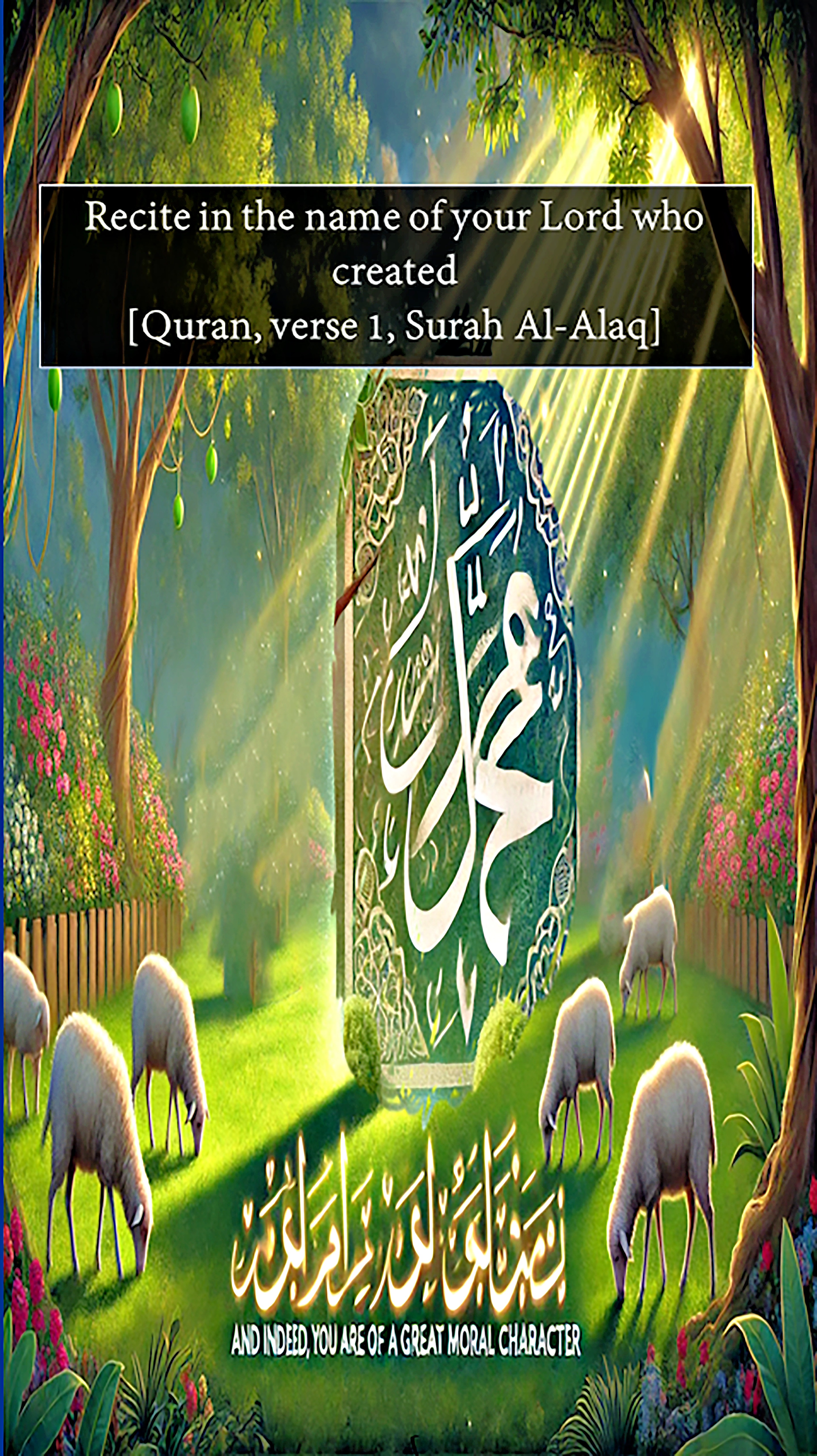
In the vast landscape of Islamic teachings, knowledge stands as the cornerstone upon which faith, worship, and human civilization are built. The very first revelation to Prophet Muhammad (peace be upon him and his progeny) began with the divine command "Read,"
"Read in the name of your Lord who created " (Quran 96:1)
establishing from the outset that the pursuit of understanding is not merely encouraged but divinely mandated. This comprehensive article explores the profound teachings of the Prophet and the Infallible Imams (peace be upon them) regarding the acquisition, application, and dissemination of knowledge, drawing upon the rich traditions preserved in Islamic literature.
The teachings of the Ahl al-Bayt present a holistic vision where learning is not an isolated intellectual exercise but an integrated spiritual journey that encompasses the mind, heart, and soul. From the urgency of youth education to the eternal rewards of teaching, from the necessity of deep reflection to the critical importance of time management, these teachings provide a complete roadmap for human development and salvation. The Imams emphasize that the ideal believer is one who is perpetually engaged in either learning or teaching, ensuring that their life is never wasted and their heart is always illuminated by the light of divine knowledge.
Part One: The Primacy of Knowledge in Islamic Doctrine
Knowledge as a Divine Obligation
The Holy Prophet Muhammad (peace be upon him and his progeny) unequivocally established the pursuit of knowledge as a fundamental religious duty. His famous declaration resonates through the centuries:
"Seeking knowledge is an obligation on every Muslim. Indeed how Allah loves those who strive in their quest for knowledge." (al-Kafi, v. 1, p. 30, no. 1)
This obligation is universal, applying to men and women alike, and spans the entirety of human life. The Prophet further emphasized this by teaching his followers that "Allah loves those who strive in their quest for knowledge," transforming the pursuit of learning from a mere intellectual exercise into an act of worship that draws the seeker closer to their Creator.
The Comprehensive Scope of Beneficial Knowledge
Islamic teachings distinguish between various forms of knowledge while emphasizing that all beneficial knowledge ultimately serves the purpose of understanding and obeying Allah.
Prophet Muhammad (peace be upon him and his family) provided numerous teachings that underscore the benefits of knowledge: “Acquire knowledge since learning is a good deed, teaching equals saying God’s glorifications, and discussing about knowledge equals participating in a holy war. Teaching knowledge to the one who doesn’t know it is giving charity. Granting knowledge to the proper persons brings God’s pleasure, since one knows the lawful and the unlawful using knowledge and knowledge would lead its seeker to Paradise. Knowledge is a guide in case of fear; it is a companion in case of loneliness; it is a guide in case of hardships; it is a weapon against the enemies; and an ornament in the presence of friends. God promotes some people by means of knowledge to such a high rank that they are the leaders of goodness and must be obeyed. Their deeds must be taken into consideration and their works must be followed. The angels are inclined to be their friends and they anoint them with their own wings while they pray. Everything including the fish in the sea, the beasts in the desert and the quadrupeds ask for forgiveness for them since knowledge brings life to the hearts and light to the eyes and power against sluggishness. God opens the doors to the homes of the good people for the learned men. He grants them association with the good ones in this world and in the Hereafter. God is obeyed and served by means of knowledge. God is recognized as One by means of knowledge. The bonds of relationship are fastened by means of knowledge. What is lawful and unlawful is recognized by means of knowledge. Knowledge is the prelude to action. Any action follows knowledge. God inspires it to the blessed ones and deprives the miserable ones from it." (Al-Khisal by Shaykh Mu?ammad b. Ali al-Saduq, Book 21, Chapter 8, Hadith #20)
The Prophet himself encouraged seeking knowledge even from distant lands, famously advising his followers to "Acquire knowledge, even if it be in China." (Bihar al-Anwar, vol. 1, p. 177)
demonstrating that beneficial knowledge, regardless of its source, is a lost treasure of the believer. The teachings describe knowledge that leads to:
Recognition of Allah and proper worship
Distinction between lawful and unlawful
Understanding of the purpose of creation
Development of moral character and piety
Guidance in times of difficulty and hardship
The Spiritual Nature of Knowledge
Imam Jafar ibn Muhammad (peace be upon him) revealed a profound truth about the nature of true knowledge:
"Knowledge is not acquired through learning. Rather it is a light that illuminates in the heart of one who wants Allah, Blessed and most High, to guide him. So if you want knowledge, first seek out within yourself true servitude [to Allah], and seek knowledge according to its use, and ask Allah to make you understand, and He will make you understand." (Bihar al-Anwar, v. 1, p. 225, no. 17)
This statement emphasizes that beneficial knowledge, especially that which leads to understanding God, is a divine gift—a light that Allah casts into the heart of whomever He wishes to guide. This divine illumination enables the heart to discern, understand, and be guided effectively, distinguishing true wisdom from mere information.
Part Two: Youth as the Golden Opportunity
The Unique Value of Youth
The teachings of the Imams place a special and urgent emphasis on youth as the most critical period for learning. Imam Ja'far al-Sadiq (peace be upon him) expressed this urgency with remarkable clarity:
"I only like to see the young man from among you occupied in either of two states: learning or teaching, for if he does not [engage in either of these two], he is wasting his time; and by wasting his time, he will lose out; and by losing out, he will be committing a sin; and by committing a sin, he will dwell in the Fire, by the One who sent Muhammad with the truth." (Amali al-Tusi, p. 303, no. 604)
This powerful statement establishes the ideal state of youth as one of continuous intellectual and spiritual engagement. The alternatives are stark and progressive: negligence leads to loss, loss leads to sin, and sin leads to punishment in the Hereafter. The Imam's concluding oath emphasizes the absolute seriousness of this matter.
The Analogy of Engraving on Stone
Prophet Muhammad (peace be upon him and his progeny) illustrated the superiority of youth as a time for learning with a memorable analogy:
"Learning something during one's youth is like engraving in stone, and learning something when one is old is like writing on the surface of water." (Bihar al-Anwar, v. 1, p. 222, no. 6)
This metaphor captures several profound truths about the nature of learning at different life stages:
Engraving in Stone represents the permanence, clarity, and lasting impact of knowledge acquired during youth. Just as an inscription carved into stone remains legible for centuries, the knowledge, values, and habits instilled during formative years become deeply ingrained in a person's character. The young mind is receptive, the heart is impressionable, and the capacity for retention is at its peak.
Writing on Water signifies the transience of knowledge acquired later in life. While there is still value in learning at any age, the impact is not as deep or lasting. This analogy does not discourage lifelong learning—the Prophet also encouraged seeking knowledge "from the cradle to the grave"—but it emphasizes the unique and irreplaceable opportunity that youth represents.
Imam Muhammad al-Baqir (peace be upon him) demonstrated the seriousness with which the Imams viewed the education of the young:
"If I was brought a young shi’aa man undevoted to learning [religious matters], I would discipline him." (al-Mahasin, v. 1, p. 357, no. 760)
This strong statement indicates that the responsibility of youth to seek knowledge is not optional but obligatory. The discipline mentioned is remedial, aimed at safeguarding the spiritual and moral future of the community. The Imam recognized that if the youth are ignorant and heedless, the future generations will be similar, resulting in various forms of evils spreading throughout the community. The discipline is not punitive but corrective, designed to guide the young person back to the path of learning and righteousness.
Part Three: The Two States of the Believer
The State of Learning (Muta'allim)
A student of knowledge is one who actively seeks understanding, learning from teachers, books, and experience. This state signifies a commitment to continuous intellectual growth and self-improvement. The qualities of a true seeker of knowledge are outlined in the teachings of the Imams:
Sincerity of Intention: Imam Ali (peace be upon him) warned against seeking knowledge for self-glorification, argumentation, showing off, or gaining positions of authority. The purpose of learning must be purely for the sake of Allah. The Prophet taught that
"He who seeks knowledge for Allah, no sooner does he learn even a chapter of it than it increases him in humility within himself, in humbleness in front of people, it increases his fear of Allah and his striving in religion, and that is the one who benefits from the knowledge that he gains. And he who seeks knowledge for this world and for status amongst people and for a favoured position with the ruler, no sooner does he learn even a chapter of it than it only increases his arrogance within himself, his presumptuousness with people, his self-delusion about Allah and his estrangement from religion. That is the one who does not benefit from his knowledge, and must subsequently refrain from it and stop furnishing proof for the case against himself in order not to feel regret and shame on the Day of Resurrection." (Rawzat al-Wa’aiuin, p. 16)
Discipline and Perseverance: The student must discipline himself in his quest for knowledge, never becoming bored of learning or overestimating what he already knows. Imam Ali said:
"Only he who lengthens his study attains knowledge." (Ghurar al-Hikam, no. 758)
He also advised that "the student must discipline himself in his quest for knowledge, and not become bored of learning, nor overestimate what he already knows." (Ghurar al-Hikam, no. 6197)
Imam al-Sadiq (a.s.) taught that "Frequent study of matters of knowledge opens the intellect." (al-Da’aawat, p. 221, no. 603)
Humility: The seeker of knowledge must be humble before teachers and open to learning from all sources.
Hazrat Mohammad (SAWW): "Be humble to your teachers as well as to your students, and be not despotic scholars." — Nahj Al-Fasahah
Imam Ali advised: "Wisdom is the lost property of the believer, so seek it even from the polytheist for you will be more deserving and worthier of it [than him]." (Amali al-Tusi, p. 625, no. 1290)
Imam al-Sadiq advised, "Among the traits of humility is to be content with sitting in a lower position when there are higher positions available, to greet whoever one meets, to avoid arguing even if one is right, and to dislike being praised for piety." (Wasa'il al-Shia Vol. 15, Section 2, Chapter 28, Hadith 20501)
Action: Knowledge must be accompanied by action. The Prophet taught that knowledge leads to action and action follows it.
Prophet Mohammad (peace be upon him and his family) said, "The quest for knowledge is incumbent upon every Muslim… by virtue of it the Lord is obeyed and worshipped, consanguinal relations are maintained, and the lawful is distinguished from the prohibited. Knowledge leads to action and action follows it. The fortunate ones are inspired by it whereas the wretched ones are deprived of it." (Amali al-Tusi, p. 488, no. 1069)
The fortunate ones are inspired by it whereas the wretched ones are deprived of it." Without action, knowledge becomes a burden rather than a blessing.
A scholar, in the Islamic tradition, is not merely someone who has accumulated information. A true scholar is defined by several essential qualities:
Insatiable Appetite for Knowledge: Imam Ali (peace be upon him) said:
"The scholar is the one who is never satiated with knowledge, and never becomes full of it." (Ghurar al-Hikam, no. 1740)
He also stated that "The scholar is the one who never gets bored of gaining knowledge." (Ghurar al-Hikam, no. 1303)
And “A believer seeks knowledge as hard as he would seek his lost ones.”
(Uyun akhbar al-Rida (Vol. 2) by Shaykh Mu?ammad b. ?Ali al-?aduq, Book 1, Chapter 1, Hadith #296)
Harmony of Word and Deed: A true scholar's actions corroborate their words. Imam al- Sadiq explained regarding the verse "Only those of His servants who have knowledge fear Allah" (Quran 35:28). A scholar is the one whose deeds conform with his words, as for the one whose deeds are contrary to his words then he is not a scholar as Prophet Muhammad (peace be upon him and his family) said: "A scholar who does not act upon his knowledge is like unto a niche providing people with light but burning itself" (Nahj Al-Fasahah)
Fear of Allah (Taqwa): A scholar is distinguished by their reverence for the Divine. The Qur'an states that "Only those fear Allah, from among His servants, who have knowledge" (Quran 35:28) Without taqwa, regardless of how much one has memorized or how eloquently one speaks, one is not counted among the truly knowledgeable.
Humility and Dignity: Scholars are characterized by humility, dignity, and forbearance. They approach knowledge with respect and do not become tyrannical or arrogant in their pursuit. Imam al-Sadiq advised seeking knowledge and adorning it with forbearance and dignity.
Continuous Pursuit of Knowledge: Even while teaching, a scholar remains a lifelong student. Imam Hasan (peace be upon him) advised:
"Teach people what you know and learn what others know, so that you will have mastered your knowledge and learned what you did not know." (Bihar al-Anwar, vol. 78, p. 111)
Imam Hasan's maxim encapsulates a bidirectional approach to knowledge that stands in contrast to a passive or hoarding mentality. This dynamic flow ensures that knowledge remains alive and beneficial:
Teaching Deepens Understanding: Explaining a concept requires true mastery and often leads to a deeper understanding than studying alone. The teacher must organize thoughts, clarify assumptions, and truly master the material.
Teaching Reveals Knowledge Gaps: When learners ask questions, they expose areas where the teacher's understanding may be incomplete, providing a clear map for improvement.
Teaching Strengthens Memory: The process of preparing, explaining, and revisiting information reinforces it in the teacher's mind, making it one of the most effective ways to remember what has been learned.
Teaching Develops Character: Teaching sharpens communication skills, builds empathy, patience, and leadership ability, and boosts confidence and self-esteem.
Teaching Strengthens Community: When knowledge is shared freely, it raises the collective understanding and piety of the community, creating a virtuous cycle of learning and growth.
Part Four: The Zakat of Knowledge
Knowledge as a Sacred Trust
Prophet Muhammad (peace be upon him and his family) stated, "Learn knowledge, for to learn it is an advantage: to study it is (a feature of) glorification of God; to search for it is (a sort of) holy war (jihad); to teach it (to the ignorant ones) is a form of charity." (Tuhuf ul-Uqool, 28)
Prophet Muhammad (saww) said: "It is sadaqah that a man learns knowledge and teaches it to people." (Uddat al-Da'i wa Najah al-Sa'i by Ibn Fahd al-Hilli, Volume 0, Page 63)
Imam Ali (peace be upon him) established a profound principle when he stated: "The zakat of knowledge is to give it to those who deserve it, and to exert oneself in acting upon it." (Mizan al-Hikmah Volume 2, Page 1151)
Imam Jaffar al-Sadiq (peace be upon him) said, "Verily upon everything is its zakat, and the zakat of knowledge is to teach it to those who are worthy of it." (Bihar al-Anwar, p. 247, no. 77)
This statement applies the concept of Zakat—the obligatory charity that purifies wealth —to the realm of knowledge. Just as wealth has a right of the poor, knowledge has a right of those who can benefit from it. Withholding knowledge is, therefore, a spiritual transgression.
Imam al-Sadiq (peace be upon him) similarly taught:
"Verily upon everything is its zakat, and the zakat of knowledge is to teach it to those who are worthy of it." (Tuhaf al-’Uqul, no. 364)
The Meaning of Zakat of Knowledge
The concept of Zakat of knowledge encompasses several important dimensions:
Conveyance to the Worthy: Sharing knowledge with those who are capable of understanding and benefiting from it. Imam Ali elaborated that the zakat of knowledge is its conveyance to the one worthy of it and exerting the self in acting upon it.
Teaching the Ignorant: Imparting knowledge to those who lack it, thereby removing ignorance. The Prophet stated that "the 'zakat' of knowledge is to teach it to those who do not know it."
Dissemination and Spreading: Actively making knowledge accessible to the broader community. The ultimate goal is the guidance and betterment of humanity.
Acting Upon It: The complete fulfillment of the Zakat of knowledge also includes acting upon the knowledge one possesses, demonstrating that knowledge must be lived, not just spoken.
The Superiority of Knowledge over Wealth
Imam Ali consistently emphasized the superiority of knowledge over material wealth:
Imam Ali (peace be upon him) said,"O Kumayl, knowledge is better than wealth. Knowledge guards you, while you have to guard the wealth. Wealth decreases by spending, while knowledge multiplies by spending, and the results of wealth die as wealth decays." (Nahj al-Balagha by al-Sharif al-Ra?i, Hadith #147)
This principle has profound implications:
Knowledge Guards the Individual: Unlike wealth that requires guarding, knowledge protects its possessor from error, ignorance, and misguidance.
Knowledge Multiplies by Sharing: When knowledge is shared, it does not diminish but rather grows and multiplies through dissemination.
Amir al-mu'minin, peace be upon him, said: "Every container gets narrower according to what is placed in it except the container of knowledge which expands instead."(Nahj al-Balagha by al-Sharif al-Ra?i, Hadith #205)
Knowledge Endures: While wealth is temporary and can be lost or depleted, knowledge continues to benefit its possessor even after death.
The Consequences of Hoarding Knowledge
The Imams warned of severe consequences for those who withhold knowledge:
Spiritual Punishment: The Prophet warned that one who conceals knowledge when asked will be bridled with reins of fire. Prophet Muhammad (peace be upon him and his progeny) warned against concealing knowledge: "A curb of fire will be put on the mouth of whoever conceals his knowledge when asked to offer it." (Nahj al Fasahah; Tradition No. 56; Page No. 16)
The Holy Prophet (S) said: “Someone who possesses knowledge on a subject but conceals it when he is asked will be bridled with reins of fire.” (altafsir al'amthal likitab allah almuha bihi, Volume 1, Page 461)
Therefore, if a person possesses information that would help a bewildered person and improve his situation but he remains silent, he has surely committed a great sin.
Community Harm: When scholars hoard knowledge, individuals and communities become affected with problems, becoming darkened and go astray.
Loss of Knowledge: Withholding knowledge can lead to its stagnation or decay, similar to hoarded wealth losing its blessing.
Divine Displeasure: The act of hoarding knowledge while others remain in ignorance is a form of oppression against humanity.
Part Five: The Reward of Teaching
Teaching as Continuous Charity (Sadaqah Jariyah)
One of the most remarkable aspects of teaching in Islamic teachings is its capacity to generate continuous reward even after death. A narration from Imam al-Baqir (peace be upon him) expresses that teaching a “door of guidance” or “something good” makes the teacher a partner in the reward of all those who follow that good path... If all people teach it, the reward will continue for him... Even if he dies.
Imam Muhammad Baqir (peace be upon him) said: "The one who adopts the Sunnah of justice and follows it, would have for himself the Reward of the one who acted upon it without any deficiency whatsoever; and the one who adopts the Sunnah of oppression and follows it, would have for himself the Reward (the like of the burden) of the one who acted upon it without any deficiency whatsoever (of their burdens)" (Al-Mahasin, volume: 1, page: 27 )
This principle establishes teaching as a form of Sadaqah Jariyah (ongoing charity). The teacher receives a reward for every instance the knowledge is practiced, and this reward continues indefinitely, even after the teacher has passed away. This makes teaching one of the most spiritually significant acts a person can undertake.
The Various Spiritual Rewards of Teaching
The teachings describe numerous rewards for those who teach:
Continuous Reward After Death: The primary benefit is that the teacher continues to receive rewards even after their demise, as long as the knowledge they imparted is used, practiced, or further disseminated.
Multiplication of Good Deeds: The teacher receives a reward for each time their student practices the knowledge they were taught, without reducing the reward of the doer.
Lightening the Grave: The good deeds performed during life, including teaching knowledge, lighten one's grave, providing comfort and blessings in the intermediate realm (Barzakh).
Harvest in the Hereafter: Sadaqah Jariyah ensures that one continues to "reap the harvest in the hereafter," securing eternal benefit from temporary efforts in this world.
Becoming a "Tradition of Guidance": Teaching knowledge firmly establishes a tradition of guidance, continuing to benefit others for generations.
The status of teachers is remarkably high in Islamic teachings. Imam al-Baqir (peace be upon him) taught that tThe one who teaches the knowledge from among you has an equivalent reward with the student who seeks knowledge except that he (the teacher) has a degree over him (the student).
Imam al-Baqir (peace be upon him) said: "The teacher of Knowledge among you receives the reward of the student and has a merit over the latter. So seek Knowledge from its possessors and teach it to your brothers in the same way as the learned taught you." (sharah 'usul alkafi, Volume 2, Page 52)
This establishes the teacher's unique merit and higher station, recognizing their role as a source of guidance and a cause of others' righteousness. The teacher is described as one who extracts individuals "from the darkness of ignorance to the light of knowledge."
Universal Praise for Teachers of Good
Prophet Muhamad (peace be upon him and his family) taught that teachers of good receive universal praise: “Acquire knowledge since learning is a good deed, teaching equals saying God’s glorifications, and discussing about knowledge equals participating in a holy war. Teaching knowledge to the one who doesn’t know it is giving charity. Granting knowledge to the proper persons brings God’s pleasure, since one knows the lawful and the unlawful using knowledge and knowledge would lead its seeker to Paradise. Knowledge is a guide in case of fear; it is a companion in case of loneliness; it is a guide in case of hardships; it is a weapon against the enemies; and an ornament in the presence of friends. God promotes some people by means of knowledge to such a high rank that they are the leaders of goodness and must be obeyed. Their deeds must be taken into consideration and their works must be followed. The angels are inclined to be their friends and they anoint them with their own wings while they pray. Everything including the fish in the sea, the beasts in the desert and the quadrupeds ask for forgiveness for them since knowledge brings life to the hearts and light to the eyes and power against sluggishness. God opens the doors to the homes of the good people for the learned men. He grants them association with the good ones in this world and in the Hereafter. God is obeyed and served by means of knowledge. God is recognized as One by means of knowledge. The bonds of relationship are fastened by means of knowledge. What is lawful and unlawful is recognized by means of knowledge. Knowledge is the prelude to action. Any action follows knowledge. God inspires it to the blessed ones and deprives the miserable ones from it.’ (Al-Khisal by Shaykh Mu?ammad b. Ali al-Saduq, Book 21, Chapter 8, Hadith #20)
This demonstrates the far-reaching impact and immense spiritual reward of teaching beneficial knowledge.
Part Six: The Role of Reflection and Contemplation
Thinking as the Essence of Knowledge
Imam Ali (peace be upon him) elevated thinking to the highest level of knowledge when he stated:
"There is no knowledge like thinking." (Nahjul Balaghah, Saying 113)
This profound statement indicates that thinking is not merely a tool for acquiring knowledge but is itself the most fundamental and encompassing form of knowledge. The act of contemplation transforms raw information into true understanding and wisdom.
Imam Ali described thinking as "Thinking is a transparent mirror." (Nahjul Balaghah, Saying 5)
This metaphor illustrates how reflection provides clarity and allows a person to perceive reality accurately, without distortion. Just as a transparent mirror reveals what is placed before it with perfect clarity, sincere and deep thinking uncovers truths and exposes realities.
The teachings of the Imams describe numerous benefits of contemplation:
It leads to perception: Imam Ali said:
"He who thinks perceives." (Nahjul Balaghah, Letter 31)
It instigates goodness: Thinking leads to virtuous intentions and righteous actions. Imam Ali stated:
"Thinking instigates goodness and action upon it." (al-Kafi, v. 2, p. 55, no. 5)
It brings proficiency in knowledge: Consistent reflection transforms superficial knowledge into deep understanding.
Imam Ali (a.s.) said, "He who gives a great deal of thought to what he learns masters his knowledge, and comes to understand that which he could not understand before." (Ghurar al-Hikam, no. 8917)
It is the life of the heart: Imam Hasan (peace be upon him) said:
"Thinking is the life of the heart of the cognizant." (Bihar al-Anwar, v. 78, p. 115, no. 11)
It is superior to worship without understanding: Imam al-Sadiq (peace be upon him) stated:
"Thinking for an hour is better than worshipping for a year, for 'Only those who possess intellect take admonition.'" (Bihar al-Anwar vol. 71, p. 327, no. 22)
The Danger of Thoughtless Worship
Imam Ali (peace be upon him) warned against superficial religious practice:
"Be aware! Knowledge without thinking has no profit! Be aware! Recitation of the Qur'an without reflection is of little use! Be aware! Worship lacking reflection has no effect!"
(Al-Kafi, Volume One, Page 36 and Tuhaful Uqul, Maani Al-Akhbar, page 226; Bihar Al-Anwar Volume 2, page 48-49, Aalamu Addeen, page 100, Mishkat Al-Anwar 137-138, Muniat Almureed 162.)
This comprehensive statement emphasizes that knowledge, recitation, and worship must all be accompanied by deep reflection to be truly beneficial. Without understanding, these acts become mere rituals devoid of spiritual effect.
The Boundaries of Beneficial Thought
Not all thinking is productive. Imam Ali cautioned:
"Thinking outside [the bounds] of wisdom is fantasy." (Ghurar al-Hikam, no. 1278)
Imam al-Sadiq (peace be upon him) said, "Much contemplation on [matters of] wisdom causes the intellect to flourish." (Bihar al-Anwar, v. 78, p. 247, no. 73)
This warns against unfocused, speculative thinking that leads nowhere. Beneficial thought is directed and guided by wisdom, leading to meaningful insight and righteous action.
Part Seven: The Characteristics of a True Scholar
Knowledge and Action Harmonized
A true scholar is distinguished by the harmony between their words and deeds.
Prophet Mohammad (peace be upon him and his family) said, "The quest for knowledge is incumbent upon every Muslim… by virtue of it the Lord is obeyed and worshipped, consanguinal relations are maintained, and the lawful is distinguished from the prohibited. Knowledge leads to action and action follows it. The fortunate ones are inspired by it whereas the wretched ones are deprived of it." (Amali al-Tusi, p. 488, no. 1069)
Imam al- Sadiq explained that a scholar is someone whose deeds conform with his words; as for the one whose deeds are contrary to his words, then he is not a scholar.
al-Kafi: Ali b. Ibrahim from Muhammad b. Isa from Yunus from Hammad b. Uthman from al-Harith b. al-Mughira al-Nasri from Abi Abdillah ???? ?????? in regards the words of All?h Mighty and Majestic: “Verily they truly fear All?h from among his slaves – the scholars” (35:28) he said: He means by the scholars the one whose deeds conform with his words, as for the one whose deeds are contrary to his words then he is not a scholar. (Mu?jam al-Ahadith al-Mu?tabara by Shaykh Mu?ammad A?if Muhsini Book 1, Chapter 5, Hadith #2)
The Insatiable Scholar
Imam Ali described the scholar as: "The scholar is the one who is never satiated with knowledge, and never becomes full of it." (Ghurar al-Hikam, no. 1740)
The true scholar never tires of gaining knowledge and always seeks to learn more.
Imam Ali also described the student's duty:"the student must discipline himself in his quest for knowledge, and not become bored of learning, nor overestimate what he already knows." (Ghurar al-Hikam, no. 6197)
Moral Responsibility and Guidance
Imam Ali (peace be upon him) said, ‘Shall I inform you of a true learned person? He who does not allow people to commit acts of disobedience to Allah, does not let them lose hope in the mercy of Allah, does not assure them against the devices of Allah, and does not leave the Quran in his desire for something other than it.’ (Tuhaf al-’Uqul, p. 204)
Imam Ali described a true scholar as someone who:
Does not cause despair among people towards Allah's mercy
Does not make them feel secure from Allah's punishment
Does not give them license for disobedience to Allah
Does not abandon the Qur'an by preferring something else over it
Fear of Allah
A scholar is distinguished by their reverence for the Divine. The Qur'an states:
"Only those of His servants who have knowledge fear Allah" (Quran 35:28)
Humility and Dignity
A true scholar is characterized by humility, dignity, and forbearance. Imam al-Sadiq advised seeking knowledge and adorning it with forbearance and dignity. He also said:
"Seek knowledge and adorn it with forbearance and piety. Humble yourself to the one you are teaching knowledge to and humble yourself to the one you sought for knowledge. Do not be tyrannical scholars lest your faults wash away your truth." (Al-Amali by Shaykh Mu?ammad b. ?Ali al-?aduq, Book 1, Chapter 57, Hadith #9)
Part Eight: Guarding the Heart and Cultivating Insight
The Heart as the Seat of Understanding
In Islamic teachings, the heart is not merely a physical organ but the center of intellect, understanding, and spiritual perception. The Qur'an states:
"For indeed, it is not eyes that are blinded, but blinded are the hearts which are within the breasts." (Qur'an 22:46)
This verse emphasizes that true blindness is a spiritual condition of the heart, not a physical one. Prophet Muhammad (peace be upon him and his family) said: "The worst blindness is blindness of the heart."(Man La Yahduruhu al-Faqih by Shaykh al-Saduq, Volume 4, Page 403)
Prophet Muhammad (peace be upon him and his family) and the Imams repeatedly distinguished between physical eyesight and spiritual insight. Prophet Muhammad (peace be upon him and his family) said, "The blind is not someone who has lost his eyesight, but the one who has lost his insight." (Kanz al-’Ummal, no. 1220)
Imam Ali (peace be upon him) stated: "Eyesight is useless if the insight goes blind." (Ghurar al-Hikam, no. 9972)
Imam Ali (peace be upon him) also said: "Losing one's eyesight is easier than losing one's insight." (Ghurar al-Hikam, no. 6536)
This indicates that the loss of spiritual and intellectual understanding has far more dire implications than the loss of physical sight.
The teachings identify several factors that can lead to the blinding of insight:
Continued Negligence: Imam Ali warned:
"Continued negligence blinds insight." (Ghurar al-Hikam, no. 5146)
Excessive Desires: Imam Ali said:
"Wishes blind the eyes of insight." (Ghurar al-Hikam, no. 1375)
Infatuation with Worldly Things: The Imam elaborated:
"When one loves a thing it blinds him and sickens his heart. Then he sees but with a diseased eye, hears but with unhearing ears. Desires have cut asunder his wit, and the world has made his heart dead, while his mind is all longing for it. Consequently, he is a slave of it and of everyone who has any share in it. Wherever it turns, he turns towards it and wherever it proceeds, he proceeds towards it. He is not desisted by any desister from Allah, nor takes admonition from any preacher. He sees those who have been caught in neglect whence there is neither rescission nor reversion." (Nahjul Balaghah, Sermon 109)
To gain and maintain insight, the teachings prescribe several practices:
Listening and Contemplating: Imam Ali described the insightful person as one "The truly insightful person is the one who hears and thinks, looks and sees, benefits from the lessons, and then follows a clear path, avoiding the pitfalls." (Mizan al-Hikmah, Volume 1, Page 266)
Remembrance of Allah: Imam Ali said:
"Verily Allah, Glory be to Him, has made [His] remembrance a polish for the hearts through which they hear after deafness, see after blindness and yield after resistance." (Nahjul Balaghah, Sermon 222)
Taking Lessons from Experience: The Imams encouraged continuous reflection on life experiences to gain insight.
Seeking Knowledge: Knowledge is the light of the heart, and its pursuit prevents spiritual blindness.
Imam al-Sadiq (peace be upon him) added: "Verily our Shi’ah are those who possess four eyes: two in their head, as well as two in their heart. Actually, all people are such, except that Allah has opened their [the Shi’ah’s] eyes, and blinded others’ [as a result of their rejection of His guidance]." (al-Kafi, v. 8, p. 215, no. 260)
Part Nine: Time Management and Purposeful Living
Time as a Divine Trust
In Islamic teachings, time is considered one of the most precious divine trusts. Prophet Muhammad (peace be upon him) stated:
"Health and free time are two neglected blessings. (failing to recognize the true value of good health and downtime or spare time)" (Man L? Ya??uruh al-Faq?h (Vol. 4) by Shaykh Mu?ammad b. ?Ali al-?aduq, Book 1, Chapter 175, Hadith #5829)
There are two blessings which many people lose: health and free time for doing good.
Time, once lost, can never be compensated for or retrieved. The Prophet advised his followers to Hazrath Abazaar: "Oh Abazar! Do value and esteem five things before five others (to happen).
1. Your youth before your old age. 2. Your health before your ailment. 3. Your wealth before your poverty.4. Your leisure time before getting busy. 5. Your life before your death"
(Bihar ul-Anwar, Vol. 77. P 75)
The Imams provided guidance on how to allocate time wisely. A narration from Imam al- Sadiq (peace be upon him) describes the wisdom of the family of David:
"In the wisdom of the family of David: It befits the wise Muslim to not be seen traveling except for three things: repairing his livelihood, preparing for the hereafter, or enjoying permissible pleasures. And it befits the wise Muslim to have a time he dedicates to his knowledge between himself and Allah the Mighty and Majestic, and a time to meet his brothers with whom he discusses matters of his hereafter, and a time he spends with himself enjoying permissible pleasures, for this helps with the other two times." (Wasa'il al-Shia Vol. 17, Section 1, Chapter 21, Hadith 21987)
Time for Allah: Dedicated to worship, prayer, supplication, and deepening one's connection with the Divine.
Time for Livelihood: Managing one's worldly affairs and earning a lawful income.
Time for Spiritual Companionship: Meeting with fellow believers for mutual encouragement and guidance.
Time for Permissible Enjoyment: Lawful recreation that refreshes the mind and body, enabling better performance of other duties.
The Consequences of Wasting Time
The teachings of the Imams warn of severe consequences for those who waste their time:
Imam Ali (peace be upon him) said, "If work is endeavor, then continuous idleness is corruptive." (Bihar al-Anwar, v. 77, p. 419, no. 40)
Imam Jaffar Sadiq (peace be upon him) said, "Allah despises excessive sleep and excessive idleness."
(Bihar al-Anwar, v. 76, p. 180, no. 10)
Regret and Repentance: The Prophet stated that wasting time will lead to regret and repentance, likening it to a farmer who regrets not using time wisely during the farming season.
Spiritual Loss: Wasting time results in a lack of spiritual growth and a failure to earn rewards for the Hereafter.
Accountability and Punishment: On the Day of Judgment, individuals who wasted their time will suffer anxiety, torture, and wretchedness.
Loss of Both Worlds: Those who turn away from faith and worship in times of hardship loses this world as well as the Hereafter; that is a manifest loss.
The Imams warned against procrastination, describing it as a spiritual disease. Imam Muhammad al-Baqir said: "Beware of procrastination, for it is a sea in which the doomed drown." (Tuhaf al-Uqul by Ibn Shu'ba al-Harrani, Volume 0, Page 285)
Imam Ali (a.s.) said in a letter he wrote to one of his companions, "Seize what you have left of your life, and do not keep [deferring] saying, 'Tomorrow, and the day after tomorrow', for verily those before you were ruined because of their persistent wishful thinking and their procrastination, until suddenly the command of Allah [i.e. death] overtook them while they were heedless." (Bihar al-Anwar, v. 73, p. 75, no. 39)
Imam Ali advised:"He whom death overtakes early calls for more time, and he whose death is deferred continues to put forth excuses with further procrastination." (Nahjul Balaghah, Saying 285)
Part Ten: The Comprehensive Roadmap of the Imams
The teachings of the Infallible Imams provide a complete roadmap for an individual's spiritual and intellectual development. This roadmap emphasizes the integration of mind, heart, and deeds in faith, leading to the disciplining of the soul and the acquisition of noble morals through the knowledge of God, self, and the Imam.
The journey begins with seeking knowledge, which is a lifelong responsibility. The approach to learning should be characterized by:
Sincerity: Seeking knowledge for the sake of Allah, not for worldly status, argumentation, or showing off.
Discipline: The student must discipline himself in his quest for knowledge, never becoming bored of learning or overestimating what he already knows.
Humility: Being humble before teachers and open to learning from all sources.
Perseverance: Only he who lengthens his study attains knowledge.
Openness to Wisdom: Wisdom is the lost property of the Believer, let him claim it wherever he finds it.
Becoming a teacher is a relational responsibility that involves guiding others while continuously being a student oneself. The qualities of a teacher include:
Gentleness in Teaching: A knowledgeable person must not be harsh when teaching.
Humility: Teachers must humble themselves to those they teach and avoid being authoritarian scholars.
Continuous Learning: Being a teacher means engaging in a lifelong journey of learning and self-reflection.
Responsibility: A teacher is appointed by Allah as a guardian of students, responsible for educating and nurturing them without disheartening them.
Reflect Deeply
Reflection is fundamental to all spiritual endeavors. The Imams emphasized:
The Importance of Thinking: Knowledge without thinking has no profit. Recitation of the Qur'an without reflection is of little use. Worship lacking reflection has no effect.
Dedicate Time for Introspection: Reflect on shortcomings as a follower, identifying traits that need strengthening, humbling, cleansing, or repairing.
Understanding Over Memorization: True understanding requires delving deeper into the meaning and underlying philosophy of teachings, not just listing themes.
Manage Your Time
Effective use of time is crucial for spiritual progress. The Imams advised:
Intentionality: Night and day both do their work in you, so work in them; they both take from you, so take from them.
Prioritizing Acts of Worship: Commit to praying on time, especially the morning prayer. Spending time before Fajr reflecting on one's future and destiny can motivate current actions.
Balance: Do not abandon worldly living issues because of religion, nor leave religion because of worldly issues.
Guard Your Heart
The heart is central to faith and spiritual purity. The teachings emphasize:
Holistic Faith: Faith combines mind, heart, and deeds. True faith is not just a confession or belief, but also actions of the body organs.
Path to Noble Morals: Disciplining the soul and acquiring noble morals is based on the knowledge of God, which is interconnected with knowledge of oneself and knowledge of the Imam.
Protection and Guidance: When actions and thoughts deviate from prophetic teachings, take refuge in God, recognizing these deviations as snares of Satan.
Social Environment: Your circle of friends matter a lot. Disconnect from material attachments and shun inappropriate associations for spiritual cleanliness.
Part Eleven: The Ultimate Purpose and Accountability
Worship Through Knowledge
The ultimate purpose of seeking knowledge is to draw closer to Allah and to worship Him properly. The teachings emphasize that through knowledge:
Allah is obeyed and worshipped
Allah is recognized as One
The bonds of kinship are maintained
The lawful is distinguished from the prohibited
Hearts are enlivened and eyes are illuminated
The Prophet taught that a person will be asked on the Day of Resurrection about what they did with the knowledge they had. This establishes knowledge as a trust for which every individual will be accountable.
The five questions on the Day of Resurrection emphasize comprehensive accountability:
- How they spent their life
- How they spent their youth
- Where they acquired their wealth
- How they spent their wealth
- What they did with the knowledge they had
The pursuit of knowledge, when accompanied by sincere intention and righteous action, leads to salvation. The Qur'an states:
""Are those who know equal to those who do not know?" Only they will remember [who are] people of understanding." (Qur'an 39:9)
Imam al-Sadiq (peace be upon him) concluded his teaching on youth and knowledge with a solemn oath:
"I only like to see the young man from among you occupied in either of two states: learning or teaching, for if he does not [engage in either of these two], he is wasting his time; and by wasting his time, he will lose out; and by losing out, he will be committing a sin; and by committing a sin, he will dwell in the Fire, by the One who sent Muhammad with the truth." (Amali al-Tusi, p. 303, no. 604)
This oath emphasizes that the path of continuous intellectual and spiritual engagement is directly linked to salvation and accountability in the afterlife.
Conclusion: The Lifelong Journey
The teachings of the Prophet and the Imams present a comprehensive vision of knowledge as a lifelong journey of intellectual and spiritual growth. From the urgency of youth education to the eternal rewards of teaching, from the necessity of deep reflection to the critical importance of time management, these teachings provide a complete roadmap for human development and salvation.
Seek Knowledge: The pursuit of understanding is a divine obligation that spans a lifetime. Every Muslim, male and female, is called to acquire knowledge from the cradle to the grave.
Be a Student: Approach learning with sincerity, discipline, and humility. Never consider your knowledge complete or sufficient. The student must discipline himself in his quest for knowledge and never become bored of learning.
Be a Teacher: Share what you learn, for this is the zakat of knowledge. Teaching is a form of continuous charity that continues to reward you even after death. The teacher receives a reward similar to the one who acts upon the knowledge taught.
Reflect Deeply: Knowledge without thinking has no profit. Cultivate the habit of deep reflection, for it is through contemplation that knowledge becomes wisdom. Thinking is a transparent mirror that reveals truth.
Manage Your Time: Time is the most precious divine trust. Use it wisely, balancing worship, livelihood, social responsibility, and lawful enjoyment. Wasting time leads to loss, sin, and punishment.
Guard Your Heart: Protect your heart from spiritual blindness through remembrance of Allah, repentance, and the continuous pursuit of insight. The worst blindness is blindness of the heart.
Act Upon Knowledge: Knowledge must lead to action. Without practice, knowledge becomes a burden rather than a blessing. The fortunate ones are inspired by knowledge whereas the wretched ones are deprived of it.
Remain Humble: Never overestimate what you know. The true scholar is one who is never satiated with knowledge and always seeks to learn more.
Prophet Muhammad (peace be upon him and his progeny) said: "He who traverses a path in order to gain knowledge thereupon, Allah makes him traverse the path to Paradise." (Amali al-Saduq, p. 58, no. 9)
This promise serves as both encouragement and motivation for all who embark on this noble journey. The path of knowledge is the path to Paradise, and the rewards are eternal.
Prophet Muhammad (peace be upon him and his family) said, "On the Day of Resurrection, the ink of the scholars will be weighed up against the blood of the martyrs, and the ink of the scholars will preponderate over the blood of the martyrs." (Tafsir al-Durr al-Manthur, v. 3, no. 423) demonstrating the immense value of knowledge in the sight of Allah.
In a world where time is fleeting and distractions are many, the teachings of the Ahl al- Bayt provide a timeless guide to purposeful living. They remind us that life is a divine trust, youth is a precious opportunity, knowledge is a sacred obligation, and teaching is a path to eternal reward.
May Allah grant us the sincerity, discipline, and humility to seek knowledge for His sake, to act upon what we learn, and to share our understanding with others for the betterment of humanity and the attainment of His pleasure. May our lives be a continuous journey of learning and teaching, and may we be counted among those who are never satiated with knowledge and never become full of it.
As Imam al-Sadiq (peace be upon him) taught, the ideal believer is one who is perpetually engaged in either learning or teaching. May we all strive to embody this ideal, ensuring that our time is never wasted, our hearts are never blind, and our lives are never without purpose.
The pursuit of knowledge is the pursuit of light, and the path of light is the path to eternal salvation.
References
Quranic Verses
- Qur'an 96:1
- Qur'an 35:28
- Qur'an 22:46
- Qur'an 39:9
Hadith & Book References
- al-Kafi, v. 1, p. 30, no. 1
- al-Kafi, v. 2, p. 55, no. 5
- al-Kafi, v. 8, p. 215, no. 260
- al-Kafi, Volume One, Page 36
- al-Khisal, Book 21, Chapter 8, Hadith #20
- al-Mahasin, v. 1, p. 357, no. 760
- al-Mahasin, volume: 1, page: 27
- Amali al-Tusi, p. 303, no. 604
- Amali al-Tusi, p. 488, no. 1069
- Amali al-Tusi, p. 625, no. 1290
- Amali al-Saduq, Book 1, Chapter 57, Hadith #9
- al-Da'awat, p. 221, no. 603
- Bihar al-Anwar, vol. 1, p. 177
- Bihar al-Anwar, v. 1, p. 222, no. 6
- Bihar al-Anwar, v. 1, p. 225, no. 17
- Bihar al-Anwar, p. 247, no. 77
- Bihar al-Anwar, v. 71, p. 327, no. 22
- Bihar al-Anwar, v. 73, p. 75, no. 39
- Bihar al-Anwar, v. 76, p. 180, no. 10
- Bihar al-Anwar, v. 77, p. 419, no. 40
- Bihar al-Anwar, v. 78, p. 111
- Bihar al-Anwar, v. 78, p. 115, no. 11
- Bihar al-Anwar, v. 78, p. 247, no. 73
- Bihar al-Anwar, Vol. 77. P 75
- Ghurar al-Hikam, no. 758
- Ghurar al-Hikam, no. 1303
- Ghurar al-Hikam, no. 1278
- Ghurar al-Hikam, no. 1375
- Ghurar al-Hikam, no. 1740
- Ghurar al-Hikam, no. 5146
- Ghurar al-Hikam, no. 6197
- Ghurar al-Hikam, no. 6536
- Ghurar al-Hikam, no. 8917
- Ghurar al-Hikam, no. 9972
- Kanz al-'Ummal, no. 1220
- Man La Yahduruhu al-Faqih, Volume 4, Page 403
- Man La Yahduruhu al-Faqih, Book 1, Chapter 175, Hadith #5829
- Mizan al-Hikmah, Volume 2, Page 1151
- Mizan al-Hikmah, Volume 1, Page 266
- Mu'jam al-Ahadith al-Mu'tabara, Book 1, Chapter 5, Hadith #2
- Nahj al-Balagha, Saying 5
- Nahj al-Balagha, Saying 113
- Nahj al-Balagha, Saying 285
- Nahj al-Balagha, Letter 31
- Nahj al-Balagha, Sermon 109
- Nahj al-Balagha, Sermon 222
- Nahj al-Balagha, Hadith #147
- Nahj al-Balagha, Hadith #205
- Nahj Al-Fasahah, Tradition No. 56; Page No. 16
- Rawzat al-Wa'izin, p. 16
- Sharah 'Usul al-Kafi, Volume 2, Page 52
- Tafsir al-Durr al-Manthur, v. 3, no. 423
- Tuhaf al-'Uqul, no. 364
- Tuhaf al-'Uqul, p. 204
- Tuhaf al-Uqul, Volume 0, Page 285
- Tuhuf ul-Uqool, 28
- Uddat al-Da'i wa Najah al-Sa'i, Volume 0, Page 63
- Uyun akhbar al-Rida, Vol. 2, Book 1, Chapter 1, Hadith #296
- Wasa'il al-Shia, Vol. 15, Section 2, Chapter 28, Hadith 20501
- Wasa'il al-Shia, Vol. 17, Section 1, Chapter 21, Hadith 21987
Qur'anic verses and hadiths of Ahl al-Bayt (peace be upon them) and sayings in Arabic, Persian and English.
https://eitaa.com/noorunalanoor
https://www.youtube.com/@110Inspire
https://youtube.com/@mustafaabbas4668?si=EnSIkaIECMiOmarE
https://youtube.com/@mustafaabbas8978?si=EMJylUW9_zruJx95