Posted by Mustafa Abbas on September 14, 2026 | Views: 8 | Ratings: 0
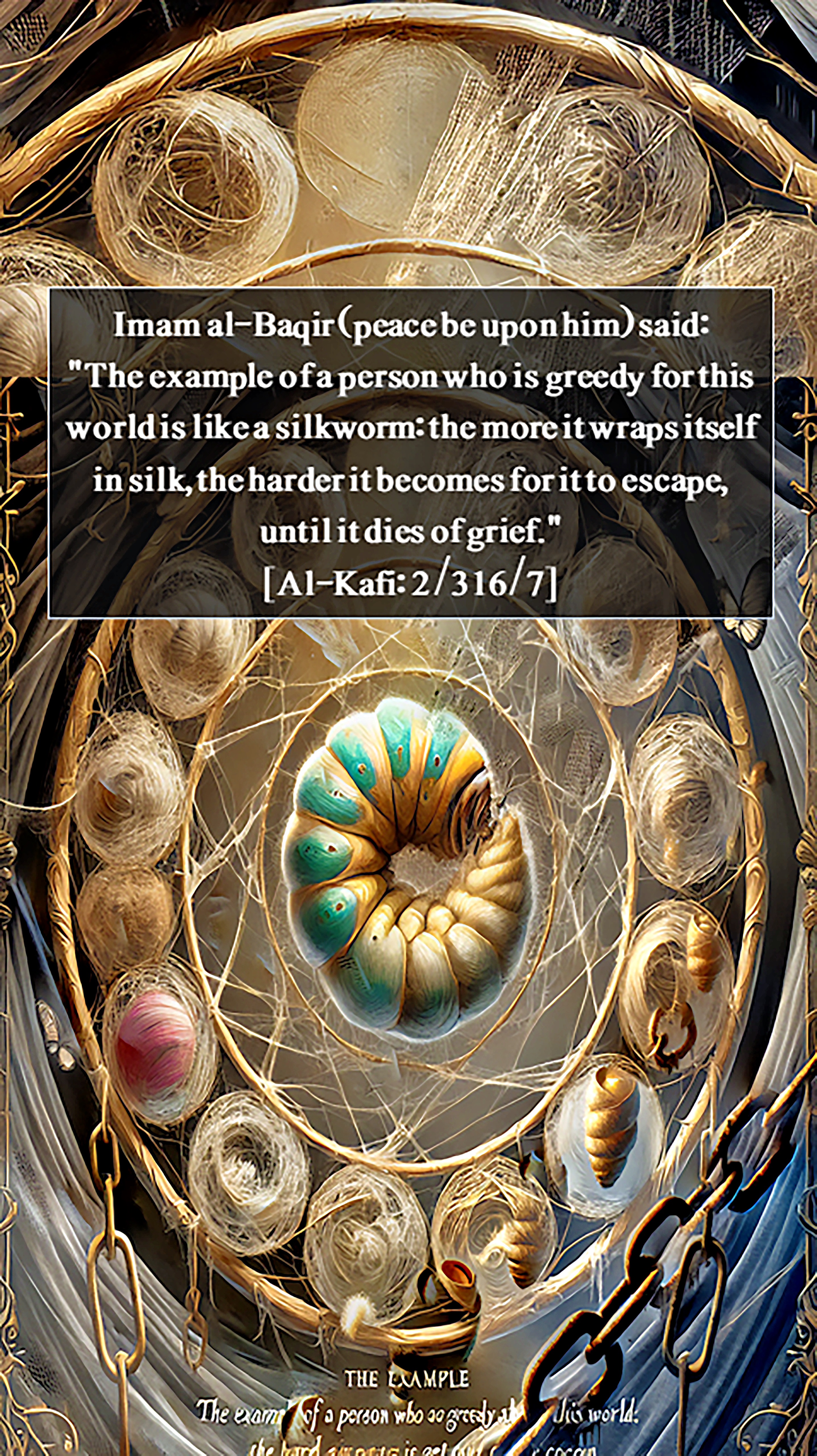
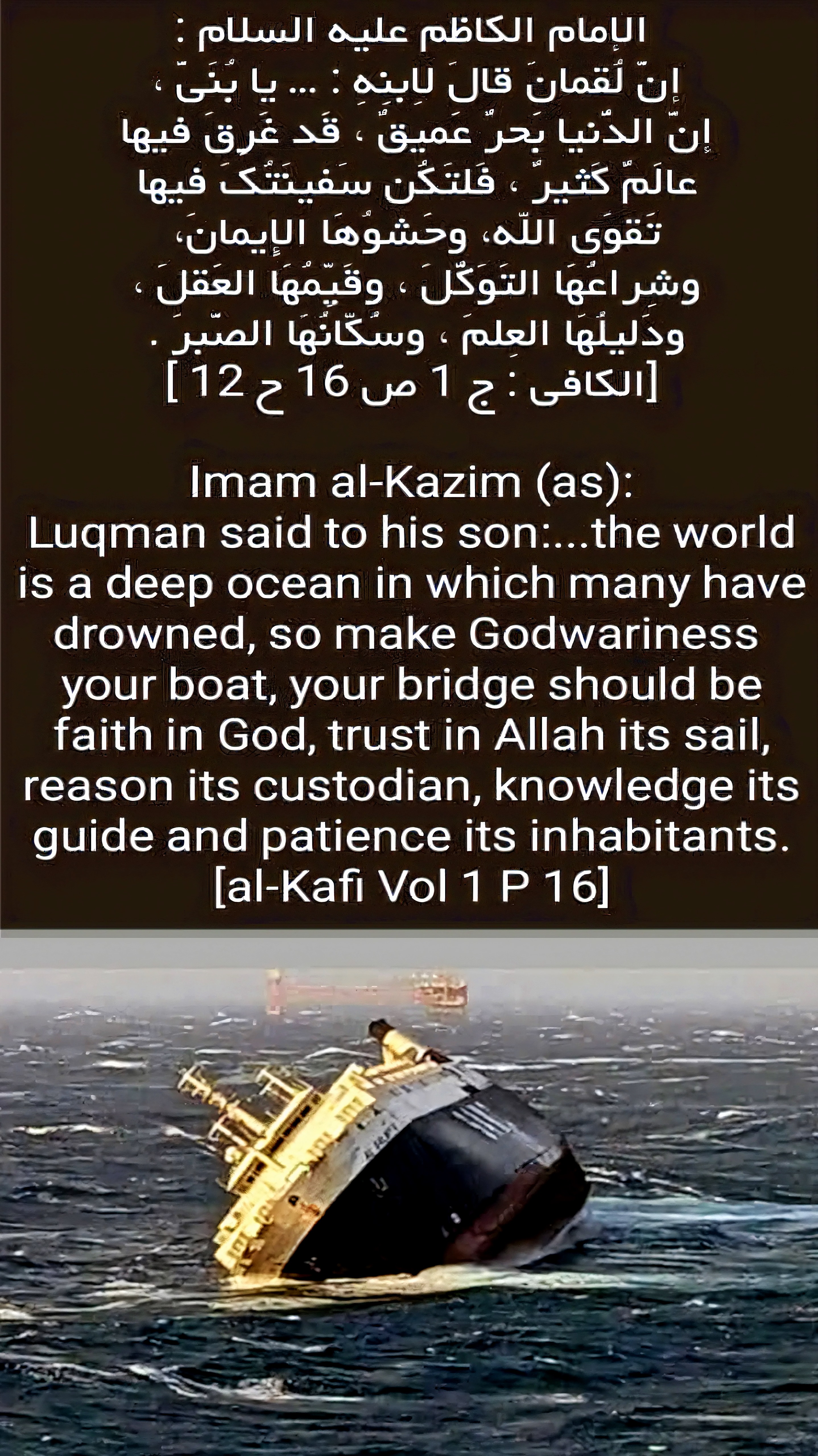
Download article from link below at the end
The Corruption of Religion Is Worldliness: A Comprehensive Study of Fasad al-din al-Dunya
Introduction
The phrase "The corruption of religion lies in [the vanities of] this world"— is attributed to Imam Ali (peace be upon him) and is cited as Ghurar al-Hikam: 6554. In its concise English rendering, Imam Ali (peace be upon him) said: "Worldliness ruins religion" (Ghurar al-Hikam: 6554). This statement encapsulates a central theme in Islamic ethical discourse, particularly within the teachings of the Ahl al-Bayt, regarding the transient nature of this world and the paramount importance of the Hereafter.
The phrase teaches that the deterioration of one's faith is directly connected to an excessive attachment to, and pursuit of, worldly desires and vanities. This article examines the meaning of worldliness (dunya), how it corrupts religion (fasad al-din), the manifestations of this corruption, and the Islamic remedies for safeguarding one's faith.
Understanding "Worldliness" (Dunya)
In Islamic teachings, the term dunya is often misunderstood. The disapproval of "the world" mentioned in the Quran and tradition does not apply to the world itself but rather to absorption in it, and love and attachment for it.
Not the World Itself: The material world is not inherently evil. It is described as a "field for the Hereafter," where actions sown will be reaped in the afterlife. It can be a good place if one observes their rights and duties. Prophet Muhammad (peace be upon him and his family) stated,
"Do not insult the world for it is the best mount for the believer, because by means of it he attains good and through it he is saved from evil. If a servant [of Allah] says: “May Allah curse the world”, the world replies: “May Allah curse the most disobedient one towards his Lord from among us!”.
(Bihar al-Anwar, v. 77, p. 178, no. 10)
Prophet Muhammad (peace be upon him and his family) said:
Warram ibn Abi Firas reported in his book that the Prophet, peace be upon him, said: "Do not curse this world, for what an excellent mount is this world for the believer - upon it he attains good and through it he is saved from evil. Indeed when a servant says May Allah curse this world , the world responds May Allah curse the one most disobedient to his Lord among us."
Wasa il al-Shia Vol. 7, Section 7, Chapter 16, Hadith 9987
Imam Ali (peace be upon him) said:
"The world is a house of truth for the one who deals it with truth & a house of safety for the one who understands (something) from it & a house of wealth for the one who wishes to take provision (for journey) from it. The world is the mosque & place of prostration of the Prophets & the descending place of Allah s revelation And the service place of the angels. And the market of His friends, those who achieved & got the mercy (of Allah) & earned paradise in it. So who denounces it? Whereas it has announced its separation & called aloud (regarding) its departure & parting. And informed about its death. So it has made them attentive by its happiness toward felicities (joys & comforts) & by its anguishes & calamities toward the afflictions. Sometime it scares & sometime it warns. (And at times) it persuades & incites & terrifies. So oh you who mentions ill of the world, where as you are yourself fascinated & charmed by the deceptions of the world. When has it ever deceived you?
Was it when it handed over your fore fathers to perishing, annihilation & decay? Or when it made your mothers disappear under the dust?"
(Bihar ul-Anwar Vol. 77, P 418)
Imam Jafar al-Sadiq (peace be upon him) said
"The worldly life is an excellent aid for the hereafter."
(Wasa il al-Shia Vol. 17, Section 1, Chapter 6, Hadith 21899)
Transient Nature: Worldly life is likened to temporary vegetation that flourishes and then withers, emphasizing its transient nature. Prophet Muhammad (peace be upon him and his family) said: said,
"The world is the plantation for the Hereafter."
(Awali al-La ali, v. 1, p. 267, no. 66)
Prophet Muhammad (peace be upon him and his family) said:
"What do I have to do with the world. My case with the world is like a traveler who finds a tree in his day of journey and uses its shadow for a short rest and then continues for the rest of his journey, leaving the tree behind.”
(Al-Kafi (Vol. 2) by Shaykh Muhammad b. Ya qub al-Kulayni, Book 1, Chapter 61, Hadith #19)
Imam Ali (peace be upon him) said:
"This world is a transitory place and not a permanent one. The people therein are of two types, the man who has sold his self [to his passions] and thus ruined it, and the man who has purchased his self [by control against his passions] and thus freed it."
(Nahjul Balaghah, Saying 133)
Imam Ali (peace be upon him) said:
"The Hereafter is secured through the world."
(Nahjul Balaghah, Sermon 156)
Imam Mohammad Baqir (peace be upon him) said:
"[Consider] your sojourn in this world just as a house that you stayed in and [soon] departed from, or an object of perfection that you witnessed in a dream then you awoke and not a thing from it remained with you. I have given you this parable because this world, according to the people of intellect and knowledge of Allah, is just as the shadow in the shade."
(al-Kafi, v. 2, p. 133, no. 16)
Imam Jafar al-Sadiq (peace be upon him) said
"The Messenger of Allah (peace and blessings be upon him) said: What do I have to do with this world? My example is only like a rider who took shelter under a tree on a hot day, then went on his way and left it."
(Wasa il al-Shia Vol. 16, Section 1, Chapter 63, Hadith 20843)
Love of this World (Hubb al-Dunya): This refers to being submerged in the love and desires of this world, regardless of one's material wealth. It is a state of being that can lead to restlessness and prevent spiritual perfection. This attachment is what is condemned, not merely possessing worldly goods.
A Place of Test: The dunya is considered a prison for believers, meaning it is a place where they are tested and must recognize their limitations, prioritize their spiritual growth, and obey Allah.
A Deceptive Appearance: Imam Ali (peace be upon him) said:
Imam Jafar al-Sadiq (peace be upon him) said
"Indeed the example of this world is like that of a snake - how soft is its touch, while in its belly is lethal poison. The wise man is cautious of it while the ignorant child is drawn to it."
(Wasa il al-Shia Vol. 16, Section 1, Chapter 63, Hadith 20845)
Imam Jafar al-Sadiq (peace be upon him) said
“It is in the book of Ali (a.s.) The example of the world is like a snake which is of soft touch and has deadly poison inside. People of reason stay away from it and ignorant children wish to feel it.”
(Al-Kafi (Vol. 2) by Shaykh Muhammad b. Ya qub al-Kulayni, Book 1, Chapter 61, Hadith #22)
Imam Jafar al-Sadiq (peace be upon him) said
"The example of this world is like a snake, it is soft to the touch yet within it lies a lethal poison. The wise person is cautious of it, yet children are inclined to touch it with their hands.”
(Kitab al-Zuhd by Husayn b. Sa id al-Ahwazi, Book 2, Chapter 8, Hadith #1)
Its attractive exterior can be very destructive.
Imam Ali (peace be upon him) and other Imams consistently describe the world as inherently deceptive, fleeting, and a source of various evils when pursued as an ultimate end. Key descriptions include:
- Deceptive and Fleeting: The world is characterized as "deceptive and deceitful,"
Imam Ali (peace be upon him) said:
"Beware of this deceptive and deceitful world that has been beautified by its ornaments and has seduced through its delusions… such that it has become like an unveiled bride upon whom everyone's eyes are gazing."
(Bihar al-Anwar, v. 73, p. 108, no. 109)
Imam Ali (peace be upon him) said:
"Beware of the world, for verily it appears sweet and green, surrounded by carnal and base desires."
(Nahjul Balaghah, Sermon 111)
Imam Ali (peace be upon him) said:
"Verily the world is a house of deception and deceit, it takes a spouse everyday, kills a family every night and splits up a group every hour."
(Nahj al-Sa ada, v. 3, p. 174)
- Source of Evil and Ruin:
Prophet Muhammad (peace be upon him and his family) said:
"He who loves his world has harmed his Hereafter."
(Bihar al-Anwar, v. 73, p. 81, no. 43)
Imam Ali (peace be upon him) calls the world
"The world is a plantation of evil."
(Ghurar al-Hikam, no. 401)
Imam Ali (peace be upon him) said:
"The world is the origin of evil and the place of deceit."
(Ghurar al-Hikam, no. 1473)
Imam Ali (peace be upon him) said:
"The intellects are most often destroyed as a result of their subservience to bursts of avid desires."
(Sharh Nahjul Balaghah li Ibn Abi al-Hadid, v. 19, p. 41)
- Temporary Abode: The world is depicted as a passage, while the Hereafter is a permanent abode,
Imam Ali (peace be upon him) said:
"O people, verily the world is a passage while the Hereafter is a permanent abode, so take [as much as you can] from the passage for the permanent abode."
(Nahjul Balaghah, Sermon 203)
- An Enemy: Imam Ali (peace be upon him) warns,
"Beware of the world, for verily it is deceptive, delusive and deceitful, it is a giver that deprives, and one who clothes yet leaves you naked."
(Nahjul Balaghah, Sermon 230)
Imam Ali (peace be upon him) said:
"Beware of the world, for verily it is the enemy of the friends of Allah and the enemy of His enemies too. As for the friends of Allah, it fills them with grief and as for Allah s enemies, it deludes them."
(Nahj al-Sa ada, v. 3, p. 202)
Imam Ali (peace be upon him) said:
"Beware of the world, for verily with regards to its lawful things there is accountability and with regards to its unlawful things there is punishment, its beginning is hardship and its end is annihilation."
(Bihar al-Anwar, v. 78, p. 23, no. 88)
- Analogy of the Shadow and Snake: The world is compared to "a person s shadow.
Imam Ali (peace be upon him) said:
"The parable of this world is like your shadow - if you stop, it stands still, and if you chase it, it distances itself from you."
(Ghurar al-Hikam, no. 9818)
Imam Ali (peace be upon him) said:
"The world s example is that of a snake which is soft to touch but it has a perilous poison in its body cavity. The ignorant one forms an attachment with it but the sage & sane person guards himself from it"
(Nahjul Balagha Le Sabeeh Al Saleh Qisar ul-Hikam 119, P484)
Imam al-Kazim (peace be upon him) said:
"Dunya is just as a snake, soft to the touch and within it is deadly poison, men of the mind are cautious about it, and boys fall towards it with their hands."
(Tuhaf al-Uqul by Ibn Shu ba al-Harrani, Volume 0, Page 396)
How Worldliness Corrupts Religion (Fasad al-din)
The corruption (fasad) of religion by worldliness occurs through several interconnected pathways:
1. Prioritizing Worldly Gains over Religious Obligations
Prophet Muhammad (peace be upon him and his family) said:
"Among the worst people is the one who barters his spiritual world for people s material world"
(Nahj Al-Fasahah)
"No sooner do people abandon an aspect of their religion in order to advance their worldly affairs than Allah will inflict them with something that is more detrimental than that."
(Nahjul Balaghah, Saying 106)
Imam Ali (peace be upon him) said:
"Whoever seeks to eat by sacrificing his religion will only have from his religion as much as he eats."
(Tuhaf al- Uqul, no. 223)
Amir al-muminin, Imam Ali (peace be upon him) said:
"Dunya and the Hereafter are two opposing enemies and two different paths, so whoever loves Dunya and adheres to it, abhors the Hereafter and is hostile to it. And they are like the east and the west and someone walking between them, the more he gets closer to one, the further he gets from the other, and they are like the two wives of the same husband."
(Nahj al-Balagha by From the speeches of Imam Ali (as), Volume 4, Page 23)
Imam Mohammad Baqir (peace be upon him) said:
"The Messenger of Allah (peace be upon him and his family) said: Allah, the Mighty and Majestic, says: By My Might, My Majesty, My Greatness, My Light, My Elevation, and the Height of My Position, no servant prefers his desires over My desires except that I will scatter his affairs, confuse his worldly life, preoccupy his heart with it, and I will not give him from it except what I have decreed for him. And by My Might, My Majesty, My Greatness, My Light, My Elevation, and the Height of My Position, no servant prefers My desires over his desires except that I will have My angels protect him, and I will guarantee his sustenance through the heavens and earths, and I will be behind every trader s trade for him, and the world will come to him while it is humbled."
(Wasa il al-Shia Vol. 15, Section 2, Chapter 32, Hadith 20511)
Imam Jafar al-Sadiq (peace be upon him) said
"Amongst My believing servants there are those whose religious affairs are not set right except by wealth, affluence and health; so, I give them these as their lot that the affairs of their religion may be set right.And amongst the servants there are those whose religious affairs are not set right except by hunger, poverty and disease; so, I afflict them with hunger, poverty and disease so that the affairs of their religion may be set right for them."
(Kitab al-Mu?min by Husayn b. Sa id al-Ahwazi, Book 1, Chapter 1, Hadith #37)
Imam Jafar al-Sadiq (peace be upon him) said:
"Indeed Allah, the Mighty and Majestic, has allocated in the wealth of the rich for the poor what suffices them, and had it not been for that He would have increased it for them, and they only suffer because of those who withhold from them what is due to them."
(Wasa il al-Shia Vol. 9, Section 1, Chapter 1, Hadith 11395)
Imam Jafar al-Sadiq (peace be upon him) said:
"The Messenger of Allah (peace and blessings be upon him) said: In seeking the world there is harm to the hereafter, and in seeking the hereafter there is harm to the world, so harm the world for it is more deserving of harm."
(Wasa il al-Shia Vol. 16, Section 1, Chapter 63, Hadith 20844)
Imam Jafar al-Sadiq (peace be upon him) said:
“The Messenger of Allah has said, Seeking worldly benefits amounts to one's disadvantages of the next world and seeking the advantages of the next world may become losses in the benefits of this world. You must then cause losses to worldly benefits; it is better to suffer worldly losses (than to suffer losses in the next life).”
(Al-Kafi (Vol. 2) by Shaykh Muhammad b. Ya qub al-Kulayni, Book 1, Chapter 61, Hadith #12)
2. Corruption of Intellect and Heart
The love of the world is explicitly linked to the degradation of inner faculties. Imam Ali (peace be upon him) stated,
"Love of the world corrupts the intellect, it deafens the heart from hearing wisdom and it brings about a painful chastisement."
(Ghurar al-Hikam, no. 4878)
Imam Ali (peace be upon him) said:
"The world is the ground of ruin for the intellects."
(Ghurar al-Hikam, no. 921)
This suggests that preoccupation with worldly matters dulls spiritual perception, making it difficult to discern truth and wisdom essential for religious adherence.
3. Root of All Sins and Vices
Prophet Muhammad (peace be upon him and his family) said:
"Love of the world is the origin of every act of disobedience and the beginning of every sin."
(Tanbih al-Khawatir, v. 2, p. 122)
Imam Jafar al-Sadiq (peace be upon him) said
"The root of all sin is love of this world."
(Wasa il al-Shia Vol. 16, Section 1, Chapter 61, Hadith 20821)
Imam Zayn al-Abideen said:
"After knowing Allah and knowing His Messenger (peace be upon him and his family), no deed is more excellent than detesting this world, for it has many branches, and sins have branches. The first sin through which Allah was disobeyed was kibr (pride and arrogance) - then he said - then greed, then envy which was the sin of Adam s son when he envied his brother and killed him. From that branched the love of women, love of the world, love of leadership, love of comfort, love of speech, love of superiority and wealth. These became seven traits, all of which combined in the love of this world. So the Prophets and scholars after knowing this said: Love of this world is the root of all sin. And there are two worlds: a world of sufficiency and a cursed world."
(Wasa il al-Shia Vol. 16, Section 1, Chapter 61, Hadith 20822)
Prophet Muhammad (peace be upon him and his family) said:
"The bane of religion is desire."
Kanz al-Ummal: 44121
Imam Ali (peace be upon him) said:
"The bane of the intellect is desire."
(Ghurar al-Hikam no. 3925)
4. Humiliation and Spiritual Loss
Prophet Muhammad (peace be upon him and his family) said:
"Why do who I see that the love of World has overwhelmed most of the people to such an extent as if death has been written (made binding) only for the others? And as if the observing of right has only been made obligatory for others than them? Far from it, Far from it, why do the next ones not take lesson from those in the past?" (Generations)
(Tuhaf al-Uqul, P. 29)
Prophet Muhammad (peace be upon him and his family) said:
"Whoever loves Dunya, the fear of the Hereafter will go away from his heart, and whenever Allah gives a servant knowledge and he becomes more loving of Dunya, he will become more distant from Allah the Exalted, and Allah the Exalted will become more angered with him."
(Nawadir al-Rawandi by Fadl Allah al-Rawandi, Volume 0, Page 157)
Amir al-muminin, Imam Ali (peace be upon him) said:
"How does one in whose heart resides love for Dunya, claim to love Allah."
— Mizan al-Hikmah by Muhammad al-Rayshahri, Volume 1, Page 511
Imam Hasan (peace be upon him) said:
"Whoever loves the world (material) the fear of here after gets out (finishes) from his heart?"
(Lyal Al Ekhbari Vol. 1, P 51)
Imam al-Sadiq (peace be upon him) explained that
"Whoever loves life is humiliated."
(Wasa il al-Shia Vol. 1, Section 5, Chapter 1, Hadith 14970)
This demonstrates a loss of inner strength and dignity, which are crucial for a strong religious identity.
Imam Ali (peace be upon him) said:
"The wealth of this world is the poverty of the Hereafter."
(Ghurar al-Hikam, no. 4705)
Imam Ali (peace be upon him) said:
"The wealth of this world is the poverty of the Hereafter."
(Ghurar al-Hikam, no. 4705)
Imam Ali (peace be upon him) said:
"Poverty is decreed on those who indulge in it - meaning the world (duny?) - and those who turn away from it will be helped with ease."
(Tuhaf al- Uqul, p. 221)
Imam Ali (peace be upon him) said:
"The wealth of this world is the poverty of the Hereafter."
(Ghurar al-Hikam, no. 4705)
This indicates that worldly riches gained at the expense of religion lead to spiritual bankruptcy.
The Concept of Fasad (Corruption)
The term Fasad encompasses a broad range of meanings, signifying deterioration, corruption, decay, negation, immorality, and mischief. It is not limited to physical destruction but extends to a more abstract sense of moral and societal breakdown.
Definition and Opposite: Fasad is defined as the lack of "wholesomeness" (salah), which implies a deficiency in wholeness, health, balance, harmony, coherence, order, integration, and unity. Its direct opposite is "wholesomeness," which is fundamentally achieved through Tawhid (the oneness of God), meaning making things unified and integrated in submission to Divine will.
Quranic Perspective: The Quran attributes Fasad to human actions. It states that corruption is a result of human choices and is caused by the hands of people themselves. In the context of Surah Al-Fajr, Fasad refers to every type of cruelty, oppression, transgression, excessive indulgence in desires, and living in pleasure and revelry. This state of affairs is depicted as the outcome of rebellion against divine laws, ultimately leading to decay and deterioration.
Ethical Implications: Fasad is ethically condemned as a sin, an act that prevents individuals from achieving goodness and keeps them away from divine mercy. It is considered a branch of polytheism that can lead to disbelief. Furthermore, the presence of Fasad negates blessings (Naimah) and mercy (Rahmah); earning sustenance from corrupt or unlawful (Haram) resources renders worship and actions unacceptable to Allah. This highlights that the harm to this religion are corrupt rulers, indicating that Fasad at the leadership level can undermine the very fabric of Din.
The Concept of Din (Religion/Way of Life)
Din is a foundational concept in Islam, signifying a deeply rooted, dutiful, devoted, submissive, and abiding approach towards "the approved discipline." It represents a complete way of life, encompassing all aspects of human existence—spiritual, moral, and practical.
Core Components: Islamic teachings classify Din into three interconnected areas:
- Beliefs (aqa id): These are the fundamentals of faith, including Tawhid (the oneness of God), Nubuwwa (prophethood, especially of Muhammad), and Qiyama (the Day of Judgment). These form the "constitution of Islam," and their protection is a sign of loyalty to the faith.
- Moral Behavior and Ethics (akhlaq): These teachings aim to improve human behavior, cultivate spiritual aspects, and instill virtues such as Taqwa (God-consciousness), justice, generosity, bravery, and patience.
- Practical Laws (ahkam): These are the rules and regulations for various acts, providing guidelines for their performance, such as the Fara id (commands of God, e.g., five daily prayers, fasting) and Sunan (commands and practices of the Prophet).
Relationship with Worldly Affairs: Din is presented as paramount. Imam Ali (peace be upon him) stated,
"Protect your religion by means of your worldly affairs and you will profit in both, but do not use your religion to protect your worldly affairs as you will lose them both."
(Ghurar al-Hikam, no. 5861)
He further warned that making Din secondary to worldly affairs destroys both, leading to loss in the Hereafter.
Imam Ali (peace be upon him) said:
"If you make your religion secondary to your worldly affairs, you have destroyed both your religion and your worldly affairs, and thus you will be among the losers in the Hereafter. But if you make your worldly affairs secondary to your religion, you have safeguarded your religion and your worldly affairs and you will be among the victorious ones in the Hereafter."
(Ghurar al-Hikam, no. 3750-3751)
This emphasizes the need for a balanced approach where worldly pursuits serve the higher objectives of Din, rather than corrupting it.
Wilayah and Din: In certain interpretations, Din is understood as Wilayah of Imam Ali (peace be upon him) and the Imams of the Ahl al-Bayt. Imam Jafar Sadiq (peace be upon him) and Imam Reza (peace be upon him) clarified that religion (deen) is wilayat of Imam Ali (peace be upon him)
From Amr bin Hurayth that he said to Abu Abdullah (peace be upon him): "Shall I tell you about my religion?" He replied: "Yes." I said: "I worship Allah by testifying that there is no god but Allah alone with no partner, and that Muhammad is the Messenger of Allah (peace be upon him and his family), and establishing prayer, and giving zakat, and fasting the month of Ramadan, and performing Hajj to the House (Kaba'h), and the Wilayah" - and he mentioned the Imams (peace be upon them). He said: "O Amr, this is the religion of Allah and the religion of my forefathers by which I worship Allah both in private and in public."
(Wasa'il al-Shia Vol. 1, Section 2, Chapter 1, Hadith 4)
Thus, corruption of Din can also imply corruption in adherence to the true path of Wilayah.
Quranic Verses and Exegesis on Fasad
Surah Al-Baqarah (Quran 2:205): Corruption Beyond the Physical
The Quran says: "And when he becomes ruler, he strives on earth that he may cause mischief therein and destroy the crop and the progeny; and Allah does not love mischief" (Quran 2:205).
According to Al-Mizan, the fasad here does not refer to the physical decay or destruction in this world. It points to a deeper corruption in the Shari ah and legislation. The individual described outwardly appears righteous but inwardly harbors hypocrisy and seeks chaos and disorder.
The manifestations of this corruption include:
- disobedience to Allah and the Messenger;
- kufr and open injustice;
- altering the words of Allah by giving them wrong meanings;
- changing the laws ordained by Allah;
- manipulating the teachings of religion;
- depravity of character and perennial controversy in religion and society;
- ultimately, the negation of religion and the elimination of humanity.
Imam Ali (peace be upon him) explained that the mischief in this verse
A number of our companions, from Sahl Bin Ziyad, from Ibn Mahboub, from Muhammad Bin Salmaan Al-Azdy, from Abu Al-Jaroud, from Abu Is’haq, who has narrated the following: Amir-ul- Momineen (asws) said regarding “[Quran 2:205] And when he turns back, he runs along in the land that he may cause mischief in it and destroy the tilth and the stock”, by his injustices, and his evil ways “and Allah does not love mischief-making”.
(Al-Kafi (Vol. 8) by Shaykh Muhammad b. Ya qub al-Kulayni, Book 1, Chapter 435, Hadith #1)
Surah Al-Rum (Quran 30:41): Social Calamities and Loss of Blessings
The Quran states: "Corruption has appeared in the land and the sea on account of what the hands of men have wrought, that He may make them taste a part of that which they have done, so that they may return" (Quran 30:41).
Fasad here encompasses the social corruptions, calamities, and negation of blessings. Human actions are the direct cause.
Imam Mohammad Baqir (peace be upon him) said:
"Indeed there is no year that has less rain than another year, but Allah places it where He wills. When people commit sins, Allah the Majestic diverts what He had destined for them of rain in that year to other places, to the deserts, seas and mountains. Indeed Allah punishes even the dung beetle in its burrow by withholding rain from the land where it dwells due to the sins of those who live there, even though Allah has given it the means to move to a path other than the dwelling of the sinful people." Then Abu Ja'far (peace be upon him) said: "So take heed, O people of insight/ vision!"
(Wasa'il al-Shia Vol. 16, Section 2, Chapter 37, Hadith 21505)
Imam Mohammad Baqir (peace be upon him) said:
"When the rainfall is less from year to year, it is only because Allah sends it down as and when He wishes, such that when a people commit acts of disobedience to Him, Allah - Mighty and Exalted - withholds the rain that He had ordained for them."
(Bihar al-Anwar, v. 73, p. 329, no. 12)
Imam Mohammad Baqir (peace be upon him) said:
"The amount of rain each year is the same but Allah sets it as He wills. When a people commit sins, Allah, the Most Majestic, the Most Holy, reduces their share of rain in that year and diverts it to other places such as open lands, oceans and mountains. Allah makes the beetles suffer in their hiding places by means of stopping the rain fall in that area because of the sins of those who live near by while He has created ways for it (beetles) to move away where sins are not committed." The Imam then said, "Learn a lesson, O people of reason.’”
(Al-Kafi (Vol. 2) by Shaykh Muhammad b. Ya qub al-Kulayni, Book 1, Chapter 111, Hadith #15)
Imam Jafar al-Sadiq (peace be upon him) said:
"When four things become widespread, four other things will appear: when fornication spreads, earthquakes will manifest; when Zakat (charity) is withheld, livestock will perish; when rulers act unjustly in judgments, rain will be withheld from the sky; and when agreements and covenants are broken, the polytheists will gain victory over the Muslims."
(Man La Yahduruh al-Faqih (Vol. 1) by Shaykh Muhammad b. Ali al-Saduq, Book 1, Chapter 80, Hadith #1488)
Imam Jafar al-Sadiq (peace be upon him) said:
"When four things spread, four things appear: When adultery spreads, earthquakes increase; when zakat is withheld, livestock perish; when judges are unjust in their rulings, rain is withheld from the sky; and when covenants are broken, the polytheists gain victory over the Muslims."
(Wasa'il al-Shia Vol. 8, Section 1, Chapter 7, Hadith 10007)
Imam Mohammad Baqir (peace be upon him) said:
Muhammad Bin Yahya, from Muhammad Bin Al-Husyan, fom Ali Bin Al-No’man, from Ibn Muskaan, from Muhammad Bin Muslim who has said: Abu Ja’far (asws) regarding the Statement of the Mighty and Majestic: “[Quran 30:41] Corruption has appeared in the land and the sea on account of what the hands of men have wrought”, he (asws) said: ‘By Allah (azwj), that was when the ‘Al-Ansar’ (Helpers) said, ‘from us should be an Emir (commander), and from you should be an Emir’ (referring to Saqifa).
(Al-Kafi (Vol. 8) by Shaykh Muhammad b. Ya qub al-Kulayni, Book 1, Chapter 19, Hadith #1)
This interpretation points to a profound corruption in the religious and social order following the Prophet s passing, related to the dispute over succession.
The verse also indicates that sins can lead to:
- erosion of social trust and confidence;
- disruption of social communications;
- perpetuation of injustice;
- rise of tyranny;
- hostility and unrest;
- loss of divine sustenance and blessings.
Surah Ar-Ra d (Quran 13:25): Breaking Covenants and Severing Relationships
The Quran says: "And there are those who break the covenant of Allah after its confirmation and cut asunder what Allah has commanded to be joined, and make mischief in the earth; they, theirs shall be the curse and theirs shall be the evil abode" (Quran 13:25).
The exegesis identifies three categories of corruption:
- Breaking Divine Testaments — including inherent, rational, and religious covenants. Narrations specify the covenant of Wilayah of Amir-ul-Momineen Ali (peace be upon him) and the Imams after him, taken in the Realm of Particles and reaffirmed at Ghadeer Khumm.
- Cutting Off Relationships — with Allah, with divine religious leaders, with other people, and with one's own self. Imam Sajjad (peace be upon him) advised abstaining from those who cut off ties with relatives, as the Quran curses them.
- Corruption on the Earth — a direct consequence, manifesting in homicide, destruction of agriculture and progeny, inciting differences, and murder.
Imam Ali (peace be upon him) said:
"Among the sins that hasten destruction is the severing of family ties."
(Wasa'il al-Shia Vol. 12, Section 1, Chapter 149, Hadith 16288)
Imam Jafar al-Sadiq (peace be upon him) said
From Abdullah ibn Sinan who said: I said to Abu Abdullah (peace be upon him): I have a cousin whom I maintain ties with, but he cuts me off, to the point that I have considered cutting him off due to his severing ties with me. He said: "If you maintain ties with him while he cuts you off, Allah will maintain ties with both of you. But if you cut him off while he cuts you off, Allah will cut off both of you."
(Wasa'il al-Shia Vol. 21, Section 7, Chapter 18, Hadith 27801)
Imam Jafar al-Sadiq (peace be upon him) said
"There is no valid oath in disobedience to Allah, or in cutting ties of kinship."
(Wasa'il al-Shia Vol. 23, Section 7, Chapter 11, Hadith 29418)
Surah Ash-Shu ara (Quran 26:151–152): Extravagance as a Root of Corruption
The Quran instructs: "And do not obey the bidding of the extravagant, Those who make mischief in the earth, and amend not" (Quran 26:151–152).
Here, israf (extravagance) is pinpointed as a form and origin of fasad. It means exceeding the limits of law, the law of creation and the law of religion. It includes:
- monetary extravagance — spending beyond one's status, on useless things, on haram things, or excessively even in charity;
- extravagance in beliefs — such as Pharaoh s claim to divinity;
- extravagance in actions — performing detestable acts or avoiding advisable deeds;
- extravagance in relation to nature — exceeding limits in using natural resources.
The origin of corruption is extravagance and the consequence of extravagance is mischief.
Imam Jafar al-Sadiq (peace be upon him) said:
"Indeed, with extravagance comes scarcity of blessing."
(Wasa'il al-Shia Vol. 21, Section 7, Chapter 27, Hadith 27859)
Imam Jafar al-Sadiq (peace be upon him) said:
"O Ubayd, indeed extravagance leads to poverty, and moderation leads to wealth."
(Wasa'il al-Shia Vol. 21, Section 7, Chapter 25, Hadith 27848)
Imam Jafar al-Sadiq (peace be upon him) said:
"O Ubayd, extravagance leads to poverty, and moderation leads to wealth."
(Wasa'il al-Shia Vol. 17, Section 1, Chapter 22, Hadith 21992)
Imam Jafar al-Sadiq (peace be upon him) said
Ishaq ibn Ammar asked Abu Abdullah (as) about the least form of extravagance. Imam (as) replied: "Wearing your garment of dignity for ordinary tasks, spilling the excess of what is in your vessel, and carelessly throwing away date pits like this and that."
(Man La Yahduruh al-Faqih (Vol. 3) by Shaykh Muhammad b. Ali al-Saduq, Book 2, Chapter 1, Hadith #61)
Imam Jafar al-Sadiq (peace be upon him) said:
"Wastefulness is in three things: wearing your good clothes casually, throwing date pits right and left, and spilling excess water. And he said: There is no extravagance (or wastefulness) in food."
(Wasa'il al-Shia Vol. 5, Section 1, Chapter 28, Hadith 5880)
The antidote is moderation and justice: You must abandon wastefulness and extravagance, and adopt the qualities of justice and equity.
Surah An-Nahl (Quran 16:90): Justice and Morality as Antidotes
The Quran says: "Surely Allah enjoins the doing of Justice and the doing of good (to others) and the giving to the kindred and He forbids indecency and evil and rebellion; He admonishes you that you may be mindful" (Quran 16:90).
This verse is described as a comprehensive charter of Islam. It commands:
- al- Adl (justice);
- al-Ihsan (kindness/goodness);
- Ita?i Dhi al-Qurba (giving to near kin).
It forbids:
- al-Fahsha? (indecency);
- al-Munkar (evil);
- al-Baghy (rebellion/tyranny).
The apparent interpretation emphasizes universal ethical principles. The esoteric interpretation in Shia tradition links justice to Prophet Muhammad (S), kindness to Imam Ali (peace be upon him), and giving to kin to the Ahl al-Bayt. The prohibitions are interpreted in some narrations as referring to the "first one," "second one," and "third one," and more broadly to those who rebelled against the People of the Household.
Imam Jafar al-Sadiq (peace be upon him) said
"If people honor the rights of each other and fulfill requirements of the poor, they will enjoy a good and satisfactory life"
(Wasa’il ‘ush-Shi’a, volume 6, page 2)
According to the same documentation on the authority of Ali (a.s.), the Prophet (S) said,
“The world will not end until one from the progeny of Al-Husayn (a.s.) rises and spreads justice all over the world which oppression and force have covered up with darkness.”
(Uyun akhbar al-Rida (Vol. 2) by Shaykh Muhammad b. Ali al-Saduq, Book 1, Chapter 1, Hadith #294)
Ali bin Ahmad narrated from Obaydillah bin Musa al-Alawi from Abu Muhammad Musa bin Haroon bin Eessa al-Ma’badi from Abdullah bin Maslama bin Qu’nub from Sulayman bin Bilal from Ja’far bin Muhammad as-Sadiqfrom his fatherfrom his grandfatherthat al-Husayn bin Alihad said: “Once a man came to Amirul Mo’mineenand said to him: “O Amirul Mo’mineen, would you tell us about your Mahdi?” Amirul Mo’mineensaid: “If most of you pass away, the believers become rare and the clamorers perish, then he will appear!” The man said: “Where from is the man (al-Mahdi)?” Imam Alisaid: “He is from the Hashemites; the top of the mountain of the Arabs (the best of the Arabs), the sea, to which everyone comes ladling, the safe resort and the pure spring when others become turbid. He is from the people, who do not cower when death hastens, do not weaken when the end approaches and do not recede when the heroes clash. He is always a winner like a lion. He will do away with the oppressors and the arrogants. He is a sword of Allah’s. He arises from loftiness. His glory emits from a great glorious family. Let none of those, who hasten towards seditions and who when saying, the evilest of sayers and when keeping silent, fishing in the troubled water, prevents you from paying homage to him.” Then he talked again about the aspects of al-Mahdi (aj) by saying: “He is the most generous, the most aware and the kindest of you to his kin. O Allah, make his advent as deliverance from distresses and make the umma unite by him! O you man, if Allah chooses (that) to you, be determined and do not deviate from him (al-Mahdi) when you are guided to him.” He sighed and pointed at his chest with his hand showing his eagerness to see him.”
(Kitab al-Ghayba by Abu Abd Allah Muhammad b. Ibrahim al-Nu mani, Book 2, Chapter 13, Hadith #1)
Environmental Fasad
Fasad also encompasses environmental destruction. Verses such as (Quran 2:205) and (Quran 7:56) — "And do no mischief on the earth, after it has been set in order…" — are interpreted to mean that the earth and its natural components are created perfect and healthy, and it is humanity that disrupts this order. Environmental degradation, including pollution, is considered a clear proof of what Allah prohibits. Specific examples include:
- cutting down trees;
- destroying agriculture;
- polluting water;
- wasting resources;
- harming animals and their habitats.
The Quran states: "And do not desire corruption in the land. Indeed, God does not like corruptors" (Quran 28:77). It also says: "Corruption has appeared on the sea and land due to what has transpired by the hands of men" (Quran 30:41).
Humans as Khalifah (stewards) and the Earth as Amanah (trust). Islamic teachings encourage cultivation and preservation.
Prophet Muhammad (peace be upon him and his family) said:
"Every single Muslim that plants or cultivates anything of which humans, animals or birds may eat from is counted as charity towards them on his behalf."
(Mustadrak al-Wasa’il, v. 13, p. 460, no. 15892)
Prophet Muhammad (peace be upon him and his family) said:
"Whoever plants a tree and patiently maintains it and tends to it until its fruition, every single fruit consumed from that tree is regarded by Allah as charity [on his behalf]."
(Kanz al-’Ummal, no. 9081)
Prophet Muhammad (peace be upon him and his family) said:
"Every single person that cultivates something, Allah rewards him as much as the fruit produced by that plant."
(Kanz al-’Ummal, no. 9075)
Imam Ja far Sadiq (peace be upon him) said:
"Cultivate and plant trees. By God, people have not done any action more lawful and purer than this"
(Safinat’ul-Bihar, volume 1, page 549. Mustadrak Alwasail, vol 13, page 26)
Imam Jafar al-Sadiq (peace be upon him) said
"Do not cut down fruit trees for Allah will pour down punishment unto you."
(al-Kafi, v. 5, p. 264, no. 9)
Imam Jafar al-Sadiq (peace be upon him) said
"Do not cut fruit trees, lest Allah pours down torture upon you heavily."
(Wasa'il al-Shia by al-Hurr al-Amili, Volume 19, Page 39)
Imam Jafar al-Sadiq (peace be upon him) said
"You must not cut down a fruit bearing tree; Allah will send on you a great suffering.’”
(Al-Kafi (Vol. 5) by Shaykh Muhammad b. Ya qub al-Kulayni, Book 2, Chapter 126, Hadith #9)
Wastefulness (israf) and squandering (tabdhir) are prohibited, even with water for ritual purification.
Prophet Muhammad (peace be upon him and his family) said:
"Ablution (wudu) is a mud (a specific measure), and ghusl (ritual washing) is a saa' (a larger measure). There will come people after me who will underestimate these amounts, and those will be contrary to my Sunnah.
The one who adheres to my Sunnah will be with me in the enclosure of holiness (Paradise)."
(Man La Yahduruh al-Faqih (Vol. 1) by Shaykh Muhammad b. Ali al-Saduq, Book 1, Chapter 8, Hadith #70)
Imam al-Kazim (peace be upon him) said:
"For ghusl (ritual washing), a saa' of water is required, and for wudu (ablution), a mud of water is sufficient.
The saa' of The Prophet (sw) is five amdad (measures), and the mud weighs two hundred and eighty dirhams. One dirham is six danaq (small units), and one danaq weighs six grains.
The grain should be from medium-quality barley, not from the small or large types”.
(Man La Yahduruh al-Faqih (Vol. 1) by Shaykh Muhammad b. Ali al-Saduq, Book 1, Chapter 8, Hadith #69)
Inner Corruption and Moral Decline
Fasad is depicted as originating from within an individual before manifesting externally.
Imam Ali (peace be upon him) said:
"How ugly the man who is sick inwardly and beautiful outwardly."
(Ghurar al-Hikam, no. 9661)
Imam Ja far al-Sadiq (peace be upon him) said:
"What good does it do for one of you to display goodness outwardly while concealing evil? Does he not return to himself and know that this is not genuine?! And Allah the Mighty and Majestic says: Rather, man is a clear witness against himself [Quran, 75:14]. Indeed when the inner self becomes righteous, the outer self becomes strong."
(Wasa'il al-Shia Vol. 1, Section 2, Chapter 11, Hadith 138)
Sources of inner corruption include:
- prolonged expectation;
- greed;
- pride;
- loving this world;
- amassing its wealth;
- following the self;
- elevating its appetites;
- loving praise;
- agreeing with Satan;
- following his footsteps;
- forgetting Allah s favors.
The Quran states: "Indeed he succeeds who purifies his own self. And indeed he fails who corrupts his self" (Quran 91:9–10). Self-purification (Tahzib al-Nafs) involves emptying the soul of vices and adorning it with virtues.
Prophet Muhammad (peace be upon him and his family) said:
"Faith is inner knowledge by means of the heart, attestation with the tongue and action with the limbs."
(Kanz al-’Ummal, no. 2)
Imam Ali (peace be upon him) said:
"The adornment of faith is purity of one's innermost thoughts coupled with good actions manifested outwardly."
(Ghurar al-Hikam, no. 5504)
Imam Ali (peace be upon him) said:
"The adornment of your inner selves is more beautiful than the adornment of the outer."
(Ghurar al-Hikam, no. 5503)
Amir al-muminin, Imam Ali (peace be upon him) said:
"The adornment of hearts is the ikhlas of faith."
(Uyun al-Hikam wa al-Mawa'iz by Ali bin Muhammad al-Laythi al-Wasiti, Volume 0, Page 276)
Imam Ali (peace be upon him) said:
"Faith is sincerity of action."
(Ghurar al-Hikam, no. 873)
Imam Ali (peace be upon him) said:
"The downfall of the upright is lack of piety."
(Ghurar al-Hikam, no. 3937 )
Ethical aphorisms:
- There is no rectitude with corruption;
- One who corrupts [his relationship] with Allah will not be upright with anyone;
Amir al-muminin, Imam Ali (peace be upon him) said:
From Ismail bin Muslim, from Jafar bin Muhammad, from his forefathers, from Ali (peace be upon them) who said: "Whoever rectifies what is between himself and Allah, Allah will rectify what is between him and the people."
(Wasa'il al-Shia Vol. 15, Section 2, Chapter 39, Hadith 20564)
Amir al-muminin, Imam Ali (peace be upon him) said:
Muhammad bin Al-Hussein Al-Radhi in (Nahj al-Balagha), from Amir al-Muminin (peace be upon him) that he said: "Whoever rectifies what is between him and Allah, Allah will rectify what is between him and people. And whoever rectifies his affairs of the hereafter, Allah will rectify his worldly affairs for him."
(Wasa'il al-Shia Vol. 15, Section 2, Chapter 39, Hadith 20562)
- Do not corrupt the thing whose rectitude is important for you.
These warn that corruption in one's relationship with God distorts all other relationships and ethical commitments.
Fasad in Religion, Law, and Faith
In religious and legal contexts, Fasad manifests as corruption of Shari ah and divine order, including attempts to distort, negate, or misapply divine law. It includes:
- hypocrisy (nifaq) — a discrepancy between inward reality and outward appearance;
- kufr and shirk;
- the state of a fasiq — one who openly breaks Islamic law;
- loss of sustenance.
Imam Ali (peace be upon him) stated:
"Verily, from corruption comes the loss of sustenance."
(al-Kafi, v. 8, p. 23, no. 4)
Imam Mohammad Baqir (peace be upon him) said:
"Verily when the servant commits a sin, his sustenance eludes him."
(al-Kafi, v. 2, p. 270, no. 8)
Imam Jafar al-Sadiq (peace be upon him) said
"I heard him saying: Indeed sin deprives the servant of sustenance."
(Wasa'il al-Shia Vol. 15, Section 2, Chapter 40, Hadith 20574)
Imam Mohammad Baqir (peace be upon him) said:
"Indeed when a man commits a sin, his sustenance is withheld from him, and he recited this verse: "When they swore to pluck the fruits in the morning, without making any exception. Then a visitation from your Lord came upon it while they were asleep" [Quran 68:17-19]
(Wasa'il al-Shia Vol. 15, Section 2, Chapter 40, Hadith 20575)
Earning sustenance from corrupt or haram resources renders worship and actions unacceptable. Naimah (bounty) and Rahmah (blessing) do not go hand in hand with Fasad.
A fasiq is described as a Muslim who does not practice the religion or openly and obstinately violates Islamic law. The Quran states that a believer and a fasiq are not equal (Quran 32:18). The fasiq s abode is the Fire. The term fisq is derived from the date broke out of its outer rind, signifying a departure from one's spiritual core.
Hypocrisy (nifaq) is a grave disease of the soul.
Prophet Muhammad (peace be upon him and his family) said:
"A hypocrite is devoid of two traits: reputation and deep knowledge of religion"
(Nahj Al-Fasahah)
Imam As-Sadiq (peace be upon him) identified three signs of hypocrites:
"There are three signs of the hypocrites : their tongue is not consistent with their heart, nor their heart with their deed , nor their outward with their inward"
(Bihar al-Anwar book, volume 15)
Remedies include sincerity (ikhlas), repentance, self-restraint, avoiding corrupting actions, cultivating spiritual awareness, adherence to divine commands, righteous intentions, and investigating news from transgressors.
Imam Ali-un-Naqi (peace be upon him) said:
"The one who performs a deed & his heart does not believe in that deed, Allah will not accept any of his practices; but that it be along with the sincerity of intention"
(Tuhaf al-Uqul P 473)
Causes of Fasad
- human actions and deeds — "what the hands of men have wrought";
- self-centeredness and greed;
- rebellion against Allah s commands;
- sins and deviations;
- denial of the Day of Judgment;
- breaking covenants;
- widespread immoralities;
- mischievousness and teasing;
- asabiyyah (tribalism/fanaticism);
- innovations (bid ah) and schism;
- hypocrisy;
- jealousy (hasad);
- falsehood;
- pollution;
- excessiveness (israf).
Consequences of Fasad
The consequences are severe and far-reaching:
- social calamities and loss of blessings;
- economic and social suffering;
- chaos and injustice;
- physical and mental harm;
- unaccepted actions;
- societal ruination;
- broken promises and damaged trust;
- curse and evil abode in the Hereafter;
- eternal damnation for innovations and schism;
- divine punishment;
- worthless deeds;
- regret.
The Quran states that those who break Allah s covenant and cause mischief on Earth will have "the curse and the evil abode" (Quran 13:25). Such individuals are "the losers" (Quran 2:27).
Divine Punishment and Eschatological Restoration
Divine punishment is a consequence of disobedience, sinfulness, and rejection of divine guidance. It is described as severe, intense, and painful. Causes include:
- disobedience and sinfulness;
- shirk in Walayat of Masumeen;
- ignoring divine reminders and persisting in disobedience;
- accumulation of sins and lack of repentance;
- prioritizing worldly desires;
- mockery of Allah s verses;
- searching for others sins while ignoring one's own;
- rejecting divine guidance.
Forms of punishment include worldly chastisement, punishment in the grave, and punishment in the Hereafter. Istidraj — gradual entrapment through worldly prosperity — can precede sudden punishment. Istisal, divine punishment involving annihilation of incorrigible individuals if warnings prove ineffective and corruption has deeply ingrained itself.
In Islamic eschatology, widespread corruption and injustice are a prelude to restoration through the Qaim of the House of Muhammad. Before his appearance, the world will be filled with oppression, fear, moral decay, and violation of divine sanctuaries. The Qaim will fill the earth with equity and justice, revive the earth spiritually and socially, triumph truth over falsehood, establish divine government, and lead a moral and spiritual revolution.
Injustice does not hasten the Mahdi s reappearance; rather, more injustice actually postpones the Mahdi s reappearance, rather than hastening it.
Din and Dunya in the Phrase
Din (Religion/Faith)
Din can mean divine law, Shari ah, deed, obedience, or the Day of Judgment. In this phrase, it refers to one's faith, religious principles, and commitment to the truth. It is the spiritual foundation and ethical framework guiding a believer s life. In certain interpretations, Din is understood as Wilayah of Imam Ali (peace be upon him) and the Imams of the Ahl al-Bayt. Imam Jafar Sadiq (peace be upon him)
Al-Husayn ibn Muhammad has narrated from Mu‘alla ibn Muhammad from Muhammad ibn Uramah from Ali ibn Hassa’n from ‘Abd al-Rahman ibn Kathir who has said the following. “I asked abu ‘Abdallah (a.s.) about the words of Allah, the Most High. “. . the human being realizes that it is the truth (God) who is the true Guardian. .” (18:44) The Imam (a.s.) said, “It is the Wilaya of Imam Ali’s (Leadership with Divine Authority).”
(Al-Kafi (Vol. 1) by Shaykh Muhammad b. Ya qub al-Kulayni, Book 4, Chapter 108, Hadith #51)
Imam Mohammad Baqir (peace be upon him) said:
"Islam is built upon five things: prayer, zakat, fasting, hajj, and wilayah, and nothing was proclaimed as much as wilayah was proclaimed."
(Wasa'il al-Shia Vol. 1, Section 2, Chapter 1, Hadith 10)
Thus, corruption of Din can also imply corruption in adherence to the true path of Wilayah.
Dunya (This World/Worldly Affairs)
Dunya refers to the material world, its fleeting nature, wealth, power, and transient pleasures. The Quran describes it as "contemptible" compared to the afterlife. The house of the world is a house of decline while the house of the Hereafter is a house of settlement.
Prophet Muhammad (peace be upon him and his family) said:
"Do not curse this world, for what an excellent mount is this world for the believer - upon it he attains good and through it he is saved from evil. Indeed when a servant says 'May Allah curse this world', the world responds 'May Allah curse the one most disobedient to his Lord among us".
(Wasa'il al-Shia Vol. 7, Section 7, Chapter 16, Hadith 9987)
Prophet Muhammad (peace be upon him and his family) said:
"The world is cursed along with what is in it, except that through which the pleasure of Allah is sought."
(Kanz al-’Ummal, no. 6088)
Imam Jafar al-Sadiq (peace be upon him) said
From Hafs bin Ghiyath, from Abu Abdullah (peace be upon him) who said regarding the intimate discourse of Moses (peace be upon him): "O Moses, indeed the world is a house of punishment in which I punished Adam for his sin, and I made it cursed, cursed is what is in it except what in it is for Me. O Moses, indeed My righteous servants abstained from the world according to their knowledge, while the rest of creation desired it according to their ignorance. No one magnified it except that his eyes were content with it, and no one belittled it except that he benefited from it."
(Wasa'il al-Shia Vol. 16, Section 1, Chapter 61, Hadith 20823)
Imam Jafar al-Sadiq (peace be upon him) said
"The worldly life is an excellent aid for the hereafter."
(Wasa'il al-Shia Vol. 17, Section 1, Chapter 6, Hadith 21899)
Islamic Stance and Conclusion
Islam strongly condemns the prioritization of worldly pursuits over faith. It advocates balance: the world is a "field for the Hereafter," where actions sown here are reaped later. Renunciation of the world does not mean abandoning worldly life but participating in jihad for the sake of Allah and working toward a higher purpose. "Worshipping the world" means forgetting God, even if one possesses wealth, unless it is spent according to religious laws.
The Islamic stance is to make your world stay under the hand of religion
Imam Ali (peace be upon him) said:
"If you made your religion (faith) follow & stay under hand of your world, you perished both your religion & the world. And you would be from the losers on the dooms day. And if you made your world (life) stay under the hand of religion then you achieved both your religion & world & would be among the successful ones in the Hereafter"
(Ghurar ul-Hikam Alfasl 10, ALHadith 44-45)
Adhering to Islamic teachings and laws prevents corruption, oppression, and social ills. Moral education and self-purification combat corruption by educating psychological talents, purifying conscience, and training individuals for righteous moral behavior.
Protecting Religion from Worldliness:
Despite its deceptive nature, the world is not entirely condemned. Imam Ali (peace be upon him) also provided guidance on how to navigate it without succumbing to its corrupting influence:
- Proper Utilization of the World:
Prophet Muhammad (peace be upon him and his family) said:
"Searching for what will improve you is not considered love of the world."
(Kanz al- Ummal, no. 5439)
Prophet Muhammad (peace be upon him and his family) said:
"The most courageous of people is whoever overcomes his hawa."
(Amali al-Saduq by Shaykh al-Saduq, Volume 0, Page 73)
Imam Ali (peace be upon him) said:
"Indeed this Islam is the religion of Allah which he has chosen for Himself … and has smashed the pillars of misguidance with its one pillar."
(Nahjul Balaghah, Sermon 198)
Imam Ali (peace be upon him) said:
"Acting with integrity increases one's sustenance."
(Bihar al-Anwar, v. 75, p. 172, no. 8)
Imam Ali (peace be upon him) advised:
"Protect your religion by means of your worldly affairs and you will profit in both, but do not use your religion to protect your worldly affairs as you will lose them both."
(Ghurar al-Hikam, no. 5861)
This means using worldly resources and opportunities in a manner that strengthens one's faith and prepares for the Hereafter, rather than compromising religious principles for material gain.
- World as a Means, Not an End: The world is created for another purpose, not for itself
Imam Ali (peace be upon him) said:
"World is created for another purpose, not for itself"
(Safinat ul-Bihar, Bihar Al-Anwar vol70, page 133, Sharh Nahj Albalagha, vol 20, page 181, Nahj Albalagha page 557)
It is a marketplace of the losers
Imam Ali (peace be upon him) said:
"The world is the marketplace of the losers."
(Ghurar al-Hikam, no. 396)
Imam Ali (peace be upon him) said:
"O you who insult the world, who have been deceived by its deceit and cheated by its falsities, do you covet the world and then insult it? Should you accuse it or should it accuse you? When did it bewilder it or deceive you?!… Verily the world is an abode of truth for he who is truthful to it, an abode of wellbeing for he who understands it, and an abode of riches for he who collects provision from it [for the next world]."
(Nahjul Balaghah, Saying.131)
Imam Ali-un-Naqi (peace be upon him) said:
"The world is a market in which some gain and some lose."
(Tuhaful Uqul, page 361)
Imam Ali al-Hadi (peace be upon him) said:
"Dunya is a market in which some people won and others lost."
(Tuhaf al-Uqul by Ibn Shu'ba al-Harrani, Volume 0, Page 483)
- Detachment and Asceticism:
Prophet Muhammad (peace be upon him and his family) said:
‘Asceticism from worldly pleasures means to cut short one’s hopes of this world, to be grateful for every single bounty, to have piety and to keep away from all that which Allah has prohibited.’
(Tuhaf al-’Uqul, no. 58)
Prophet Muhammad (peace be upon him and his family) said:
"Asceticism in this world is based on three things: curtailment of desires, thanksgiving for blessings, and avoiding the prohibited things"
(Tuhaful Uqul, page 58. Al-Kafi, vol 5, page 71. Wasa'il Al-Shia, vol 17, page 15. AlKhisal, vol 1, page 14.)
Prophet Muhammad (peace be upon him and his family) said:
"A little, but sufficient, is better than much leading to vanity"
(Nahj Al-Fasahah)
Imam Ali (peace be upon him) said:
"Asceticism (zuhd) in worldly life means having short hopes, being grateful for every blessing, and being pious regarding everything Allah the Mighty and Majestic has forbidden."
(Wasa'il al-Shia Vol. 17, Section 1, Chapter 8, Hadith 21915)
Imam Ali (peace be upon him) said:
"The real ascetic in the world is one whose endurance is not defeated by the temptations of unlawful wealth and who is not distracted from god’s remembrance and duty of thanksgiving when he acquires lawful wealth"
(Tuhaful Uqul)
Imam Ali (peace be upon him) said:
[regarding the world], ‘Do not ask in it for what is more than a sufficient means of living and do not seek from it more than what you need.’
(Nahjul Balaghah, Sermon 45)
Imam Ali (peace be upon him) said:
"Prosperity lies in adhering to the truth."
(Ghurar al-Hikam, no. 6489)
Imam Jafar al-Sadiq (peace be upon him) said
From Abdullah bin al-Qasim, from Abu Abdullah (peace be upon him) who said: "When Allah wants good for a servant, He makes him ascetic regarding this world, gives him understanding in religion, and makes him see its faults. Whoever is given these has been given the good of this world and the hereafter." And he said: "No one has sought truth through a better door than asceticism in this world, and it is opposite to what the enemies of truth seek." I said: May I be sacrificed for you, opposite to what? He said: "To desire for it." And he said: "Except for the noble patient one, for these are just few days. Indeed it is forbidden for you to find the taste of faith until you become ascetic regarding this world." He said: And I heard Abu Abdullah (peace be upon him) saying: "When the believer becomes free from worldly concerns, he ascends and finds the sweetness of loving Allah and becomes preoccupied with nothing else." He said: And I heard him saying: "When the heart becomes pure, the The Merit Of Asceticism In This World And Its Limits earth becomes constrained for it until it ascends."
(Wasa'il al-Shia Vol. 16, Section 1, Chapter 62, Hadith 20834)
Imam Jafar al-Sadiq (peace be upon him) said
"It is forbidden for your hearts to cognize the sweetness of faith until it practices zuhd in Dunya."
(al-Kafi by Shaykh al-Kulayni, Volume 2, Page 128)
Imam Jafar al-Sadiq (peace be upon him) said:
"Asceticism (zuhd) in this world is not by wasting wealth, nor by making the lawful forbidden. Rather, asceticism in this world is that you do not trust what is in your hands more than what is with Allah, the Mighty and Majestic."
(Wasa'il al-Shia Vol. 17, Section 1, Chapter 8, Hadith 21914)
Imam Jafar al-Sadiq (peace be upon him) said:
"Asceticism in worldly life is not about wasting wealth or forbidding what is permissible. Rather, asceticism in worldly life is that you are not more confident in what is in your hands than what is in Allah's hands, the Mighty and Majestic."
(Wasa'il al-Shia Vol. 16, Section 1, Chapter 62, Hadith 20839)
True believers should take from the world enough to keep your body strong, to keep yourself alive and to gain provision for your Resurrection
- Focus on the Hereafter:
Imam Jafar al-Sadiq (peace be upon him) said:
"The world is both a seeker and one being sought.
Whoever seeks the world, death will pursue him until it removes him from it.
And whoever seeks Hereafter, the world will pursue him until it delivers his sustenance to him."
(Man La Yahduruh al-Faqih (Vol. 4) by Shaykh Muhammad b. Ali al-Saduq, Book 1, Chapter 175, Hadith #5886)
Hazrat Luqman (a.s.) said in counsel to his son, "Sell your world for your Hereafter and you will attain both of them, but do not sell your Hereafter for your world for you will lose them both."
(Bihar al-Anwar, v. 13, p. 422, no. 17)
The world is a "passage" from which to "take for the permanent abode".
In synthesis, Fasad al-din al-Dunya means that spiritual and moral decay in one's religious life is a direct consequence of being overly consumed by, and prioritizing, the allure and demands of the material world. Fasad is a comprehensive state of moral, spiritual, social, legal, and environmental disarray resulting from human transgression against divine order. Its antidote is salah — wholeness, balance, and unity — achieved through Tawhid, justice, kindness, self-purification, and placing the world under the hand of religion. As Imam Ali (peace be upon him) said: "Worldliness ruins religion" (Ghurar al-Hikam: 6554).
Imam al-Mahdi (as) said:
"Let each one of you do what will bring him closer to our love and avoid what will bring him closer to our hatred and indignation, for our affair is sudden and surprising, when no repentance will benefit him and no regret over sin will save him from our punishment."
(al-Ihtijaj by Ahmad bin Ali al-Tabrisi, Volume 2, Page 323)
A Prayer For This World And The Hereafter
Imam Jafar al-Sadiq (peace be upon him) said
Al-Hasan ibn Mahbub narrated from Jamil ibn Salih, from Abu Abdullah (as):
Regarding the words of Allah (swt), the Almighty: Our Lord (azj), grant us good in this world and good in the Hereafter (Surah Al-Baqarah Quran 2:201)
Imam (as) said: "Good in the Hereafter refers to Allah's (swt) pleasure and Paradise,
and good in this world refers to abundance in sustenance, favorable living conditions, and good character."
(Man La Yahduruh al-Faqih (Vol. 3) by Shaykh Muhammad b. Ali al-Saduq, Book 2, Chapter 1, Hadith #1)
References
Quranic References
Quran 2:27
Quran 2:201
Quran 2:205
Quran 7:56
Quran 13:25
Quran 16:90
Quran 18:44
Quran 26:151–152
Quran 28:77
Quran 30:41
Quran 32:18
Quran 68:17–19
Quran 75:14
Quran 91:9–10
Surah Al-Fajr — cited generally
Hadith, Sermon, Exegesis, and Other References
Al-Kafi, Vol. 1, Book 4, Chapter 108, Hadith #51
Al-Kafi, Vol. 2, Book 1, Chapter 61, Hadith #12
Al-Kafi, Vol. 2, Book 1, Chapter 61, Hadith #19
Al-Kafi, Vol. 2, Book 1, Chapter 61, Hadith #22
Al-Kafi, Vol. 2, Book 1, Chapter 111, Hadith #15
Al-Kafi, Vol. 2, p. 128
Al-Kafi, Vol. 2, p. 133, no. 16
Al-Kafi, Vol. 2, p. 270, no. 8
Al-Kafi, Vol. 5, Book 2, Chapter 126, Hadith #9
Al-Kafi, Vol. 5, p. 264, no. 9
Al-Kafi, Vol. 5, p. 71
Al-Kafi, Vol. 8, Book 1, Chapter 19, Hadith #1
Al-Kafi, Vol. 8, Book 1, Chapter 435, Hadith #1
Al-Kafi, Vol. 8, p. 23, no. 4
Al-Khisal, Vol. 1, p. 14
Al-Mizan — cited in discussion of Quran 2:205; no volume/page given
Amali al-Saduq, p. 73
Awali al-La’ali, Vol. 1, p. 267, no. 66
Bihar al-Anwar, Vol. 13, p. 422, no. 17
Bihar al-Anwar, Vol. 15 — signs of hypocrites; page/hadith not given
Bihar al-Anwar, Vol. 70, p. 133
Bihar al-Anwar, Vol. 73, p. 81, no. 43
Bihar al-Anwar, Vol. 73, p. 108, no. 109
Bihar al-Anwar, Vol. 73, p. 329, no. 12
Bihar al-Anwar, Vol. 75, p. 172, no. 8
Bihar al-Anwar, Vol. 77, p. 178, no. 10
Bihar al-Anwar, Vol. 77, p. 418
Bihar al-Anwar, Vol. 78, p. 23, no. 88
Ghurar al-Hikam: 6554
Ghurar al-Hikam, no. 396
Ghurar al-Hikam, no. 401
Ghurar al-Hikam, no. 873
Ghurar al-Hikam, no. 921
Ghurar al-Hikam, no. 1473
Ghurar al-Hikam, no. 3750–3751
Ghurar al-Hikam, no. 3925
Ghurar al-Hikam, no. 3937
Ghurar al-Hikam, no. 4705
Ghurar al-Hikam, no. 4878
Ghurar al-Hikam, no. 5503
Ghurar al-Hikam, no. 5504
Ghurar al-Hikam, no. 5861
Ghurar al-Hikam, no. 6489
Ghurar al-Hikam, no. 9661
Ghurar al-Hikam, no. 9818
Ghurar al-Hikam, Alfasl 10, Al-Hadith 44–45
Al-Ihtijaj by Ahmad bin Ali al-Tabrisi, Vol. 2, p. 323
Kanz al-Ummal: 44121
Kanz al-Ummal, no. 2
Kanz al-Ummal, no. 5439
Kanz al-Ummal, no. 6088
Kanz al-Ummal, no. 9075
Kanz al-Ummal, no. 9081
Kitab al-Ghayba by Abu Abd Allah Muhammad b. Ibrahim al-Nu’mani, Book 2, Chapter 13, Hadith #1
Kitab al-Mu’min by Husayn b. Sa’id al-Ahwazi, Book 1, Chapter 1, Hadith #37
Kitab al-Zuhd by Husayn b. Sa’id al-Ahwazi, Book 2, Chapter 8, Hadith #1
Lyal Al Ekhbari, Vol. 1, p. 51
Man La Yahduruh al-Faqih, Vol. 1, Book 1, Chapter 8, Hadith #69
Man La Yahduruh al-Faqih, Vol. 1, Book 1, Chapter 8, Hadith #70
Man La Yahduruh al-Faqih, Vol. 1, Book 1, Chapter 80, Hadith #1488
Man La Yahduruh al-Faqih, Vol. 3, Book 2, Chapter 1, Hadith #1
Man La Yahduruh al-Faqih, Vol. 3, Book 2, Chapter 1, Hadith #61
Man La Yahduruh al-Faqih, Vol. 4, Book 1, Chapter 175, Hadith #5886
Mizan al-Hikmah by Muhammad al-Rayshahri, Vol. 1, p. 511
Mustadrak al-Wasa’il, Vol. 13, p. 460, no. 15892
Mustadrak Alwasail, Vol. 13, p. 26
Nahj al-Balagha by From the speeches of Imam Ali (as), Vol. 4, p. 23
Nahj al-Balagha, p. 557
Nahj al-Balagha Le Sabeeh Al Saleh, Qisar ul-Hikam 119, p. 484
Nahjul Balaghah, Qisar ul-Hikam 119, p. 489
Nahjul Balaghah, Saying 106
Nahjul Balaghah, Saying 131
Nahjul Balaghah, Saying 133
Nahjul Balaghah, Sermon 45
Nahjul Balaghah, Sermon 111
Nahjul Balaghah, Sermon 156
Nahjul Balaghah, Sermon 198
Nahjul Balaghah, Sermon 203
Nahjul Balaghah, Sermon 230
Nahj al-Sa’ada, Vol. 3, p. 174
Nahj al-Sa’ada, Vol. 3, p. 202
Nahj Al-Fasahah — multiple citations; no page given
Nawadir al-Rawandi by Fadl Allah al-Rawandi, p. 157
Safinat ul-Bihar, Vol. 1, p. 549
Safinat ul-Bihar / Bihar al-Anwar, Vol. 70, p. 133
Sharh Nahj Albalagha, Vol. 20, p. 181
Sharh Nahjul Balaghah li Ibn Abi al-Hadid, Vol. 19, p. 41
Tanbih al-Khawatir, Vol. 2, p. 122
Tuhaf al-Uqul, p. 29
Tuhaf al-Uqul, p. 221
Tuhaf al-Uqul, p. 361
Tuhaf al-Uqul, p. 396
Tuhaf al-Uqul, p. 473
Tuhaf al-Uqul, p. 483
Tuhaf al-Uqul, no. 58
Tuhaf al-Uqul, no. 223
Uyun Akhbar al-Rida, Vol. 2, Book 1, Chapter 1, Hadith #294
Uyun al-Hikam wa al-Mawa’iz by Ali bin Muhammad al-Laythi al-Wasiti, p. 276
Wasa’il al-Shia, Vol. 1, Section 2, Chapter 1, Hadith 4
Wasa’il al-Shia, Vol. 1, Section 2, Chapter 1, Hadith 10
Wasa’il al-Shia, Vol. 1, Section 2, Chapter 11, Hadith 138
Wasa’il al-Shia, Vol. 1, Section 5, Chapter 1, Hadith 14970
Wasa’il al-Shia, Vol. 5, Section 1, Chapter 28, Hadith 5880
Wasa’il al-Shia, Vol. 6, p. 2
Wasa’il al-Shia, Vol. 7, Section 7, Chapter 16, Hadith 9987
Wasa’il al-Shia, Vol. 8, Section 1, Chapter 7, Hadith 10007
Wasa’il al-Shia, Vol. 9, Section 1, Chapter 1, Hadith 11395
Wasa’il al-Shia, Vol. 12, Section 1, Chapter 149, Hadith 16288
Wasa’il al-Shia, Vol. 15, Section 2, Chapter 32, Hadith 20511
Wasa’il al-Shia, Vol. 15, Section 2, Chapter 39, Hadith 20562
Wasa’il al-Shia, Vol. 15, Section 2, Chapter 39, Hadith 20564
Wasa’il al-Shia, Vol. 15, Section 2, Chapter 40, Hadith 20574
Wasa’il al-Shia, Vol. 15, Section 2, Chapter 40, Hadith 20575
Wasa’il al-Shia, Vol. 16, Section 1, Chapter 61, Hadith 20821
Wasa’il al-Shia, Vol. 16, Section 1, Chapter 61, Hadith 20822
Wasa’il al-Shia, Vol. 16, Section 1, Chapter 61, Hadith 20823
Wasa’il al-Shia, Vol. 16, Section 1, Chapter 62, Hadith 20834
Wasa’il al-Shia, Vol. 16, Section 1, Chapter 62, Hadith 20839
Wasa’il al-Shia, Vol. 16, Section 1, Chapter 63, Hadith 20843
Wasa’il al-Shia, Vol. 16, Section 1, Chapter 63, Hadith 20844
Wasa’il al-Shia, Vol. 16, Section 1, Chapter 63, Hadith 20845
Wasa’il al-Shia, Vol. 16, Section 2, Chapter 37, Hadith 21505
Wasa’il al-Shia, Vol. 17, Section 1, Chapter 6, Hadith 21899
Wasa’il al-Shia, Vol. 17, Section 1, Chapter 8, Hadith 21914
Wasa’il al-Shia, Vol. 17, Section 1, Chapter 8, Hadith 21915
Wasa’il al-Shia, Vol. 17, Section 1, Chapter 22, Hadith 21992
Wasa’il al-Shia, Vol. 17, p. 15
Wasa’il al-Shia, Vol. 19, p. 39
Wasa’il al-Shia, Vol. 21, Section 7, Chapter 18, Hadith 27801
Wasa’il al-Shia, Vol. 21, Section 7, Chapter 25, Hadith 27848
Wasa’il al-Shia, Vol. 21, Section 7, Chapter 27, Hadith 27859
Wasa’il al-Shia, Vol. 23, Section 7, Chapter 11, Hadith 29418
Quranic verses and hadiths of Ahl al-Bayt (peace be upon them) and sayings in Arabic, Persian and English.
https://eitaa.com/noorunalanoor
https://www.youtube.com/@110Inspire
https://youtube.com/@mustafaabbas4668?si=EnSIkaIECMiOmarE
https://youtube.com/@mustafaabbas8978?si=EMJylUW9_zruJx95