Posted by Mustafa Abbas on October 09, 2026 | Views: 25 | Ratings: 10
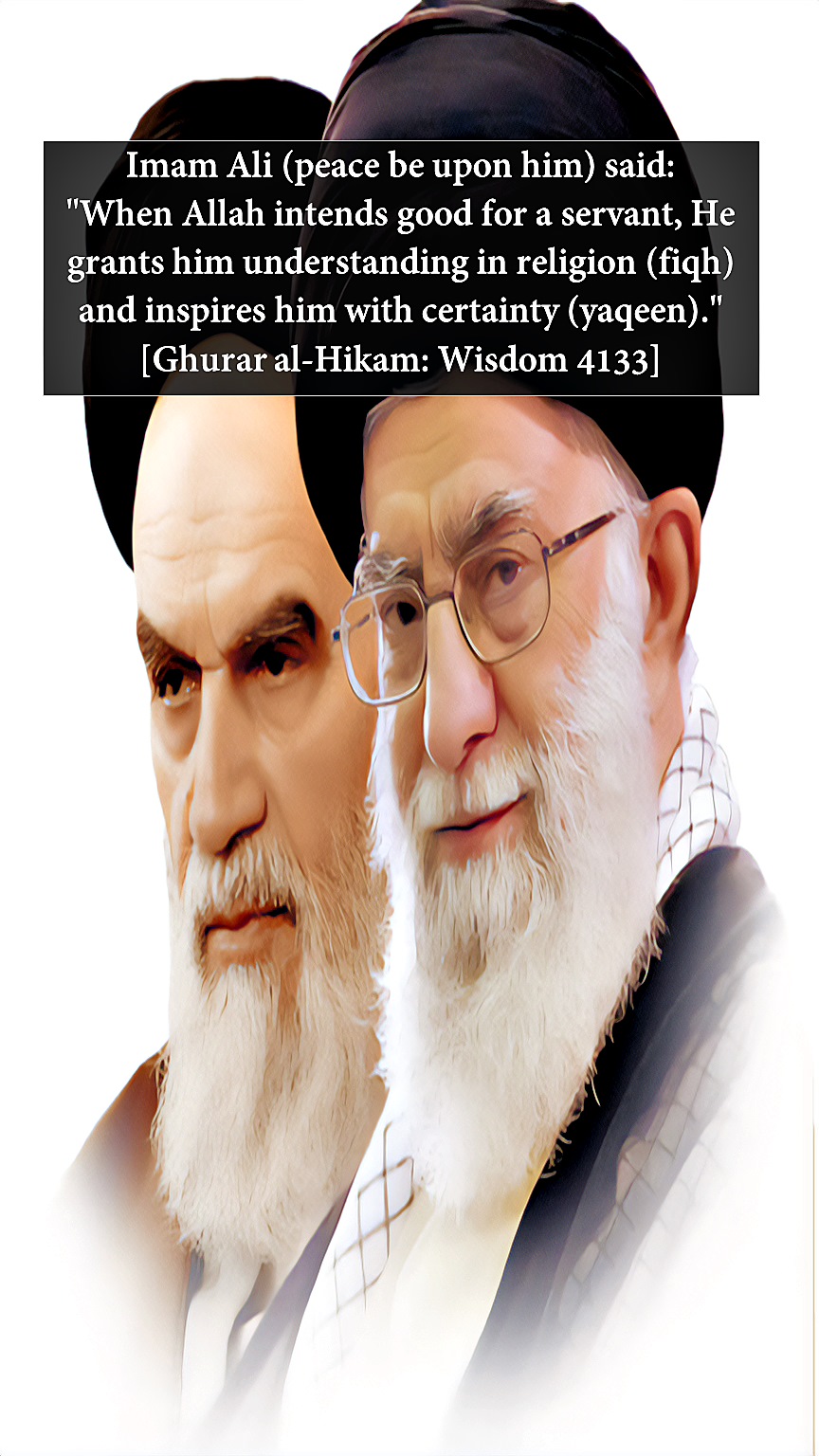
The Institution of Marja'iyyah: Authoritative Guidance in the Absence of the Imam
The institution of Marja'iyyah (religious authority), led by prominent Ulama (religious scholars), represents the highest religious authority in Shia Islam. It serves as a vital point of reference for religious law and guidance, especially during the physical absence of the Imam of our time. The term Marja' means one to whom we turn to for guidance and expertise, signifying a highly skilled and experienced scholar. Its historical development from qualified narrators of hadith into the institution of Marja'iyyah reflects the ongoing need for authoritative religious guidance when direct access to the Imam is unavailable, positioning those qualified narrators as the sources of reference for the Shia community.
Historical Development and Evolution from Qualified Narrators
The early marajah (plural of marja'a) began to emerge during the time of Imam al-Baqir and Imam al-Sadiq (peace be upon him). The Imams actively trained and authorized companions to apply religious principles and issue fatwas (religious verdicts), establishing the foundation of scholarly authority.
Imam Mohammad al-Baqir (peace be upon him) speaking to Aban b. Taghlib said, ‘Sit in the mosque of Madina and give verdicts to the people, for I love to see the likes of you among my followers.’
— Mustadrak al-Wasa’il, v. 17, p. 315, no. 21452
Rijal al-Kashshi: From Hamduwayh from Yaqub b. Yazid from Ibn Abi Umayr from Aban b. Taghlib who said: Abu Abdillah (peace be upon him) said to me: sit and attend to the people of Madina (answer their questions) – for I like it that someone like you be seen amongst our Shia.
— Mujam al-Ahadith al-Mutabara by Shaykh Muhammad Asif Muhsini Book 3, Chapter 1, Hadith #2
From Aban ibn Taghlib who said: I said to Abu Abdullah (peace be upon him): I sit in the mosque and people come asking me questions. If I don't answer them, they won't accept it from me, but I dislike answering them with your sayings and what has come from you. He said to me: Look at what you know is from their sayings and inform them of that. Translator: Aban was concerned about how to handle religious questions from the aammah (general non-Shia muslims) in the mosque. His specific concern was whether he should share specialized knowledge from the Imam's teachings or not. Imam advises him to answer them based on their (the aammah's) own commonly accepted interpretations. Note here that Aban was not doing his own ijtihad - rather he was simply conveying the knowledge from the Imams, because he clearly says: "... with your sayings and what has come from you"
— Wasa'il al-Shia Vol. 16, Section 2, Chapter 30, Hadith 21443
Imam al-Baqir’s statement to Abaan, “I love to see the likes of you among my followers.”, indicates a general authorization for qualified and pious scholars to guide the community. The Imams of Ahlulbayt had over 200 years to explain Islamic truths and raise a generation of scholars to pass on this knowledge.
Ali ibn Ahmad ibn Abdullah ibn Ahmad ibn Abi Abdullah al-Barqi, Muhammad ibn Musa al-Barqi, Muhammad ibn Ali Majiluwayh, Muhammad ibn Ali ibn Hashem and Ali ibn Isa al-Mojawir - may God be pleased with them - narrated that Ali ibn Muhammad Majiluwayh quoted on the authority of Ahmad ibn Muhammad ibn Khalid, on the authority of Ahmad ibn Muhammad al-Sayyari, on the authority of Ali ibn Asbat, “I told Al-Ridha (s), ‘There are times when I must know the decree on an issue which arises, but I am in another town where none of your followers are present from whom to ask.’ The Imam (s) said, ‘Go to that town’s jurisprudent and present your question. Act against whatever he decrees since that is the right thing to do.’”
— Uyun akhbar al-Ri?a (Vol. 1) by Shaykh Muhammad b. Ali al-Saduq, Book 2, Chapter 28, Hadith #10
Initially, scholars functioned as “narrators of our hadith” (ruwaat al-hadeeth), transmitting the sayings and practices of the Imams. Over time, as the complexity of deriving laws from various narrations increased, these narrators developed into jurists (mujtahidin) capable of deep analysis. A Marja' is now understood as a logician who has mastered logic and uses it to understand and compare the statements of the Imams, acting as an expert narrator who can also infer practical guidance from the Quran and Sunnah.
During the Minor Occultation (al-Ghaybat al-Sughra), which lasted approximately seventy years (260–329 AH), the general Shia community was largely prevented from directly meeting the Imam (peace be upon him). Communication with the Imam was primarily facilitated through a select group of prominent scholars who served as his special deputies. These deputies would convey the people’s questions and problems to the Imam and then return with his direct answers and rulings. The Shia were instructed to refer to the narrators of hadith for guidance on newly occurring events, based on a directive from the Imam himself:
Imam Muhammad al-Mahdi (peace be upon him) said: Concerning the events that occur, refer to the narrators of our hadith; for they are my proof over you, and I am Allah's proof [over them].
— al-Ihtijaj by Ahmad bin Ali al-Tabrisi, Volume 2, Page 283
Imam Mahdi (may Allah hasten his appearance) said: And when the incidents occur and take shape then turn to those who describe our Hadiths since they are my proof and authority over you and I am the authority of Allah upon them
— Kamal Uddin Vol. 2, P 484
The four special deputies, recognized as the Imam’s “Ambassadors”, were:
- Abu Amr Uthman ibn Sa'id al-Asadi al-Umari (d. 280 AH)
- Abu Ja'far Muhammad ibn Uthman ibn Sa'id al-Asadi (d. 305 AH)
- Abu al-Qasim al-Husayn ibn Ruh al-Nawbakhti (d. 326 AH)
- Abu al-Hasan Ali ibn Muhammad al-Samri (d. 329 AH)
Their operational center was located in Baghdad.
The Major Occultation (al-Ghaybat al-Kubra) commenced with the death of the fourth special deputy, Abu al-Hasan Ali ibn Muhammad al-Samri, in 329 AH. With the cessation of direct communication through special deputies, religious leadership transferred to the institution of Marja'iyyah, which assumed authority in matters of jurisprudence and judgment. This marked a shift from specific, named deputies to a more general deputyship vested in qualified jurists. Among the first scholars widely recognized as Maraji' during the initial phase of the Major Occultation were:
- Ibn Qulawayh (328–368 AH): Abu al-Qasim Ja'far ibn Muhammad, regarded as one of the pillars of Shia jurisprudence and thought, and recognized as the first Marja' in this new era.
- Al-Shaykh al-Saduq (368–381 AH): Abu Ja'far Muhammad ibn Ali ibn Babawayh al-Qummi, a prominent figure in narrating and codifying Hadith.
- Al-Shaykh al-Mufid (371–413 AH): Abu Abdullah Muhammad ibn al-Nu'man, who brought about a clear transformation in jurisprudence, furthering its analytical depth.
- Al-Sayyid al-Murtada (413–436 AH): Known as 'Alam al-Huda, a scholar who surpassed the learned individuals of his era in knowledge and intellectual prowess.
Imam al-Mahdi (peace be upon him) provided clear directives that in regards to the various events happening during the major occultation, "refer to the narrators of our hadith". He further declared that they are his proof (hujja) on his followers and he is the proof of God on them.
Function as a Source of Religious Guidance During the Absence of the Imam
During the Major Occultation of Imam al-Mahdi (peace be upon him), the Marja'iyyah assumes a critical and comprehensive role in guiding the Muslim community, representing a living manifestation of divine guidance. The religious authority in the time of Imam Mahdi’s occultation represents the legal or shari' extension of the Imamate, which carries God’s message to humanity. Marajah serve as messengers to the Ahlul Bayt, with followers ultimately adhering to the teachings transmitted through them, connecting back to the Imams, the Prophet, and Allah.
The Marja'iyyah provides leadership, interprets Islamic law, and offers guidance to the Ummah based on the teachings of the Ahlulbayt. They are responsible for explaining and deducing the laws of Islam from the Quran and Sunnah, rather than creating new laws. This involves providing expert opinions (fatwas) on contemporary societal issues and often unique, unprecedented religious dilemmas. Maraji' are considered the trustees of religion, responsible for guiding believers and providing them with the necessary knowledge and advice for a righteous life. They act as spokesmen for the Imam, guiding the Shi'ites in their religious matters and acting on the Imam’s behalf.
The Marja'iyyah also provides the necessary anchor and direction for the Muslim community, guiding them through turbulent times and offering a sense of stability and continuity. They serve as a crucial safeguard, protecting the Shia community from the negative impacts of misinterpreted Islamic teachings or the uncritical adoption of foreign ideologies, thereby preserving Orthodox Islam and promoting its values.
A qualified jurist who fulfills all necessary requirements has a role of guardianship (wilayah) over believers, due to being the representative of the infallible Imam. While there is a difference of opinion regarding the extent of this guardianship, it is unanimously agreed that the jurist has authority in important matters such as protecting lives, honor, blood, wealth, orphans, matters of divorce, preservation of public order and security, endowment funds, and Islamic rights. Muslims are instructed to refer new problems and events to these experts in religion, who are considered the authority of the Imam on believers. A top priority of the religious authority is educating the seminary faculty, as the presence of jurists is crucial for the preservation of the Islamic seminary and its knowledge, teachers, and students.
Despite the Imam’s occultation, his authority and guidance persist.
Imam al-Mahdi (may Allah hasten his appearance) clarified that
And the how-ness of benefiting from me in my occultation is like the benefiting from the sun when it disappears from the eyes behind the clouds
— Bihar ul-Anwar Vol. 78, P 380
A related statement is reported from Imam al-Sadiq (peace be upon him),
Imam As-Sadiq (peace be upon him) was asked “how can people enjoy the existence of an invisible and hidden Imam?”
He replied, “just as they enjoy sunlight from behind the clouds.”
— Bihar al-Anwar, volume 52, page 92
This signifies that even when unseen, the Imam’s spiritual blessings and guidance continue to illuminate the world and its inhabitants. The Imam is considered to have complete control and the first say in all affairs during the occultation, actively working to protect the sharia and guide the people through his representatives.
Believers have several responsibilities during this period. They must seek recourse in pious scholars for matters of religion, confirming their Islamic knowledge and the validity of their actions. It is obligatory to perform taqlid, or follow one of the qualified Mujtahidin (jurists) for guidance on legal issues. The legitimacy of fiqh (jurisprudence) and taqlid is based on honest research in religious texts, and not necessarily on being identical to the Imam’s opinion. Believers are advised to be patient and responsible, remaining steadfast in the Imam’s leadership, striving for self-reform, and praying for his reappearance. The absence of the Imam does not invalidate the concept of leadership. If believers were to empower the Imam to run affairs, he would appear. Therefore, the responsibility and “guilt” for the Imam’s absence in governance rests with the mukallafs (duty-bound individuals) and not with the Imam himself
The answer to this would be that, which we have explained in the context of necessity of Imamate; that his administration of affairs and fear of his reprimand are not availed by the duty-bound due to their own stance, because they forced him to go into hiding by threatening him and did not empower him to run the society. Therefore, this is an evil that they have caused themselves. This is similar to a case where someone says, “Religious obligations with respect to a person who does not have knowledge of the existence of Allah, the Exalted, is wrong, since he has not availed the knowledge that is a grace for him. Therefore, committing him to religious obligations is wrong.” In the same way our adversary would answer a question as such – that the infidel did that on his own, because Allah assigned ways to His cognition and gave him the capacity to attain belief, and if he did not respect that and did not attain faith, he did that on his own and this does not render his subjection to religious duties wrong.
— Kitab al-Ghayba by Shaykh Muhammad b. al-Hasan al-?usi, Book 1, Chapter 3, Hadith #8
Dying without knowing the Imam of one’s age is likened to dying the “death of a pagan,” emphasizing the critical importance of recognizing and following the appointed authority of the time.
Prophet Muhammad (peace be upon him and his family) said: ‘Whoever dies without knowing his Imam has died a pagan [pre-Islamic] death.’
— Bihar al-Anwar, v. 23, p. 76, no. 1
Prophet Muhammad (peace be upon him and his family) said: ‘Whoever dies without having an Imam has died a pagan [pre-Islamic] death.’
— Kanz al-’Ummal, no. 464
Ahmad bin Muhammad bin Sa’eed narrated from Ali bin al-Hasan from al-Abbas bin Aamir from Abdul Melik bin Otba that Mo’awiya bin Wahab had said: I have heard Abu Abdullah as-Sadiq (peace be upon him) saying: “The Prophet (peace be upon him and his family) has said: “Whoever dies without knowing his imam, dies as an unbeliever.”
— Kitab al-Ghayba by Abu Abd Allah Muhammad b. Ibrahim al-Numani, Book 2, Chapter 7, Hadith #6
Basis and Necessity of Marja'iyyah
The validity and necessity of the Marja'iyyah are supported by direct directives from the Imams, Quranic verses, and rational arguments. During the Major Occultation, Imam al-Mahdi (peace be upon him) himself instructed his followers to refer to “the most learned pious Ulama” for recurring events and new cases, stating, “They are my proof (hujja) on you. And I'm the proof of God on them.” He also instructed: “In regards to the various events happening during the major occultation, refer to the narrators of our hadith.”
Imam Abu ‘Abdallah (peace be upon him) cited the Quranic verse (9:122)
Muhammad ibn Yahya has narrated from Muhammad b. al-Hussain from Safwan from Ya‘qub ibn Shu‘ayb who said the following: “I asked Abu ‘Abdallah (peace be upon him), ‘If something would happen to the Imam what should then the people do?” The Imam (peace be upon him) said, “Where are the words of Allah, the Most Majestic, the Most Gracious, ‘Not all believers have to become specialists in religious learning. Why do not some people from each group of believers seek to become specialists in religious learning and, after completing their studies, guide their group so that they will have fear of God.’” (Quran 9:122) The Imam (peace be upon him) said, “They will have good reason to be excused as long as they are searching also those who wait for them until they complete their religious education and return back to them.”
— Al-Kafi (Vol. 1) by Shaykh Muhammad b. Yaqub al-Kulayni, Book 4, Chapter 89, Hadith #1
This verse highlights the importance of religious specialization and guidance.
"And it is not for the believers to go forth [to battle] all at once. For there should separate from every division of them a group [remaining] to obtain understanding in the religion and warn their people when they return to them that they might be cautious." (Quran 9:122)
It is considered rational that Allah would not leave the Ummah without guidance during the occultation of the Infallible Imam. Communities require pious leadership to remain protected from deviation. The most learned and pious scholars are best equipped to guide the Ummah on Islamic rules, especially concerning new issues. The necessity of following a Marja' is likened to consulting a medical specialist for an illness. Just as one relies on an expert in a field where they lack expertise, taqlid (following a Marja') fundamentally means referring to an expert in Islamic law. By following the most knowledgeable jurist, individuals can be more certain that their actions will be acceptable on the Day of Judgment.
Qualifications of a Marja'
To assume the role of a Marja', a scholar must possess exceptional qualifications, reflecting a lifetime of rigorous study and spiritual cultivation. A Marja' must have reached a superior level of ijtihad (the ability to derive the laws of the shari‘ah through deep analysis of its sources) and alami yy ah (achieving a high level of scholarship in relation to all other mujtahidin). They must be profoundly pious, a strong believer with certainty, and just (aadil), meaning unsinful to the best of their ability. They should fulfill all wajib (obligatory) acts and refrain from every Haraam (forbidden) act. A Marja' should have no material interest, not wish for personal gain or more followers, and be selfless, guided solely by a desire to serve others. Other conditions include knowledge of jurisprudence, independence (according to some narrations), relevant qualifications and specialization, and immense fear of God.
The Political Role of the Jurist and Analysis
Beyond purely jurisprudential matters, the jurist also assumes a crucial political role in the absence of the infallible Imam. The jurist occupies a central position to activate religious consciousness within the community and provide legitimacy to political directions. This necessitates an individual capable of mobilizing religious texts to foster awareness and bestow legitimacy upon behavioral orientations that align with Islamic principles.
Historically, after the Major Occultation, Shia initially relied on “narrators of hadith” who transmitted the teachings of the infallible Imams without personal interpretation or addition. However, under increasing practical and societal pressures, the mujtahid progressively assumed the role of the general deputy of the absent infallible Imam, thereby expanding their authority to encompass not only jurisprudence but also aspects of communal and political leadership.
The institution of Marja'iyyah represents a sophisticated theological and legal solution that evolved organically from the imperative of continuous religious guidance during the Imam’s absence. The transition from the highly specific role of the four special deputies during the Minor Occultation to the broader, general deputyship of qualified jurists during the Major Occultation allowed the Shia community to maintain its religious continuity and legal framework. This system has enabled the preservation of Shia identity and adherence to the teachings of the Ahlulbayt (peace be upon them) despite centuries without direct access to the infallible Imam, serving as the living manifestation of divine guidance through rigorous scholarship and spiritual leadership.
References
Quranic References
- Qur’an 9:122 — cited in the section “Basis and Necessity of Marja‘iyyah” and quoted in Al-Kafi (Vol. 1), Book 4, Chapter 89, Hadith #1.
Other References
- Mustadrak al-Wasa’il, v. 17, p. 315, no. 21452.
- Rijal al-Kashshi — cited in Mujam al-Ahadith al-Mutabara by Shaykh Muhammad Asif Muhsini, Book 3, Chapter 1, Hadith #2.
- Wasa’il al-Shia, Vol. 16, Section 2, Chapter 30, Hadith 21443.
- Uyun akhbar al-Ri?a (Vol. 1) by Shaykh Muhammad b. Ali al-Saduq, Book 2, Chapter 28, Hadith #10.
- al-Ihtijaj by Ahmad bin Ali al-Tabrisi, Volume 2, Page 283.
- Kamal Uddin, Vol. 2, P. 484.
- Bihar ul-Anwar, Vol. 78, P. 380.
- Bihar al-Anwar, Volume 52, Page 92.
- Kitab al-Ghayba by Shaykh Muhammad b. al-Hasan al-?usi, Book 1, Chapter 3, Hadith #8.
- Bihar al-Anwar, v. 23, p. 76, no. 1.
- Kanz al-’Ummal, no. 464.
- Kitab al-Ghayba by Abu Abd Allah Muhammad b. Ibrahim al-Numani, Book 2, Chapter 7, Hadith #6.
- Al-Kafi (Vol. 1) by Shaykh Muhammad b. Yaqub al-Kulayni, Book 4, Chapter 89, Hadith #1.
Quranic verses and hadiths of Ahl al-Bayt (peace be upon them) and sayings in Arabic, Persian and English.
https://eitaa.com/noorunalanoor
https://www.youtube.com/@110Inspire
https://youtube.com/@mustafaabbas4668?si=EnSIkaIECMiOmarE
https://youtube.com/@mustafaabbas8978?si=EMJylUW9_zruJx95