KhanwadeAbuTalib.com
Posted by Mustafa Abbas on August 12, 2026 | Views: 240 | Ratings: 114
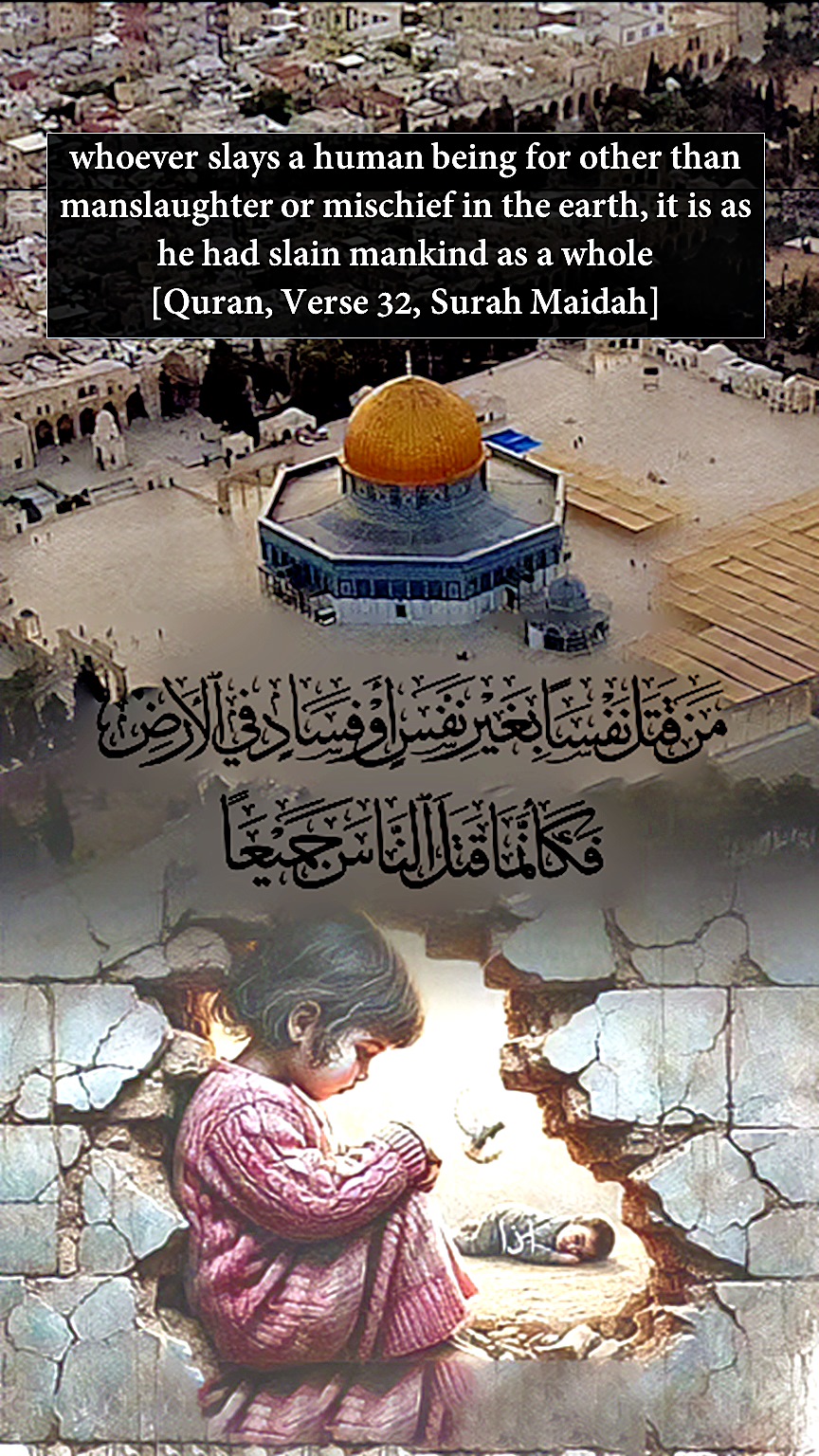
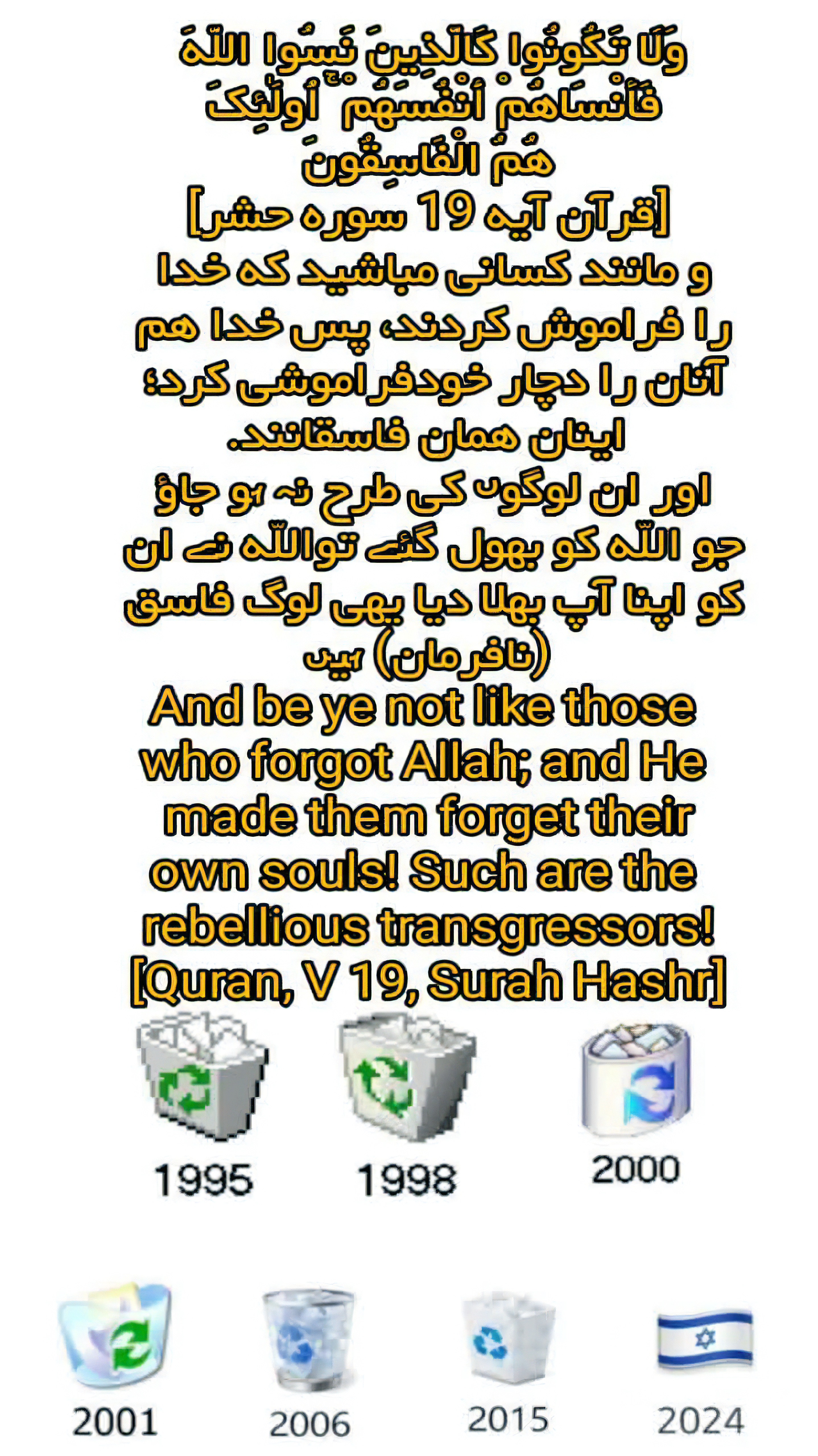
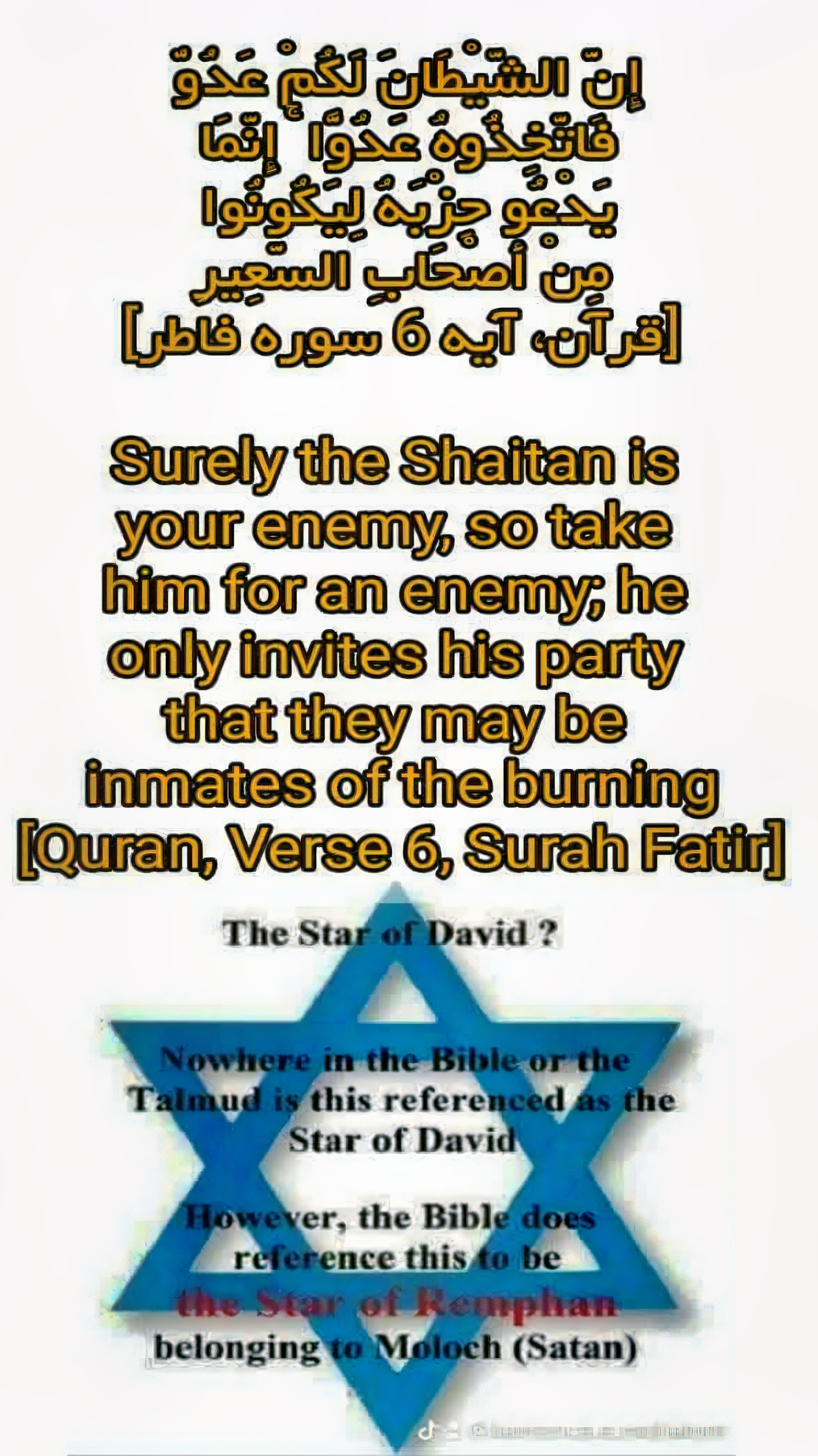
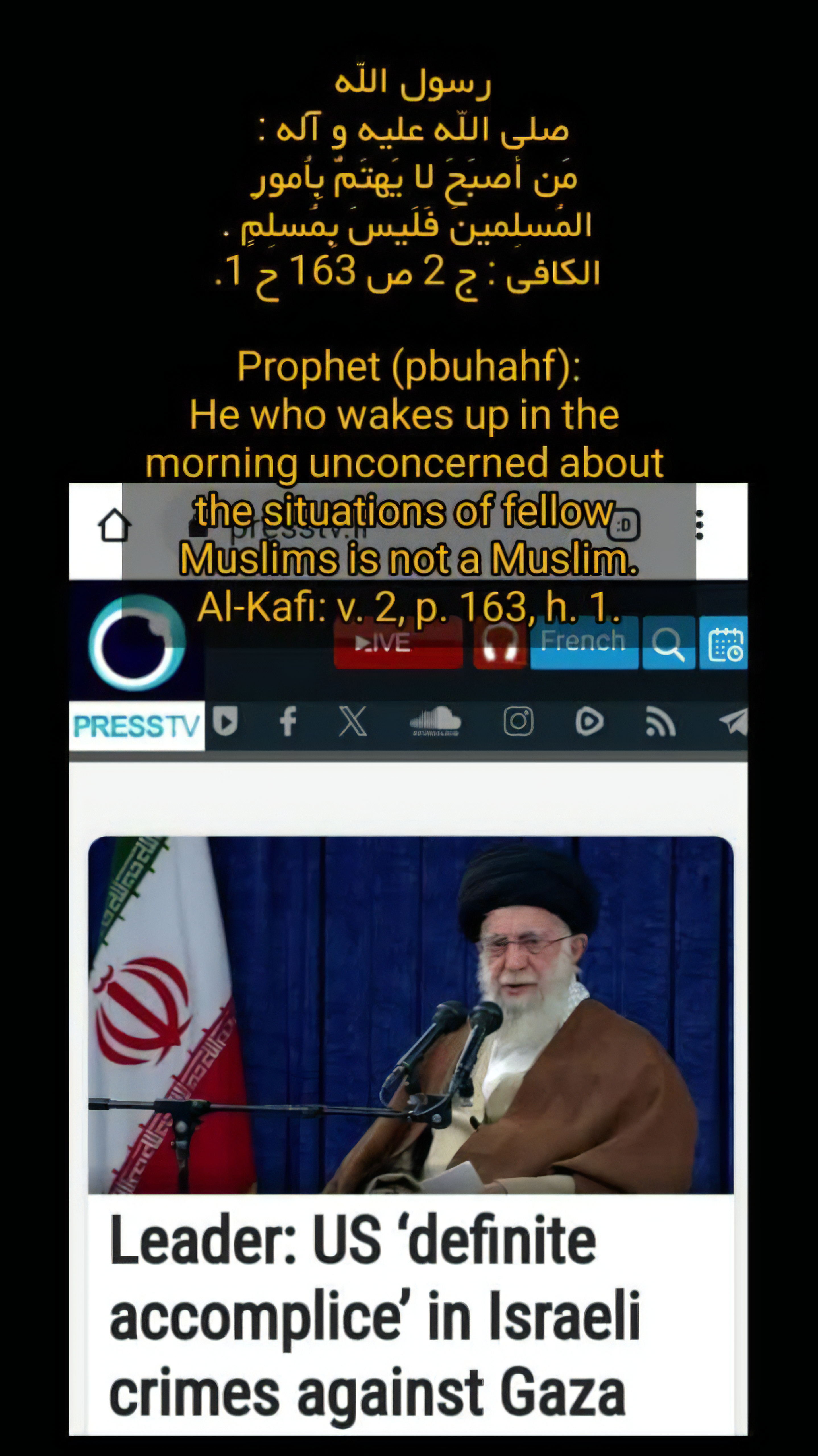


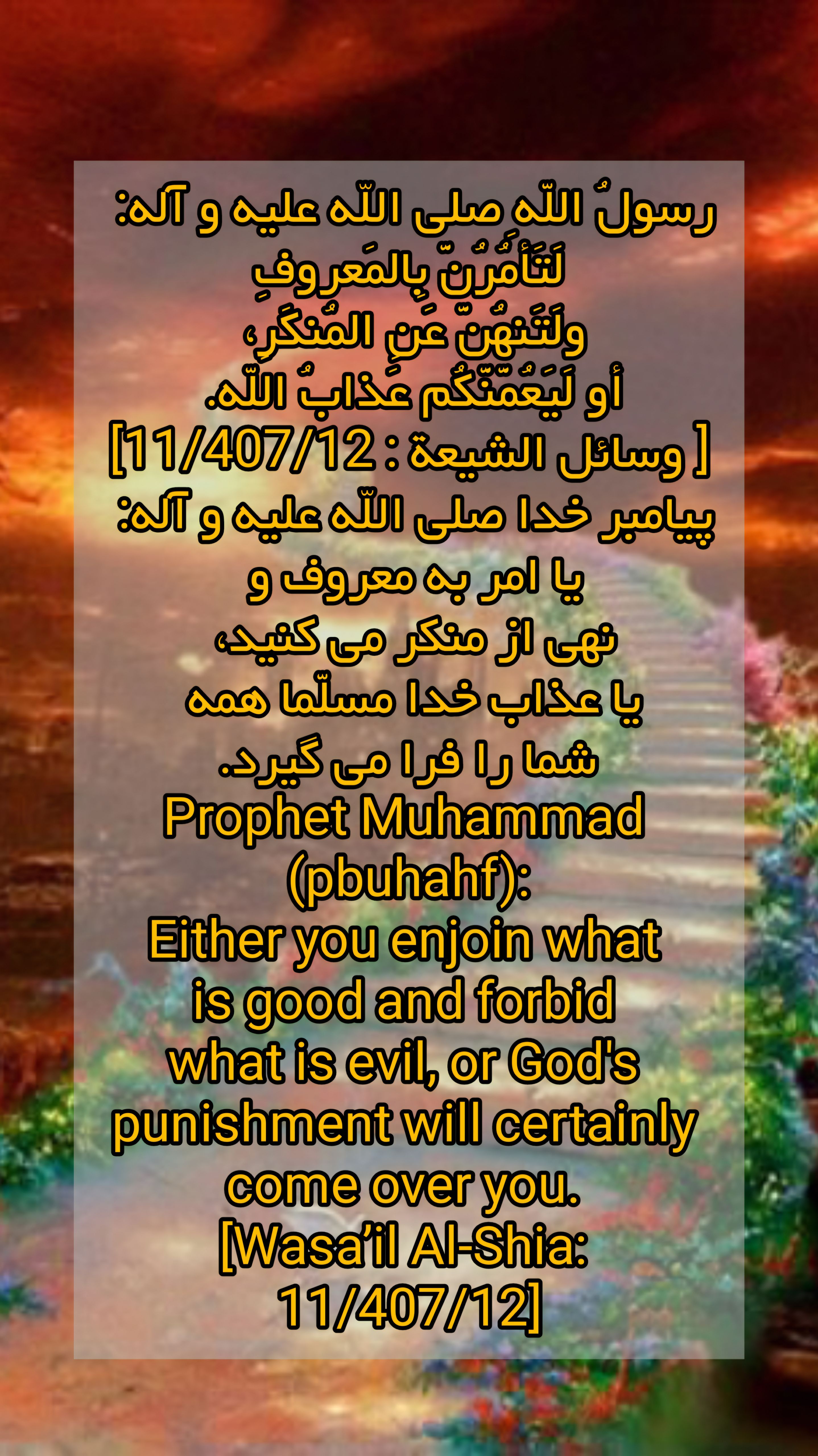
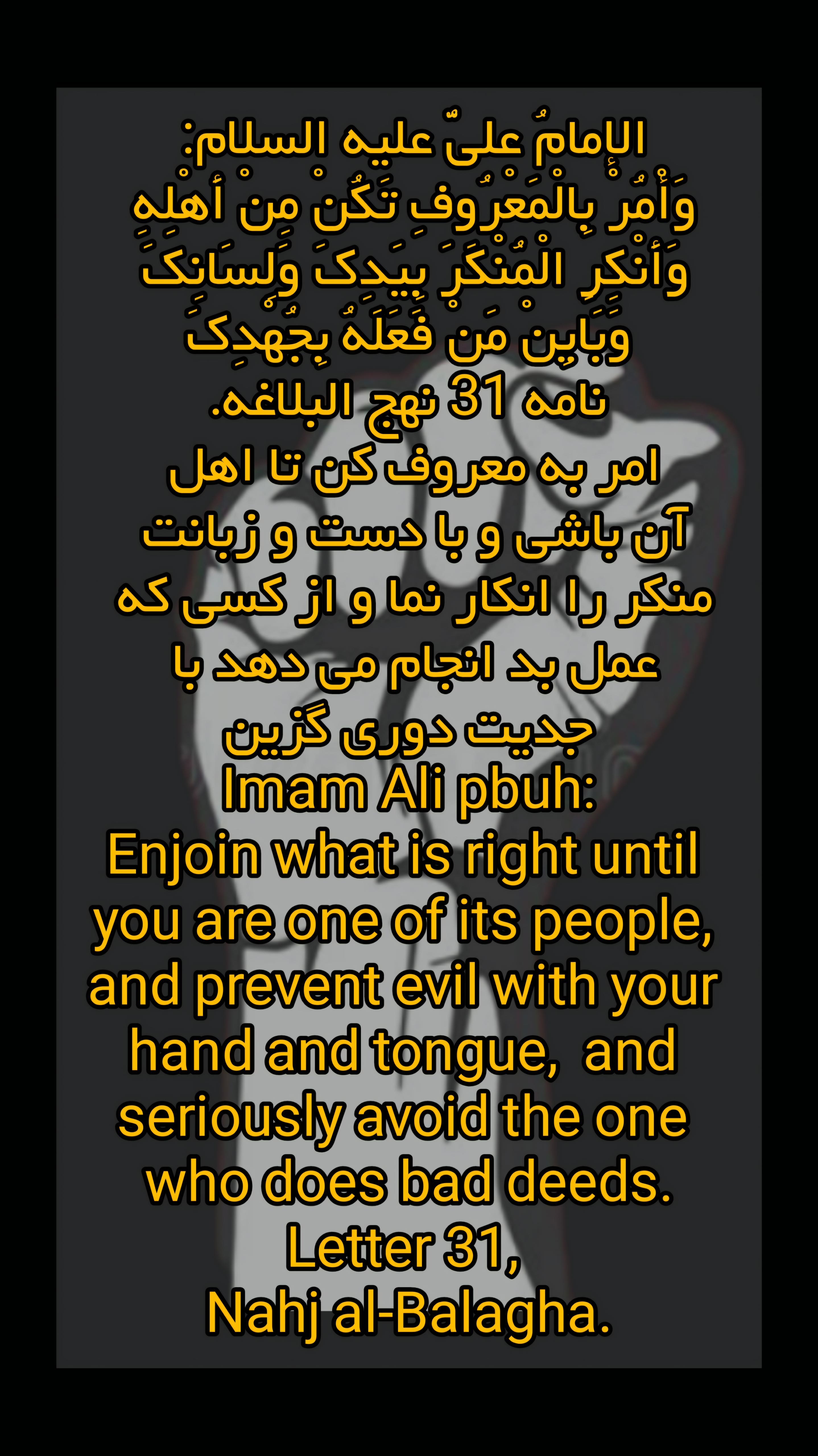
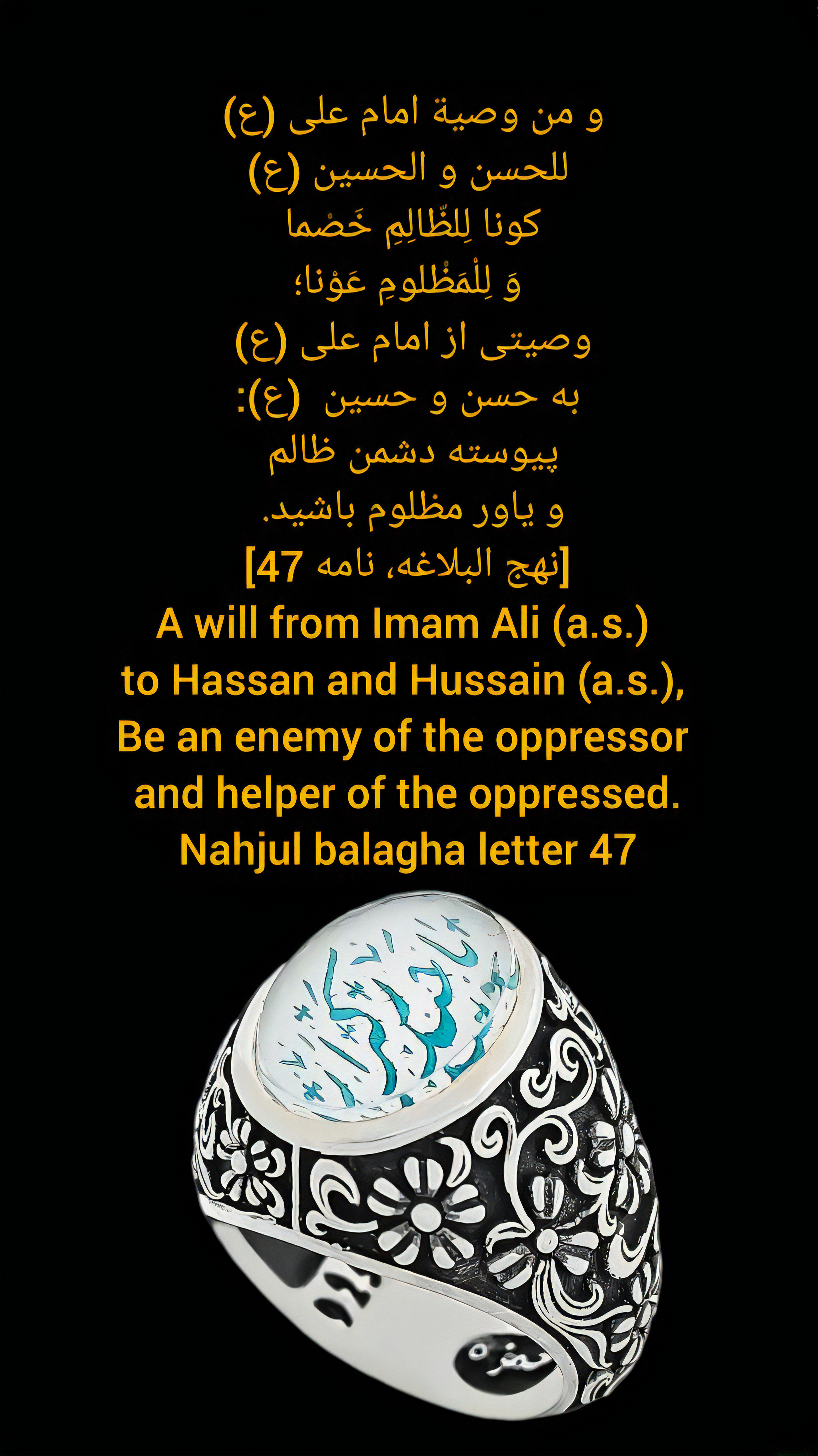
Download article from link below at the end
Please wait for pictures to download, click ">" for next picture, "<" for previous picture or wait for pictures to play in slideshow.
Divine Justice in Islam: The Oppressed and the Oppressor
A Comprehensive Analysis of Imam Ali's Profound Teaching on Divine Justice
The profound statement attributed to Imam Ali ibn Abi Talib (peace be upon him) stands as one of the most comprehensive articulations of divine justice in Islamic tradition:
"Indeed, Allah is Hearer of the supplication of the oppressed, and He is for the oppressors in wait."(Nahj al-Balagha, Letter 53)
This brief yet profound statement encapsulates core Islamic beliefs regarding divine justice, the ultimate fate of both the oppressed and their oppressors, and the assurance that no act of injustice, however hidden or powerful, escapes the divine gaze. It simultaneously offers solace to those who suffer and serves as a stern warning to those who perpetrate wrongdoing.
Part One: Allah is Hearer of the Supplication of the Oppressed
The Divine Attribute of Hearing (Al-Sami')
The first part of Imam Ali's statement—(Indeed, Allah is Hearer of the supplication of the oppressed)—highlights several divine attributes and their profound implications for believers:
Comprehensive Knowledge and Awareness
Allah's attribute of being "Al-Sami'" (The All-Hearing) signifies His comprehensive knowledge and awareness of all sounds, whispers, and prayers, regardless of how faint or hidden they may be. This is a recurring theme in the Qur'an, where Allah is often described as "Al-Sami' Al-'Alim" (The Hearer, The Knower) or "Al-Sami' Al-Basir" (The Hearer, The Seer). As the Qur'an states:
The Prophet said, "My Lord knows whatever is said throughout the heaven and earth, and He is the Hearing, the Knowing." (Qur'an 21:4)
"Indeed, He is the Hearing, the Knowing." (Qur'an 26:220)
Beyond Physical Perception
Crucially, Allah's hearing is not comparable to human hearing. It does not rely on physical organs like ears, nerves, or instruments. Attributing physical hearing to Allah would be limiting Him and implying a dependence on creation, which is contrary to His self-sufficient nature. Imam Ali (peace be upon him) affirmed this understanding:
"He is the All-hearing but not by means of any organ." (Nahjul Balaghah, Sermon 152)
Similarly, Imam Jafar al-Sadiq (peace be upon him) clarified:
"Allah is All-hearing, All-seeing. He hears without any organ and sees without any instrument. He Himself hears and He Himself sees." (Al-Kafi (Vol. 1) by Shaykh Muhammad b. Yaqub al-Kulayni, Book 3, Chapter 13, Hadith #2)
Special Emphasis on the Oppressed
The phrase specifically mentions (the supplication of the oppressed). This is not merely hearing in a general sense, but an assurance of attentiveness and readiness to respond. It conveys a sense of hope and solace to those who suffer injustice, indicating that their cries for help do not go unnoticed by the Almighty. The Qur'an affirms this proximity:
"And when My servants ask you, [O Muhammad], concerning Me - indeed I am near. I respond to the invocation of the supplicant when he calls upon Me." (Qur'an 2:186)
The Unique Status of the Oppressed
Islamic teachings emphasize a special relationship between Allah and the oppressed (al- mazlum):
- Divine Promise of Vengeance: Allah explicitly promises to take revenge on behalf of the oppressed. Imam Mehdi (ATFS) said:
"I am the remnant (the remainings of the Allah's affair) upon His earth & the avenger & vengeance taker from His enemies." (Bihar ul-Anwar Vol. 52, P 24)
- Direct Access: The supplication of the oppressed is considered to have no veil between it and the Throne of Allah. The Prophet warned:
"Beware of the supplication of the oppressed, for it rises above the clouds until Allah looks at it and says: Raise it until I respond to it. And beware of the supplication of the parent, for it is sharper than a sword." (Wasa'il al-Shia Vol. 7, Section 2, Chapter 52, Hadith 8916)
- Imam Ali's Warning: Amir al-Mu'minin Imam Ali (peace be upon him) stated:
"Beware of the supplication of the oppressed, for he asks Allah for his haqq, and Allah, The Glorified, is so generous that if He is asked for a haqq He answers". (Mizan al-Hikmah by Muhammad al-Rayshahri, Volume 2, Page 1781)
Promise of Response and Justice
The hearing of the oppressed's supplication implies an eventual response and a promise of justice. The Qur'an permits speaking out against evil by one who has been wronged:
"Allah does not like the public mention of evil except by one who has been wronged. And ever is Allah Hearing and Knowing." (Qur'an 4:148)
Part Two: He is for the Oppressors in Wait
The Meaning of (In Wait/Observing/Ambush)
The second part of Imam Ali's statement—(and He is for the oppressors in wait)—serves as a stern warning and a declaration of divine retribution:
Active Vigilance
The term signifies that Allah is ever-watchful, observing the actions of the oppressors and preparing to hold them accountable. It suggests an inescapable fate for those who commit injustice. It is not merely a passive observation but an active stance of readiness to bring justice.
Inevitability of Divine Justice
This part assures that no act of oppression will go unpunished. Allah's justice is absolute, and while He may grant respite, He never overlooks injustice. Imam Ali frequently warned against oppression:
"There is nothing more conducive to changing Allah's grace and hastening His wrath than persisting in injustice."(Nahj al-Balagha, Letter 53)
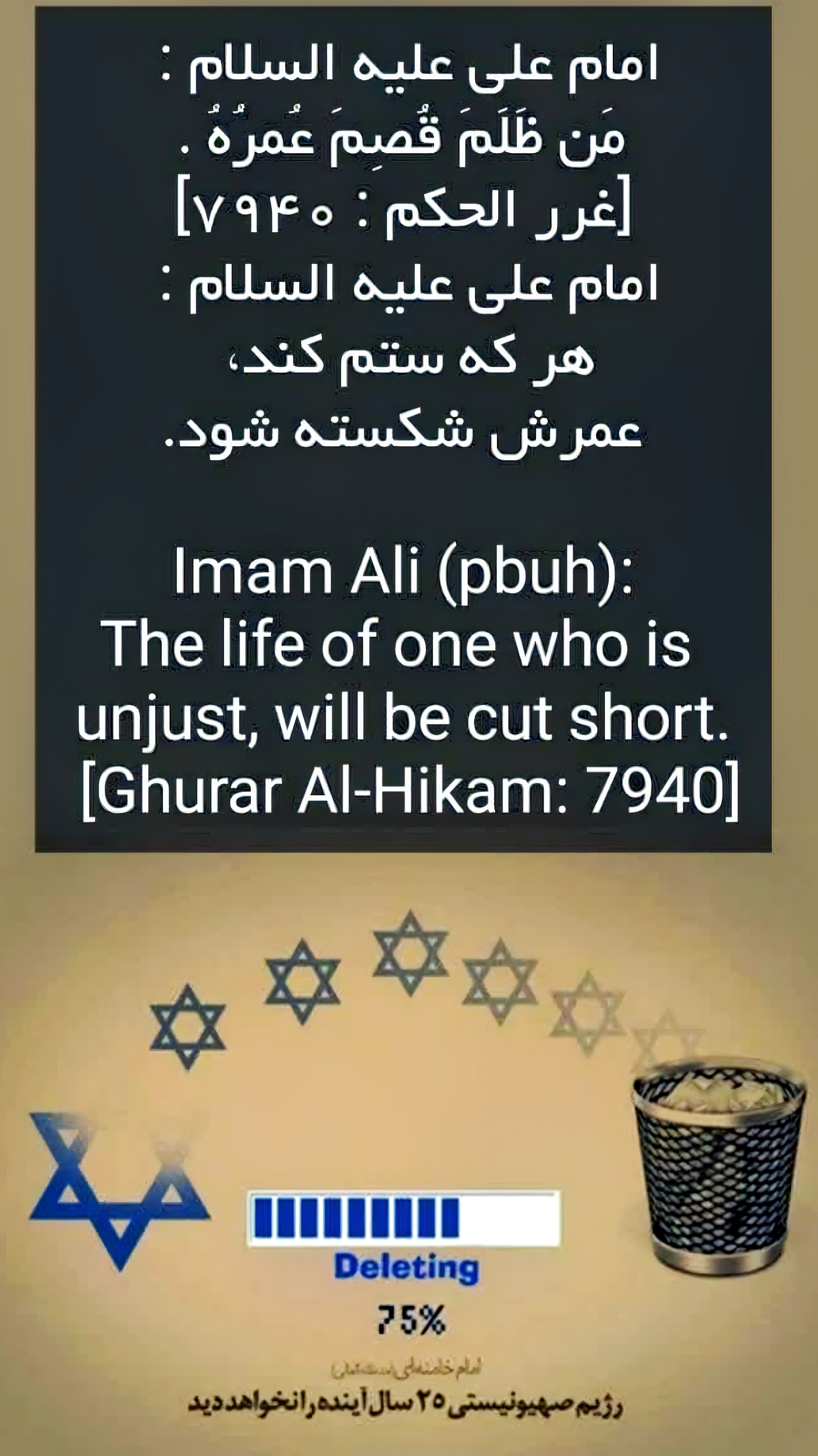
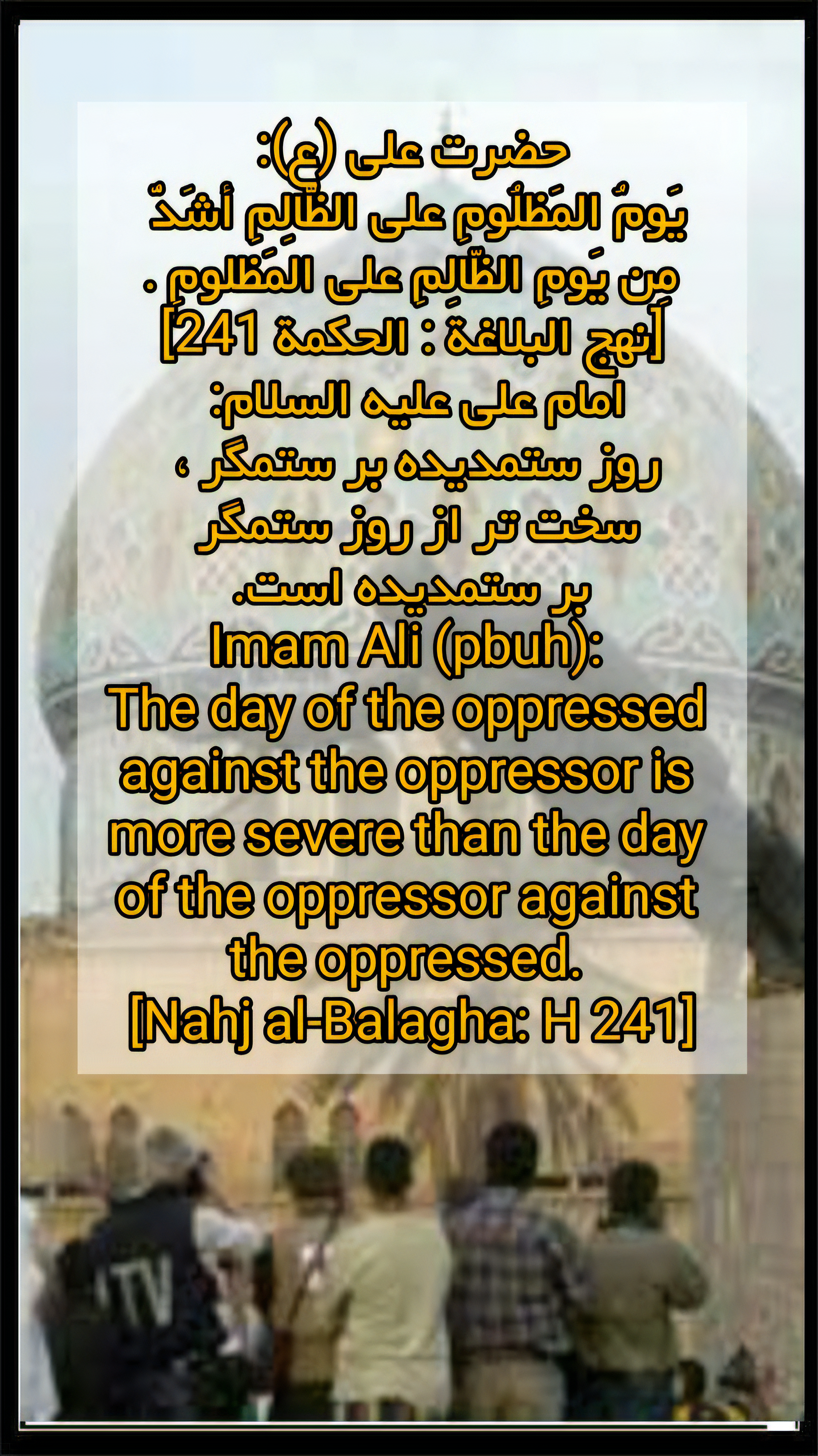
"The day of the oppressed over the oppressor will be severer than the day of the oppressor over the oppressed." (Nahj al-Balagha by al-Sharif al-Radi, Book 3, Chapter 241, Hadith #292)
The Concept of Divine Respite
A critical dimension of divine justice is the concept of respite (imhal or imla'). While Allah may delay punishment, this delay serves multiple purposes:
- Opportunity for Repentance
For those who might genuinely turn back to Allah, respite serves as a chance to correct their ways. The Qur'an states:
"Allah will forgive you of your sins and delay you for a specified term. Indeed, the time [set by] Allah, when it comes, will not be delayed, if you only knew." (Qur'an 71:4)
- Accumulation of Sins for the Unrepentant
For persistent wrongdoers, respite allows them to become more entrenched in their wrongdoings:
"And let not those who disbelieve ever think that [because] We extend their time [of enjoyment] it is better for them. We only extend it for them so that they may increase in sin, and for them is a humiliating punishment." (Qur'an 3:178)
- Completing the Argument (Itmam al-Hujjah)
Respite is given to complete the argument against the oppressors, so that they cannot claim they were not given sufficient warning or opportunity to reform.
The Concept of Istidraj (Gradual Entrapment)
A related concept is istidraj—gradual entrapment, where Allah allows wrongdoers to continue in their sins, often granting them increased worldly prosperity without immediate punishment. Imam Ja'far al-Sadiq (peace be upon him) explained that when a person commits a sin, he is given respite and a new blessing, then when he fails to repent, he is slowly led towards destruction; about which he is heedless. This is known as Istedraj and 'Allah's Plan.
Imam Ja'far al-Sadiq (peace be upon him) said: "When Allah, Mighty and Majestic, wants good for a servant who commits a sin, He follows it with a hardship and reminds him to seek forgiveness. And when Allah, Mighty and Majestic, wants evil for a servant who commits a sin, He follows it with a blessing which makes him forget to seek forgiveness and persists in it. This is the meaning of Allah's words "We will gradually lead them to destruction from where they do not know" [Quran 7:182] through blessings at times of disobedience. (Wasa'il al-Shia Vol. 16, Section 1, Chapter 85, Hadith 21000)
Prophet Mohammad (peace be upon him and his family) said, ‘Verily Allah gives such respite to the wrongdoer, until he says [rejoicingly], ‘He [Allah] has indeed forgotten about me!’ Then Allah seizes him with a terrible seizing. Verily Allah has praised Himself with regard to the way in which He destroys wrongdoers, saying in the Qur’an: “Thus the wrongdoing ones were rooted out, and all praise belongs to Allah, the Lord of all the worlds”[Qur’an 6:45] (Bihar al-Anwar, v. 75, p. 322, no. 51)
The Qur'an describes this process:
"But those who deny Our signs - We will progressively lead them [to destruction] from where they do not know.And I will give them time. Indeed, my plan is firm." (Qur'an 7:182-183)
The Severity of Respite as Punishment
Interestingly, prophet Mohammad (peace be upon him and his family) has taught that the respite itself can be a severe form of punishment. This is because respite allows oppressors to continue committing sins, further deepening their heedlessness and ultimately leading to a more disgraceful and humiliating torment.
Part Three: The Consequences of Oppression
The Qur'an and prophetic traditions describe severe consequences for oppressors:
- Divine Curse
"Allah's curse is on the wrongdoers." (Qur'an 11:18)
The curse signifies divine wrath and expulsion from Allah's mercy.
- Deprivation of Divine Guidance
Oppressors face the risk of being deprived of divine guidance:
"Allah will not guide the unjust people." (Qur'an 2:258)
- Eternal Failure
"And they worship, besides Allah, things for which He has sent no authority, and of which they have no knowledge, and for the unjust there shall be no helper." (Qur'an 22:71)
- Painful Punishment
"The way (to blame) is only against those who oppress men and revolt in the earth unjustly; these shall have a painful punishment." (Qur'an 42:42)
- Darkness on the Day of Resurrection
Imam Mohammad Baqir (peace be upon him) stated: "Oppression in this world is darkness in the hereafter." (Wasa'il al-Shia Vol. 16, Section 1, Chapter 77, Hadith 20949)
- Allah as an Adversary
Imam Ali (AS): Imam Ali (peace be upon him) said, "The day that justice is brought to the wrongdoer is much more severe than the day oppression is done unto the oppressed" (Nahjul Balaghah, Saying 241)
From Qutaybah al-A'sha, from Abu Abdullah (peace be upon him) who said: "Among those who will face the severest punishment on the Day of Resurrection are those who prescribe justice but act contrary to it." (Wasa'il al-Shia Vol. 15, Section 2, Chapter 38, Hadith 20556)
The Qur'an recounts the fate of oppressors and tyrants like Pharaoh, Nimrod, and Croesus, who were ultimately destroyed:
"Indeed Pharaoh tyrannized over the land, reducing its people to factions, abasing one group of them, slaughtering their sons, and sparing their women. Indeed, He was one of the agents of corruption." (Qur'an 28:4)
These narratives serve as timeless warnings of the consequences of disobedience, arrogance, and oppression.
Part Four: The Fate of Oppressors on the Day of Judgment
The Severity of the Day of Justice
Amirulmu'minin, Imam Ali (peace be upon him), emphasized the severity of divine retribution:
"The day of justice will be severer on the oppressor than the day of oppression on the oppressed." (Nahj al-Balagha, Saying 241)
The Horrors for Oppressors
Imam Ali described specific horrors for oppressors on the Day of Judgment:
- Divine Curse and Punishment:
Messenger of Allah (peace be upon him and his family) said: "Beware of oppression for it will be darkness on the Day of Resurrection." (Wasa'il al-Shia Vol. 16, Section 1, Chapter 77, Hadith 20941)
- Speechlessness and Witnessing Organs:
"when they reach it, their hearing, eyes and skins will testify against them for what they were doing."(Qur'an 41:20)
- Public Admonition and Humiliation: An announcer from Allah will declare that the individual is an oppressor who did not fulfill the right of Allah.
From Yunus bin Dhubyan who said: Abu Abdullah (peace be upon him) said: "O Yunus, whoever withholds the right of a believer, Allah the Mighty and Majestic will make him stand on his feet for five hundred years on the Day of Resurrection until his sweat or blood flows, and a caller from Allah will announce: This is the oppressor who withheld from Allah His right. He said: Then he will be rebuked for forty days, then he will be ordered to the Fire." (Wasa'il al-Shia Vol. 16, Section 3, Chapter 39, Hadith 21837)
- Blackened Faces:
"On the Day of Judgment, faces would be whitened and faces would be blackened." (Qur'an 3:106)
The Oppressors shall be gathered together
Prophet Mohammad (peace be upon him and his family) said, ‘On the Day of Resurrection, a caller will call out, ‘Where are the wrongdoers and their helpers? Whoever prepared the inkwell for them, or tied their purse for them, or supplied them with a pen – gather them all together with them." (Bihar al-Anwar, v. 75, p. 373, no. 17)
This highlights the complete isolation and vulnerability of oppressors when divine judgment is rendered. Even their wealth and power will not avail them.
Surely, Allah shall not harm so much as the weight of an atom, and if it is a good deed He will double it, and give from His Own a great wage.(Qur'an 4:40)
Part Five: The Responsibility of Believers
Active Opposition to Oppression
Islam places a fundamental obligation on believers to resist oppression and stand for justice:
Standing up to an oppressor is one of the sacred primary teachings of Islam.
Prophet Mohammad (peace be upon him and his family) said: "Assist your brother (in faith), being him an oppressor or oppressed; if the former, keep him away from oppression and if the latter, lend him a hand" — Nahj Al-Fasahah
The Qur'an commands:
"And what is [the matter] with you that you fight not in the cause of Allah and [for] the oppressed among men, women, and children who say, "Our Lord, take us out of this city of oppressive people and appoint for us from Yourself a protector and appoint for us from Yourself a helper?" (Qur'an 4:75)
Imam Ali (peace be upon him) consistently urged his followers:
"Be an enemy to the oppressor and a helper to the oppressed." (Nahj al-Balagha, Letter 47)
The Prohibition of Aiding Oppressors
Islamic teachings strongly condemn any form of support for oppressors:
"And do not incline to those who are unjust, lest the fire touch you, and you have no guardians besides Allah, then you shall not be helped." (Qur'an 11:113)
"do not cooperate in sin and aggression. And fear Allah; indeed, Allah is severe in penalty." (Qur'an 5:2)
The Gravity of Aiding Oppressors
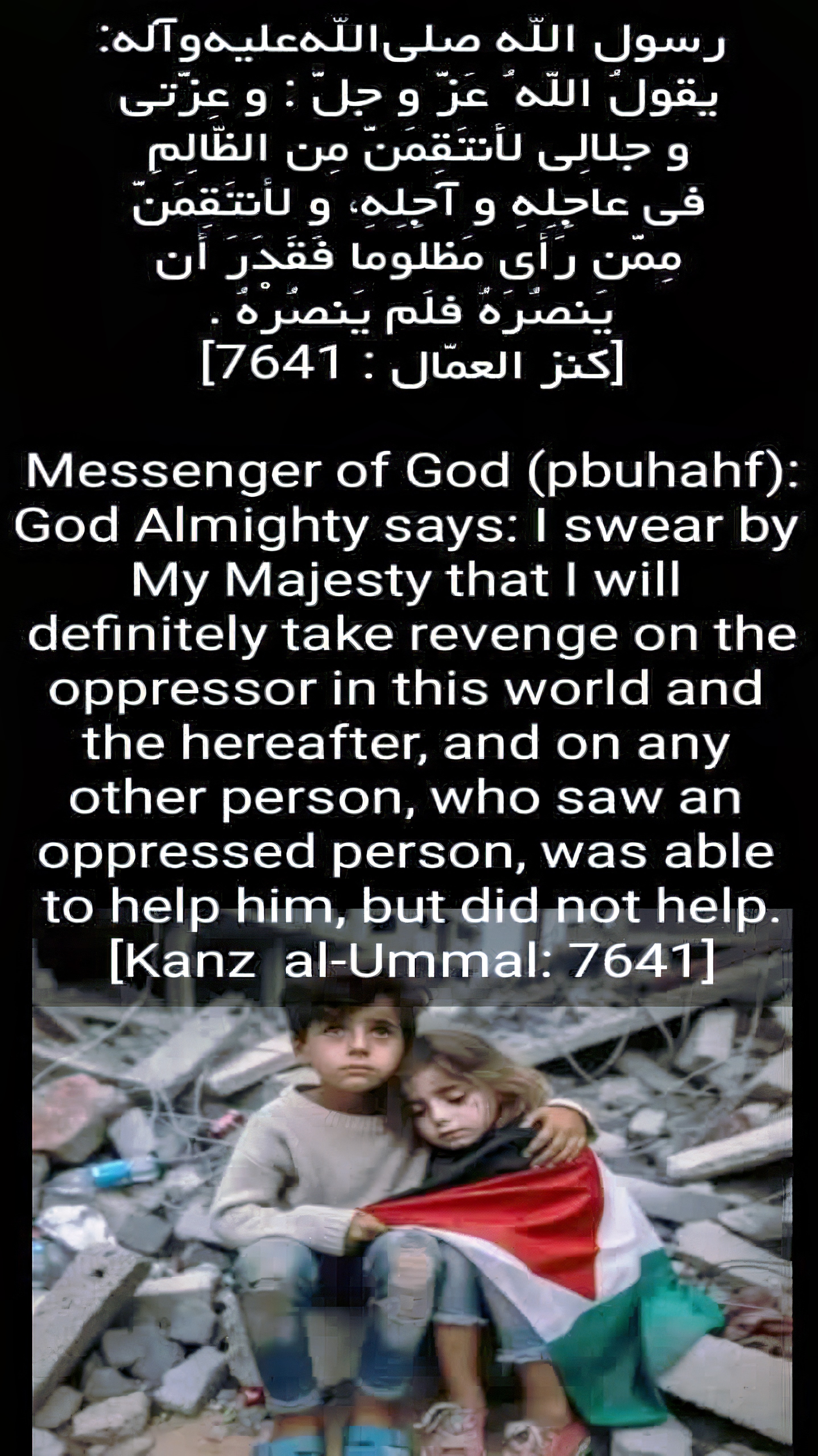
Imam Ja'far al-Sadiq (peace be upon him) stated: "Whoever helps an oppressor against an oppressed person, Allah will remain angry with him until he withdraws from helping him." (Wasa'il al-Shia Vol. 16, Section 1, Chapter 80, Hadith 20969)
Ali bin Al-Husayn (peace be upon him) said: "Beware of accompanying sinners and aiding oppressors." (Wasa'il al-Shia Vol. 17, Section 2, Chapter 42, Hadith 22289)
Prophet Mohammad (peace be upon him) also stated that If one knowingly goes to help an oppressor, he has apostatized from Islam.
Prophet Mohammad (peace be upon him) said: "Whoever walks to an oppressor to help him while knowing he is an oppressor has left Islam." (Wasa'il al-Shia Vol. 17, Section 2, Chapter 42, Hadith 22303)
Shared Responsibility
Imam al-Sadiq, peace be upon him remarked:
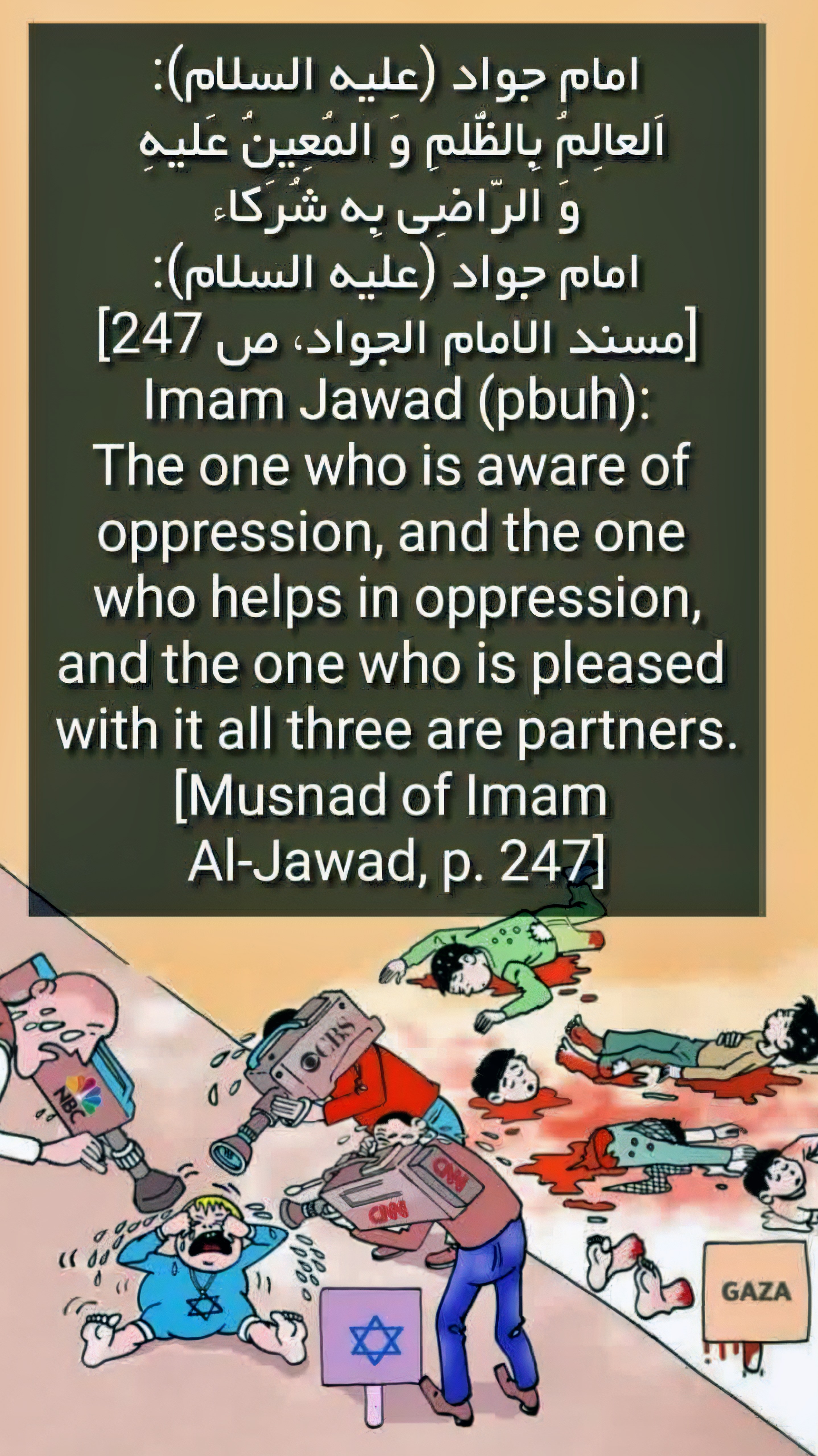
“The oppressor, the one who helps an oppressor and the one who is satisfied with it, are all partners in oppression." (Wasa’il ul-Shi’a)
This means all three are equally responsible and accountable to Allah.
The Reward for Siding with the Oppressed
The Prophet (peace be upon him) promised immense reward:
"Whoever takes the side of the oppressed over the oppressor will be with me as my companion in Paradise."(Bihar al-Anwar, v. 75, p. 359, no. 75)
Part Six: The Example of Imam Husayn and Karbala
The Uprising as a Manifestation of Divine Justice
Imam Husayn's (peace be upon him) uprising at Karbala is presented as a complete manifestation of this crucial Godly mission and a response to this challenge of standing up against injustice. His actions exemplify the teachings of his father, Imam Ali (peace be upon him).
Hadrat Zaynab's Response to Yazid
Following the tragedy of Karbala, when Yazid arrogantly claimed that Allah was with him due to his apparent victory, Hadrat Zaynab al-Kubra (peace be upon her) recited:
"And let not those who disbelieve ever think that [because] We extend their time [of enjoyment] it is better for them. We only extend it for them so that they may increase in sin, and for them is a humiliating punishment." (Qur'an 3:178)
Her powerful response highlighted that Yazid's worldly power and temporary success were merely a respite, allowing him to increase his sins, which would ultimately lead to a "degrading torment" in the Hereafter.
Part Seven: The Nature of Divine Justice
Allah's Justice is Perfect and Absolute
Allah is described as al-'Adl (the Just). His justice is perfect and absolute:
"And Allah has not wronged them, but they wrong themselves." (Qur'an 3:117)
This means human injustice is directed towards oneself, not Allah. Allah does not burden humans with anything they cannot bear and does not punish more than deserved.
The Word of Allah Finds Fulfillment in Truth and Justice
"And the word of your Lord has been fulfilled in truth and in justice. None can alter His words, and He is the Hearing, the Knowing." (Qur'an 6:115)
The Connection Between Hearing, Seeing, and Knowing
The attributes of Hearing, Seeing, and Knowing are deeply interconnected, forming an indivisible aspect of Allah's absolute awareness and perfection:
"He is All-hearing, All-seeing, All-knowing and All-aware, without any multiplicity in the meaning." (Al-Kafi (Vol. 1) by Shaykh Muhammad b. Yaqub al-Kulayni, Book 3, Chapter 13, Hadith #2)
Eternal Existence of Attributes
Allah's attributes of Hearing, Seeing, and Knowing are eternal (azaliyyah) and sempiternal. They existed with Him even before creation:
"“Allah has always been AllKnowing, All-Hearing, All-Seeing, sempiternally, and the Possessor of the Knowledge of Hearing and Seeing.” (Al-Tawhid by Shaykh Muhammad b. ?Ali al-Saduq, Book 2, Chapter 11, Hadith #2)
Manifestation Through Creation
While these attributes eternally existed as part of Allah's Essence, their manifestation became evident with creation.
Part Eight: The Attribute of Hearing (Al-Sami') in Islamic Theology
Al-Sami' literally means "The All-Hearing" or "He who hears everything." This attribute emphasizes that nothing is hidden from Allah; He is aware of all sounds, voices, and even the most secret thoughts and whispers.
- Proof of Allah's Existence and Perfection
Believing in Allah's attributes, including Al-Sami', is a part of the necessities of religion, serving as a way to understand and prove the existence of Allah as the creator.
- Responsiveness to Prayers and Supplications
Invoking Allah's Name "As-Sami'" acknowledges that He hears everything, "implying that He is always listening and aware of our thoughts, words, and actions." This attribute assures believers that their prayers and invocations are heard.
- Connection to Other Divine Attributes
Allah's attributes of hearing and seeing are intrinsically linked and often mentioned together. Allah "hears with what He sees by and sees with what He hears by," contrasting this with human attributes that rely on separate body parts.
Distinction from Human Attributes
The divine attributes of hearing, seeing, and knowing are fundamentally different from their human counterparts:
- Independence from Organs: Allah's perception is not dependent on physical organs like ears or eyes.
- Intertwined and Unified Perception: Unlike humans who use separate organs for different senses, Allah's hearing and seeing are intertwined and unified in His Essence:
Imam Mohammad Baqir (peace be upon him) said, "Verily He is all-hearing and all-seeing, such that He hears with that by means of which He sees and He sees with that by means of which He hears." (al-Tawhid, p. 144, no. 9)
Beyond Comprehension through Human Qualities:
al-Kafi: Ali b. Ibrahim from Muhammad b. Isa b. Ubayd from Hammad from Hariz from Muhammad b. Muslim from Abi Ja’far that he (the Imam) said in describing The Eternal: He is Unique. Besought (of all). One in meaning not in multiple divergent meanings. I said: May I be made your ransom - a group from the people of Iraq claim that He hears with other than that which He sees by, and He sees with other than that which He hears by. He (the Imam) said: They have lied, deviated and likened (Allah to His creation) - Far elevated is Allah from that. He is Hearing, Seeing. He hears with what He sees by and sees with what He hears by. I said: They claim that He sees using that which they understand i.e. eyes. He said: Elevated is Allah. Only that which has the attribute of the created can be understood and Allah is not like that. (Mujam al-Ahadith al-Mutabara by Shaykh Muhammad Asif Muhsini Book 4, Chapter 6, Hadith #1)
The Unity of Allah's Attributes
A core principle in Islamic theology is that Allah's attributes are not separate from His Essence; rather, they are His Essence. This means Allah is All-Hearing, All-Seeing, and All-Knowing in a unified, non- multiplicitous sense: Imam Jafar al-Sadiq (peace be upon him) described about Allah:
"He is All-hearing, All-seeing, All-knowing and All-aware, without any multiplicity in the meaning."— Al-Kafi (Vol. 1) by Shaykh Muhammad b. Yaqub al-Kulayni, Book 3, Chapter 13, Hadith #2
Part Nine: The Concept of Divine Justice in Imam Ali's Teachings
Uncompromising Commitment to Justice
Imam Ali (peace be upon him) demonstrated an unparalleled commitment to justice:
"By Allah, even if I am given all the domains of the seven (spheres) with all that exists under the skies in order that I may disobey Allah to the extent of snatching one grain of barley from an ant I would not do it." Mizan al-Hikmah (Scale of Wisdom)
"I prefer to pass a night in wakefulness on prickly thorns or be driven in chains as a prisoner than meet Allah and His Messenger on the Day of Judgment as an oppressor over any person or a usurper of anything out of worldly wealth."(Nahj al-Balagha, Sermon 223)
Justice in Governance
Imam Ali's instructions to his governors emphasized:
"Be an enemy of the oppressor and a helper to the oppressed" (Nahj al-Balagha, Letter 47)
"All the people should be equal in right before you, because injustice cannot be a substitute for justice." (Nahj al-Balagha, Letter59)
Justice as the Foundation of Existence
Imam Ali (peace be upon him) said, "Justice is the base that supports the whole world." (Matalib al-Sa’ul, p. 61)
Imam Ali (peace be upon him) said, "Justice is the support of the masses and the beauty [adorning] the governors"’ (Ghurar al-Hikam, no. 1954)
Imam Ali (peace be upon him) said, "Justice is the regulatory system of authority"’— Ghurar al-Hikam, no. 774
The Role of Leadership in Upholding Justice
Prophet Mohammad (peace be upon him and his progeny) said: "One hour of justice is better than one year of worship" (Nahjul Fasahah, page 490)
Imam Hussain(peace be upon him) said: "Allah, firstly mentioned, 'command for good & forbid to do evil' as one of His obligatory services, since, He knew that if these two obligatory are performed & established, all the obligatory services out of easy & hard will get performed & established. Because, 'command for good & forbid to do evil' invites to Islam, along with giving out the right of those having right & opposing of the tyrants & oppressors" (Tuhaf al-Uqul. P 237)
No Compromise on Justice
Amir al-mu’minin, peace be upon him, said about Allah’s saying: "Verily, Allah enjoins justice (‘adl) and benevolence (ihsan),(Qur’an,16:90). Here ‘adl means equidistribution and ihsan means favour." (Nahj al-Balagha by al-Sharif al-Radi, Book 3, Chapter 231, Hadith #279)
The "Piercing Arrow" of the Oppressed
Imam Ali described: "The most piercing arrow is the plea of the oppressed."(Ghurar al-Hikam, no. 2979)
He recommended specific guidance for the oppressed, including a two-rak'at salat followed by reciting verse 10 of Surah Al-Qamar one thousand times:
"Rabbi innee maghloobun fantasir" ('My Lord, I have been overcome, so help me.')
And from the Commander of the Faithful (peace be upon him): Whoever is wronged should perform ablution and pray two rak'ahs, prolonging their bowing and prostration. When he finishes the salutation, he should say: "O Allah, I am oppressed, so grant me victory" a thousand times, and victory will be hastened for him. (Wasa'il al-Shia Vol. 8, Section 5, Chapter 34, Hadith 10257)
Part Ten: The Call to Action for Believers
The Duty to Stand Against Injustice
Islamic teachings emphasize that supporting the oppressed is "intertwined with faith itself." The struggle against tyranny is a righteous cause, and believers are entrusted with the duty of supporting and saving the oppressed.
The Concept of "Enjoining Good and Forbidding Evil"
Imam Hussain (peace be upon him) emphasized:
"Allah, firstly mentioned, 'command for good & forbid to do evil' as one of His obligatory services, since, He knew that if these two obligatory are performed & established, all the obligatory services out of easy & hard will get performed & established. Because, 'command for good & forbid to do evil' invites to Islam, along with giving out the right of those having right & opposing of the tyrants & oppressors" (Tuhaf al-Uqul. P 237)
The Role of the Knowledgeable
The wise and knowledgeable in society have a responsibility to ensure that the rights of the weak are not usurped by the oppressors and must not remain meek spectators in the face of oppression.
If a person remains silent when an oppressor is doing injustice:
Allah may make the oppressor overpower them.
Allah may not accept the prayer of the oppressed.
Allah may not reward them for the injustice done to them.
Prophet Mohammad (peace be upon him and his family)taught:
"Assist your brother (in faith), being him an oppressor or oppressed; if the former, keep him away from oppression and if the latter, lend him a hand" (Nahj Al-Fasahah)
The Consequences of Supporting Oppressors
Those who support oppressors face severe consequences:
Divine Wrath: Imam Ali (peace be upon him) said, ‘Nothing induces the reversal of Allah’s bounty or the hastening of His retribution than continuous injustice [to others]; for verily Allah hears the call of the oppressed and lies in wait for the oppressors.’[Nahjul Balaghah, Letter 53]
Entry into Hellfire: The Qur'an warns that those who help an oppressor will be punished with fire and given "water like molten brass that will scald their faces" (Surah al-Kahf, verse 29).
Imam al-Sadiq (peace be upon him) with respect to Allah’s verse in the Qur’an: “And do not incline toward the wrongdoers, lest the Fire should touch you, and you will not have any friend besides Allah, then you will not be helped” [Quran 11:13], said, ‘This refers to the man who attends to an unjust ruler, wishing his rule to continue in order that he may put his hand in his purse and give him thereof.’[al-Kafi, v. 5, p. 108, no. 12]
Desertion of Islam: The Prophet (peace be upon him) stated that one who knowingly goes to help an oppressor has apostatized from Islam.
Holy Prophet (peace be upon him and his family) said:
“One who breaks allegiance to the Imam, or raises a standard of misguidance or conceals a piece of knowledge which is obligatory to be imparted or usurps some property or helps an oppressor knowingly; then he has deserted the religion of Islam." (Mustadrak ul-Wasa’il)
Destruction: Imam Ali (peace be upon him) said,
"The one who takes wrongdoing as a mount is thrown off by it." (Ghurar al-Hikam, no. 5391)
The one who continues to oppress, the one who assists him, and the one who is pleased with his ways are all considered to be in the same position, implying that they are equally responsible and accountable for their actions.
Imam al-Sadiq (peace be upon him and his family) has remarked:
“The oppressor, the one who helps an oppressor and the one who is satisfied with it, are all partners in oppression."(Wasa’il ul-Shi’a).
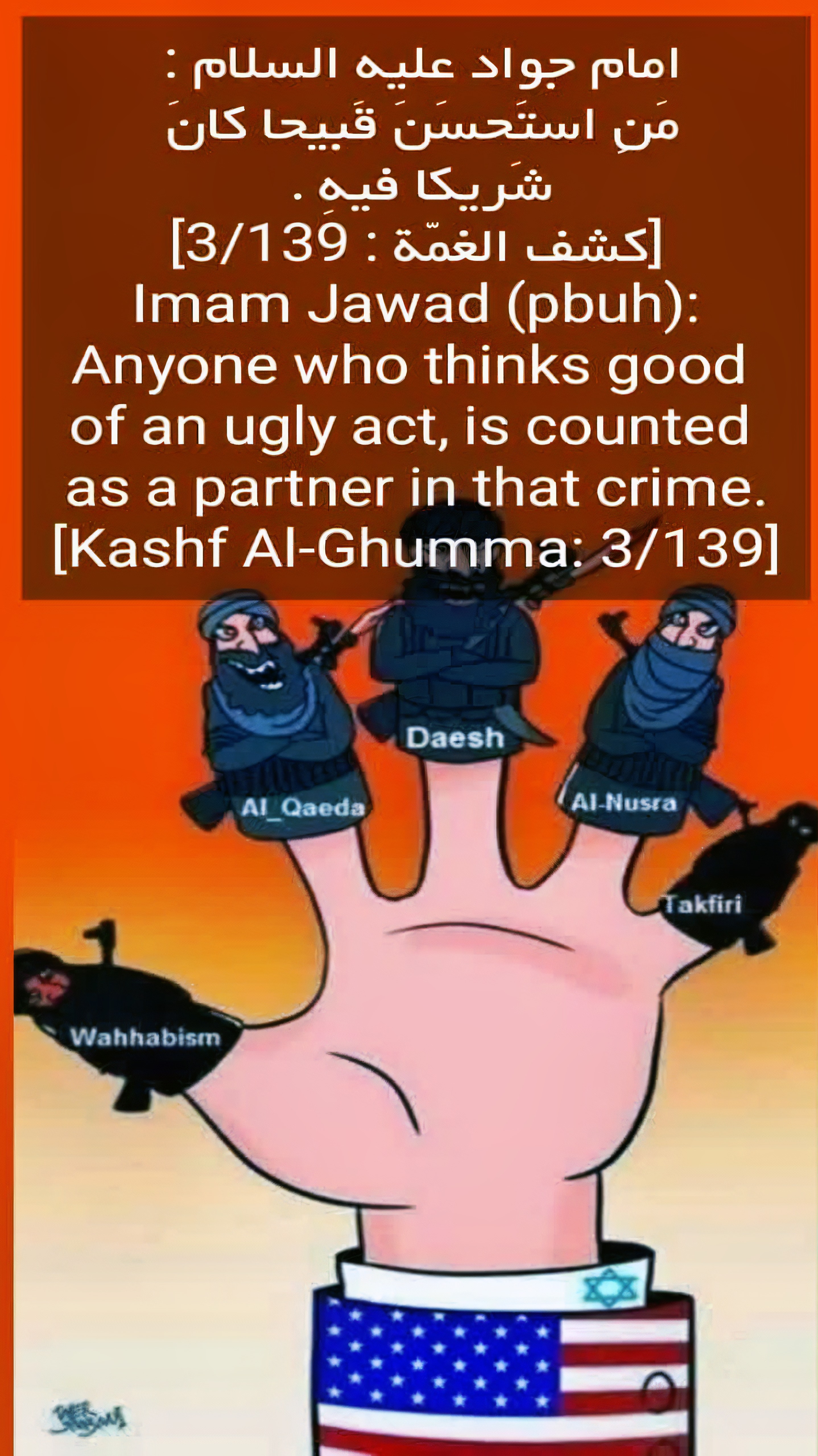
This means active participation, assistance, and even tacit approval lead to shared accountability and severe divine consequences.
Part Eleven: Historical and Contemporary Lessons
The Example of Imam Husayn
Imam Husayn's (peace be upon him) uprising at Karbala serves as the ultimate example of standing against oppression. His actions demonstrated that:
A leader acts according to the Quran.
A leader stands up to ensure that everyone receives his or her due right.
A leader should not deviate from the right path, and this should all be done for the pleasure of God.
The Example of Al-Abbas ibn Ali
Al-Abbas ibn Ali, being Imam Ali's son, was "the worthiest of learning and applying the instructions of his father to himself and working on propagating them among people," leading him to stand with Imam al-Husayn against unjust rulers.
Hadrat Zaynab's courageous response to Yazid demonstrates:
The power of divine truth against worldly power.
The understanding that apparent worldly success is not a sign of divine favor.
The certainty that oppression will ultimately lead to disgrace and punishment.
These teachings have profound implications for Muslims today:
- Active Resistance: Muslims are commanded to actively resist oppression, not remain passive in the face of injustice.
- Support for the Oppressed: Supporting the oppressed is a fundamental religious duty, not merely a charitable act.
- Avoiding Complicity: Aiding, supporting, or even approving of oppressors is a grave sin with severe consequences.
- Hope and Patience: The oppressed are assured that their cries are heard and that justice will ultimately prevail.
- Accountability: All people, especially those in power, will be held accountable for their actions.
The Assurance of Divine Justice
"Indeed, Allah is Hearer of the supplication of the oppressed, and He is for the oppressors in wait."(Nahj al-Balagha, Letter 53)
Imam Ali's profound statement encapsulates the core Islamic belief that Allah is both the ultimate protector of the oppressed and the ultimate punisher of the oppressors.
Summary of Key Points
- Allah Hears the Oppressed: Divine hearing is comprehensive, beyond physical perception, and attentive to the cries of those who suffer injustice.
- Allah is in Wait for Oppressors: Divine justice is inevitable, though it may be delayed to allow for repentance or to allow oppressors to accumulate more sins.
- Consequences of Oppression: Oppression leads to divine wrath, deprivation of guidance, eternal failure, painful punishment, and ultimate humiliation.
- Responsibility of Believers: Muslims must actively oppose oppression, support the oppressed, and avoid any form of complicity with oppressors.
- Historical Examples: The tragedies of Karbala and the responses of the Ahl al-Bayt demonstrate how these principles should be applied.
- Divine Attributes: Allah's attributes of hearing, seeing, and knowing are unified in His Essence, eternal, and distinct from human attributes.
- Justice as Foundation: Justice is the foundation of the universe and human society, and leaders have a special responsibility to uphold it.
The statement provides comfort to the oppressed, assuring them that their grievances are heard and will be addressed by the most powerful and just authority. Simultaneously, it serves as a severe caution to oppressors, reminding them that divine justice is inevitable and they will ultimately face accountability for their deeds. It underscores the foundational Islamic principle of justice as a cornerstone of both individual conduct and societal order.
"Nothing is more inducive of the reversal of Allah's bounty or for hastening of His retribution than continuance in oppression, because Allah hears the prayer of the oppressed and is on the look-out for the oppressors." — Imam Ali ibn Abi Talib (peace be upon him) (Nahj al-Balagha, Letter 53)
# Sources Extracted from the Text
## Qur'anic References
- Qur'an 21:4
- Qur'an 26:220
- Qur'an 2:186
- Qur'an 4:148
- Qur'an 71:4
- Qur'an 3:178
- Qur'an 7:182–183
- Qur'an 6:45
- Qur'an 11:18
- Qur'an 2:258
- Qur'an 22:71
- Qur'an 42:42
- Qur'an 28:4
- Qur'an 41:20
- Qur'an 3:106
- Qur'an 4:40
- Qur'an 4:75
- Qur'an 11:113
- Qur'an 5:2
- Qur'an 3:117
- Qur'an 6:115
- Qur'an 16:90
- Qur'an 54:10
- Qur'an 18:29
Primary Hadith and Theological Works
### Nahj al-Balagha
- Letter 53 (multiple citations)
- Sermon 152
- Saying 241 (also cited as Book 3, Chapter 241, Hadith #292)
- Letter 47
- Sermon 223
- Letter 59
- Saying 279 (Book 3, Chapter 231)
Al-Kafi (Shaykh Muhammad b. Yaqub al-Kulayni)
- Vol. 1, Book 3, Chapter 13, Hadith #2
- Vol. 5, p. 108, no. 12
Wasa'il al-Shia
- Vol. 7, Section 2, Chapter 52, Hadith 8916
- Vol. 16, Section 1, Chapter 85, Hadith 21000
- Vol. 16, Section 1, Chapter 77, Hadith 20941
- Vol. 16, Section 1, Chapter 77, Hadith 20949
- Vol. 16, Section 1, Chapter 80, Hadith 20969
- Vol. 16, Section 3, Chapter 39, Hadith 21837
- Vol. 15, Section 2, Chapter 38, Hadith 20556
- Vol. 17, Section 2, Chapter 42, Hadith 22289
- Vol. 17, Section 2, Chapter 42, Hadith 22303
- Vol. 8, Section 5, Chapter 34, Hadith 10257
Bihar al-Anwar
- Vol. 52, p. 24
- Vol. 75, p. 322, no. 51
- Vol. 75, p. 373, no. 17
- Vol. 75, p. 359, no. 75
Al-Taw?id (Shaykh Muhammad b. ?Ali al-?aduq)
- Book 2, Chapter 11, Hadith #2
- p. 144, no. 9
Mujam al-Ahadith al-Mutabara (Shaykh Muhammad Asif Muhsini)
- Book 4, Chapter 6, Hadith #1
Mustadrak ul-Wasa'il
Secondary Wisdom Collections
Mizan al-Hikmah (Muhammad al-Rayshahri)
- Volume 2, Page 1781
Ghurar al-Hikam
- no. 1954
- no. 774
- no. 2979
- no. 5391
Tuhaf al-Uqul
- p. 237
Nahj Al-Fasahah
- page 490
Matalib al-Sa'ul
- p. 61
Wasa'il ul-Shi'a (general reference)
Qur'anic verses and hadiths of Ahl al-Bayt (peace be upon them) and sayings in Arabic, Persian and English.
https://eitaa.com/noorunalanoor
https://www.youtube.com/@110Inspire
https://youtube.com/@mustafaabbas4668?si=EnSIkaIECMiOmarE
https://youtube.com/@mustafaabbas8978?si=EMJylUW9_zruJx95