KhanwadeAbuTalib.com
Posted by Mustafa Abbas on August 10, 2026 | Views: 235 | Ratings: 121
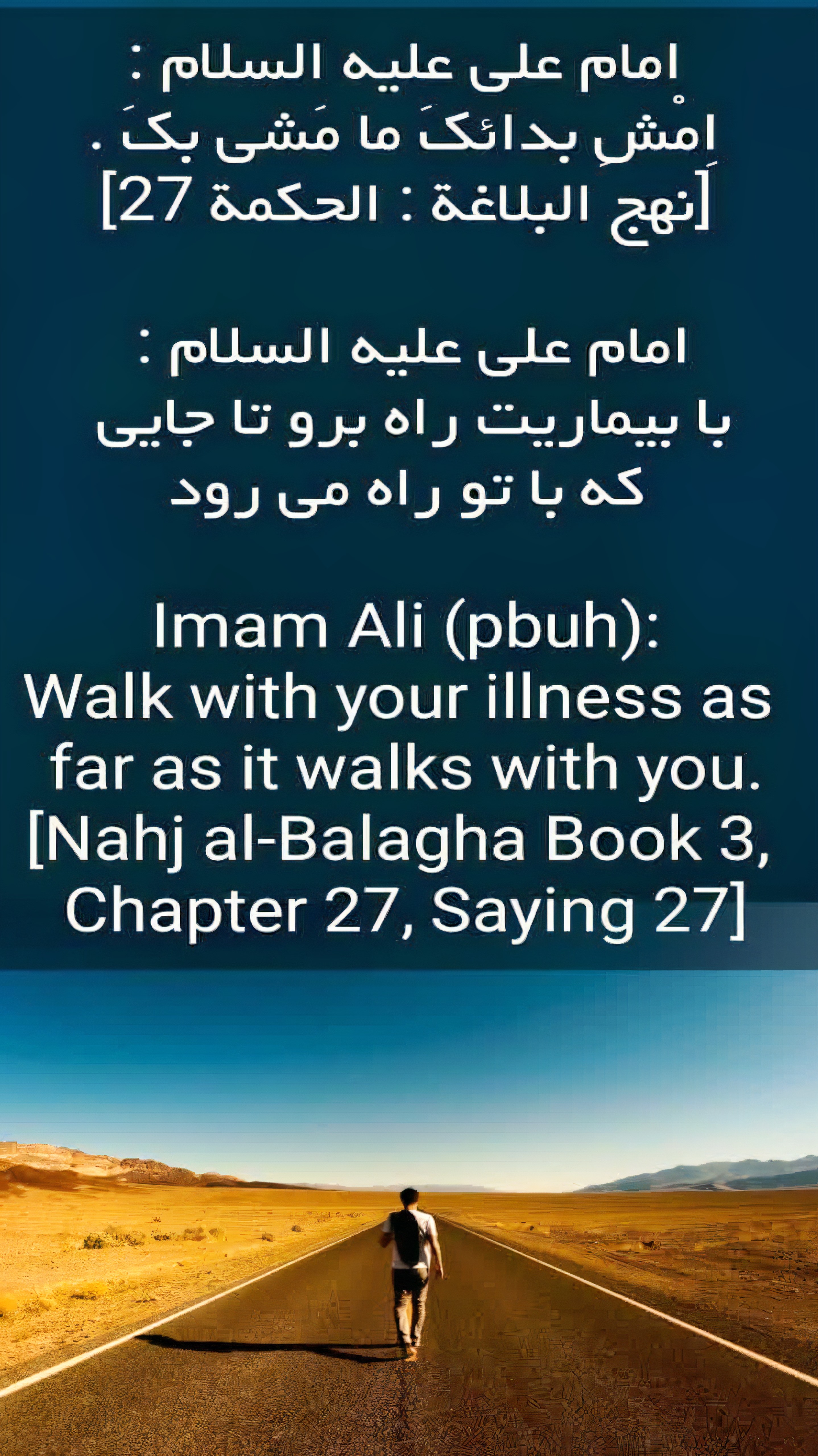
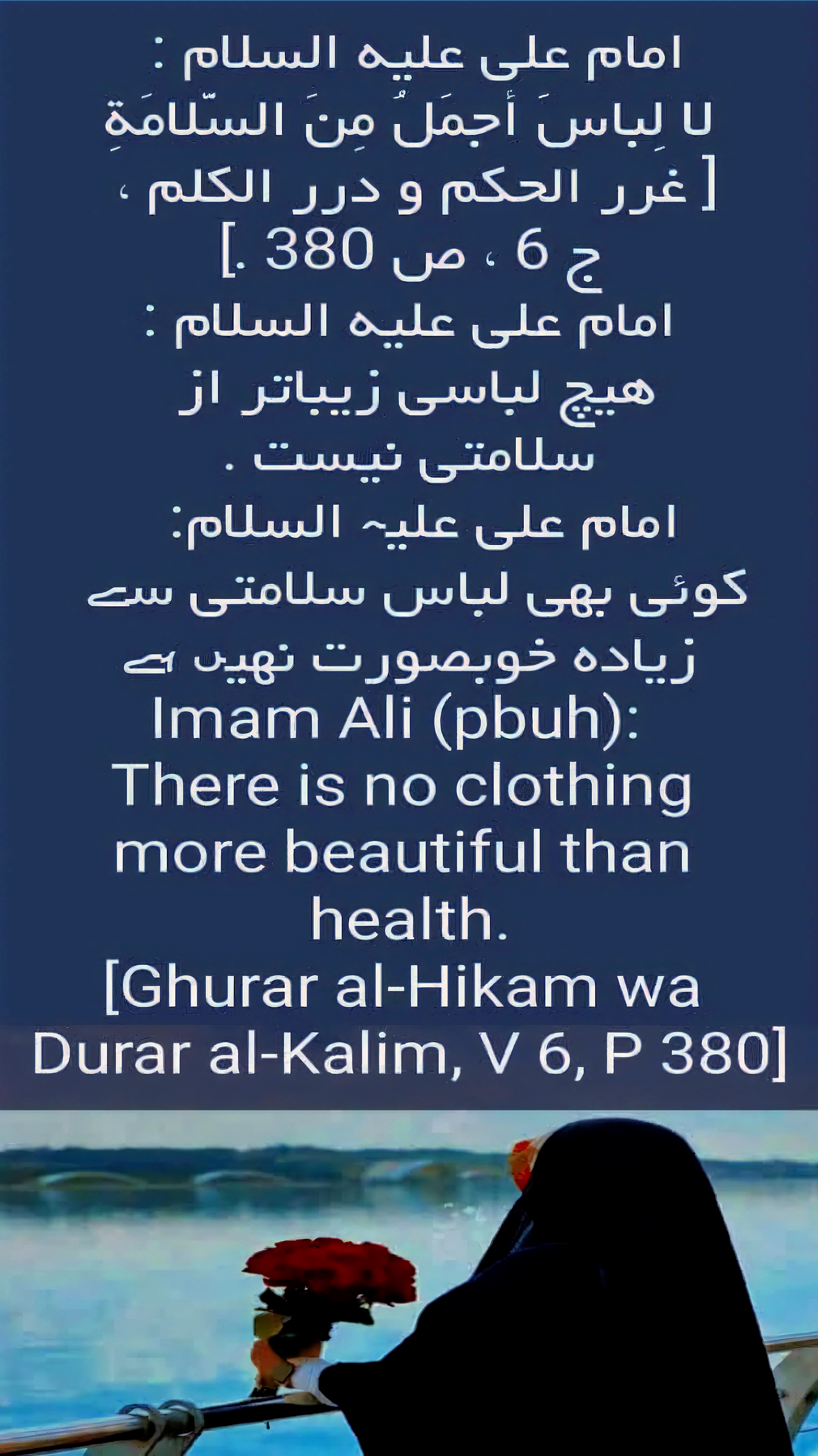
Download article from link below at the end
The Divine Promise of Healing: A Comprehensive Islamic Perspective on Health, Disease, and Cure
In the vast tapestry of Islamic teachings, few principles resonate with such profound hope and universal relevance as the declaration of the Prophet Muhammad (peace be upon him and his family): "God has not sent down any disease without also sending down its cure." (Bihar al-Anwar, 62/68/21). This statement, echoed in various traditions and expounded upon by the Imams of the Ahl al-Bayt, establishes a foundational worldview: the universe is not a place of random suffering but a divinely ordered system where every affliction carries within it the seed of its own remedy.
This comprehensive article explores the multifaceted dimensions of this principle, drawing from the Quran, prophetic traditions, the wisdom of Imam Ali (peace be upon him) and other infallible Imams, as well as the rich heritage of Islamic medicine. We will examine the theological purpose of illness, the integration of faith and medicine, the holistic nature of healing, and the spiritual and practical responses expected of believers. The goal is to present a complete understanding of how Islam addresses the human experience of sickness, suffering, and recovery.
Part One: The Core Principle – Disease and Cure in Divine Creation
The hadith under consideration is both concise and comprehensive. The Prophet Muhammad (peace be upon him) states:
"God has not sent down any disease without also sending down its cure."
This principle is repeated in various forms:
Prophet Mohammad (peace be upon him and his family) said, ‘Treat yourselves with medicine, for verily Allah has not sent down any ailment except that he has sent down a cure for it with the exception of death and old age.’ (Kanz al-’Ummal, no. 28088)
Imam Ali (peace be upon him) affirmed this, saying: "For every ailment, there is a cure."
(Ghurar al-Hikam, no. 7275)
The Meaning of "Disease" and "Cure"
In the Islamic understanding, "disease" (da') encompasses more than just physical illness. It includes:
Physical diseases: All bodily ailments, from minor fevers to chronic conditions.
Psychological and mental disorders: Anxiety, depression, and other emotional challenges.
Spiritual maladies: Pride (kibr), envy (hasad), hypocrisy (nifaq), and other vices of the heart.
Social problems: Injustice, corruption, and community-level dysfunctions.
Similarly, "cure" (shifa') is not limited to medical treatments. It encompasses:
Physical medicine: Pharmaceuticals, surgery, and therapeutic interventions.
Psychological healing: Counseling, mental health support, and emotional care.
Spiritual remedies: Repentance, supplication, Quranic recitation, and moral reform.
Social solutions: Justice, education, and systemic change.
The Exceptions: Death and Old Age
Islamic teachings explicitly identify two exceptions to the universal principle of cure:
- Death: Death is not a disease but the inevitable transition from this world to the next.
The Quran states: "Every soul shall taste death." (Surah Al-Imran, 3:185). No cure exists for death because it is not an ailment to be treated but a divine decree to be accepted.
- Old Age: Aging is a natural process of decline, a sign of Allah's power and a reminder of human mortality. While measures can be taken to maintain health in old age, the process itself is irreversible.
Some narrations also mention "fatal poison" as an exception, though this is generally understood within the broader exceptions of death and the inevitable end of life.
This principle reflects several attributes of God:
Al-Rahman (The Most Gracious): God's mercy ensures that creation is not left without solutions to its problems.
Al-Hakim (The All-Wise): The existence of both disease and cure demonstrates divine wisdom in ordering the universe.
Al-Shafi (The Healer): While means of healing exist, ultimate cure comes from God alone.
Imam Jafar al-Sadiq (peace be upon him) beautifully captured this duality in his profound statement:
“You have been made the physician for your own self. Medicine is prescribed for you; signs of good health are shown to you, and the direction for medicine is given to you. It is all up to you how you treat yourself.” (Al-Kafi (Vol. 2) by Shaykh Muhammad b. Ya qub al-Kulayni, Book 1, Chapter 203, Hadith #6)
Your sickness is from you, but you do not perceive it; and your remedy is within you, but you do not sense it.
This suggests that much of human suffering originates from internal sources—actions, thoughts, and spiritual states—and that the solutions lie within one's own capacity for change.
Part Two: The Divine Wisdom Behind Disease and Suffering
- Purification and Expiation of Sins
One of the most significant purposes of illness is the purification of sins. The Prophet Muhammad (peace be upon him) said:
"No believing man or woman gets sick without God taking away their wrongdoings for it." (Nahj al-Fasahah)
Imam Ali (peace be upon him) elaborated:
"When Allah afflicts a servant with illness, sins fall away from him in proportion to the severity of his ailment." (Da'aim al-Islam, v. 1, p. 218)
This means that a believer's suffering serves as a form of spiritual cleansing. Every fever, every ache, every moment of pain can erase sins, allowing the individual to meet Allah with a purified soul. The Prophet (peace be upon him) even said:
"A believer will not be exposed to any suffering, hardship, disease, harm, and sorrow unless God ignores some of his sins in lieu of them." (Nahj al-Fasahah)
This perspective transforms physical suffering into a spiritual benefit. The believer does not simply endure pain; they receive divine compensation for it.
- Testing and Elevation
Disease and hardship serve as tests of faith, distinguishing sincere believers from those who only profess faith in times of ease. The Quran states:
"And We will surely test you with something of fear and hunger and a loss of wealth
and lives and fruits, but give glad tidings to the patient." (Surah Al-Baqarah, 2:155)
The purpose of these tests is not to cause despair but to elevate the believer's station.
Imam al-Sadiq (peace be upon him) said, ‘When Allah loves a people, or a certain servant, He pours ordeals down heavily on him, so that whenever he exits from a [source of] anguish he falls into another.’ (Bihar al-Anwar, v. 82, p. 148, no. 32)
This teaching reveals that divine love is not expressed only through ease and comfort. It is also expressed through challenges that deepen the believer's faith, patience, and dependence on God. From Abu Ja'far (peace be upon him) who said: "Indeed when Allah loves a servant, He immerses him completely in trials and pours trials upon him abundantly. When he calls upon Him, He says: "Here I am, My servant. If I hasten what you ask for, I am indeed capable of that, but what I have stored for you is better for you." (Wasa'il al-Shia Vol. 3, Section 3, Chapter 77, Hadith 3598)
Therefore, those whom Allah loves are put to trial.
- Correction and Reminder
Diseases can serve as "God's whips on the earth for the correction of people." They remind humanity of its vulnerability, its dependence on God, and the temporary nature of worldly life.
Imam Ali (peace be upon him) said, ‘But Allah tries His servants with various tribulations, renders them to worship Him through struggles, tests them with various types of distresses, all in order to extract pride out from their hearts, and to settle humbleness in their souls, and in order to make all these open doors to His grace an easy means to His pardon.’ (Nahjul Balaghah, Sermon 192)
Illness is a trial by which Allah tests man, removing vanity from their hearts and instilling humility in their souls. When people become arrogant, oppressive, or forgetful of God, illnesses can serve as wake-up calls. They redirect attention to spiritual realities, encourage repentance, and refine character. From Imam Al-Ridha (peace be upon him) who said: "Illness for a believer is purification and mercy, and for a disbeliever is punishment and curse, and illness continues with the believer until no sin remains upon him." (Wasa'il al-Shia Vol. 2, Section 7, Chapter 1, Hadith 2465)
Therefore, illness continues with the believer until no sin remains upon him.
4. Fostering Gratitude and Compassion
Suffering also fosters gratitude. When health is restored, the believer appreciates the blessing they previously took for granted. As the saying goes, "Health is a crown on the heads of the healthy that only the sick can see."
Additionally, illness cultivates empathy and compassion. When individuals experience suffering, they become more sensitive to the pain of others and more inclined to help. The Quran commands believers to care for the sick, the poor, and the vulnerable, and personal experience of hardship strengthens this commitment.
5. The Suffering of the Infallibles
It is important to note that the sufferings of the Prophets and Imams (peace be upon them) are not due to their sins, as they are divinely protected and purified. Their trials serve to elevate their status, demonstrate their patience, and provide role models for humanity.
Imam Husayn (peace be upon him), for example, endured the tragedy of Karbala not because of any sin but to uphold truth and justice. His suffering was a demonstration of ultimate sacrifice and unwavering faith. Similarly, Prophet Yusuf (peace be upon him) faced decades of hardship not due to sin but as part of a divine plan that ultimately placed him in a position of authority and mercy.
Part Three: The Integration of Faith and Medicine
- Seeking Treatment as an Act of Obedience
A critical misconception is that faith in God as the ultimate Healer negates the need to seek medical treatment. On the contrary, Islam strongly emphasizes the importance of seeking healing through lawful means. The Prophet Muhammad (peace be upon him) explicitly commanded:
"Seek treatment, for Allah has not created a disease without creating a cure for it."
This makes seeking treatment an act of obedience to divine guidance. When a believer consults a physician, takes medication, or undergoes surgery, they are not abandoning reliance on God; they are utilizing the means that God has placed within creation.
Tawakkul (trust in God) does not mean neglecting the means; it means using the means while recognizing that the ultimate outcome is in God's hands.
- The Parable of Prophet Musa (peace be upon him)
Imam Jaffar al-Sadiq (peace be upon him) said, ‘A prophet from among the prophets fell sick and said, ‘I will not treat myself [with medicine] until the One who made me sick heals me’. Then Allah revealed to him saying, ‘I will not heal you until you treat yourself [with medicine] for verily the healing is from Me.’ (Bihar al-Anwar, v. 62, p. 66, no. 15)
This teaches that divine healing operates through the very means that God has created. Treatment is not a sign of weak faith but a recognition of God's system of cause and effect. The physician is a means, but the ultimate Healer is Allah.
- The Golden Rule: Medicine and Ailment
Beware of Hastening towards Resorting to Medicine
Prophet Muhammad (peace be upon him and his family) said: "Avoid medicine as long as your body can bear the ailment, but if it cannot bear the ailment, then resort to medicine." (Bihar al-Anwar, v. 81, p. 211, no. 30)
Imam Ali (peace be upon him) further added that "A Muslim does not seek to treat himself [with medicine] until the ailment overcomes his health." (al-Khisal, p. 620, no. 10)
Imam al-Kazim (peace be upon him) said, "There is no medicine except that it exacerbates another ailment, and there is nothing more beneficial to the body than self-restraint from all except that which the body needs." (al-Kafi, v. 8, p. 273, no. 409)
Imam Jafar al-Sadiq (peace be upon him) said, "You have been made the physician of your own self, and the illness has been made clear to you, and you have been shown the sign of health, and you have been guided to the medicine, so see how you take care of yourself." (Wasa'il al-Shia Vol. 1, Section 2, Chapter 1, Hadith 20210)
This cautions against over-reliance on medication. A medicine that is appropriate in one context may be harmful in another. The body has its own wisdom, and excessive intervention can sometimes be counterproductive. This encourages allowing the body's natural healing mechanisms to function first, followed by appropriate medical intervention.
4. The Body's Innate Healing Power
Imam Ali (peace be upon him) recognized the body's remarkable capacity for selfhealing:
The human body provides medicine from within... by virtue of the immune system, lymphatic glands, and antibodies existing within his body which can mysteriously cure different diseases.
Imam Ali (peace be upon him), ‘A Muslim does not seek to treat himself [with medicine] until the ailment overcomes his health.’ (al-Khisal, p. 620, no. 10)
This insight, articulated long before modern immunology, emphasizes that the human body is not passive in the face of illness. It has built-in defense mechanisms, and the believer should support these natural processes through proper nutrition, rest, and healthy living.
Part Four: Holistic Healing – Body, Mind, and Soul
Islam views the human being as an integrated whole—body, mind, and soul. Healing, therefore, must address all dimensions of human existence. Imam Ali (peace be upon him) had stated that your sickness is from you, but you do not perceive it; and your remedy is within you, but you do not sense it.
Imam Ali (peace be upon him) said, ‘A Muslim does not seek to treat himself [with medicine] until the ailment overcomes his health.’ (al-Khisal, p. 620, no. 10)
This profound statement highlights several truths:
Sickness originates from within: Many ailments stem from one's own actions, thoughts, and habits.
Self-awareness is key: Many people are unaware of both their problems and their solutions.
- Physical Healing
Islamic medicine has a rich tradition of addressing physical health. The Quran and
Hadith recommend specific foods and practices:
Honey: The Quran states: "There comes forth from within it a beverage of many colors, in which there is healing for men." (Surah An-Nahl, 16:69).
Imam Ali (peace be upon him) had stated that licking honey is a cure for all illnesses.
Muhammad ibn Yahya has narrated from Ahmad ibn Muhammad from al-Qasim ibn Yahya from his grandfather al-Hassan ibn Rashid from Muhammad ibn Muslim who has said the following: “Abu ‘Abd Allah (peace be upon him), has said that ’Amir al-Mu’minin has said, ‘Licking honey is cure for all illnesses. Allah, most Majestic, most Glorious, has said, “From its belly, drink of many colors come out. In it there is cure for people.” Honey with reading Quran and chewing frankincense dissolves phlegm.’”
(Al-Kafi (Vol. 6) by Shaykh Muhammad b. Ya qub al-Kulayni, Book 5, Chapter 81, Hadith #2)
Cow's Milk: Muhammad ibn Yahya has narrated from Ahmad ibn Muhammad from Muhammad ibn Khalid from ‘Abd Allah ibn al-Mughirah from ’Isma‘il ibn abu Ziyad who has said the following: “Abu ‘Abd Allah (peace be upon him), has said, ‘Cow milk and ghee (or fat) are cures but their meat is illness.’” (Al-Kafi (Vol. 6) by Shaykh Muhammad b. Ya qub al-Kulayni, Book 5, Chapter 58, Hadith #3)
Black Seeds (Nigella Sativa): Prophet Mohamad (peace be upon him and his family) said,"Hold on to senna and san?t, for in the two of them there is healing from every disease except as-s?m."(This narration is recorded in Sunan Ibn Majah)
Olive Oil, Dates, Pomegranate, and other wholesome foods: These are regularly mentioned as beneficial for health.
- Mental and Psychological Healing
Islamic teachings address mental health through several avenues:
Seeking knowledge and understanding: Knowledge dispels ignorance, which is a source of anxiety and confusion.
Supplication and prayer: Du'a provides emotional release, connects the believer to God, and fosters inner peace.
Mindfulness of God (dhikr): The Quran states: "Verily, in the remembrance of Allah do hearts find rest." (Surah Ar-Ra'd, 13:28)
Social connections: Islam emphasizes community, family ties, and caring for one another, which are essential for mental well-being.
Patience and acceptance: Developing sabr and rida (contentment with divine decree) prevents despair and promotes resilience.
Spiritual maladies—such as pride, envy, hypocrisy, and love of the world—are considered the most dangerous diseases of the heart.
The Quran serves as the ultimate spiritual remedy. Allah says: "And We send down of the Quran that which is healing and mercy for the believers." (Surah Al-Isra, 17:82). Imam Sadiq (peace be upon him) said:"No believer has ever complained of any ailment and said with sincere intention while wiping the location of illness: "And We send down of the Quran that which is healing and mercy for the believers, but it does not increase the wrongdoers except in loss" [17:82], except that they were cured of that illness, whatever illness it was, and the confirmation of that is in the verse where it says healing and mercy for the believers." (Wasa'il al-Shia Vol. 2, Section 7, Chapter 14, Hadith 2537)
Spiritual healing involves:
Repentance (tawbah): Turning away from sin and returning to God.
Self-accountability: Regularly examining one's actions and intentions.
Purification of the soul (tazkiyah): Removing vices and cultivating virtues.
Seeking forgiveness (istighfar): Asking God to pardon sins and purify the heart.
4. The Interconnection of Physical and Spiritual Health
From Abdullah bin Sinan, from Abu Abdullah (peace be upon him), who said: I asked him about the ruqyah (incantation) for scorpion and snake bites, the nushrah (a form of treatment to undo magic), and the ruqyah for the possessed and the bewitched who are tormented. He said: O Ibn Sinan, there is no harm in ruqyah, ta'widh (amulets), and nushrah if they are from the Quran. And whoever is not cured by the Quran, may Allah not cure him. Is there anything more effective in these matters than the Quran? Does not Allah say "And We send down of the Quran that which is healing and mercy for the believers" [Quran 17:82]? Does not Allah, exalted be His praise, say "If We had sent down this Quran upon a mountain, you would have seen it humbled and breaking apart from fear of Allah" [Quran 59:21]? Ask us and we will teach you and guide you to the striking verses of the Quran for every ailment. (Wasa'il al-Shia Vol. 6, Section 4, Chapter 41, Hadith 7822)
There is no separation between body and soul in Islamic thought. What affects one affects the other. Stress, anxiety, and negative emotions can manifest as physical illness. Similarly, physical health supports spiritual practice. The believer is called to care for their body as a trust from God.
Part Five: The Exemplary Models of Patience and Faith
- Prophet Yusuf (Joseph) – Patience Through Trials
The story of Prophet Yusuf (peace be upon him) is described in the Quran as "the best of stories." He endured:
Being thrown into a well by his jealous brothers.
Sold into slavery in Egypt.
False accusations and imprisonment for years.
Separation from his father and family.
Despite these immense trials, he maintained his faith, purity, and patience. When tempted by the wife of Al-Aziz, he chose imprisonment over sin, saying: "My Lord! Prison is dearer to me than to what they invite me." (Surah Yusuf, 12:33)
Imam Sadiq (peace be upon him) described him as the ultimate example of a "free human being" whose inner freedom was unaffected by external circumstances: A free human being is free in all circumstances... If taken captive and subdued, he turns hardship into ease, as was the case of Joseph, the truthful and trustworthy. Imam Sadiq (peace be upon him) said, ‘The free is free in all his states: when he is inflicted by a calamity, he shows patience; when afflictions bear down on him, they do not break him, even though he be taken in captivity or defeated and his prosperity turns into poverty, just like the truthful trustworthy Prophet Joseph - blessings of Allah upon him - whose freedom was not affected even when he was enslaved, defeated and captivated.’ (al-Kafi, v. 2, p. 89, no. 6)
His patience and taqwa ultimately elevated him to the position of ruler of Egypt, fulfilling his childhood dream and reuniting his family. The Quran states:
"Indeed, if one is God-wary and patient, Allah does not waste the reward of the virtuous." (Surah Yusuf, 12:90)
Imam Husayn (peace be upon him) – The Ultimate Sacrifice
The tragedy of Karbala represents the pinnacle of faith, patience, and sacrifice. Imam Husayn (peace be upon him), along with his family and companions, faced:
Being surrounded by a massive army.
Denied water for days in the desert.
Witnessing the martyrdom of his loved ones.
Ultimately being killed in the most tragic circumstances.
Despite this, Imam Husayn (peace be upon him) remained steadfast. His resilience was not born of helplessness but of unwavering faith in God's justice. He knew that even if the worldly outcome seemed devastating, the divine purpose was being fulfilled. His patience transformed apparent defeat into eternal spiritual victory.
- Lady Zaynab (peace be upon her) – Resilience in Captivity
Lady Zaynab (peace be upon her), the sister of Imam Husayn (peace be upon him), demonstrated extraordinary patience and strength after the tragedy of Karbala. She endured:
The loss of her brother, her sons, and her nephews.
Captivity and being paraded through the streets of Kufa and Damascus.
Facing the tyrant Yazid with unwavering dignity.
Her words to the oppressor encapsulate her faith:
"You cannot erase our memory... Shame and disgrace will remain for you alone."
- The Role of Faith, Patience, and Prayer
The Quran commands believers to seek help through patience and prayer:
"And seek help through patience and prayer, and indeed, it is difficult except for the humbly submissive." (Surah Al-Baqarah, 2:45)
Imam Ali (peace be upon him) would turn to prayer whenever he faced difficulty. This combination of patience (endurance in adversity) and prayer (direct communication with God) provides the spiritual strength to overcome trials.
Part Six: The Quran as the Ultimate Source of Healing
- The Quran as Cure and Mercy
The Quran is not only a book of guidance but a source of healing for all ailments. Allah says:
"And We send down of the Quran that which is healing and mercy for the believers." (Surah Al-Isra, 17:82)
"O mankind, there has come to you instruction from your Lord and healing for what is in the breasts and guidance and mercy for the believers." (Surah Yunus, 10:57)
Imam Ali (peace be upon him) described the Quran as: "A cure after which there is no ailment."
2. The Comprehensiveness of the Quran
Imam Jafar al-Sadiq (peace be upon him) stated The knowledge of everything is present in the Quran.
Muhammad ibn Yahya has narrated from Muhammad ibn al-Husayn from Muhammad ibn ’Isa from abu ‘Abdallah al-Mu‘min from ‘Abd al-A‘la Mawla ’Ala Sam who has said that he heard abu ‘Abdallah (peace be upon him) say the following. “I swear by Allah that I know the Holy Quran from the beginning to end as if it is in the palm of my hand. In it there is the news of the heavens and the earth, the news of what has been and the new of what will come into being. Allah, the Most Holy, the Most High, has said, “In it there is the explanation of all things.” (16:89)
(Al-Kafi (Vol. 1) by Shaykh Muhammad b. Ya qub al-Kulayni, Book 4, Chapter 35, Hadith #4)
This does not mean the Quran contains specific medical prescriptions or scientific formulas. Rather, it provides:
General principles for health, ethics, and well-being.
Spiritual guidance for inner peace and moral rectitude.
Legal frameworks for justice and social harmony.
The Quran's solutions are applied through human intellect, experience, and effort. The Quran provides general ways that can be understood and followed using Godgiven intellect, talents, and acquired knowledge in human sciences.
Imam Ali (peace be upon him) said: "Be aware! Knowledge without thinking has no profit! Be aware! Recitation of the Quran without reflection is of little use! Be aware! Worship lacking reflection has no effect! ( Al-Kafi, Volume One, Page 36 and Tuhaful Uqul, Maani Al-Akhbar, page 226; Bihar Al-Anwar Volume 2, page 48-49, Aalamu Addeen, page 100, Mishkat Al-Anwar 137-138, Muniat Almureed 162.)
3. Recitation as a Spiritual Medicine
Imam Sadiq (peace be upon him) taught that one should seek cure from the Holy Quran.
From Abdullah bin Sinan, from Abu Abdullah (peace be upon him), who said: I asked him about the ruqyah (incantation) for scorpion and snake bites, the nushrah (a form of treatment to undo magic), and the ruqyah for the possessed and the bewitched who are tormented. He said: O Ibn Sinan, there is no harm in ruqyah, ta'widh (amulets), and nushrah if they are from the Quran. And whoever is not cured by the Quran, may Allah not cure him. Is there anything more effective in these matters than the Quran? Does not Allah say "And We send down of the Quran that which is healing and mercy for the believers" [Quran 17:82]? Does not Allah, exalted be His praise, say "If We had sent down this Quran upon a mountain, you would have seen it humbled and breaking apart from fear of Allah" [Quran 59:21]? Ask us and we will teach you and guide you to the striking verses of the Quran for every ailment. (Wasa'il al-Shia Vol. 6, Section 4, Chapter 41, Hadith 7822)
Specific Surahs and verses are recommended for various ailments. For example:
Surah Al-Fatihah: For general healing and relief from pain.
Surah Al-Ikhlas, Al-Falaq, An-Nas: For protection from harm.
Ayat al-Kursi: For spiritual protection.
The practice of reciting the Quran over water and drinking it, or writing verses and wearing them as amulets, has been part of Islamic tradition, understood as a means of drawing upon the Quran's spiritual power.
Part Seven: Obstacles to Healing and How to Overcome Them
- Weakness of Faith
One of the most serious problems today is weakness of faith in the Quran's ability to solve problems. Many people acknowledge this truth, but few sincerely believe that by turning to the Quran and acting upon its teachings, they will find the best solution.
Faith is the key that unlocks divine assistance. Without conviction, the remedies remain inaccessible. Strengthening faith involves:
Deepening understanding: Studying the Quran and the teachings of the Ahl al-Bayt.
Regular practice: Implementing Islamic teachings in daily life.
Sincere intention: Seeking God's pleasure in all actions.
Arrogance leads individuals to rely solely on their own intellect or material sciences, dismissing the spiritual dimension of healing. Ibn Ab? ?Umayr narrated from one of our companions, from Ab? ?Abdill?h (a) who said, “One who has even a [tiny] seed’s weight of pride in his heart will not enter Paradise.” (Kit?b al-Zuhd by ?usayn b. Sa??d al-Ahw?z?, Book 2, Chapter 10, Hadith #14)
Overcoming arrogance requires:
Recognizing human limitations: No matter how advanced science becomes, ultimate knowledge belongs to God.
Humility before God: Acknowledging dependence on Him for all things.
Openness to guidance: Being willing to accept wisdom from divine sources.
- Insufficient Knowledge
A lack of understanding of Islamic teachings, particularly regarding the Quran and the Ahl al-Bayt, prevents individuals from accessing the wisdom and remedies they contain. Imam Ali (peace be upon him) said:‘Knowledge is the lamp of the intellect.’
(Ghurar al-Hikam, no. 536)
Seeking knowledge is obligatory for every Muslim, both in religious and worldly matters. The more one understands, the more capable they are of finding solutions.
- Reliance on Other Than God
True reliance (tawakkul) must be on Allah alone. Muhammad ibn Yahya has narrated from Ahmad ibn Muhammad ibn ‘Isa from ibn Mahbub from ‘Abd Allah ibn Sinan from Abu ‘Abdillah (peace be upon him) who has said the following: “Any servant (of Allah) who comes forward to accept what Allah, the Most Majestic, the Most Holy, loves, Allah comes forward with what he (the servant) loves. Whoever seeks protection with Allah, He protects him. To whoever’s rescue Allah comes He will protect him even if the skies were to fall on earth or an incident involving all the inhabitants of earth were to befall them, but the person under the protection of Allah would be among the members of the party of Allah, well-guarded against all misfortunes. Is it not that Allah, the Most Majestic, the Most Holy, says, ‘The pious people are in a trustable and stable place?”’ (44:51)
(Al-Kafi (Vol. 2) by Shaykh Muhammad b. Ya qub al-Kulayni, Book 1, Chapter 32, Hadith #4)
Relying on other than God—whether on wealth, power, or other human beings— ultimately leads to disappointment. The believer must always remember: "And whoever puts his trust in Allah, He will suffice him." (Surah At-Talaq, 65:3)
- Attachment to the World
Love of this world (dunya) is considered the root of all evil. The Prophet (peace be upon him) said: ‘Love of the world is the origin of every act of disobedience and the beginning of every sin.’ (Tanbih al-Khawatir, v. 2, p. 122)
Excessive attachment to material things, status, and temporary pleasures distracts from spiritual realities and prevents the believer from seeking the deeper remedies of faith.
Part Eight: Practical Guidelines for Health and Healing
- Dietary and Lifestyle Recommendations
Islamic teachings offer practical guidelines for maintaining health:
Eat only when hungry: Prophet Mohammad (peace be upon him and his family) said, ‘Eat when you desire and stop while you still desire.’ (Bihar al-Anwar, v. 62, p. 290)
Prophet Mohammad (peace be upon him and his family) said, ‘The heart bears wisdom when the stomach is empty, and the heart throws out wisdom when the stomach is full.’ (Tanbih al-Khawatir, v. 2, p. 119)
Chew food well: Imam Muhammad al-Baqir (peace be upon him) said: "Whoever wants food not to harm him, let him not eat food until he is hungry and his stomach is clean; and if he eats, let him say basmalah, chew well, and stop eating food while he desires it and needs it." (Mizan al-Hikmah by Muhammad al-Rayshahri, Volume 1, Page 91)
Eat lawful (halal) and wholesome (tayyib) food: The Quran commands: "Eat of the lawful and good things which Allah has provided for you." (Surah Al-Ma'idah, 5:88)
Avoid excess: "Eat and drink, but waste not by excess, for God loves not the prodigals." (Surah Al-A'raf, 7:31)
Practice fasting: Prophet Mohammad (peace be upon him and his family) said, ‘Fast and you will be healthy.’ (al-Da’aawat, p. 76, no. 179)
Cleanliness is part of faith. The Prophet (peace be upon him) said: ‘Purification is a portion of faith.’ (Kanz al-’Ummal, no. 25998)
Recommended practices include:
Regular bathing (ghusl) and ablution (wudu).
Washing hands before and after eating.
Maintaining oral hygiene (miswak).
Keeping the environment clean.
- Natural Remedies
The Islamic tradition recommends various natural remedies:
Honey: A cure for many ailments.
Cow's milk: Nutritious and healing.
Black seeds: Remedy for every disease except death.
Olive oil: Beneficial for health.
Frankincense: Good for memory and respiratory health.
Cupping (hijama): Removes toxins and promotes circulation.
- Supplication and Prayer
Supplication is a powerful tool for healing:
Du'a for healing: Specific prayers are recommended for various ailments.
Prayer before sleep: Seeking protection and forgiveness.
Night prayers (Salat al-Layl): Spiritual strengthening.
Reciting the Quran: Regular recitation for spiritual and physical benefit.
- Moderation in Medication
Sometimes, medical treatment can exacerbate the patient's condition, rather than improving it, leading to the observation that "many sick ones, the treatment increased the sickness." Imam Ali (peace be upon him) also stated, "It is possible for a medicine to be an ailment and an ailment to be a medicine." (Nahjul Balaghah, Letter 31)
The principle of moderation applies to both eating and medicine. The body should be given the opportunity to heal itself when possible.
Part Nine: The Ultimate Healer – Allah Al-Shafi
The name "Al-Shafi" (The Healer) is one of the beautiful names of Allah, emphasizing His role as the ultimate source of restoration and well-being. The Quran states:
"...And when I sicken, then He (Allah) heals me." (Surah Ash-Shu'ara, 26:80)
While physicians and medicines are means, the true healing comes from God. This understanding fosters:
Humility: Acknowledging human limitations.
Trust (tawakkul): Placing ultimate reliance on God.
Gratitude: Recognizing that recovery is a divine blessing.
Hope: Believing in God's power to heal even when all else fails.
2. The Relationship Between Means and Divine Will
The Islamic understanding is that God has created the means of healing, and it is through these means that His healing is realized.
Imam Ali (peace be upon him): said, ‘For every ailment, there is a cure.’
(Ghurar al-Hikam, no. 7275)
While medicine is a means, ultimate healing is attributed to Allah, who is 'the Healer' (Al-Shafi).
3. The Balance of Effort and Reliance
The believer strikes a balance between:
Effort: Seeking the best possible treatment, consulting qualified physicians, taking prescribed medication, and maintaining a healthy lifestyle.
Reliance: Trusting that ultimately, it is Allah who heals, and being content with whatever outcome He decrees.
This balance is perfectly captured in the Prophet's (peace be upon him) command:
From al-Sakuni, from Jafar, from his forefathers (peace be upon them) who said: The Messenger of Allah (peace be upon him and his family) said: For every disease there is a cure, and the cure for sins is seeking forgiveness.
(Wasa'il al-Shia Vol. 16, Section 1, Chapter 85, Hadith 21001)
Part Ten: The Believer's Response to Illness
- Patience (Sabr)
The believer responds to illness with patience. This involves:
Acceptance: Recognizing that illness is from God and accepting His decree.
Endurance: Persevering through pain and difficulty without complaint.
Trust: Believing that God has a purpose in the suffering and will provide relief or reward.
Imam Ali (peace be upon him) said, ‘Thankfulness is the adornment of wealth, whereas patience is the adornment of tribulation.’ (al-Irshad, v. 1, p. 300)
- Gratitude (Shukr)
Even in illness, the believer finds reasons for gratitude:
Thanking God for the health they still possess.
Expressing gratitude for the opportunity to expiate sins.
Being thankful that the illness is not more severe.
Imam Ali (peace be upon him) said, ‘The believer is grateful in times of prosperity, patient during tribulation, and fearful in times of ease.’ (Ghurar al-Hikam, no. 1743)
3. Seeking Forgiveness (Istighfar)
Illness can be a time for introspection and repentance. Imam Ali (peace be upon him) said, 'When Allah afflicts a servant with illness, sins shed away from him in proportion to the severity of his ailment.’ (Da’aim al-Islam, v. 1, p. 218)
The believer examines their life, repents for shortcomings, and resolves to improve.
Illness should not be an excuse for neglecting worship. Even when unable to pray in the usual manner, the believer can:
Engage in dhikr (remembrance of God).
Listen to the Quran.
Pray with the heart.
Seek knowledge.
Imam Al-Ridha (peace be upon him) said: "Illness for a believer is purification and mercy, and for a disbeliever is punishment and curse, and illness continues with the believer until no sin remains upon him." (Wasa'il al-Shia Vol. 2, Section 7, Chapter 1, Hadith 2465)
- Maintaining Hope
The believer never despairs of God's mercy. The Quran states:
"Indeed, no one despairs of relief from Allah except the disbelieving people."
(Surah Yusuf, Quran 12:87)
Hope is essential for healing. A positive outlook, trust in God, and expectation of recovery contribute to both spiritual and physical well-being.
Part Eleven: The Social Dimension of Healing
- Visiting the Sick
Visiting the sick is a highly recommended practice in Islam. From Abu Abdullah (peace be upon him) who said: "Whoever visits a sick Muslim, Allah assigns seventy thousand angels to him forever, who cover his journey, glorify, sanctify, and proclaim Allah's oneness and greatness until the Day of Judgment, with half of their prayers being for the visitor of the sick." (Wasa'il al-Shia Vol. 2, Section 7, Chapter 10, Hadith 2509)
Visiting the sick provides:
Emotional support and encouragement.
Prayers for the sick person's recovery.
A reminder of one's own vulnerability and dependence on God.
An opportunity to earn divine reward.
- Praying for the Sick
Praying for others in their illness is a form of charity. Mu'awiya bin Ammar narrated from Abu Abdullah (peace be upon him) who said: "The prayer of a Muslim for his brother in his absence drives sustenance to the one praying and averts calamity The Preference Of Choosing To Pray For A Believer Over Praying For ... from him, and the angels say to him: "For you is twice as much." (Wasa'il al-Shia Vol. 7, Section 2, Chapter 42, Hadith 8883)
- Supporting the Family of the Sick
Illness affects not just the patient but the entire family. The community is encouraged to support:
Providing meals and assistance.
Offering emotional support.
Helping with childcare or other responsibilities.
Making du'a for the patient and their family.
- The Responsibility of Society
The Islamic state and community have a responsibility to:
Ensure access to healthcare.
Support medical research and education.
Care for the poor and vulnerable who cannot afford treatment.
Prevent the spread of disease through public health measures.
It has been related that Abu Ibrahim Musa al-Kadim (a.s) said: One who One who relieves his Muslim brother of a distress, Allah will compensate him for it (by relieving him) of a distress on the Day of Resurrection.
(Kit?b al-Mu?min by ?usayn b. Sa??d al-Ahw?z?, Book 1, Chapter 5, Hadith #16)
Part Twelve: The Historical Contribution of Islamic Medicine
- The Golden Age of Islamic Medicine
Islamic civilization made monumental contributions to medicine, building on the knowledge of Greek, Persian, and Indian traditions while adding original discoveries. Muslim physicians established:
The first hospitals with specialized departments.
Medical schools and teaching hospitals.
Pharmaceutical sciences and pharmacology.
Systematic clinical observation and documentation.
Concepts of medical ethics and licensing.
2. Ibn Sina (Avicenna) – The Prince of Physicians
Ibn Sina (980-1037 CE) is one of the most famous medical scholars in history. His work, "The Canon of Medicine" (Al-Qanun fi al-Tibb), was the standard medical textbook in Europe for over 500 years. His contributions include:
Classification of diseases.
The concept of contagious diseases.
The importance of diet and hygiene.
Pharmaceutical formulations.
Understanding of the circulatory system.
3. Al-Razi (Rhazes) – The Observant Clinician
Abu Bakr al-Razi (865-925 CE) was a brilliant clinician who made significant contributions:
First to differentiate between smallpox and measles.
Emphasized careful clinical observation.
Wrote the comprehensive medical encyclopedia "Al-Hawi" (The Comprehensive Book).
Pioneered treatments for various diseases.
4. The Legacy of Islamic Medicine
The contributions of Muslim physicians extended far beyond the Islamic world. Their works were translated into Latin and were used in European universities well into the 17th century. They laid the foundations for:
Modern surgery and anatomy.
Systematic pharmacology.
Medical licensing and ethics.
Hospital-based care.
Public health and preventive medicine.
Conclusion: A Comprehensive Vision of Healing
The hadith "God has not sent down any disease without also sending down its cure" is not merely a statement of divine promise; it is a comprehensive vision of the human experience. It affirms:
- Suffering is meaningful: Illness serves multiple divine purposes—purification, testing, elevation, correction, and fostering compassion.
- Healing is possible: God has created remedies for all afflictions, and believers are encouraged to seek them through lawful means.
- Healing is holistic: True healing addresses the body, mind, and soul. The Quran, supplication, and spiritual practice are as essential as medical treatment.
- Faith and action are complementary: Trusting in God does not negate the need for effort. The believer uses all means while relying on God for the outcome.
- Patience and gratitude are the believer's response: Whether in health or illness, the believer remains content with God's decree, patient in adversity, and grateful in ease.
- The community has a role: Visiting the sick, praying for them, and supporting them are acts of collective responsibility.
- Allah is the ultimate Healer: All means of healing ultimately operate through His will and permission. Believers should pin their hopes on God while actively pursuing treatment.
- The lives of the prophets and Imams, particularly Prophet Yusuf, Imam Husayn, and Lady Zaynab, demonstrate how patience and trust in God transform even the most severe trials into paths of spiritual triumph. Their example inspires believers to face difficulties with courage, hope, and unwavering faith.
- As the Quran reminds us:
"So verily, with hardship comes ease. Verily, with hardship comes ease."
(Surah Ash- Sharh, Quran 94:5-6)
This divine promise is the foundation upon which the entire Islamic approach to health and healing rests—a promise of cure, a call to effort, and a reminder that God's mercy encompasses all things.
References
Quranic References
- Surah Al-Imran (3:185) - "Every soul shall taste death."
- Surah Al-Baqarah (2:155) - "And We will surely test you with something of fear and hunger and a loss of wealth and lives and fruits, but give glad tidings to the patient."
- Surah An-Nahl (16:69) - "There comes forth from within it a beverage of many colors, in which there is healing for men."
- Surah Ar-Ra'd (13:28) - "Verily, in the remembrance of Allah do hearts find rest."
- Surah Al-Isra (17:82) - "And We send down of the Quran that which is healing and mercy for the believers."
- Surah Yunus (10:57) - "O mankind, there has come to you instruction from your Lord and healing for what is in the breasts and guidance and mercy for the believers."
- Surah Yusuf (12:33) - "My Lord! Prison is dearer to me than to what they invite me."
- Surah Yusuf (12:90) - "Indeed, if one is God-wary and patient, Allah does not waste the reward of the virtuous."
- Surah Al-Baqarah (2:45) - "And seek help through patience and prayer, and indeed, it is difficult except for the humbly submissive."
- Surah At-Talaq (65:3) - "And whoever puts his trust in Allah, He will suffice him."
- Surah Al-Ma'idah (5:88) - "Eat of the lawful and good things which Allah has provided for you."
- Surah Al-A'raf (7:31) - "Eat and drink, but waste not by excess, for God loves not the prodigals."
- Surah Ash-Shu'ara (26:80) - "...And when I sicken, then He (Allah) heals me."
- Surah Yusuf (12:87) - "Indeed, no one despairs of relief from Allah except the disbelieving people."
- Surah Ash-Sharh (94:5-6) - "So verily, with hardship comes ease. Verily, with hardship comes ease."
- Surah An-Nahl (16:89) - "In it there is the explanation of all things."
- Surah Al-Anbiya (21:83) - (Referenced in context of trials)
- Surah Al-Qasas (28:56) - (Referenced in context of guidance)
- Surah Al-Mulk (67:2) - (Referenced in context of testing)
Hadith References
Primary Hadith Collections
- Bihar al-Anwar - (62/68/21) - Prophet Muhammad (peace be upon him): "God has not sent down any disease without also sending down its cure."
- Bihar al-Anwar - (v. 62, p. 66, no. 15) - Imam Jafar al-Sadiq (peace be upon him): Parable of Prophet Musa (peace be upon him).
- Bihar al-Anwar - (v. 62, p. 148, no. 32) - Imam al-Sadiq (peace be upon him): "When Allah loves a people, or a certain servant, He pours ordeals down heavily on him..."
- Bihar al-Anwar - (v. 62, p. 290) - Prophet Muhammad (peace be upon him): "Eat when you desire and stop while you still desire."
- Bihar al-Anwar - (v. 81, p. 211, no. 30) - Prophet Muhammad (peace be upon him): "Avoid medicine as long as your body can bear the ailment..."
- Kanz al-'Ummal - (no. 28088) - Prophet Muhammad (peace be upon him): "Treat yourselves with medicine, for verily Allah has not sent down any ailment except that he has sent down a cure for it..."
- Kanz al-'Ummal - (no. 25998) - Prophet Muhammad (peace be upon him): "Purification is a portion of faith."
- Ghurar al-Hikam - (no. 7275) - Imam Ali (peace be upon him): "For every ailment, there is a cure."
- Ghurar al-Hikam - (no. 536) - Imam Ali (peace be upon him): "Knowledge is the lamp of the intellect."
- Ghurar al-Hikam - (no. 1743) - Imam Ali (peace be upon him): "The believer is grateful in times of prosperity, patient during tribulation, and fearful in times of ease."
- Al-Kafi - (Vol. 1, Book 4, Chapter 35, Hadith #4) - Muhammad ibn Yahya from Muhammad ibn al-Husayn: Imam Jafar al-Sadiq (peace be upon him): "I swear by Allah that I know the Holy Quran from the beginning to end as if it is in the palm of my hand..."
- Al-Kafi - (Vol. 1, Page 36) - Imam Ali (peace be upon him): "Be aware! Knowledge without thinking has no profit! Be aware! Recitation of the Quran without reflection is of little use!"
- Al-Kafi - (Vol. 2, Book 1, Chapter 32, Hadith #4) - Muhammad ibn Yahya from Ahmad ibn Muhammad: Abu Abdillah (peace be upon him): "Any servant (of Allah) who comes forward to accept what Allah, the Most Majestic, the Most Holy, loves..."
- Al-Kafi - (Vol. 2, Book 1, Chapter 203, Hadith #6) - Imam Jafar al-Sadiq (peace be upon him): "You have been made the physician for your own self..."
- Al-Kafi - (Vol. 2, p. 89, no. 6) - Imam Sadiq (peace be upon him): "The free is free in all his states..."
- Al-Kafi - (Vol. 6, Book 5, Chapter 58, Hadith #3) - Muhammad ibn Yahya from Ahmad ibn Muhammad: Abu Abd Allah (peace be upon him): "Cow milk and ghee (or fat) are cures but their meat is illness."
- Al-Kafi - (Vol. 6, Book 5, Chapter 81, Hadith #2) - Muhammad ibn Yahya from Ahmad ibn Muhammad: Abu Abd Allah (peace be upon him): "Licking honey is cure for all illnesses..."
- Al-Kafi - (Vol. 8, p. 273, no. 409) - Imam al-Kazim (peace be upon him): "There is no medicine except that it exacerbates another ailment..."
- Wasa'il al-Shia - (Vol. 1, Section 2, Chapter 1, Hadith 20210) - Imam Jafar al-Sadiq (peace be upon him): "You have been made the physician of your own self..."
- Wasa'il al-Shia - (Vol. 2, Section 7, Chapter 1, Hadith 2465) - Imam Al-Ridha (peace be upon him): "Illness for a believer is purification and mercy..."
- Wasa'il al-Shia - (Vol. 2, Section 7, Chapter 10, Hadith 2509) - Abu Abdullah (peace be upon him): "Whoever visits a sick Muslim, Allah assigns seventy thousand angels to him..."
- Wasa'il al-Shia - (Vol. 2, Section 7, Chapter 14, Hadith 2537) - Imam Sadiq (peace be upon him): "No believer has ever complained of any ailment and said with sincere intention... except that they were cured..."
- Wasa'il al-Shia - (Vol. 3, Section 3, Chapter 77, Hadith 3598) - Abu Ja'far (peace be upon him): "Indeed when Allah loves a servant, He immerses him completely in trials..."
- Wasa'il al-Shia - (Vol. 6, Section 4, Chapter 41, Hadith 7822) - Abdullah bin Sinan from Abu Abdullah (peace be upon him): On ruqyah and healing from the Quran.
- Wasa'il al-Shia - (Vol. 7, Section 2, Chapter 42, Hadith 8883) - Mu'awiya bin Ammar from Abu Abdullah (peace be upon him): "The prayer of a Muslim for his brother in his absence..."
- Wasa'il al-Shia - (Vol. 16, Section 1, Chapter 85, Hadith 21001) - Al-Sakuni from Jafar from his forefathers: Prophet Muhammad (peace be upon him): "For every disease there is a cure, and the cure for sins is seeking forgiveness."
- Nahj al-Fasahah - Prophet Muhammad (peace be upon him): "No believing man or woman gets sick without God taking away their wrongdoings for it."
- Nahj al-Fasahah - Prophet Muhammad (peace be upon him): "A believer will not be exposed to any suffering, hardship, disease, harm, and sorrow unless God ignores some of his sins in lieu of them."
- Da'aim al-Islam - (v. 1, p. 218) - Imam Ali (peace be upon him): "When Allah afflicts a servant with illness, sins fall away from him in proportion to the severity of his ailment."
- al-Khisal - (p. 620, no. 10) - Imam Ali (peace be upon him): "A Muslim does not seek to treat himself [with medicine] until the ailment overcomes his health."
- Tanbih al-Khawatir - (v. 2, p. 119) - Prophet Muhammad (peace be upon him): "The heart bears wisdom when the stomach is empty..."
- Tanbih al-Khawatir - (v. 2, p. 122) - Prophet Muhammad (peace be upon him): "Love of the world is the origin of every act of disobedience..."
- al-Irshad - (v. 1, p. 300) - Imam Ali (peace be upon him): "Thankfulness is the adornment of wealth, whereas patience is the adornment of tribulation."
- al-Da'awat - (p. 76, no. 179) - Prophet Muhammad (peace be upon him): "Fast and you will be healthy."
- Sunan Ibn Majah - Prophet Muhammad (peace be upon him): "Hold on to senna and san?t, for in the two of them there is healing from every disease except as-s?m."
- Kit?b al-Zuhd - (Book 2, Chapter 10, Hadith #14) - Ibn Ab? ?Umayr from Abu Abdillah (peace be upon him): "One who has even a [tiny] seed's weight of pride in his heart will not enter Paradise."
- Kit?b al-Mu?min - (Book 1, Chapter 5, Hadith #16) - Abu Ibrahim Musa al-Kadim (peace be upon him): "One who relieves his Muslim brother of a distress..."
Other Islamic Sources
- Nahjul Balaghah - Sermon 192 - Imam Ali (peace be upon him): "But Allah tries His servants with various tribulations..."
- Nahjul Balaghah - Letter 31 - Imam Ali (peace be upon him): "It is possible for a medicine to be an ailment and an ailment to be a medicine."
- Tuhaful Uqul - (Maani Al-Akhbar, page 226; Bihar Al-Anwar Volume 2, page 48-49) - On knowledge and reflection.
- Aalamu Addeen - (page 100) - On knowledge and reflection.
- Mishkat Al-Anwar - (137-138) - On knowledge and reflection.
- Muniat Almureed - (162) - On knowledge and reflection.
- Mizan al-Hikmah - (Volume 1, Page 91) - Imam Muhammad al-Baqir (peace be upon him): "Whoever wants food not to harm him, let him not eat food until he is hungry..."
Historical Medical References
- Ibn Sina (Avicenna) - "The Canon of Medicine" (Al-Qanun fi al-Tibb) - 980-1037 CE
- Al-Razi (Rhazes) - "Al-Hawi" (The Comprehensive Book) - 865-925 CE
Qur'anic verses and hadiths of Ahl al-Bayt (peace be upon them) and sayings in Arabic, Persian and English.
https://eitaa.com/noorunalanoor
https://www.youtube.com/@110Inspire
https://youtube.com/@mustafaabbas4668?si=EnSIkaIECMiOmarE
https://youtube.com/@mustafaabbas8978?si=EMJylUW9_zruJx95