KhanwadeAbuTalib.com
Posted by Mustafa Abbas on August 27, 2026 | Views: 274 | Ratings: 115
Download article from link below at the end
The Forgotten Pillar of Strength: Caring for the Weak in Islamic Teachings
A Comprehensive Study Based on Prophetic Traditions and Imamic Guidance
In an age where power, wealth, and status often define success, Islamic teachings present a profoundly counterintuitive paradigm: true strength lies not in domination but in compassion; victory comes not through might but through mercy. At the heart of this paradigm is a prophetic teaching that has been largely forgotten or marginalized in contemporary Muslim discourse—the command to "seek out the weak."
Prophet Muhammad (peace be upon him and his family) declared: "Assist me in seeking out the weak people, for verily you are given sustenance and succour only because of the presence of the weak among you." (Kanz al-Ummal, no. 6019)
This statement establishes a foundational principle of Islamic social ethics: the wellbeing, prosperity, and divine favor of a community are intrinsically linked to how it treats its most vulnerable members. This comprehensive study explores the status of the weak in Islamic teachings, the divine mechanism through which they bring sustenance and victory, the practical responsibilities incumbent upon the community, Imam Ali's vision of justice, the theological significance of "al-Mustad'afin" (the weakened ones), the consequences of neglect, and the reciprocal nature of divine mercy.
Drawing from the Quran, prophetic traditions, and the guidance of the Ahl al-Bayt, this study aims to revive a forgotten pillar of Islamic strength and demonstrate that caring for the weak is not merely an act of charity but a fundamental pillar of faith and societal survival.
Part One: The Status of the Weak in Islamic Teachings
1.1 The Best of Allah's Servants
Prophet Muhammad (peace be upon him and his family) posed a question that challenges every conventional measure of human worth: "Shall I inform you of the best of Allah's servants? It is the weak, abased person." (Kanz al-Ummal, no. 5944)
In stark contrast, the Prophet identified the worst of Allah's servants as "the rude and arrogant person." (Kanz al-Ummal, no. 5944) This juxtaposition reveals a fundamental principle: humility, vulnerability, and lack of worldly power are not deficiencies but spiritual assets, while arrogance, pride, and abuse of power are spiritual diseases that distance one from divine favor.
The Prophet further emphasized this point by declaring: "Shall I inform you of the people of Paradise? They will be the weak and the defeated." (Kanz al-Ummal, no. 39338) This teaching transforms the perception of weakness from a liability into a profound spiritual asset, indicating that those who are humble, patient, and possibly downtrodden in this world hold a special station in the Hereafter.
The Danger of Arrogance
Islamic teachings warn severely against arrogance.
The Quran declares: "So enter the gates of Hell to abide eternally therein, and how wretched is the residence of the arrogant." (Quran 16:29).
Messenger of Allah (peace be upon him and his family) said: "Most of the inhabitants of Hell are the Mutakabbirun" (proud and arrogant ones). (Wasa'il al-Shia Vol. 15, Section 2, Chapter 58, Hadith 20796)
Prophet Mohammad (peace be upon him and his family) said, “The majority of the people of Hell will be those who are proud.” (Thawab al-A mal wa iqab al-A mal by Shaykh Mu?ammad b. Ali al-Saduq, Book 3, Chapter 18, Hadith #9)
Imam al-Sadiq (peace be upon him) and Imam al-Baqir (peace be upon him) stated: “Whoever in his heart may have an amount of arrogance of the size of an atom he will not be able to enter paradise.” (Al-Kafi (Vol. 2) by Shaykh Muhammad b. Ya qub al-Kulayni, Book 1, Chapter 124, Hadith #6)
Imam Musa Kazim (peace be upon him) said: "be cautious! Never at all be arrogant, for, the one who has a Misqal (unit of quantity) smallest amount of arrogance in his heart, will not enter the paradise" (Tuhful-Aqool, P 396)
1.2 The Comprehensive Meaning of "Weakness"
The concept of "weakness" (du'f) and "the weakened ones" (al-mustad'afin) in Islamic teachings encompasses multiple dimensions beyond mere physical or material deficiency.
Intellectual and Spiritual Incapacity: A weak person is defined as one who "cannot argue against falsehood and does not understand the differences," or who "does not know the difference between right and wrong" without negligence, due to lack of knowledge, understanding, or proof. Imam Musa al-Kazhim (peace be upon him) explained: "The [spiritually] weak person is one whom the divine proof has not reached, and who would not be able to differentiate [even if it did reach him]. If he is able to differentiate [between truth and falsehood] therefore, then he is not considered weak." (al-Kafi, v. 8, p. 125, no. 95)
Imam Ali (peace be upon him) said, "The term ‘weak’ cannot be applied to those whom the divine proof has reached, whose ears have heard it and whose hearts have heeded it." (Nahjul Balaghah, Sermon 189)
Imam Mohammad Baqir (peace be upon him) with regards to the Qur’anic verse: “Except the ones who are deemed weak…”[Qur’an 4:98], said, ‘This refers to one who is not capable of disbelieving that he may be considered a disbeliever, though neither has he been guided the path of faith that he may have faith. [It also refers to] children, and those people from among men and women who have intellects of children and who are therefore not accountable for their deeds.’ (Ma’ani al-Akhbar, p. 201, no. 4)
Social and Economic Vulnerability: The term al-mustad'afin also refers to those who are "abased, deemed weak, or downtrodden by others"—the poor, the oppressed, the marginalized, and those lacking means or support.
Prophet Muhammad (peace be upon him and his family) lived this teaching in his daily life. He would sit and associate with the humble and poor, seeing no difference between people except in piety. His kindness extended even to animals, such as driving a weak camel with care and supplicating for it, and advising against cruelty.
The Prophet's instruction "Attending the weak is paying attention to me, for your sustenance and its support (by God) is for the sake of them" (Nahj al-Fasahah, Tradition No. 246, Page No. 40) establishes a direct spiritual connection: serving the weak is akin to serving the Prophet himself, a path to divine favor and recognition.
Prophet Mohammad (peace be upon him and his family) also said: "Allah has commanded me to treat people amicably just as He has commanded me to fulfil the religious obligations." (Al-Kafi, v. 2, p. 117, no. 4) He further instructed: "My Lord commanded me to be courteous with people just as He commanded me to perform the obligations." (Wasa'il al-Shia Vol. 12, Section 1, Chapter 121, Hadith 16081)
Prophet Mohammad (peace be upon him and his family) said, "I have been commanded to be amicable towards people as much as I have been commanded to deliver the Message." (Tuhaf al-’Uqul, no. 48)
Prophet Mohammad (peace be upon him and his family) said: "Be humble and keep company with the poor to be glorified before God and saved from vanity" (Nahj al Fasahah; Tradition No. 1091; Page No. 154)
Part Two: The Divine Mechanism—How the Weak Bring Sustenance and Victory
The central teaching on this subject is the prophetic declaration: "Verily Allah gives succour to this community only as a result of [the presence of] the weak among them, their supplication, their prayer and their sincerity." (Al-Durr al-Manthur, v. 2, p. 724)
This hadith reveals a profound divine mechanism: the sustenance and victory granted to a community are not due to the strength or wealth of its powerful members but are directly contingent upon the presence and spiritual state of its weakest members.
The supplication (du'a) of the weak holds exceptional spiritual weight. Messenger of Allah (peace be upon him and his family) said: "Beware of the supplication of the oppressed, for it rises above the clouds until Allah looks at it and says: Raise it until I respond to it. And beware of the supplication of the parent, for it is sharper than a sword." (Wasa'il al-Shia Vol. 7, Section 2, Chapter 52, Hadith 8916)
Prophet Mohammad (peace be upon him and his family) said: "The supplication of the oppressed is answered, even if he is an immoral person who fears for himself." (Wasa'il al-Shia Vol. 7, Section 2, Chapter 52, Hadith 8922)
The Prophet warned believers to fear the prayer of the oppressed for there is nothing that blocks the prayers of an oppressed person even if that person is not a Muslim.
Prophet Mohammad (peace be upon him and his family) said: "There are four whose supplications are not rejected until the gates of the heavens are opened for them and their prayers reach the Throne: the supplication of a parent for their child, the supplication of the wronged against the one who wronged them, the supplication of the one performing Umrah until they return, and the supplication of the fasting person until they break their fast." (Man La Yahduruh al-Faqih (Vol. 2) by Shaykh Mu?ammad b. Ali al-Saduq, Book 3, Chapter 2, Hadith #117)
The Prophet identified "the weakest person as the one who is incapable of supplicating" (Amali al-Tusi, p. 89, no. 136)
Prophet Muhammad (peace be upon him and his family) said: "Supplication is the essence of worship and no one who supplicates will be destroyed." (Bihar al-Anwar, v. 93, p. 300, no. 37)
Prophet Mohammad (peace be upon him and his family) said: "Supplication (dua) is the essence of worship (ibadaah), and no believer supplicates to Allah except that He responds to him - either by hastening it for him in this world, or delaying it for him in the hereafter, or by expiating his sins in proportion to what he supplicated for, as long as he does not supplicate for something sinful." (Wasa'il al-Shia Vol. 7, Section 2, Chapter 2, Hadith 8615)
Imam Ali (peace be upon him) said, "The most piercing arrow is the plea of the oppressed." (Ghurar al-Hikam, no. 2979)
Imam Jafar al-Sadiq (peace be upon him) said: "Supplication is more penetrating than a sharp spear." (Wasa'il al-Shia Vol. 7, Section 2, Chapter 8, Hadith 8652)
The supplication of the weak is described as the most piercing arrowthat quickly reaches its target and is powerfully effective in the unseen realm.
When the weak supplicate with sincerity, their helplessness and complete dependence on Allah resonate deeply, drawing His immediate attention and compassion.
2.3 The Spiritual Economy of Interdependence
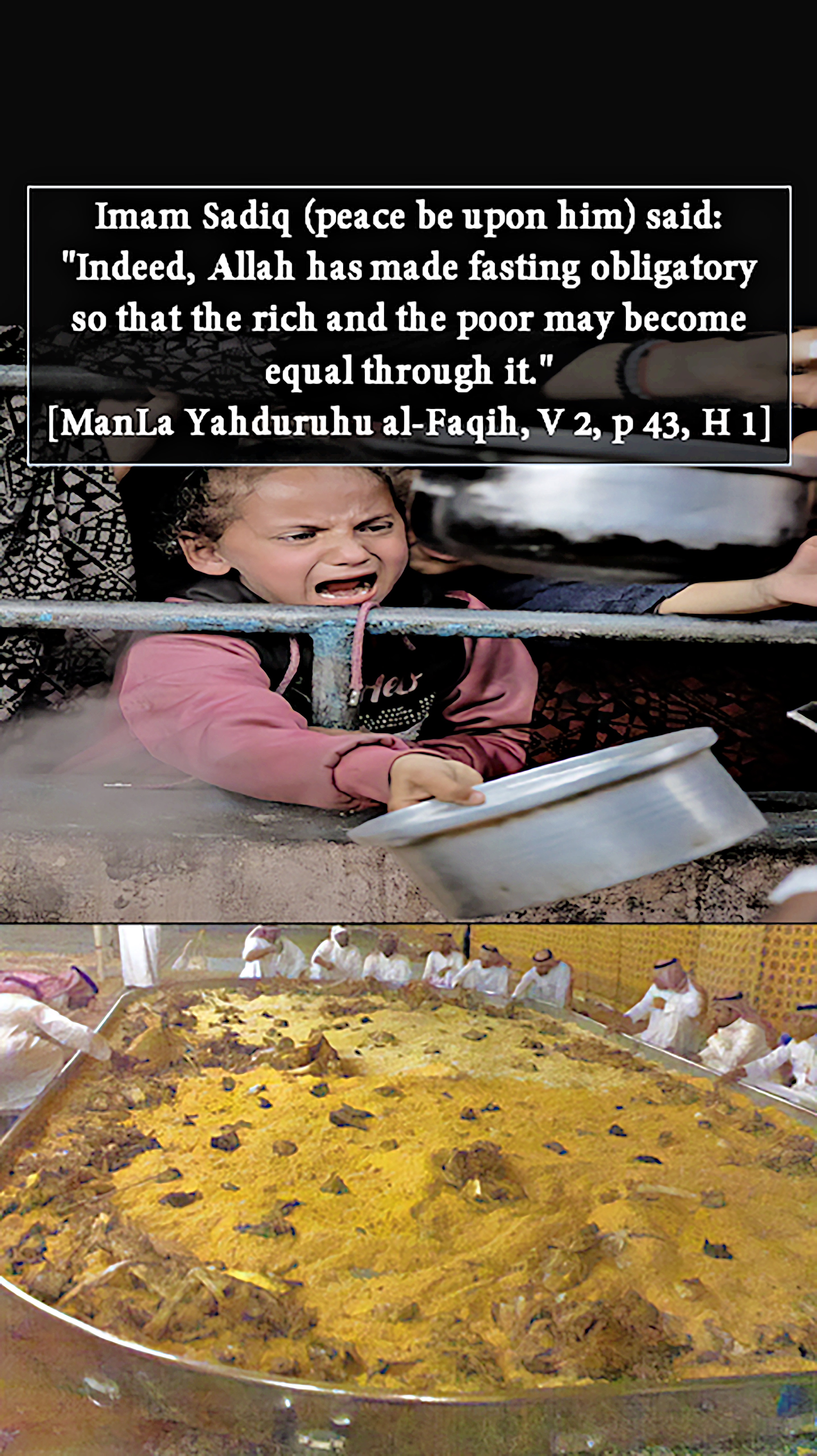
The teachings reveal a profound interdependence within the Muslim community. Allah has made the sustenance of the poor a right in the wealth of the rich. Imam Ali (peace be upon him) stated: "Verily Allah allotted to the rich their wealth in proportion to what would also suffice the poor from among them, so if they go hungry or are naked or exhausted, it is only because of the rich people’s deprivation of them. And Allah has a right to take them to account for it on the Day of Resurrection and to punish them for it." (Kanz al-’Ummal, no. 16840)
Imam Jafar al-Sadiq (peace be upon him) said: "Indeed Allah, the Mighty and Majestic, has allocated in the wealth of the rich for the poor what suffices them, and had it not been for that He would have increased it for them, and they only suffer because of those who withhold from them what is due to them." (Wasa'il al-Shia Vol. 9, Section 1, Chapter 1, Hadith 11395)
Imam Jafar al-Sadiq (peace be upon him) said: "Zakat was only established as a test for the rich and aid for the poor. If people paid the zakat on their wealth, no Muslim would remain poor or needy, and they would be satisfied with what Allah has obligated for them. People only become poor, needy, hungry, and naked due to the sins of the rich. It is fitting for Allah, the Blessed and Exalted, to withhold His mercy from those who withhold Allah's right in their wealth. I swear by the One who created creation and extended provision, no wealth is lost on land or sea except by neglecting zakat, and no prey is hunted on land or sea except by neglecting glorification Obligation Of Zakat on that day. The most beloved people to Allah, the Exalted, are those most generous with their hands, and the most generous people are those who pay the zakat on their wealth and do not withhold from the believers what Allah has obligated for them in their wealth." (Wasa'il al-Shia Vol. 9, Section 1, Chapter 1, Hadith 11392)
2.4 The Weak as Catalysts for Divine Mercy
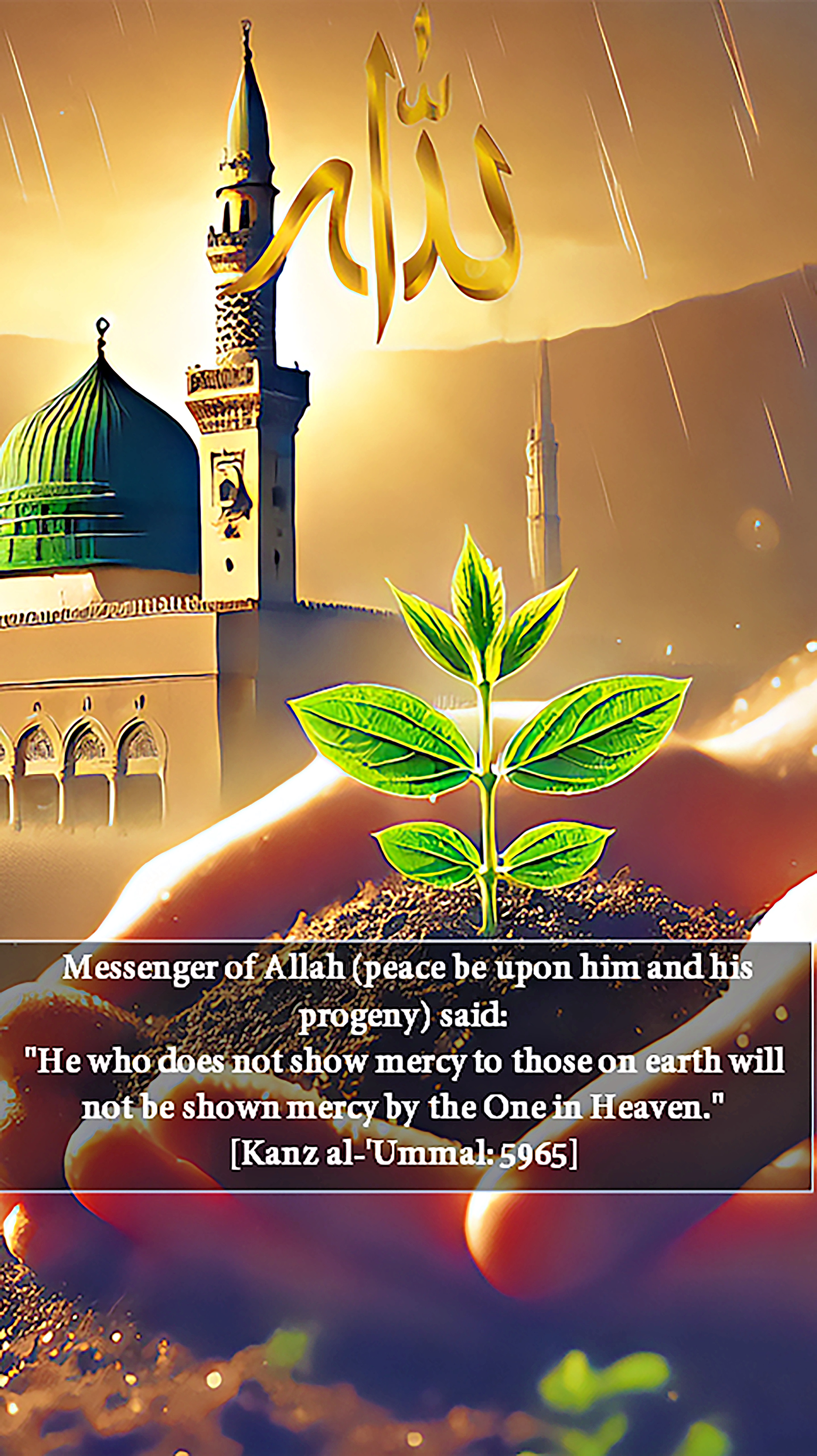
Prophet Mohammad (peace be upon him and his family) said: "The Merciful, Blessed and Exalted, has mercy on those who are merciful, have mercy on those on earth and He in heaven will have mercy on you." (Mizan al-Hikmah by Muhammad al-Rayshahri, Volume 2, Page 1044)
Prophet Mohammad (peace be upon him and his family) said: "Show mercy to those on the earth, and the One (Allah (swt)) in the heavens will show mercy to you." (Man La Yahduruh al-Faqih (Vol. 4) by Shaykh Mu?ammad b. Ali al-Saduq, Book 1, Chapter 175, Hadith #5806)
Amir al-Mu'minin Imam Ali (peace be upon him) said: "Show mercy, and you will be shown mercy." (Amali al-Saduq by Shaykh al-Saduq, Volume 0, Page 278)
The weak, through their sincerity, humility, and dependence on Allah, become catalysts for divine mercy. Their presence, prayers, and sincerity are a cause for Allah's help and sustenance to reach the entire Ummah.
Part Three: Practical Responsibilities Toward the Weak
3.1 Justice and the Protection of Rights
Islamic teachings place a paramount duty on individuals and society to uphold justice and defend the rights of the weak.
The Quranic Command for Justice:
"Indeed, Allah commands you to render trusts to whom they are due and when you judge between people to judge with justice. Excellent is that which Allah instructs you. Indeed, Allah is ever Hearing and Seeing." (Quran 4:58)
"O you who have believed, be persistently standing firm in justice, witnesses for Allah, even if it be against yourselves or parents and relatives. Whether one is rich or poor, Allah is more worthy of both. So follow not [personal] inclination, lest you not be just. And if you distort [your testimony] or refuse [to give it], then indeed Allah is ever, with what you do, Acquainted." (Quran 4:135)
"O you who have believed, be persistently standing firm for Allah, witnesses in justice, and do not let the hatred of a people prevent you from being just. Be just; that is nearer to righteousness. And fear Allah; indeed, Allah is Acquainted with what you do." (Quran 5:8)
"Indeed, Allah orders justice and good conduct and giving to relatives and forbids immorality and bad conduct and oppression. He admonishes you that perhaps you will be reminded." (Quran 16:90)
Prophet Muhammad (peace be upon him and his family) warned: "A community who does not let the weak uphold his rights from the strong without obstacle will never be sanctified." (Bihar al-Anwar, v. 77, p. 258, no. 1)
Prophet Mohammad (peace be upon him and his family) said: "How can Allah sanctify a people who do not take for their weak from their strong." (Bihar al-Anwaar by Allamah Majlisi, Volume 72, Page 353)
Imam Jafar al-Sadiq (peace be upon him) said: "A nation is not considered holy if the rights of its weak are not taken from its strong without hesitation." (Wasa'il al-Shia Vol. 16, Section 2, Chapter 1, Hadith 21135)
Imam Ali (peace be upon him) emphasized: "Wronging the weak is the most atrocious type of injustice." (Nahj al-Balagha, Letter 31)
Imam Ai (peace be upon him) also stated: "Allah, most High, has made obligatory upon the leaders of justice to equate themselves with the weak ones from among of people, so that the poor cannot be intimidated as a result of his poverty." (Nahjul Balaghah, Sermon 209)
Prophet Mohammad (peace be upon him and his family) said: "A believer has seven rights over another believer, which are obligatory upon him by Allah (swt), the Mighty and Majestic: to respect him in his sight, to have affection for him in his heart, to assist him with his wealth, to prohibit speaking ill of him in his absence, to visit him when he is sick, to accompany his funeral, and to speak only good of him after his death." (Man La Yahduruh al-Faqih (Vol. 4) by Shaykh Mu?ammad b. Ali al-Saduq, Book 1, Chapter 175, Hadith #5850)
Prophet Mohammad (peace be upon him and his family) said: "A Muslim has thirty rights over his brother, from which there is no exemption except by fulfillment or pardon: Forgive his slip, have mercy on his tears, cover his faults, overlook his mistakes, accept his excuse, defend him in his absence, maintain giving him advice, preserve his friendship, protect his covenant, visit him when sick, attend his funeral, accept his invitation, accept his gift, reciprocate his favor, thank his blessing, give him good support, protect his wife, fulfill his need, support his request, respond to his sneeze, guide him when lost, return his greeting, speak kindly to him, appreciate his favors, believe in his oaths, befriend his friend (and not be hostile), support him whether he is oppressor or oppressed; as for supporting him when he is an oppressor, prevent him from his oppression, and as for supporting him when he is oppressed, help him obtain his right, not surrender him, not abandon him, love for him what good he loves for himself, and hate for him what evil he hates for himself. Then he (peace be upon him) said: I heard the Messenger of Allah (peace be upon him and his family) say: Indeed one of you may neglect something from the rights of his brother, and he will be held accountable for it on the Day of Judgment, and it will be settled for or against him." (Wasa'il al-Shia Vol. 12, Section 1, Chapter 122, Hadith 16114)
From Al-Mu'alla ibn Khunais, from Abu Abdullah (peace be upon him), who said: I asked him: What are the rights of a Muslim over another Muslim? He said: He has seven obligatory rights, none of which is optional. If he neglects any of them, he departs from Allah's guardianship and obedience, and Allah will have no share in him. I said: May I be sacrificed for you, what are they? He said: O Mu'alla, I am concerned about you, I fear that you will neglect and not preserve them, and learn but not act upon them. I said: There is no power except through Allah. He said: The easiest right among them is that you love for him what you love for yourself and dislike for him what you dislike for yourself. The second right is that you avoid his anger, seek his pleasure, and obey his command. The third right is that you help him with yourself, your wealth, your tongue, your hand, and your foot. The fourth right is that you be his eye, his guide, and his mirror. The fifth right is that you should not be satisfied while he is hungry, nor drink while he is thirsty, nor dress while he is naked. The sixth right is that if you have a servant while your brother doesn't, it is obligatory for you to send your servant to wash his clothes, prepare his food, and make his bed. The seventh right is that you fulfill his oath, accept his invitation, visit him when sick, attend his funeral, and if you know he has a need, you hasten to fulfill it without waiting for him to ask you, but rather take the initiative. When you do this, you have connected your guardianship with his guardianship, and his guardianship with your guardianship. (Wasa'il al-Shia Vol. 12, Section 1, Chapter 122, Hadith 16097)
3.2 Zakat, Khums, and Institutionalized Support
Quranic Verses on Zakat:
Islam establishes institutional mechanisms to support the weak through obligatory financial duties.
"Take, [O, Muhammad], from their wealth a charity by which you purify them and cause them increase, and invoke [Allah 's blessings] upon them. Indeed, your invocations are reassurance for them. And Allah is Hearing and Knowing." (Quran 9:103)
"Zakah expenditures are only for the poor and for the needy and for those employed to collect [zakah] and for bringing hearts together [for Islam] and for freeing captives [or slaves] and for those in debt and for the cause of Allah and for the [stranded] traveler - an obligation [imposed] by Allah. And Allah is Knowing and Wise." (Quran 9:60)
Imam al-Ridha (peace be upon him) explained: "The reason for Zakat is for the sustenance of the poor and the protection of the wealth of the rich, because Allah the Mighty and Majestic has tasked the healthy people with taking care of the affairs of the chronically ill and afflicted, as Allah the Blessed and Exalted said: "You shall certainly be tested in your wealth and yourselves" [Quran 3:186] In your wealth is the payment of zakat, and within yourselves is the conditioning of the soul upon patience, along with what is in that of fulfilling gratitude for Allah's blessings mighty and majestic and hoping for increase, along with what it contains of ziyarah and compassion and mercy for the weak ones and kindness to the poor and encouraging them towards consolation, and strengthening the poor and helping them in matters of religion. It is an admonition and lesson for the wealthy so they may recognize through them the poverty of the hereafter, and what they have of encouragement in that to be grateful to Allah the Blessed and Most High for what He has bestowed upon them and given them, and to supplicate and implore and fear becoming like them in many matters regarding paying zakat, giving charity, maintaining family ties, and doing good deeds." (Wasa'il al-Shia Vol. 9, Section 1, Chapter 1, Hadith 11393)
Imam Musa ibn Jafar Al-Kadhim (peace be upon him) said: "Zakat was established as sustenance for the poor and a means of increasing their wealth." (Man La Yahduruh al-Faqih (Vol. 2) by Shaykh Mu?ammad b. Ali al-Saduq, Book 1, Chapter 1, Hadith #2)
Imam Jafar al-Sadiq (peace be upon him) said: "Allah Almighty has imposed upon the rich an obligation in their wealth for the poor which they are not praised except for fulfilling it, and it is zakat. By it, their blood is protected, and by it, they are called Muslims." (Wasa'il al-Shia Vol. 9, Section 1, Chapter 4, Hadith 11450)
3.3 Caring for Specific Vulnerable Groups
Orphans
Quranic Verses on Orphans:
"And give to the orphans their properties and do not substitute the defective [of your own] for the good [of theirs]. And do not consume their properties into your own. Indeed, that is ever a great sin." (Quran 4:2)
"Indeed, those who devour the property of orphans unjustly are only consuming into their bellies fire. And they will be burned in a Blaze." (Quran 4:10)
"Have you seen the one who denies the Recompense?For that is the one who drives away the orphan And does not encourage the feeding of the poor." (Quran 107:1-3)
Prophet Muhammad (peace be upon him and his family) emphasized the profound significance of caring for orphans. "Whoever finds hardness in their heart should bring an orphan close, show kindness to them, and pass their hand over their head; this will soften their heart, by the permission of Allah (swt), the Mighty and Majestic. Indeed, the orphan has a right."
It is also reported that He said: "He should seat the orphan at his table and pass his hand over their head, and this will soften his heart." (Man La Yahduruh al-Faqih (Vol. 1) by Shaykh Mu?ammad b. Ali al-Saduq, Book 1, Chapter 28, Hadith #572)
Imam Jafar al-Sadiq (peace be upon him) said: "When an orphan cries, the Throne shakes, and Allah, the Blessed and Exalted, says: Who is this who made My servant cry, whom I deprived of his parents in his childhood?! By My Might, My Majesty, and My Elevation in My place, no believing servant consoles him except that Paradise becomes obligatory for him." (Wasa'il al-Shia Vol. 1, Section 4, Chapter 91, Hadith 3670)
Imam Jafar al-Sadiq (peace be upon him) said: "If the orphan cries, the throne shakes for him, and Allah, Blessed and Exalted, says: Who is this who made my servant whom I deprived of his parents when he was young cry? By My Glory, My Magnificence, and My elevation in My Place, I will obligate Paradise for any believing servant who gets him to stop crying." (Man La Yahduruhu al-Faqih by Shaykh al-Saduq, Volume 1, Page 188)
Imam Jafar al-Sadiq (peace be upon him) said: "There is no servant who passes their hand over the head of an orphan out of compassion for them except that Allah (swt), the Mighty and Majestic, grants them a light for every strand of hair (they touch) on the Day of Judgment." (Man La Yahduruh al-Faqih (Vol. 1) by Shaykh Mu?ammad b. Ali al-Saduq, Book 1, Chapter 28, Hadith #570)
The Elderly
Islamic teachings deeply embed the care and respect for the elderly.
Quranic Verses on the Elderly:
"And your Lord has decreed that you not worship except Him, and to parents, good treatment. Whether one or both of them reach old age [while] with you, say not to them [so much as], "uff," and do not repel them but speak to them a noble word." (Quran 17:23)
"And lower to them the wing of humility out of mercy and say, "My Lord, have mercy upon them as they brought me up [when I was] small." (Quran 17:24)
"And We have enjoined upon man, to his parents, good treatment. His mother carried him with hardship and gave birth to him with hardship, and his gestation and weaning [period] is thirty months. [He grows] until, when he reaches maturity and reaches [the age of] forty years, he says, "My Lord, enable me to be grateful for Your favor which You have bestowed upon me and upon my parents and to work righteousness of which You will approve and make righteous for me my offspring. Indeed, I have repented to You, and indeed, I am of the Muslims."(Quran 46:15)
Prophet Mohammad (peace be upon him and his family) said: "Whoever recognizes the virtue of an elderly sheikh and respects him due to his age, Allah will protect him from the terror of the Day of Judgment, and he said: Among the Recommendation Of Honoring, Respecting, And Being Generous To Elder... ways of glorifying Allah is honoring the elderly believer." (Wasa'il al-Shia Vol. 12, Section 1, Chapter 67, Hadith 15750)
Prophet Mohammad (peace be upon him and his family) said, “One who knows the excellence of an elderly person and honors him, Allah, the Mighty and Sublime will grant him salvation from fear on the Day of Judgment.” And he said, “Respecting an elderly believer is a way of showing respect to Allah, the Mighty and Sublime.” (Thawab al-A mal wa iqab al-A mal by Shaykh Mu?ammad b. Ali al-Saduq, Book 2, Chapter 432, Hadith #1)
The Sick and Disabled
Islam encourages specific acts of compassion and responsibility towards the sick and infirm.
"There is no blame upon the blind, the lame, or the sick" (Quran 24:61).
"So eat of them and feed the miserable and poor."(Quran 22:28)
From Al-Sakuni, from Abu Abdullah (peace be upon him), regarding the words of Allah the Mighty and Majestic: "And feed the miserable poor" [Quran 22:28], he said: It refers to the chronically ill person who cannot go out due to his chronic illness. (Wasa'il al-Shia Vol. 9, Section 8, Chapter 45, Hadith 12506)
Prophet Mohammad (peace be upon him and his family) said: "Give sadaqah, and medicate your sick with sadaqah, for sadaqah drives away symptoms and sicknesses and it is an increase in your lifespans and your hasanat." (Mizan al-Hikmah by Muhammad al-Rayshahri, Volume 2, Page 1595)
Prophet Mohammad (peace be upon him and his family) said: "Treat your sick with charity." (Wasa'il al-Shia Vol. 9, Section 8, Chapter 1, Hadith 12269)
Visiting the sick
Visiting the sick is an act that immerses a believer in divine mercy.
Prophet Mohammad (peace be upon him and his family) said: "Any Muslim who visits a sick believer will be absorbed in mercy. When he sits with him (the sick believer), mercy will submerge him; and when he returns, he will be accompanied by seventy thousand angels until he enters his house, every one of them saying, 'Rejoice and enjoy Paradise." (Kitab al-Mu?min by Husayn b. Sa id al-Ahwazi, Book 1, Chapter 6, Hadith #9)
Prophet Mohammad (peace be upon him and his family) said : "Whoever visits a sick person, a caller from heaven calls out his name: "O so-and-so! You are blessed and your walk is blessed with a reward from Paradise." And Al-Himyari reported in (Qurb Al-Isnad) from Harun bin Muslim similarly except he said: "You have secured a dwelling in Paradise." (Wasa'il al-Shia Vol. 2, Section 7, Chapter 10, Hadith 2514)
Imam Muhammad Baqir (peace be upon him) said: "Whoever visits a sick person for the sake of Allah, the sick person will not ask anything for the visitor except that Allah will answer it." (Wasa'il al-Shia Vol. 2, Section 7, Chapter 12, Hadith 2526)
The Poor and Needy
"And in their wealth there is acknowledged right for the needy and destitute" (Quran 51:19).
Prophet Mohammad (peace be upon him and his family) said: "The Prophet (S) said, ‘The poor are the friends of Allah." (al-Firdaws, v. 3, p. 157, no. 4423)
Prophet Mohammad (peace be upon him and his family) said: "Feign poverty and love the poor; sit with them and help them, and shun the companionship of the rich and be kind to them and covet not their wealth." (Tanbih al-Khawatir, v. 2, p. 120)
Prophet Mohammad (peace be upon him and his family) said: "Be kind to the poor; for theirs is a (high) status in the last Day, for sure" (Nahj Al-Fasahah)
Prophet Mohammad (peace be upon him and his family) said: "A poor at the door of the pious is God’s gift for him" (Nahj Al-Fasahah)
Prophet Mohammad (peace be upon him and his family) said, "Be compassionate towards the destitute." (Kanz al-’Ummal, no. 5983)
Prophet Mohammad (peace be upon him and his family): "Be kind to the poor; for theirs is a (high) status in the last Day, for sure" (Nahj Al-Fasahah)
Prophet Mohammad (peace be upon him and his family) said: "A believer must not feel satiated, with his neighbor being hungry" (Nahj Al-Fasahah)
Imam Muhammad Baqir (peace be upon him) said: “Of the rights of the believer on his believing brother (in belief) is to satisfy his hunger, provide covering for his privacy, facilitate his hardships and pay off his debts. When he dies, look after his family and children.” (Al-Kafi (Vol. 2) by Shaykh Muhammad b. Ya qub al-Kulayni, Book 1, Chapter 75, Hadith #1)
Messenger of Allah (peace be upon him and his family) was asked: Which deeds are most beloved to Allah the Most High? He said: "Following up on bringing happiness to a Muslim." It was said: O Messenger of Allah, what is following up on bringing happiness to a Muslim? He said: "Satisfying his hunger, relieving his distress, and paying off his debt." (Wasa'il al-Shia Vol. 16, Section 3, Chapter 24, Hadith 21752)
Imam Muhammad Baqir (peace be upon him) said: "Among the rights of a believer over his believing brother is to satisfy his hunger, cover his nakedness, relieve his distress, pay his debt, and when he dies, to look after his family and children." (Wasa'il al-Shia Vol. 12, Section 1, Chapter 122, Hadith 16095)
Imam Muhammad Baqir (peace be upon him) said: "(Amongst) the qualities most loved by Allah are three: a Muslim who feeds a hungry Muslim, relieves him from a distress or settle his debt for him." (Kitab al-Mu?min by Husayn b. Sa id al-Ahwazi, Book 1, Chapter 7, Hadith #9)
Imam Muhammad al-Baqir (peace be upon him) said: "Three traits are among the most beloved deeds to Allah: a Muslim who feeds a hungry Muslim, relieves him of his anguish, and pays off his debt." (Bihar al-Anwaar by Allamah Majlisi, Volume 71, Page 365)
Prophet Mohammad (peace be upon him and his family) said: "The best charity is that given when one is financially capable. Begin with those under your care. The upper hand (the giver) is better than the lower hand (the receiver), and Allah (swt), the Almighty, does not reproach for sufficiency." (Man La Yahduruh al-Faqih (Vol. 2) by Shaykh Mu?ammad b. Ali al-Saduq, Book 1, Chapter 11, Hadith #9)
Prophet Mohammad (peace be upon him and his family) said, "Your helping a weak person is the best charity.”’ (Al-Kafi (Vol. 5) by Shaykh Muhammad b. Ya qub al-Kulayni, Book 1, Chapter 26, Hadith #2)
Imam Musa Kazim (peace be upon him) said, "Your assistance of the weak is one of the best forms of charity." (Tuhaf al-’Uqul, p. 414)
Imam Jafar ibn Muhammad Al-Sadiq (peace be upon him) was asked, Which charity is the best? Imam (as) replied: "The charity given by one in hardship. Have you not heard the words of Allah (swt), the Mighty and Glorious: 'And they give preference over themselves, even though they are in need.' Do you see any surplus here? (Man La Yahduruh al-Faqih (Vol. 2) by Shaykh Mu?ammad b. Ali al-Saduq, Book 1, Chapter 20, Hadith #24)
Every good deed is considered charity
Prophet Mohammad (peace be upon him and his family) said: "Every good deed is charity, and one who guides to good is like its doer, and Allah loves helping those in distress." (Wasa'il al-Shia Vol. 16, Section 3, Chapter 1, Hadith 21561)
Prophet Mohammad (peace be upon him and his family) said: "Every good deed is charity, and the best charity is that given from surplus wealth. Start with those you support. The upper hand is better than the lower hand. And Allah does not blame for sufficiency." (Wasa'il al-Shia Vol. 9, Section 8, Chapter 42, Hadith 12502)
Part Four: Imam Ali's Vision of Justice
4.1 The Inversion of Power
Prophet Mohammad (peace be upon him and his family) said, "All of you are observers of and responsible for your subjects’ rights" (Nahj Al-Fasahah)
Imam Ali (peace be upon him) articulated a revolutionary principle of justice that inverts conventional notions of power and weakness. He declared: "The low is in my view worthy of honour till I secure (his) right for him while the strong is in my view weak till I take (other’s) right from him." [Nahj al-Balaghah, Sermon 37]
This statement encapsulates Imam Ali's unwavering commitment to justice:
The weak becomes strong: Their inherent weakness is transformed into strength when their rights are violated. Imam Ali pledges to empower the weak until their rightful claim is restored.
The strong becomes weak: The societal strength of the powerful is rendered "weak and infirm" until they are compelled to return what they have unjustly taken.
Imam Ali (peace be upon him) further emphasized: "Wronging the weak is the most atrocious type of injustice." (Nahj al-Balagha, Letter 31)
He also stated: "Allah, most High, has made obligatory upon the leaders of justice [truth] to equate themselves with the weak ones from among of people, so that the poor cannot be intimidated as a result of his poverty." (Nahjul Balaghah, Sermon 209)
4.2 Practical Examples of Justice
Equal Distribution of Wealth
When Imam Ali assumed the caliphate, he publicly announced that all special privileges and unequal distributions would be ended and that wealth in the treasury would be divided equally among people. He declared: "Allah, most High, has made obligatory upon the leaders of justice [truth] to equate themselves with the weak ones from among of people, so that the poor cannot be intimidated as a result of his poverty." (Nahjul Balaghah, Sermon 209)
Imam Ali (peace be upon him) said: "Justice puts things in their places while generosity takes them out from their directions; justice is the general caretaker while generosity is a particular benefit. Consequently, justice is superior and more distinguished of the two." (Nahj al-Balagha by al-Sharif al-Radi, Book 3, Chapter 437, Hadith #553)
Imam Ali (peace be upon him) said: "The most just person is he who uses his strength even-handedly." (Ghurar al-Hikam, no. 3242)
Imam Ali (peace be upon him) said, "Justice is the regulatory system of authority." (Ghurar al-Hikam, no. 774)
Imam Ali(peace be upon him) said, "Justice is the base that supports the whole world." (Matalib al-Sa’ul, p. 61)
Imam Ali (peace be upon him) was once asked which was better, justice or generosity, to which he replied, "Justice puts things in their rightful place, whereas generosity takes them away from their course. Justice is a general predominant state, whereas generosity is a transient characteristic. Justice is therefore the nobler and better of the two." (Nahjul Balaghah, Saying 437)
Justice as Worship
Prophet Mohammad (peace be upon him and his family) said: "One hour of justice is better than one year of worship" (Nahjul Fasahah, page 490)
Justice among children
Prophet Mohammad (peace be upon him and his family) said: "Observe justice among your children just as you would like that they render justice among you" (Bihar al-Anwar, volume 23, Makarim AlAkhlaq, page 220)
Prophet Mohammad (peace be upon him and his family) said: "Allah The Exalted loves that you maintain justice among your children, even in kisses." (Mizan al-Hikmah by Muhammad al-Rayshahri, Volume 4, Page 3673)
4.3 The Consequences of Injustice
Prophet Mohammad (peace be upon him and his family) said, “One who takes up the leadership of ten persons and is not able to do justice to them, will come on the Day of Judgment with his hands, feet and head perforated.” (Thawab al-A mal wa iqab al-A mal by Shaykh Mu?ammad b. Ali al-Saduq, Book 3, Chapter 103, Hadith #1)
Imam Mohammad Baqir (peace be upon him) said: "Indeed, the most terrifically sorry of all the people on the resurrection day will be the servant who defines and shows the way of justice to the people and himself opposes it" (Tuhaf al-Uqul, P 298)
Imam Jafar al-Sadiq (peace be upon him) said: "No wealth is lost on land or sea except by withholding zakat. He said: And he said: When the Qa'im rises, he will take the withholder of zakat and behead him." (Wasa'il al-Shia Vol. 9, Section 1, Chapter 4, Hadith 11456)
Part Five: The Theological Dimension—"Al-Mustad'afin" as a
Sacred Category
The Quranic verse that most powerfully defines the concept of al-Mustad'afin is: "And We wanted to confer favor upon those who were oppressed in the land and make them leaders and make them inheritors And establish them in the land and show Pharaoh and [his minister] Haman and their soldiers through them that which they had feared." (Quran 28:5-6)
This verse, known as the "Verse of the Rule of the Oppressed," carries a profound divine promise: those who have been weakened and oppressed will ultimately be granted leadership and inheritance of the earth. The verse is understood as a general and continuous law throughout history, with the ultimate fulfillment occurring through the appearance of Imam al-Mahdi (peace be upon him).
The Imams as the Weakened Ones
According to numerous narrations, the Imams of the Ahl al-Bayt (peace be upon them) are the primary referents of the Quranic promise to the weakened ones. Imam al-Sadiq (peace be upon him) stated: "Indeed, the Messenger of Allah, Allah’s blessings be upon him and his Family, looked at Ali, Hasan and Hussain, peace be upon them, and so he wept and said: You are the ones considered weak after me." Mufaddal said: So I said to him: What is the meaning of that, O son of Allah’s Messenger? He said:"Its meaning is that «You are the Imams after me». Indeed, Allah, Exalted and Glorious is He, says: «And We want to bestow favor upon those who were considered weak on earth and make them Imams and make them the inheritors.» (28:5) This verse goes in us until the Day of Resurrection." (Ma ani al-Akhbar by Shaykh Mu?ammad b. Ali al-Saduq, Book 1, Chapter 31, Hadith #1)
Amirul Momineen, Imam Ali (peace be upon him) said with regard to the following verse: “And We desired to bestow a favor upon those who were deemed weak in the land, and to make them the Imams, and to make them the heirs…” (28:5) “They are Aale Muhammad (a.s). Allah will raise their Mahdi after their distress, so he will honor them and will disgrace their enemy.” (Kitab al-Ghayba by Shaykh Mu?ammad b. al-Hasan al-Tusi, Book 1, Chapter 28, Hadith #14)
Imam Jafar al-Sadiq (peace be upon him) explained another dimension of "the weakened ones": "I asked Abu Abdullah about the weak ones. He said: They are the people of wilayah. I said: Which wilayah? He said: It is not wilayah in religion, but wilayah in marriage, inheritance, and social interaction. They are neither believers nor disbelievers; among them are those whose matter is deferred to Allah." [Wasa'il al-Shia Vol. 20, Section 8, Chapter 11, Hadith 26338; Wasa'il al-Shia Vol. 20, Section 8, Chapter 11, Hadith 26345; Ma'ani al-Akhbar, Book 1, Chapter 186, Hadith #8]
This interpretation reveals that the category of al-mustad'afin includes individuals who have not fully embraced the true faith to be considered believers, nor have they outright rejected it to be labeled disbelievers. Their spiritual journey is incomplete, and their ultimate judgment is left to Allah's discretion.
Part Six: The Consequences of Neglect
6.1 Worldly Consequences
Loss of Wealth
Prophet Mohammad (peace be upon him and his family) said: "Wealth does not decrease because of (giving in) charity." (Man La Yahduruh al-Faqih (Vol. 4) by Shaykh Mu?ammad b. Ali al-Saduq, Book 1, Chapter 175, Hadith #5827)
Imam Jafar al-Sadiq (peace be upon him) warned: "Indeed Allah, the Mighty and Majestic, has allocated in the wealth of the rich for the poor what suffices them, and had it not been for that He would have increased it for them, and they only suffer because of those who withhold from them what is due to them." (Wasa'il al-Shia Vol. 9, Section 1, Chapter 1, Hadith 11395)
Societal Destruction
Amir al-muminin, Imam Ali (peace be upon him), said: "Allah, the Glorified, has fixed the livelihood of the destitute in the wealth of the rich. Consequently, whenever a destitute remains hungry it is because some rich person has denied (him his share). Allah, the Sublime, will question them about it." (Nahj al-Balagha by al-Sharif al-Radi, Book 3, Chapter 328, Hadith #405)
Imam Jaffar Sadiq (peace be upon him): "If people honor the rights of each other and fulfill requirements of the poor, they will enjoy a good and satisfactory life" (Wasa’il ‘ush-Shi’a, volume 6, page 2)
Divine Displeasure and Punishment
Prophet Muhammad (peace be upon him and his family) warned: "When adultery appears frequently after me, sudden death will increase. When they give short measure and weight, Allah will seize them with years of famine and decrease. When they withhold Zakat, the earth will withhold its blessings from crops, fruits, and all minerals. When they are unjust in judgments, they will help each other in oppression and transgression. When they break covenants, Allah will give their enemy power over them. When they cut off family ties, wealth will be placed in the hands of the wicked. When they do not enjoin good and forbid evil, and do not follow the righteous ones from my household, Allah will give the evil ones among them power over them, then their righteous ones will supplicate but will not be answered." (Wasa'il al-Shia Vol. 16, Section 2, Chapter 41, Hadith 21550)
Loss of Divine Sanctification
Prophet Mohammad (peace be upon him and his family) said, "A community who does not let the weak uphold his rights from the strong without obstacle will never be sanctified." (Bihar al-Anwar, v. 77, p. 258, no. 1)
Prophet Mohammad (peace be upon him and his family) said: "How can Allah sanctify a people who do not take for their weak from their strong." (Bihar al-Anwaar by Allamah Majlisi, Volume 72, Page 353)
Not our Shia
It is narrated from him (narrator of the Hadith above) from ‘Uthman ibn ‘Isa from Muhammad ibn ‘Ajlan who has said the following: “Once, I was in the presence of Abu ‘Abdillah (a.s.) when a man came and offered the greeting of peace. The Imam asked, "How are your brothers (in belief) whom you have left behind?" He praised, admired and extolled them. The Imam asked, "Do their wealthy ones visit their poor ones?" He said, ‘It is very rare.’ The Imam asked, "Do their rich ones reach out to the poor ones?" He said, ‘It is very rare.’ “The Imam asked, "Do their rich ones maintain good relations with their poor ones financially?" He said, ‘You are speaking of the moral behavior that is practiced very rarely in our people.’ The narrator has said that the Imam then asked, "Why do you then think they are Shi’a (Muslims)?”’ (Al-Kafi (Vol. 2) by Shaykh Muhammad b. Ya qub al-Kulayni, Book 1, Chapter 75, Hadith #10)
Unanswered Prayers
Neglecting the communal duty to enjoin good and forbid evil, which includes advocating for the weak, can have dire consequences. "Do not give up bidding for good and forbidding from evil lest the mischievous gain positions over you, and then if you will pray, the prayers will not be granted." (Nahjul Balagha, Letter 47)
6.3 Consequences in the Hereafter
Hellfire
"Indeed, those who devour the property of orphans unjustly are only consuming into their bellies fire. And they will be burned in a Blaze." (Quran 4:10).
"And those who hoard gold and silver and spend it not in the way of Allah - give them tidings of a painful punishment." (Quran 9:34).
Prohibition Of Wrongfully Consuming The Wealth Of Orphans From Al-Halabi, from Abu Abdullah (peace be upon him) who said: In the book of Ali (peace be upon him) it states that consuming the wealth of an orphan will affect one's descendants in this world and its punishment will follow him in the Hereafter. As for this world, Allah says: "And let those fear who, if they left behind weak offspring, would be concerned about them. So let them fear Allah and speak justly" [Quran, 4:9]. And as for the Hereafter, Allah the Mighty and Majestic says: "Indeed, those who devour the property of orphans unjustly are only consuming into their bellies fire. And they will be burned in a Blaze" [Quran, 4:10]. (Wasa'il al-Shia Vol. 17, Section 2, Chapter 70, Hadith 22443)
From Muhammad bin Sinan, from Abu Al-Hassan Al-Ridha (peace be upon him) in what he wrote to him in response to his questions: Allah prohibited consuming the wealth of orphans unjustly for many reasons related to various forms of corruption: The first of these is that when a person consumes the wealth of an orphan unjustly, he has helped in killing him, as the orphan is not self-sufficient, nor can he support himself or manage his affairs, nor does he have someone to care for him and suffice him like his parents would. So when someone consumes his wealth, it is as if he has killed him and driven him to poverty and destitution, in addition to what Allah has forbidden and the punishment He has established in His words, the Mighty and Majestic: "And let those fear who, if they left behind weak offspring, would be concerned about them. So let them fear Allah" [Quran, 4:9]. And according to Abu Ja'far (peace be upon him): "Allah has threatened two punishments for consuming the wealth of an orphan: a punishment in this world and a punishment in the hereafter." So in prohibiting the wealth of the orphan is the preservation of the orphan, his self- sufficiency, and safety for descendants that they not be afflicted with what befell him, due to the punishment Allah has threatened, along with the orphan seeking retribution when he comes of age and the occurrence of hatred, enmity, and animosity until they destroy one another. (Wasa'il al-Shia Vol. 17, Section 2, Chapter 70, Hadith 22442)
From Al-Mujashi'i, from Al-Ridha, from his forefathers (peace be upon them), he said: When this verse was revealed "And those who hoard gold and silver and do not spend it in the way of Allah, give them tidings of a painful punishment" [Quran 9:34], the Messenger of Allah (peace be upon him and his family) said: Any wealth whose zakat is paid is not considered hoarding even if it is beneath seven earths, and any wealth whose zakat is not paid is hoarding even if it is above the earth. (Wasa'il al-Shia Vol. 9, Section 1, Chapter 3, Hadith 11445)
Imam Jafar ibn Muhammad Al-Sadiq (as) regarding the words of Allah (swt), the Exalted, Thus Allah (swt) will show them their deeds as regrets upon them (Surah Al-Baqarah 2:167), said: This refers to a man who hoards his wealth and refrains from spending it in the obedience of Allah (swt), the Exalted, out of miserliness. Then he dies and leaves it behind for someone who either uses it in the obedience of Allah (swt) or in His disobedience. If it is used in obedience to Allah (swt), he will see it recorded in someone else's scale of deeds and will feel regret, for the wealth was originally his. And if it is used in disobedience to Allah (swt), he will have enabled the person who committed sins with that wealth, furthering their disobedience to Allah (swt), the Exalted. (Man La Yahduruh al-Faqih (Vol. 2) by Shaykh Mu?ammad b. Ali al-Saduq, Book 1, Chapter 16, Hadith #7)
And with the former chains of narration from ‘Ali ibn Mahyzar, from al-Qasim ibn Urwah, from a person, from either of them, peace be upon them, who explained the verse: ’Thus will Allah show them their deeds as heartbreaking anguish for them....’ (2:167). He said: "It is parable of a man who amasses wealth but is averse to spending it in a charitable manner and then he dies, bequeathing it to the others. And the heirs spend the same wealth for good deeds; so the man who originally earned the wealth rises on the Day of Judgement to witness the reward of the good deeds going to someone else’s credit." (Al-Am?l? by Shaykh Mu?ammad b. Mu?ammad al-Muf?d, Book 23, Chapter 35, Hadith #35)
Imam Jafar al-Sadiq (peace be upon him) said: “Whoever in his heart may have an amount of arrogance of the size of an atom he will not be able to enter paradise.” (Al-Kafi (Vol. 2) by Shaykh Muhammad b. Ya qub al-Kulayni, Book 1, Chapter 124, Hadith #6)
Imam Jafar al-Sadiq (peace be upon him) said: "In Hell there is a valley for the Mutakabbirin (arrogant people) called Saqar. It complained to Allah, the Mighty and Majestic, about its intense heat and asked Allah, the Mighty and Majestic, to permit it to breathe. When it breathed, it burned Hell." (Wasa'il al-Shia Vol. 15, Section 2, Chapter 58, Hadith 20786)
Most of the people of hell are the arrogant ones
Prophet Mohammad (peace be upon him and his family) said: "Most of the inhabitants of Hell are the Mutakabbirun (proud and arrogant ones)." (Wasa'il al-Shia Vol. 15, Section 2, Chapter 58, Hadith 20796)
Prophet Mohammad (peace be upon him and his family) said, “The majority of the people of Hell will be those who are proud.” (Thawab al-A mal wa iqab al-A mal by Shaykh Mu?ammad b. Ali al-Saduq, Book 3, Chapter 18, Hadith #9)
Loss of Reward
"If one does not discharge their rights towards the poor and weak, they will face a large number of enemies on the Day of Judgment, including the needy, the destitute, and the penniless travelers." "If a person neglects the rights of a believer, they shall be out of Allah's mercy and shall be doomed."
Part Seven: The Reciprocal Nature of Mercy
7.1 Mercy as a Divine Principle
Prophet Muhammad (peace be upon him and his family) taught: "Show mercy to those on the earth, and the One (Allah (swt)) in the heavens will show mercy to you." (Man La Yahduruh al-Faqih (Vol. 4) by Shaykh Mu?ammad b. Ali al-Saduq, Book 1, Chapter 175, Hadith #5806)
Prophet Mohammad (peace be upon him and his family) said: "The Merciful, Blessed and Exalted, has mercy on those who are merciful, have mercy on those on earth and He in heaven will have mercy on you." (Mizan al-Hikmah by Muhammad al-Rayshahri, Volume 2, Page 1044)
Amir al-muminin, Imam Ali (peace be upon him), said: "Show mercy, and you will be shown mercy." (Amali al-Saduq by Shaykh al-Saduq, Volume 0, Page 278)
7.2 The Weak as Mirrors of Divine Love
This teaching reveals that loving and serving the poor is a direct path to closeness to Allah. The poor embody humility, patience, and reliance on God—qualities that are beloved to Him.
Imam Jafar al-Sadiq (peace be upon him) narrates from his predecessors that the Holy Prophet (s.a.w.s.) said, “O poor ones! Be happy. Allah’s pleasure is granted to your hearts. Allah will pay the price of your poverty. If you had not been poor there was no reward for you.” (Thawab al-A mal wa iqab al-A mal by Shaykh Mu?ammad b. Ali al-Saduq, Book 2, Chapter 410, Hadith #2)
Imam Jafar al-Sadiq (peace be upon him) said: "A Muslim is a brother of another Muslim; he does not wrong him, desert him, or betray him. Muslims should strive to maintain connections, make pacts of mutual sympathy, support the needy, and show compassion to one another until you become as Allah, the Mighty and Majestic, commanded you to be: merciful among yourselves, sympathizing with each other, concerned about what you miss of their affairs, as were the Ansar during the time of the Messenger of Allah (peace be upon him and his family)." (Wasa'il al-Shia Vol. 12, Section 1, Chapter 122, Hadith 16092)
7.3 The Reward of Caring for the Weak
Divine Assistance
Imam Jafar al-Sadiq (peace be upon him) said: "Allah the Mighty and Majestic says: The creation is My dependents, so the most beloved of them to Me are those who are most kind to them and those who strive the most in fulfilling their needs." (Wasa'il al-Shia Vol. 16, Section 3, Chapter 27, Hadith 21781)
Imam Jafar al-Sadiq (peace be upon him) said: "Whosoever engages in fulfilling the requirements and needs of his Muslim brothers, God will fulfill his requests" (Bihar al-Anwar, volume 74, page 286, Wasa'il Al-Shia, vol 16, page 359. Mustadrak AlWasa'il, vol 12, page 414. Al-Amali, page 97. Awali Al-Laali, vol 1, page 375.)
Imam Ali ibn Al-Hussein (peace be upon him) said: "Whoever fulfills a need for their brother has begun with fulfilling Allah's need, and Allah will fulfill one hundred needs for them, one of which is Paradise. Whoever relieves their brother's distress, Allah will relieve their distresses on the Day of Resurrection, no matter how great they are. Whoever helps their brother against an oppressor, Allah will help them cross the bridge when feet slip. Whoever strives to fulfill their need until it is fulfilled and becomes happy with its fulfillment, it is like bringing happiness to the Messenger of Allah (peace be upon him and his family). Whoever gives water to one who is thirsty, Allah will give them from the sealed nectar. Whoever feeds one who is hungry, Allah will feed them from the fruits of Paradise. Whoever clothes one who is naked, Allah will clothe them with fine silk and brocade. Whoever clothes someone who is not naked will remain under Allah's protection as long as a thread remains on the clothed person. Whoever visits them when sick will be surrounded by angels praying for them until they leave, saying: You are blessed and Paradise is blessed for you. Whoever helps them marry someone they find comfort in, Allah will comfort them in their grave with the image of their most beloved family member. Whoever spares them from what degrades them, preserves their dignity, and helps them support their children, Allah will give them eternal youth as servants. Whoever carries their belongings, Allah will raise them on the Day of Resurrection at the gathering place on a she-camel from Paradise's she-camels, boasting about them to the angels. Whoever provides their shroud at death, it is as if they had clothed them from the day their mother bore them until the day they die. By Allah, fulfilling their need is more beloved to Allah than fasting two consecutive months while staying in the Sacred Mosque." (Wasa'il al-Shia Vol. 16, Section 3, Chapter 22, Hadith 21716)
Prophet Mohammad (peace be upon him and his family) said: "A guide to goodness is like unto its doer, and God loves `helping the poor’" (Nahj Al-Fasahah)
Imam Jafar al-Sadiq (peace be upon him) said: "Whosoever engages in fulfilling the requirements and needs of his Muslim brothers, God will fulfill his requests" (Bihar al-Anwar, volume 74, page 286, Wasa'il Al-Shia, vol 16, page 359. Mustadrak AlWasa'il, vol 12, page 414. Al-Amali, page 97. Awali Al-Laali, vol 1, page 375.)
Prophet Mohammad (peace be upon him and his family) said: "Whoever fulfills a need for a believer, Allah will fulfill many needs for him, the least of them being Paradise." (Bihar al-Anwaar by Allamah Majlisi, Volume 71, Page 285)
Protection from Calamities
Imam Ali ibn Al-Hussein (peace be upon him) said: "Whoever fulfills a need for their brother has begun with fulfilling Allah's need, and Allah will fulfill one hundred needs for them, one of which is Paradise. Whoever relieves their brother's distress, Allah will relieve their distresses on the Day of Resurrection, no matter how great they are. Whoever helps their brother against an oppressor, Allah will help them cross the bridge when feet slip. Whoever strives to fulfill their need until it is fulfilled and becomes happy with its fulfillment, it is like bringing happiness to the Messenger of Allah (peace be upon him and his family). Whoever gives water to one who is thirsty, Allah will give them from the sealed nectar. Whoever feeds one who is hungry, Allah will feed them from the fruits of Paradise. Whoever clothes one who is naked, Allah will clothe them with fine silk and brocade. Whoever clothes someone who is not naked will remain under Allah's protection as long as a thread remains on the clothed person. Whoever visits them when sick will be surrounded by angels praying for them until they leave, saying: You are blessed and Paradise is blessed for you. Whoever helps them marry someone they find comfort in, Allah will comfort them in their grave with the image of their most beloved family member. Whoever spares them from what degrades them, preserves their dignity, and helps them support their children, Allah will give them eternal youth as servants. Whoever carries their belongings, Allah will raise them on the Day of Resurrection at the gathering place on a she-camel from Paradise's she-camels, boasting about them to the angels. Whoever provides their shroud at death, it is as if they had clothed them from the day their mother bore them until the day they die. By Allah, fulfilling their need is more beloved to Allah than fasting two consecutive months while staying in the Sacred Mosque." (Wasa'il al-Shia Vol. 16, Section 3, Chapter 22, Hadith 21716)
Imam Jafar al-Sadiq (peace be upon him) said: "Any believer who relieves a distress from another believer, Allah will relieve seventy distresses from him, of the distresses of the world and the distresses of the Day of Resurrection.He also said: One who brings ease to a believer in straitened circumstances, Allah will make easy for him the needs of the world and the hereafter; and one who hides the fault of a believer, Allah will conceal seventy faults that he leaves behind, in the world and in the hereafter.He also said: Indeed, Allah continues to aid a believer as long as he continues to aid his fellow believer; therefore, benefit from the exhortation and seek the good (of doing this)." (Kitab al-Mu?min by Husayn b. Sa id al-Ahwazi, Book 1, Chapter 5, Hadith #3)
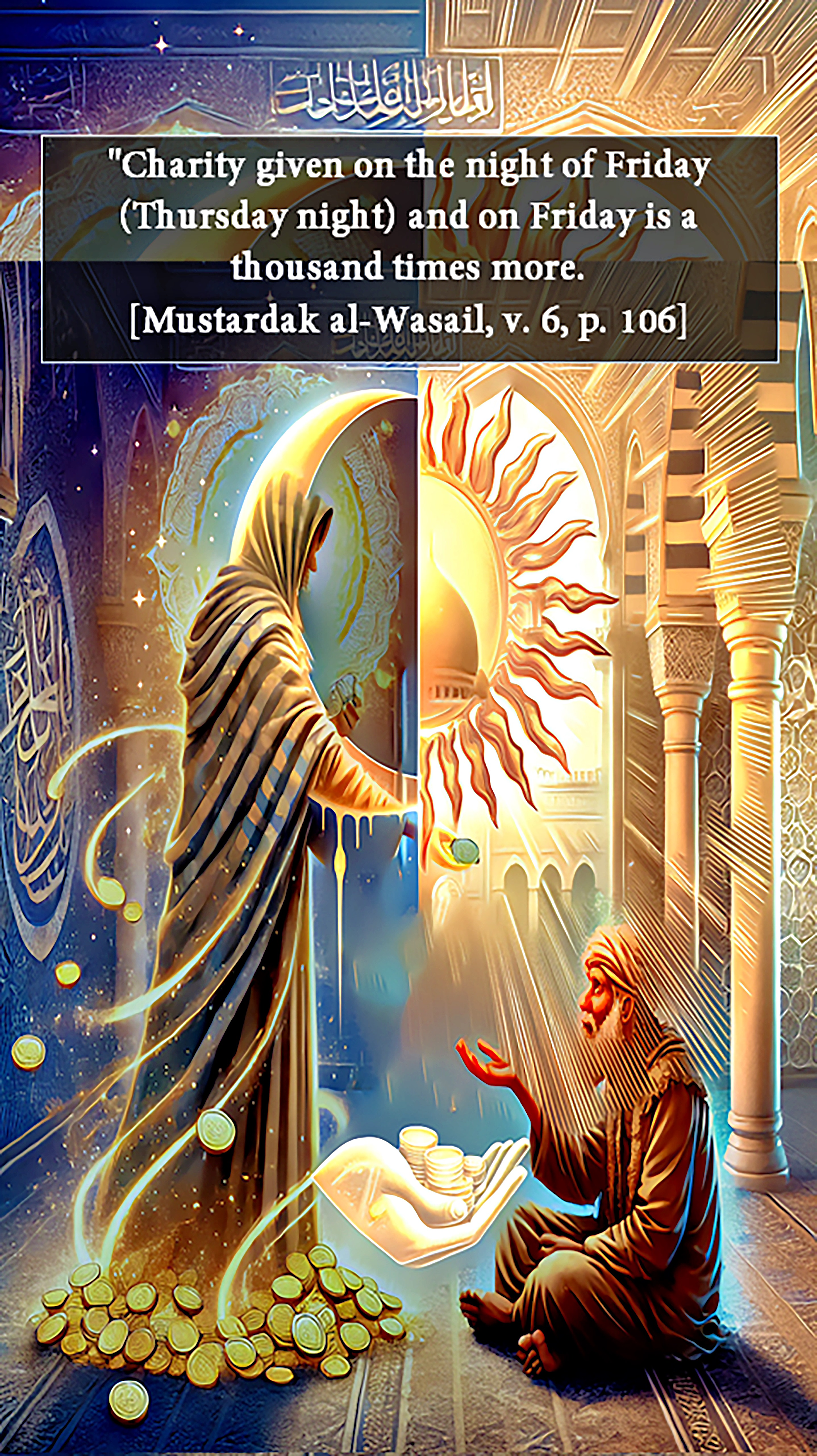
Imam (peace be upon him) said: "Give charity early in the day, for calamities do not surpass it. Whoever gives charity at the beginning of the day, Allah (swt) will protect him from the evil that descends from the sky that day. And if he gives charity at the beginning of the night, Allah (swt) will protect him from the evil that descends from the sky during that night." (Man La Yahduruh al-Faqih (Vol. 2) by Shaykh Mu?ammad b. Ali al-Saduq, Book 1, Chapter 20, Hadith #6)
Imam Jafar al-Sadiq (peace be upon him) said: "Whoever gives charity in the morning, Allah will protect him from the misfortune of that day." (Wasa'il al-Shia Vol. 11, Section 5, Chapter 15, Hadith 15056)
Imam Jafar al-Sadiq (peace be upon him) said: "Whoever gives charity in the morning, Allah (swt), the Exalted and Glorious, will avert the misfortune of that day from him." (Man La Yahduruh al-Faqih (Vol. 2) by Shaykh Mu?ammad b. Ali al-Saduq, Book 3, Chapter 7, Hadith #4)
Charity can ward off diseases, abscesses, burning, drowning, collapse, and madness.Charity repels Decreed calamities and can be used as a cure for patients.
Paradise
Imam Jafar al-Sadiq (peace be upon him) said: "When an orphan cries, the Throne of Allah (swt) shakes, and Allah (swt), Blessed and Exalted, says, 'Who is it that has made My servant cry, the one from whom I took his parents in his childhood? By My might, majesty, and elevated status, no believer will calm him except that I will make Paradise obligatory for him.' (Man La Yahduruh al-Faqih (Vol. 1) by Shaykh Mu?ammad b. Ali al-Saduq, Book 1, Chapter 28, Hadith #573)
Imam (peace be upon him) said: "Charity given by hand protects against an evil death, wards off seventy kinds of calamities, and loosens the grip of seventy devils, all of whom urge the person not to give." (Man La Yahduruh al-Faqih (Vol. 2) by Shaykh Mu?ammad b. Ali al-Saduq, Book 1, Chapter 20, Hadith #4)
Elevation in Status
Prophet Mohammad (peace be upon him and his family) said: "Humbleness increases its owner in high standing, so be humble and Allah will raise you up." (al-Kafi by Shaykh al-Kulayni, Volume 2, Page 121)
Imam Muhammad Baqir (peace be upon him) said: "Humility and humbleness (means) is to be pleased and contented with sitting in, an assembly at a place lower than ones status and honor, and saluting anybody one meets and abandoning dispute even if one is right" (Tuhaf al-Uqul, P 296)
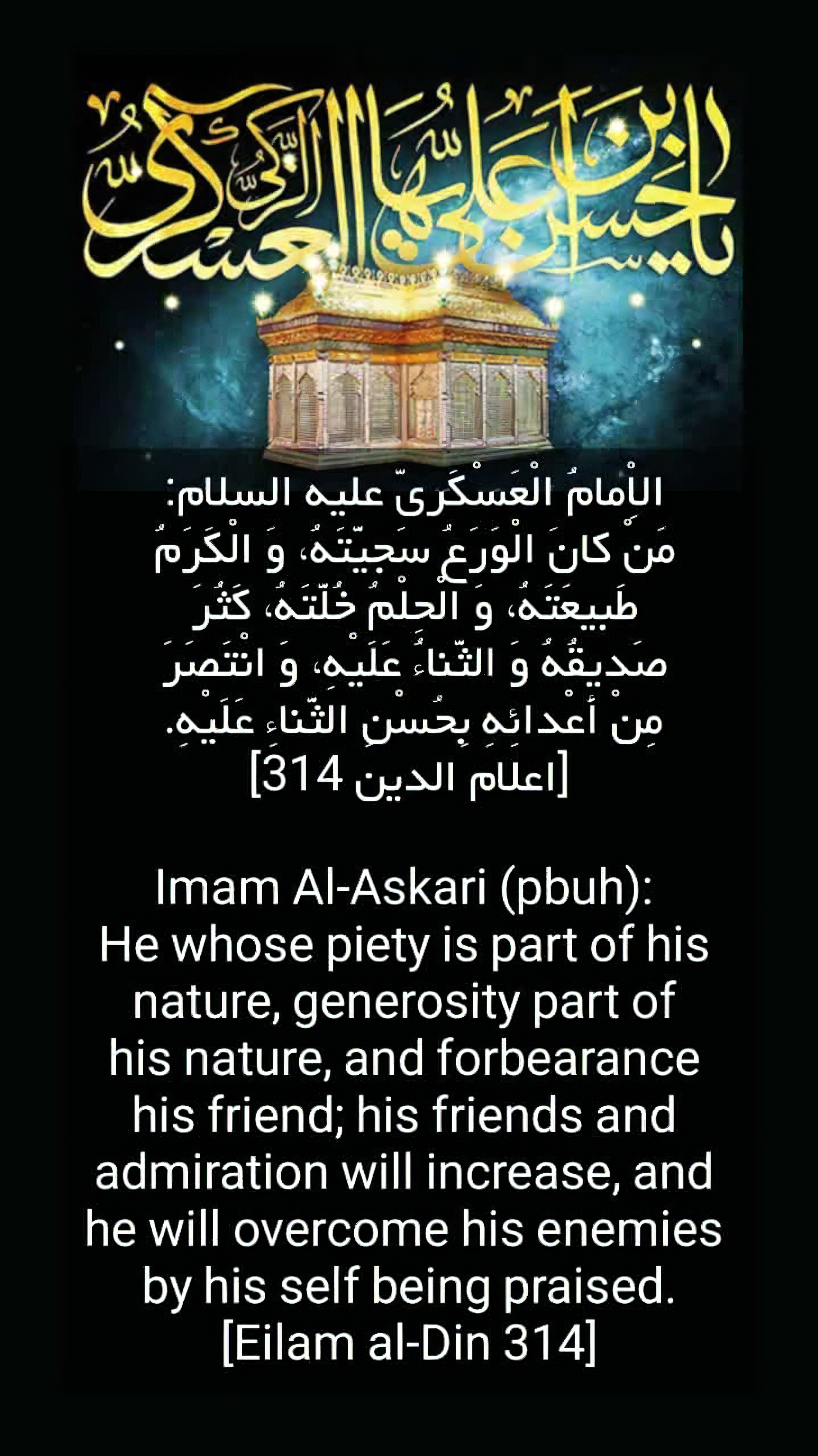
Imam Hasan Askari (peace be upon him) said: "Humbleness is a boon and beneficence which does not get subjected to the jealousy of people" (Tuhaf al-Uqul. P 489)
Imam Jafar al-Sadiq (peace be upon him) said: "Among what Allah the Mighty and Majestic revealed to David (peace be upon him): O David, just as the closest people to Allah are the humble ones, likewise the farthest people from Allah are the arrogant ones." (Wasa'il al-Shia Vol. 15, Section 2, Chapter 28, Hadith 20494)
Imam Jafar al-Sadiq (peace be upon him) said: "I heard him saying: In the heaven there are two angels assigned to the servants. Whoever shows humility for Allah, they elevate him, and whoever shows arrogance, they lower him." (Wasa'il al-Shia Vol. 15, Section 2, Chapter 28, Hadith 20493)
The Islamic teachings on caring for the weak, as preserved in the Quran, prophetic traditions, and the guidance of the Ahl al-Bayt, reveal a profound and comprehensive vision of social justice that is both spiritual and practical. The weak are not merely recipients of charity but are active contributors to the community's well-being through their sincere supplications, prayers, and spiritual connection with Allah.
Prophet Muhammad (peace be upon him and his family) established a divine mechanism whereby the sustenance and victory of the entire community are contingent upon the presence and treatment of its weakest members. Imam Ali (peace be upon him) articulated a vision of justice that inverts conventional notions of power, making the weak strong and the strong weak until justice is served.
The consequences of neglect are severe—both worldly and spiritual—while the rewards of care are immense, including divine assistance, protection from calamities, and the ultimate reward of Paradise. The reciprocal nature of mercy ensures that those who show compassion to the weak will receive compassion from Allah.
In an age of increasing inequality, social fragmentation, and the marginalization of the vulnerable, this forgotten pillar of Islamic strength demands revival. Caring for the weak is not an optional act of charity but a fundamental pillar of faith, a prerequisite for divine favor, and a necessary condition for the survival and prosperity of any community.
As Prophet Muhammad (peace be upon him and his family) declared: "Assist me in seeking out the weak people, for verily you are given sustenance and succour only because of the presence of the weak among you." (Kanz al-Ummal, no. 6019)
Quranic References
1. Quran 16:29
2. Quran 4:98
3. Quran 4:58
4. Quran 4:135
5. Quran 5:8
6. Quran 9:103
7. Quran 9:60
8. Quran 3:186
9. Quran 4:2
10. Quran 4:10
11. Quran 107:1-3
12. Quran 17:23
13. Quran 17:24
14. Quran 46:15
15. Quran 24:61
16. Quran 22:28
17. Quran 51:19
18. Quran 28:5-6
19. Quran 4:9
20. Quran 9:34
21. Quran 2:167
22. Quran 16:90
Hadith and Other References
1. Kanz al-Ummal, no. 6019
2. Kanz al-Ummal, no. 5944
3. Kanz al-Ummal, no. 39338
4. Wasa'il al-Shia Vol. 15, Section 2, Chapter 58, Hadith 20796
5. Thawab al-A mal wa iqab al-A mal by Shaykh Mu?ammad b. Ali al-Saduq, Book 3, Chapter 18, Hadith #9
6. Al-Kafi (Vol. 2) by Shaykh Muhammad b. Ya qub al-Kulayni, Book 1, Chapter 124, Hadith #6
7. Tuhful-Aqool, P 396
8. al-Kafi, v. 8, p. 125, no. 95
9. Nahjul Balaghah, Sermon 189
10. Ma’ani al-Akhbar, p. 201, no. 4
11. Nahj al-Fasahah, Tradition No. 246, Page No. 40
12. Al-Kafi, v. 2, p. 117, no. 4
13. Wasa'il al-Shia Vol. 12, Section 1, Chapter 121, Hadith 16081
14. Tuhaf al-’Uqul, no. 48
15. Nahj al Fasahah; Tradition No. 1091; Page No. 154
16. Al-Durr al-Manthur, v. 2, p. 724
17. Wasa'il al-Shia Vol. 7, Section 2, Chapter 52, Hadith 8916
18. Wasa'il al-Shia Vol. 7, Section 2, Chapter 52, Hadith 8922
19. Man La Yahduruh al-Faqih (Vol. 2) by Shaykh Mu?ammad b. Ali al-Saduq, Book 3, Chapter 2, Hadith #117
20. Amali al-Tusi, p. 89, no. 136
21. Bihar al-Anwar, v. 93, p. 300, no. 37
22. Wasa'il al-Shia Vol. 7, Section 2, Chapter 2, Hadith 8615
23. Ghurar al-Hikam, no. 2979
24. Wasa'il al-Shia Vol. 7, Section 2, Chapter 8, Hadith 8652
25. Kanz al-’Ummal, no. 16840
26. Wasa'il al-Shia Vol. 9, Section 1, Chapter 1, Hadith 11395
27. Wasa'il al-Shia Vol. 9, Section 1, Chapter 1, Hadith 11392
28. Mizan al-Hikmah by Muhammad al-Rayshahri, Volume 2, Page 1044
29. Man La Yahduruh al-Faqih (Vol. 4) by Shaykh Mu?ammad b. Ali al-Saduq, Book 1, Chapter 175, Hadith #5806
30. Amali al-Saduq by Shaykh al-Saduq, Volume 0, Page 278
31. Bihar al-Anwar, v. 77, p. 258, no. 1
32. Bihar al-Anwaar by Allamah Majlisi, Volume 72, Page 353
33. Wasa'il al-Shia Vol. 16, Section 2, Chapter 1, Hadith 21135
34. Nahj al-Balagha, Letter 31
35. Nahjul Balaghah, Sermon 209
36. Man La Yahduruh al-Faqih (Vol. 4) by Shaykh Mu?ammad b. Ali al-Saduq, Book 1, Chapter 175, Hadith #5850
37. Wasa'il al-Shia Vol. 12, Section 1, Chapter 122, Hadith 16114
38. Wasa'il al-Shia Vol. 12, Section 1, Chapter 122, Hadith 16097
39. Wasa'il al-Shia Vol. 9, Section 1, Chapter 1, Hadith 11393
40. Man La Yahduruh al-Faqih (Vol. 2) by Shaykh Mu?ammad b. Ali al-Saduq, Book 1, Chapter 1, Hadith #2
41. Wasa'il al-Shia Vol. 9, Section 1, Chapter 4, Hadith 11450
42. Man La Yahduruh al-Faqih (Vol. 1) by Shaykh Mu?ammad b. Ali al-Saduq, Book 1, Chapter 28, Hadith #572
43. Wasa'il al-Shia Vol. 1, Section 4, Chapter 91, Hadith 3670
44. Man La Yahduruhu al-Faqih by Shaykh al-Saduq, Volume 1, Page 188
45. Man La Yahduruh al-Faqih (Vol. 1) by Shaykh Mu?ammad b. Ali al-Saduq, Book 1, Chapter 28, Hadith #570
46. Wasa'il al-Shia Vol. 12, Section 1, Chapter 67, Hadith 15750
47. Thawab al-A mal wa iqab al-A mal by Shaykh Mu?ammad b. Ali al-Saduq, Book 2, Chapter 432, Hadith #1
48. Wasa'il al-Shia Vol. 9, Section 8, Chapter 45, Hadith 12506
49. Mizan al-Hikmah by Muhammad al-Rayshahri, Volume 2, Page 1595
50. Wasa'il al-Shia Vol. 9, Section 8, Chapter 1, Hadith 12269
51. Kitab al-Mu?min by Husayn b. Sa id al-Ahwazi, Book 1, Chapter 6, Hadith #9
52. Wasa'il al-Shia Vol. 2, Section 7, Chapter 10, Hadith 2514
53. Wasa'il al-Shia Vol. 2, Section 7, Chapter 12, Hadith 2526
54. al-Firdaws, v. 3, p. 157, no. 4423
55. Tanbih al-Khawatir, v. 2, p. 120
56. Nahj Al-Fasahah (multiple entries)
57. Kanz al-’Ummal, no. 5983
58. Al-Kafi (Vol. 2) by Shaykh Muhammad b. Ya qub al-Kulayni, Book 1, Chapter 75, Hadith #1
59. Wasa'il al-Shia Vol. 16, Section 3, Chapter 24, Hadith 21752
60. Wasa'il al-Shia Vol. 12, Section 1, Chapter 122, Hadith 16095
61. Kitab al-Mu?min by Husayn b. Sa id al-Ahwazi, Book 1, Chapter 7, Hadith #9
62. Bihar al-Anwaar by Allamah Majlisi, Volume 71, Page 365
63. Man La Yahduruh al-Faqih (Vol. 2) by Shaykh Mu?ammad b. Ali al-Saduq, Book 1, Chapter 11, Hadith #9
64. Al-Kafi (Vol. 5) by Shaykh Muhammad b. Ya qub al-Kulayni, Book 1, Chapter 26, Hadith #2
65. Tuhaf al-’Uqul, p. 414
66. Man La Yahduruh al-Faqih (Vol. 2) by Shaykh Mu?ammad b. Ali al-Saduq, Book 1, Chapter 20, Hadith #24
67. Wasa'il al-Shia Vol. 16, Section 3, Chapter 1, Hadith 21561
68. Wasa'il al-Shia Vol. 9, Section 8, Chapter 42, Hadith 12502
69. Nahj Al-Fasahah
70. Nahj al-Balaghah, Sermon 37
71. Nahj al-Balagha by al-Sharif al-Radi, Book 3, Chapter 437, Hadith #553
72. Ghurar al-Hikam, no. 3242
73. Ghurar al-Hikam, no. 774
74. Matalib al-Sa’ul, p. 61
75. Nahjul Balaghah, Saying 437
76. Nahjul Fasahah, page 490
77. Bihar al-Anwar, volume 23, Makarim AlAkhlaq, page 220
78. Mizan al-Hikmah by Muhammad al-Rayshahri, Volume 4, Page 3673
79. Thawab al-A mal wa iqab al-A mal by Shaykh Mu?ammad b. Ali al-Saduq, Book 3, Chapter 103, Hadith #1
80. Tuhaf al-Uqul, P 298
81. Wasa'il al-Shia Vol. 9, Section 1, Chapter 4, Hadith 11456
82. Ma ani al-Akhbar by Shaykh Mu?ammad b. Ali al-Saduq, Book 1, Chapter 31, Hadith #1
83. Kitab al-Ghayba by Shaykh Mu?ammad b. al-Hasan al-Tusi, Book 1, Chapter 28, Hadith #14
84. Wasa'il al-Shia Vol. 20, Section 8, Chapter 11, Hadith 26338
85. Wasa'il al-Shia Vol. 20, Section 8, Chapter 11, Hadith 26345
86. Ma'ani al-Akhbar, Book 1, Chapter 186, Hadith #8
87. Man La Yahduruh al-Faqih (Vol. 4) by Shaykh Mu?ammad b. Ali al-Saduq, Book 1, Chapter 175, Hadith #5827
88. Nahj al-Balagha by al-Sharif al-Radi, Book 3, Chapter 328, Hadith #405
89. Wasa’il ‘ush-Shi’a, volume 6, page 2
90. Wasa'il al-Shia Vol. 16, Section 2, Chapter 41, Hadith 21550
91. Al-Kafi (Vol. 2) by Shaykh Muhammad b. Ya qub al-Kulayni, Book 1, Chapter 75, Hadith #10
92. Nahjul Balagha, Letter 47
93. Wasa'il al-Shia Vol. 17, Section 2, Chapter 70, Hadith 22443
94. Wasa'il al-Shia Vol. 17, Section 2, Chapter 70, Hadith 22442
95. Wasa'il al-Shia Vol. 9, Section 1, Chapter 3, Hadith 11445
96. Man La Yahduruh al-Faqih (Vol. 2) by Shaykh Mu?ammad b. Ali al-Saduq, Book 1, Chapter 16, Hadith #7
97. Al-Am?l? by Shaykh Mu?ammad b. Mu?ammad al-Muf?d, Book 23, Chapter 35, Hadith #35
98. Wasa'il al-Shia Vol. 15, Section 2, Chapter 58, Hadith 20786
99. Wasa'il al-Shia Vol. 16, Section 3, Chapter 27, Hadith 21781
100. Bihar al-Anwar, volume 74, page 286
101. Wasa'il Al-Shia, vol 16, page 359
102. Mustadrak AlWasa'il, vol 12, page 414
103. Al-Amali, page 97
104. Awali Al-Laali, vol 1, page 375
105. Wasa'il al-Shia Vol. 16, Section 3, Chapter 22, Hadith 21716
106. Kitab al-Mu?min by Husayn b. Sa id al-Ahwazi, Book 1, Chapter 5, Hadith #3
107. Man La Yahduruh al-Faqih (Vol. 2) by Shaykh Mu?ammad b. Ali al-Saduq, Book 1, Chapter 20, Hadith #6
108. Wasa'il al-Shia Vol. 11, Section 5, Chapter 15, Hadith 15056
109. Man La Yahduruh al-Faqih (Vol. 2) by Shaykh Mu?ammad b. Ali al-Saduq, Book 3, Chapter 7, Hadith #4
110. Man La Yahduruh al-Faqih (Vol. 1) by Shaykh Mu?ammad b. Ali al-Saduq, Book 1, Chapter 28, Hadith #573
111. Man La Yahduruh al-Faqih (Vol. 2) by Shaykh Mu?ammad b. Ali al-Saduq, Book 1, Chapter 20, Hadith #4
112. al-Kafi by Shaykh al-Kulayni, Volume 2, Page 121
113. Tuhaf al-Uqul, P 296
114. Tuhaf al-Uqul, P 489
115. Wasa'il al-Shia Vol. 15, Section 2, Chapter 28, Hadith 20494
116. Wasa'il al-Shia Vol. 15, Section 2, Chapter 28, Hadith 20493
Quranic verses and hadiths of Ahl al-Bayt (peace be upon them) and sayings in Arabic, Persian and English.
https://eitaa.com/noorunalanoor
https://www.youtube.com/@110Inspire
https://youtube.com/@mustafaabbas4668?si=EnSIkaIECMiOmarE