KhanwadeAbuTalib.com
Posted by Mustafa Abbas on August 11, 2026 | Views: 346 | Ratings: 185
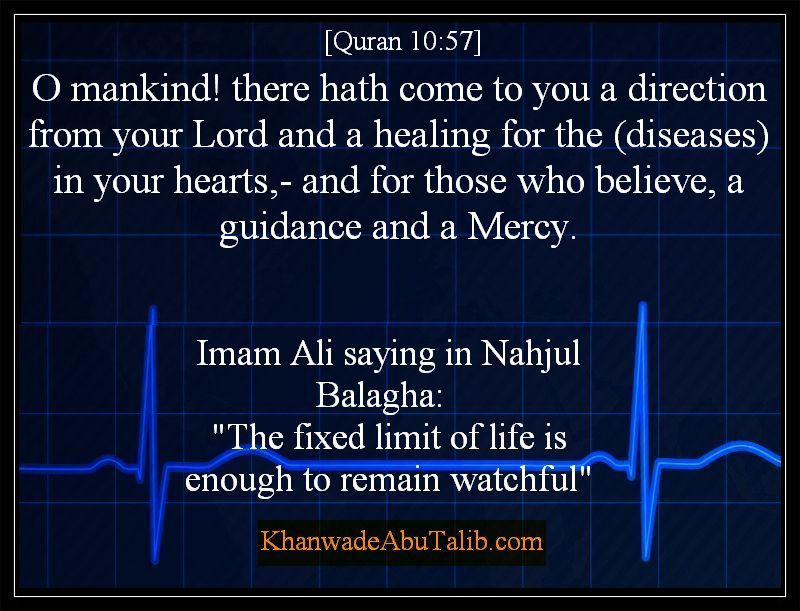
Download article from link below at the end
The Islamic Healing Principles
The Islamic tradition presents a profound and holistic understanding of health, disease, and healing that integrates spiritual, physical, and psychological dimensions. At the heart of this worldview lies a fundamental principle articulated by the Prophet Muhammad (peace be upon him and his family): "Allah has not sent down any disease except that He has sent down for it a cure." (Bihar al-Anwar, Vol. 62, Pg. 68, No. 21). This divine declaration establishes an unshakeable foundation of hope and encourages proactive engagement with health challenges while maintaining absolute trust in God's wisdom and mercy.
This article explores the multifaceted dimensions of this principle, examining its theological foundations, practical implications, and the comprehensive framework Islam provides for understanding and addressing illness.
Part One: The Theological Foundation
The Principle of Universal Cure
The prophetic tradition establishes a fundamental truth: within the very fabric of creation, healing corresponds to ailment. This principle is not merely a statement of optimism but a declaration about the nature of divine creation. Imam Ali (peace be upon him) affirmed this teaching, stating: "For every ailment, there is a cure" (Ghurar al- Hikam, no. 7275).
This correspondence between disease and remedy reflects a deeper cosmic order.
Jabir reported Allah's Messenger (peace be upon him and his family) as saying: "There is a remedy for every malady, and when the remedy is applied to the disease it is cured with the permission of Allah, the Exalted and Glorious." (Sahih Muslim 2204).
This nuanced statement acknowledges that while remedies exist, their effectiveness ultimately depends on divine will and the precise alignment of treatment with the specific condition.
The Exceptions: Death and Old Age
Islamic teachings identify two exceptions to the principle of universal cure: death and old age. The Prophet (peace be upon him) clarified: "Treat yourselves with medicine, for verily Allah has not sent down any ailment except that he has sent down a cure for it with the exception of death and old age." (Kanz al-’Ummal, no. 28088)
This exception serves multiple theological purposes. It reminds humanity of mortality and the transient nature of worldly existence. It establishes boundaries for human agency, acknowledging that certain realities are beyond the scope of medical intervention. It also frames the ultimate purpose of life: preparing for the eternal afterlife rather than seeking perpetual physical existence.
Divine Wisdom in Creating Disease
The existence of diseases, despite God's attributes of compassion and mercy, serves profound purposes within Islamic theology:
- Tests and Trials (Ibtila'): Diseases serve as divine tests that reveal human character, patience, and faith. The Quran states: "And We will surely test you with something of fear and hunger and a loss of wealth and lives and fruits, but give good tidings to the patient" (Quran 2:155). These trials allow individuals to demonstrate their true merit and reliance on God.
- Expiation of Sins: Illness serves as a means of purification. The Prophet (peace be upon him) said: "A believer’s sickness is the atonement of his sins." (Nahj Al-Fasahah)
- Spiritual Growth and Elevation: Enduring hardships with patience (sabr) elevates one's spiritual station. Imam Ali (peace be upon him) stated: "When Allah afflicts a servant with illness, sins shed away from him in proportion to the severity of his ailment." (Da’aim al-Islam, v. 1, p. 218)
- Reminder of Human Dependence: Disease reminds humanity of its inherent vulnerability and dependence on God. It serves as a corrective to arrogance and selfsufficiency, directing attention toward the Divine.
- Precursor to Death: Islamic teachings present disease, including fever, as part of the natural cycle leading to death, which is ultimately a transition to the eternal life.
Part Two: The Nature of Cure and Healing
Allah as the Ultimate Healer (Al-Shafi)
While Islam encourages seeking treatment, it maintains that ultimate healing comes from Allah alone. The Quran declares: "and when I sicken, then He (Allah) heals me" (Quran 26:80). The divine name "Al-Shafi" (The Healer) emphasizes this fundamental truth.
This understanding creates a balanced perspective: believers should utilize all available means of treatment while maintaining absolute trust in God's will. The famous statement of Imam Jafar al Sadiq (peace be upon him) captures this balance:
From Ahmad who raised it said: Abu Abdullah (peace be upon him) said to a man: "You have been made the physician of your own self, and the illness has been made clear to you, and you have been shown the sign of health, and you have been guided to the medicine, so see how you take care of yourself." (Wasail al-Shia Vol. 1, Section 2, Chapter 1, Hadith 20210)
The Body's Innate Healing Capacity
Islamic teachings recognize the human body's remarkable self-healing capabilities. Imam Rida (peace be upon him) described that every body has the capacity of a big complex world containing a wonderful power to combat all diseases by virtue of the immune system, lymphatic glands, antibodies and millions of good bacteria in the digestive tract that aid in digestion and maintaining good health. This understanding, articulated centuries before modern medical science, acknowledges the body's sophisticated defense mechanisms.
Ali ibn Ahmad ibn `Abd Allah la-Barqi (RA) said: My father said, on the authority of his grandfather Ahmad ibn Abu `Abd Allah, on the authority of Ahmad ibn Muhammad ibn Abu Nasr that A man came to al-Rida (peace be upon him) and enquired: “Does Your Lord have the power to place the heavens and the Earth and whatever is between them inside an egg?” Hence, he (peace be upon him) replied, Of course he can! In fact, He has placed it in something even smaller than an egg. He has placed it all in your eye, while it is smaller than an egg. For when you open it, you see the Heavens and the Earth and whatever is in between them. IF he has willed, He would have blinded you from it all.
(Al-Tawhid by Shaykh Muhammad b. Ali al-Saduq, Book 2, Chapter 9, Hadith #11)
Beware of Hastening towards Resorting to Medicine
Prophet Muhammad (peace be upon him and his family) said: "Avoid medicine as long as your body can bear the ailment, but if it cannot bear the ailment, then resort to medicine." (Bihar al-Anwar, v. 81, p. 211, no. 30)
Imam Ali (peace be upon him) further added that "A Muslim does not seek to treat himself [with medicine] until the ailment overcomes his health." (al-Khisal, p. 620, no. 10)
Imam Jafar al-Sadiq (peace be upon him) said
"You have been made the physician of your own self, and the illness has been made clear to you, and you have been shown the sign of health, and you have been guided to the medicine, so see how you take care of yourself."
(Wasa'il al-Shia Vol. 1, Section 2, Chapter 1, Hadith 20210)
Imam Musa Kazim (AS): Imam al-Kazim (a.s.) said, "There is no medicine except that it exacerbates another ailment, and there is nothing more beneficial to the body than self-restraint from all except that which the body needs." (al-Kafi, v. 8, p. 273, no. 409)
- Divine Provision of Cures: The Prophet Muhammad (peace be upon him) instructed: "Treat yourselves with medicine, for verily Allah has not sent down any ailment except that he has sent down a cure for it with the exception of death and old age." (Kanz al-’Ummal, no. 28088)
- The Duty to Seek Treatment: Seeking treatment is considered a responsibility. Maintaining physical health and treating patients are important aspects of Islamic teachings.
- Balancing Medical and Spiritual: Believers are encouraged to seek medical attention while also supplicating to God, understanding that divine will operates through both natural and spiritual means.
The Holy Quran as a Source of Healing
The Quran is described as both spiritual and physical healing:
"And We send down of the Quran that which is healing and mercy for the believers" (Quran 17:82)
"O mankind, there has come to you instruction from your Lord and healing for what is in the breasts and guidance and mercy for the believers" (Quran 10:57)
Imam Ja'far al-Sadiq (peace be upon him) emphasized: "A prophet among the prophets became ill and said: I will not seek treatment until the One who made me ill is the One who cures me. So Allah revealed to him: I will not cure you until you seek treatment, for healing is from Me." (Wasail al-Shia Vol. 2, Section 7, Chapter 4, Hadith 2496)
The Quran serves as:
A cure for spiritual ailments and doubts
Guidance for moral and ethical challenges
Comfort for emotional distress
A means of physical healing through recitation and specific remedies
Supplication (Du'a) and Spiritual Healing
Supplication is a vital component of seeking healing:
- Direct Appeal to Allah: After seeking medical assistance, believers turn to Allah for comprehensive healing. Imam al-Sadiq (peace be upon him) stated: "The one who fears the onset of a calamity and precedes it with supplication, Allah will never afflict him with that calamity." (Makarim al-Akhlaq, v. 2, p. 10, no. 1992)
- The Power of Du'a: It is believed that for every disease, there is a corresponding supplication that can lead to healing. When a person is inspired to make du'a, Allah has permitted healing through that supplication.
- Specific Supplications: Islamic tradition contains numerous prayers for healing. A prayer from Imam Ali (peace be upon him) states: "O He whose name is a remedy and whose remembrance is a healing." (Dua Kumail)
- Charitable Acts: Messenger of Allah (peace be upon him and his family) said: "Treat your sick with charity." (Wasail al-Shia Vol. 2, Section 7, Chapter 22, Hadith 2564)
This establishes a connection between spiritual generosity and physical healing.
Traditional Natural Remedies
Islamic tradition recommends various natural substances for healing:
- Honey: The Quran explicitly mentions honey's healing properties (16:69). Imam Ali (peace be upon him) had stated thatlicking honey is a cure for all illnesses.
Muhammad ibn Yahya has narrated from Ahmad ibn Muhammad from al-Qasim ibn Yahya from his grandfather al-Hassan ibn Rashid from Muhammad ibn Muslim who has said the following: “Abu ‘Abd Allah (peace be upon him), has said that ’Amir al-Mu’minin has said, ‘Licking honey is cure for all illnesses. Allah, most Majestic, most Glorious, has said, “From its belly, drink of many colors come out. In it there is cure for people.” Honey with reading Quran and chewing frankincense dissolves phlegm.” (Al-Kafi (Vol. 6) by Shaykh Muhammad b. Yaqub al-Kulayni, Book 5, Chapter 81, Hadith #2)
- Cow's Milk: Ali ibn Ibrahim has narrated from his father from af-Nawfafiy from af-Sakuniy who has said the following: “Abu ‘Abd Allah (peace be upon him), has said that ’Amir al-Mu’minin has said, ’Milk products from cows are medicine.” (Al-Kafi (Vol. 6) by Shaykh Muhammad b. Yaqub al-Kulayni, Book 5, Chapter 85, Hadith #1)
Imam Ja'far al-Sadiq (peace be upon him) said: "Milk of cows is medicine and their ghee is healing and their meat is disease." (al-Kafi by Shaykh al-Kulayni, Volume 6, Page 311)
- Black Seeds (Nigella Sativa): Messenger of Allah (peace be upon him and his family) is quoted as saying, "These black seeds, there is a healing in it from every illness except the poison, meaning the death." (Al Da’aim)
"The black seed is Blessed, expelling the underlying illness from the body’’. (Fiqh Al-Reza)
"Take the honey and the black cumin and like from it three licks from it, for it would be uprooted, and they are both Blessed. And Allah-azwj the Exalted Said regarding the honey: There comes out from their bellies a drink of different colours wherein is healing for the people" (Tibb Al Aimma)
- Olive Oil: Recommended for its health benefits.
- Dates: Known for their nutritional and healing properties.
- Frankincense: Used for memory enhancement and dissolving phlegm.
The Internal Remedy: Self-Knowledge and Repentance
Imam Ali's (peace be upon him) teaching that "your remedy is within you" points to profound internal sources of healing:
- Self-Knowledge (Ma'rifat al-Nafs): Understanding oneself is key to healing. Imam Ali (peace be upon him) stated: "He who attains inner knowledge of his self attains inner knowledge of his Lord." (Ghurar al-Hikam, no. 7946)
This self-awareness enables recognition of both spiritual and physical ailments.
- Repentance (Tawbah): Sincere repentance is a powerful spiritual remedy. Since many ailments are connected to sins, turning back to Allah opens pathways to healing.
- Self-Accountability (Muhasabah): Reflecting on one's actions and rectifying behavior contributes to holistic well-being.
- Willpower and Obedience: Willpower to sincerely obey Allah (SWT)... is the key to solving all the problems. The Prophet (peace be upon him and his family) said, ‘Allah said, ‘No sooner do I look into a servant’s heart and find that he has sincere love for My sole obedience and he seeks My pleasure than I take charge of his plans and affairs.’ (Bihar al-Anwar, v. 85, p. 136, no. 16)
Part Three: The Connection Between Sin and Illness
The Quranic Foundation
The Quran establishes a connection between human actions and suffering:
"Whatever misfortune befalls you, it is because of what your hands have earned.
And He pardons many [of your sins]" (Quran 42:30)
"Whatever benefit comes to you, it is from Allah; and whatever misfortune befalls you, it is from yourself" (Quran 4:79)
Imam al-Sadiq (peace be upon him) elaborated: "Indeed, there is no vein that throbs, no misfortune, no headache, and no illness except due to a sin. And that is the saying of Allah, the Mighty and Majestic, in His Book: "And whatever strikes you of disaster - it is for what your hands have earned; but He pardons much" [Quran 42:30]. Then he said: And what Allah pardons is more than what He holds accountable for." (Wasail al-Shia Vol. 15, Section 2, Chapter 40, Hadith 20565)
This teaching establishes a direct connection between human transgression and physical suffering, while also acknowledging divine mercy that "pardons many [sins]."
Imam al-Sadiq (peace be upon him) identified specific sins that lead to adversities:
Breaking vows
Committing indecencies openly
Spreading lies
Issuing verdicts that violate Allah's judgment
Refraining from paying zakat
Defrauding in measurements
The Purification Through Suffering
Illness serves as a mechanism for purification:Imam Ali(peace be upon him) said, "When Allah afflicts a servant with illness, sins shed away from him in proportion to the severity of his ailment." (Da’aim al-Islam, v. 1, p. 218)
This perspective transforms suffering into a mercy, allowing believers to enter the afterlife spiritually cleansed.
The Exemption of the Infallibles
It is important to note that the afflictions suffered by prophets and Imams (peace be upon them) are not due to sins. Their suffering serves to promote their exalted state and increase their rewards from Allah, as they are purified by divine will.
Part Four: Preventive Health and Lifestyle
Dietary Principles
Muhammad al-Baqir (peace be upon him) provided comprehensive guidance for maintaining health: "Whoever wants food not to harm him, let him not eat food until he is hungry and his stomach is clean; and if he eats, let him say basmalah, chew well, and stop eating food while he desires it and needs it." (Mizan al-Hikmah by Muhammad al-Rayshahri, Volume 1, Page 91)
- Eat Only When Hungry: Do not sit for food (in order to eat) unless you are hungry.
- Stop Before Full: "Do not leave the (table of) food but you still have an appetite for it."
- Chew Food Well: "Chew (your food in your mouth) well."
Attend to Nature call: When you want to go to bed, (primarily) go to the water-closet to ease nature. From Abu Ja'far (Imam Muhammad al-Baqir), peace be upon him, who said: "Do not take urination lightly, nor should you be careless about it." (Wasail al-Shia Vol. 1, Section 7, Chapter 23, Hadith 892)
By following these principles, you will be healthy.
The Quran commands: "Eat and drink, but waste not by excess, for God loves not the prodigals" (Quran 7:31). The Prophet (peace be upon him) said: "The son of Adam fills no vessel worse than his stomach. A few morsels to keep his back upright are enough for him..." (Sahih al-Tirmidhi and Ibn Majah)
Imam Ali (peace be upon him) said, "Man’s stomach is his enemy." (Ghurar al-Hikam, no. 4424)
Imam Musa Kazim (peace be upon him) said, "Diet control is the fountainhead of remedies and the stomach is the house of all ailments, so condition your body while it can be conditioned." (Makarim al-Akhlaq, v. 2, p. 180, no. 2468)
Fasting as Preventive Medicine
Fasting is recommended for health: Prophet (peace be upon him and his family) said, "Fast and you will be healthy." (al-Da’aawat, p. 76, no. 179)
This allows the body to cleanse itself, provides rest to the digestive system, and promotes spiritual purification.
Cleanliness is integral to Islamic faith. The Prophet (peace be upon him and his family) emphasized:
Washing hands before and after eating
Regular bathing (ghusl)
Oral hygiene (miswak)
Maintaining purity (tahara)
Imam Ali (peace be upon him) had stated that the fear of Allah is the cure for the ailments. Imam Ali (peace be upon him) said, "Religion immunizes." (Ghurar al-Hikam, no. 1).
Part Five: Social and Individual Implications
Hope and Encouragement
The principle that every disease has a cure generates profound hope. It encourages believers to:
Actively seek solutions for health challenges
Maintain optimism in difficult circumstances
Avoid despair when facing illness
Continue researching and developing treatments
This principle extends beyond physical disease to encompass social challenges. The text states: "This view expresses that not only is there no incurable corporeal disease, but there is also no unsolvable social problem." This perspective encourages:
Patient engagement with complex social issues
Confidence that solutions exist for societal challenges
Persistence in seeking answers to community problems
The Responsibility to Seek Knowledge
The search for cures requires:
Medical research and scientific advancement
Understanding of the body's systems
Development of treatments
Integration of traditional and modern approaches
The Role of Physicians and Scientists
Islamic teachings guide the medical profession:
Physicians are agents through whom Allah acts
Medical treatment is a means, not the ultimate source of healing
Physicians must practice with ethics and competence
The Prophet (peace be upon him) said: "Whoever acts without knowledge, what he corrupts will be more than what he sets right." (al-Kafi by Shaykh al-Kulayni, Volume 1, Page 44)
Islamic teachings emphasize personal responsibility:
Individuals are responsible for their health choices
Self-awareness is crucial for recognizing imbalances
Seeking treatment is both a right and a duty
Healthy lifestyle choices are acts of worship
Part Six: Spiritual Healing Through the Quran and Supplication
Specific Quranic Remedies
The tradition of using Quranic verses for healing includes:
- Surah Al-Fatihah: Recited for general healing
- Ayat al-Kursi (2:255): For protection
- Surah Al-Ikhlas (112): For various ailments
- Surah Al-Falaq (113) and Surah An-Nas (114): For protection from harm
- Surah Al-Qadr (97): Recited over water for healing
- Recitation Over Water: Verses recited over water, which is then drunk or used for washing
- Written Protection: Writing verses and wearing them or washing them into water
- Recitation During Illness: Regular recitation while ill
- Combining with Natural Remedies: Recitation alongside honey, olive oil, or other remedies
Supplications for Specific Conditions
Islamic tradition provides prayers for various ailments:
For Pain: Placing the right hand on the affected area and reciting a specific prayer
For Fever: Specific verses and supplications, including Surah Al-Fatihah and Surah Al- Tawhid
For Toothache: Reciting specific verses and prayers
For Headache: Written prayers and recitations
For General Illness: Various supplications invoking Allah's names of healing
Part Seven: The Ultimate Healing - The Hereafter
The Perspective of Eternal Life
While Islam encourages seeking treatment in this world, it also maintains perspective on the ultimate reality:
- Death as a Transition: Death is not a failure of healing but a transition to eternal life.
- The Hereafter as Complete Healing: The afterlife offers complete healing from all physical and spiritual ailments.
- Eternal Reward for Patient Endurance: Those who bear illness with patience receive eternal compensation.
Islam maintains a balance between:
Seeking treatment while trusting in Allah
Valuing this life while preparing for the next
Using medical means while recognizing divine power
Taking responsibility while submitting to divine will
Part Eight: Famous Muslim Physicians and Their Contributions
The Islamic principle that every disease has a cure inspired generations of Muslim scholars to advance medical knowledge. The legacy of figures like Ibn Sina (Avicenna) and al-Razi (Rhazes) transformed world medicine.
- The Canon of Medicine (Al-Qanun fi al-Tibb): This encyclopedic work synthesized Greek and Islamic medical knowledge. It served as the standard medical textbook in European universities for centuries.
- Contributions:
First description of meningitis
Discovery of contagious nature of tuberculosis
Research on pharmacology and drug treatment
Establishment of free hospitals
Understanding of disease transmission through water and soil
- Influence: His works influenced both Islamic and Christian scholars during the Renaissance period.
Al-Razi (Rhazes)
- Clinical Observation: Known for accurate clinical observations that set a global model for medical research.
- Contributions:
First accurate description of smallpox and measles
Distinguishing clinical differences between them
Established separate hospital wards for psychiatric patients
Developed treatments based on diet over medication
Described rose allergy in a classic case study
- Major Works: "Kitab al-Jadari wa al-Hasbah" (On Smallpox and Measles) and "Al- Hawi" (Comprehensive Book).
Collective Contributions
- Establishment of Hospitals: Muslim physicians established well-organized hospitals with:
Separate wards for different conditions
Teaching and research functions
Record-keeping and clinical reporting
Free treatment for the poor
- Medical Legislation: The Prophet (peace be upon him) stated: "Whoever practices medicine and is not skilled in it is liable." This established:
Professional accountability
Quality standards for practitioners
Protection for patients
- Pharmacology: Significant advances in:
Development of syrups and gels
Drug composition and dosage
Therapeutic applications
Scientific testing methods
- Medical Ethics: Islamic principles guided:
The relationship between physician and patient
Informed consent
Professional responsibility
Holistic care approach
The translation of Islamic medical works into Latin during the 12th century:
Introduced Muslim medical knowledge to Europe
Influenced Renaissance scholars
Established foundations for modern medicine
Continued as standard texts for centuries
Part Nine: Addressing Common Questions
- Does Seeking Treatment Conflict with Trust in Allah?
No. The Prophet (peace be upon him) explicitly encouraged seeking treatment. Trust in Allah (tawakkul) means using all available means while recognizing ultimate power lies with God. The Prophet himself said: "O people, seek treatment, for Allah the Exalted did not create a disease without creating a cure for it, except death." (Mizan al-Hikmah by Muhammad al-Rayshahri, Volume 2, Page 940)
"Cure yourselves, for He who has let diseases befall you, has created their medicines too."
2. Does the Hadith Guarantee Everyone Will Find the Cure?
No. The hadith speaks of the "existence" of a cure in creation, not universal "attainment" in a specific timeframe. Finding cures depends on human effort, scientific progress, and divine will. A cure may be discovered after a patient's lifetime, but the principle of its existence remains valid.
- Are Modern Medicines Permissible?
Yes. Islam encourages using any effective treatment, regardless of whether it is specifically mentioned in religious texts. The only condition is that medicines must be lawful (halal) and pure (tayyib). The Prophet (peace be upon him) said: "Allah has not sent down any disease except that He has sent down for it a cure." (Bihar al-Anwar, Vol. 62, Pg. 68, No. 21).
- If Someone Dies Despite Treatment, Is the Hadith Invalidated?
Never. Death is the exception to the rule and is a predetermined appointment (ajal). Treatment is a means for improvement until death arrives; it does not guarantee eternal physical life. Healing or not healing is part of divine decree.
- Do Spiritual and Psychological Illnesses Have Cures?
Yes. The hadith is general: "every disease." Psychological, spiritual, and moral afflictions have their own treatments, including:
Medication
Psychotherapy
Remembrance of God (dhikr)
Supplication (du'a)
Lifestyle changes
Ethical and spiritual development
- What if Someone Cannot Access Treatment?
There is hope. The principle of existence remains, even if access is limited. Additionally, sickness itself can be a form of purification and mercy. Those who endure illness patiently are rewarded, and the community is responsible for providing healthcare access.
7. How Does This Apply to Social Problems?
It encourages hope and persistence. Just as diseases have cures, social problems have solutions. This perspective:
Prevents despair in the face of challenges
Encourages continuous effort to find solutions
Promotes the belief that no problem is fundamentally unsolvable
Part Ten: Conclusion and Reflection
Summary of Key Principles
The Islamic perspective on healing encompasses:
- The Principle of Correspondence: Every disease has a corresponding cure in creation.
- Divine Wisdom: Diseases serve purposes including testing, purification, spiritual growth, and reminders of mortality.
- The Exceptions: Death and old age are the only conditions without a cure.
- The Role of Medical Treatment: Seeking treatment is encouraged and considered a duty.
- Spiritual Healing: The Quran and supplication are powerful sources of healing.
- Natural Remedies: Honey, milk, black seeds, and other natural substances have documented healing properties.
- Self-Healing: The human body has innate healing capacities.
- Preventive Health: Diet, lifestyle, and hygiene are essential for maintaining health.
- Social Extension: The principle applies to solving social problems.
- Ultimate Healing: Allah alone is the ultimate Healer (Al-Shafi).
Practical Implications
This worldview generates:
- Hope: Despite challenges, there is always reason to seek solutions.
- Responsibility: Individuals must care for their health and seek treatment.
- Scientific Advancement: The search for cures is religiously encouraged.
- Spiritual Integration: Physical and spiritual health are interconnected.
- Community Support: Providing healthcare is a community responsibility.
- Patience: When healing is delayed or absent, patience is rewarded.
- Trust in Allah: All means of healing ultimately depend on divine will.
A Final Reflection
The hadith of the Prophet (peace be upon him) offers profound wisdom for humanity. It acknowledges the reality of suffering while affirming the existence of hope. It encourages effort while maintaining perspective. It values this life while preparing for the next. It integrates physical and spiritual dimensions of existence.
In a world where illness and suffering are inevitable, this teaching provides:
Hope that every challenge has a potential solution
Encouragement to continue seeking knowledge and treatment
Comfort that suffering is not meaningless
Purpose in enduring hardship with patience
Direction toward both spiritual and physical remedies
Ultimately, the Islamic perspective on healing recognizes that while cures exist, complete and eternal healing belongs to Allah alone. The believer engages in the search for healing while trusting in divine wisdom, knowing that whether recovery comes in this life or the next, Allah's mercy and justice will prevail.
And Allah is the Healer, the Most Merciful.
References
Quranic References
- Quran 2:155 - "And We will surely test you with something of fear and hunger and a loss of wealth and lives and fruits, but give good tidings to the patient"
- Quran 2:255 - Ayat al-Kursi (referenced for protection)
- Quran 4:79 - "Whatever benefit comes to you, it is from Allah; and whatever misfortune befalls you, it is from yourself"
- Quran 7:31 - "Eat and drink, but waste not by excess, for God loves not the prodigals"
- Quran 10:57 - "O mankind, there has come to you instruction from your Lord and healing for what is in the breasts and guidance and mercy for the believers"
- Quran 16:69 - Reference to honey's healing properties
- Quran 17:82 - "And We send down of the Quran that which is healing and mercy for the believers"
- Quran 26:80 - "and when I sicken, then He (Allah) heals me"
- Quran 42:30 - "Whatever misfortune befalls you, it is because of what your hands have earned. And He pardons many [of your sins]"
- Surah Al-Fatihah (referenced for general healing)
- Surah Al-Ikhlas (112) (referenced for various ailments)
- Surah Al-Falaq (113) (referenced for protection from harm)
- Surah An-Nas (114) (referenced for protection from harm)
- Surah Al-Qadr (97) (referenced for recitation over water for healing)
Hadith and Islamic Primary Sources
Bihar al-Anwar
- Vol. 62, Pg. 68, No. 21 - "Allah has not sent down any disease except that He has sent down for it a cure"
- Vol. 81, p. 211, no. 30 - "Avoid medicine as long as your body can bear the ailment, but if it cannot bear the ailment, then resort to medicine"
- Vol. 85, p. 136, no. 16 - "'Allah said, 'No sooner do I look into a servant's heart and find that he has sincere love for My sole obedience and he seeks My pleasure than I take charge of his plans and affairs'"
Sahih Muslim
- 2204 - "There is a remedy for every malady, and when the remedy is applied to the disease it is cured with the permission of Allah, the Exalted and Glorious"
Kanz al-'Ummal
- no. 28088 - "Treat yourselves with medicine, for verily Allah has not sent down any ailment except that he has sent down a cure for it with the exception of death and old age"
Ghurar al-Hikam
- no. 7275 - "For every ailment, there is a cure"
- no. 7946 - "He who attains inner knowledge of his self attains inner knowledge of his Lord"
- no. 4424 - "Man's stomach is his enemy"
- no. 1 - "Religion immunizes"
Nahj Al-Fasahah
- "A believer's sickness is the atonement of his sins"
Da'aim al-Islam
- v. 1, p. 218 - "When Allah afflicts a servant with illness, sins shed away from him in proportion to the severity of his ailment"
Wasail al-Shia
- Vol. 1, Section 2, Chapter 1, Hadith 20210 - "You have been made the physician of your own self, and the illness has been made clear to you, and you have been shown the sign of health, and you have been guided to the medicine, so see how you take care of yourself"
- Vol. 1, Section 7, Chapter 23, Hadith 892 - "Do not take urination lightly, nor should you be careless about it"
- Vol. 2, Section 7, Chapter 4, Hadith 2496 - "A prophet among the prophets became ill and said: I will not seek treatment until the One who made me ill is the One who cures me. So Allah revealed to him: I will not cure you until you seek treatment, for healing is from Me"
- Vol. 2, Section 7, Chapter 22, Hadith 2564 - "Treat your sick with charity"
- Vol. 15, Section 2, Chapter 40, Hadith 20565 - "Indeed, there is no vein that throbs, no misfortune, no headache, and no illness except due to a sin"
Al-Kafi
- Vol. 1, Page 44 - "Whoever acts without knowledge, what he corrupts will be more than what he sets right"
- Vol. 6, Book 5, Chapter 81, Hadith #2 - "'Amir al-Mu'minin has said, 'Licking honey is cure for all illnesses... Honey with reading Quran and chewing frankincense dissolves phlegm'"
- Vol. 6, Book 5, Chapter 85, Hadith #1 - "'Milk products from cows are medicine"
- Vol. 6, Page 311 - "Milk of cows is medicine and their ghee is healing and their meat is disease"
- v. 8, p. 273, no. 409 - "There is no medicine except that it exacerbates another ailment, and there is nothing more beneficial to the body than self-restraint from all except that which the body needs"
Al-Tawhid
- Book 2, Chapter 9, Hadith #11 - The tradition about placing the heavens and earth inside an eye
Al-Khisal
- p. 620, no. 10 - "A Muslim does not seek to treat himself [with medicine] until the ailment overcomes his health"
Makarim al-Akhlaq
- v. 2, p. 10, no. 1992 - "The one who fears the onset of a calamity and precedes it with supplication, Allah will never afflict him with that calamity"
- v. 2, p. 180, no. 2468 - "Diet control is the fountainhead of remedies and the stomach is the house of all ailments, so condition your body while it can be conditioned"
Al-Da'awat
- p. 76, no. 179 - "Fast and you will be healthy"
Sahih al-Tirmidhi and Ibn Majah
- "The son of Adam fills no vessel worse than his stomach. A few morsels to keep his back upright are enough for him..."
Mizan al-Hikmah
- Volume 1, Page 91 - "Whoever wants food not to harm him, let him not eat food until he is hungry and his stomach is clean; and if he eats, let him say basmalah, chew well, and stop eating food while he desires it and needs it"
- Volume 2, Page 940 - "O people, seek treatment, for Allah the Exalted did not create a disease without creating a cure for it, except death"
Tibb Al Aimma
- "Take the honey and the black cumin and like from it three licks from it, for it would be uprooted, and they are both Blessed"
Fiqh Al-Reza
- "The black seed is Blessed, expelling the underlying illness from the body"
Dua Kumail
- "O He whose name is a remedy and whose remembrance is a healing"
Secondary Sources
- Al-Razi (Rhazes) - "Kitab al-Jadari wa al-Hasbah" (On Smallpox and Measles) and "Al-Hawi" (Comprehensive Book)
- Ibn Sina (Avicenna) - "The Canon of Medicine" (Al-Qanun fi al-Tibb)
This comprehensive article synthesizes the rich Islamic tradition on healing, drawing from the Quran, the teachings of the Prophet Muhammad (peace be upon him and his family), and the Imams of the Ahl al-Bayt (peace be upon them). It presents a holistic vision that integrates physical, spiritual, psychological, and social dimensions of health, offering hope and guidance for believers facing the challenges of illness and suffering.
Qur'anic verses and hadiths of Ahl al-Bayt (peace be upon them) and sayings in Arabic, Persian and English.
https://eitaa.com/noorunalanoor
https://www.youtube.com/@110Inspire
https://youtube.com/@mustafaabbas4668?si=EnSIkaIECMiOmarE
https://youtube.com/@mustafaabbas8978?si=EMJylUW9_zruJx95