KhanwadeAbuTalib.com
Posted by Mustafa Abbas on August 30, 2026 | Views: 324 | Ratings: 202
Download article from link below at the end
The Significance of Agriculture and Tree Planting in Islam
A Comprehensive Study Based on Quranic Verses, Prophetic Traditions, and the Teachings of the Ahl al-Bayt
In the rich tapestry of Islamic teachings, few acts are elevated to the level of spiritual significance as agriculture and tree planting. From the Quranic verses that describe nature as signs of divine power to the Prophetic traditions that promise eternal rewards for planting a single tree, Islam presents a comprehensive worldview where caring for the earth is inseparable from worship and righteous living.
The foundational hadith from Imam Ja'far al-Sadiq (peace be upon him) encapsulates this teaching:
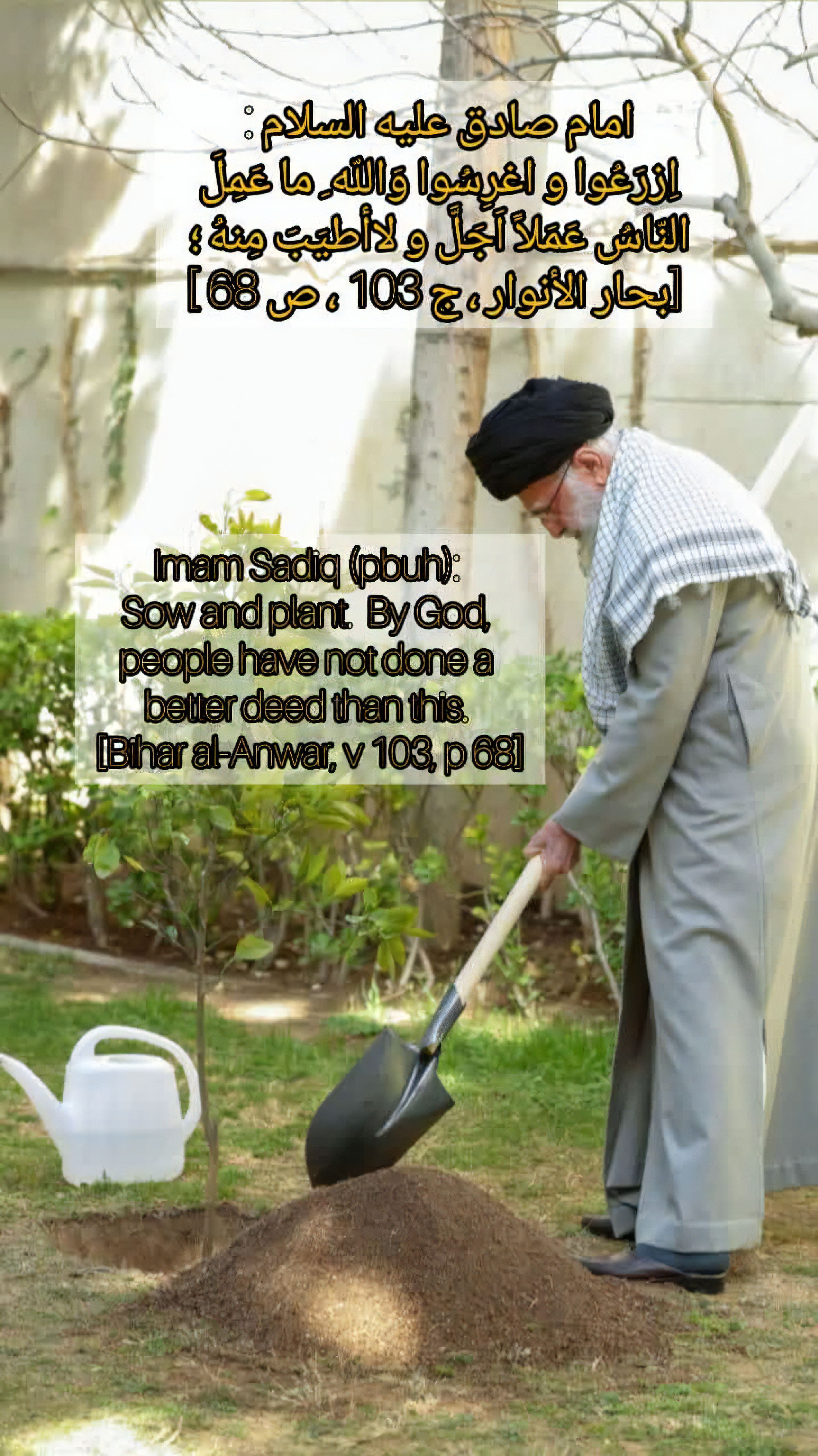
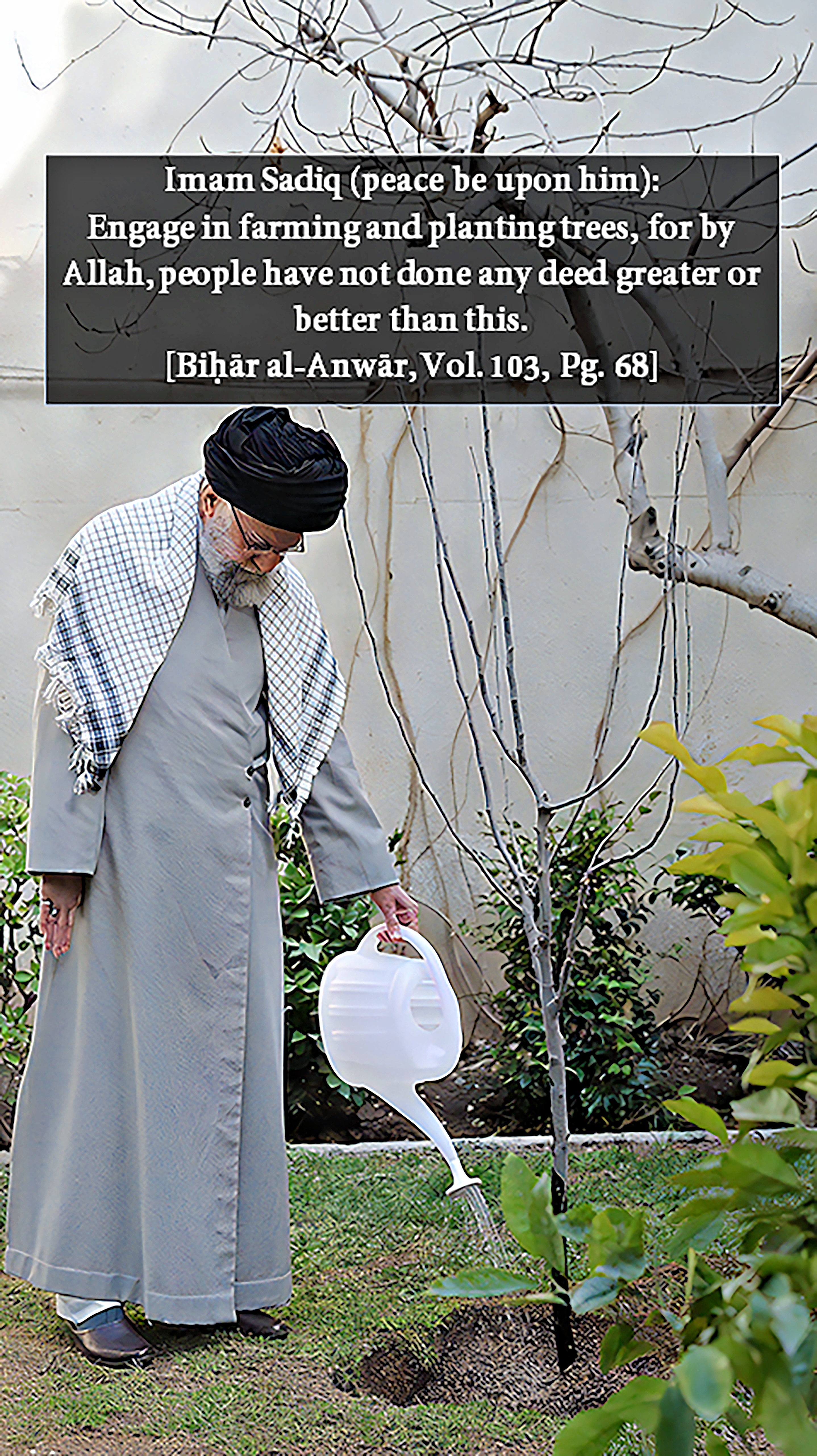
"Plant and sow, for by God, people have never done anything more lawful or better than it."
(Al-Kafi, Volume 5, Page 260)
This declaration is not merely an encouragement but a profound theological statement that elevates agriculture to the highest echelons of human endeavor. To understand why Islam places such immense value on planting and cultivation, we must explore the Quranic foundations, Prophetic traditions, the teachings of the Ahl al-Bayt, and the comprehensive ethical framework that surrounds this noble act.
Part One: Quranic Foundations – Nature as Divine Signs
1.1 The Quranic View of Creation
The Holy Quran presents the natural world not as a random collection of phenomena but as a coherent system of signs (ayat) pointing to the existence, power, and wisdom of Allah. Over 750 verses in the Quran relate to natural phenomena, and several chapters are named after natural elements or creatures—Al-Baqarah (The Cow), Al-An'am (The Cattle), Al-Nahl (The Bee), Al-Naml (The Ant), Al-Fil (The Elephant), Al-Shams (The Sun), Al-Layl (The Night), and Al-Tin (The Fig), among others.
The Quranic perspective treats the natural universe as aware and part of a whole, rather than a dead resource for human exploitation. It speaks of everything in creation praising Allah, the concerns of ants, the lives of bees, and birds having opinions. This holistic view establishes the foundation for Islamic environmental ethics.
1.2 Water as the Source of Life
The Quran consistently emphasizes water as the fundamental source of all life and vegetation. Surah Qaf beautifully describes this divine cycle:
"And We send down blessed water [rain] from the sky, then We produce therewith gardens and grain [every kind of harvests] that are reaped. And tall date-palms, with ranged clusters. A provision for [Allah's] servants. And We give life therewith to a dead land. Thus will be the Resurrection [of the dead from the graves]."(Quran 50:9-11)
This connection between rain, vegetation, and resurrection is one of the most frequent themes in the Quran. The revival of dead land through water serves as a tangible proof of Allah's ability to bring the dead back to life on the Day of Judgment.
Imam Muhammad al-Baqir (peace be upon him) further explained this connection, stating that "There is no water on earth with which water of the sky is not mixed." (Al-Kafi, Volume 6, Book 6, Chapter 8, Hadith # 1)
This statement, attributed to the Messenger of Allah (peace be upon him and his family) and conveyed by Imam al-Baqir (peace be upon him), underscores a fundamental principle regarding the nature and origin of water on Earth. It implies that all water found on Earth, irrespective of its immediate source (be it rivers, oceans, wells, or springs), inherently contains a component of water that has descended from the sky. This teaching suggests a continuous and inseparable connection between the heavenly and earthly realms concerning the most vital element for life. It further reinforces the concept of water as a blessed and divinely infused substance, as indicated by the Quranic verse.
1.3 Specific Fruits and Plants as Signs
The Quran repeatedly mentions specific fruits and plants as manifestations of divine blessing. Surah Al-An'am provides a comprehensive description:
"And He it is who produces gardens, trellised and untrellised, and the palm trees, and the crops of different foods, and the olives, and the pomegranates resembling and without resemblance. Eat from its fruits when it yields and give His Right on the day of its harvest, and do not be extravagant. He does not Love the extravagant ones." (Quran 6:141)
The mention of date palms, olives, pomegranates, and various crops highlights their significance not just as sustenance but as signs for reflection.
Surah An-Nahl further emphasizes this point:
"He causes to grow for you thereby herbage, and the olives, and the palm trees, and the grapes, and of all the fruits; most surely there is a sign in this for a people who reflect." (Quran 16:11)
Allah challenges humanity to consider the source of their sustenance:
"Have you considered what you cultivate? Are you its growers or are We the Growers?"
(Quran 56:63-64)
This rhetorical question establishes a crucial theological principle: while humans perform the physical act of planting and tending, the actual power of growth and life resides solely with Allah.
1.4 The Parable of the Good Tree
One of the most profound agricultural metaphors in the Quran appears in Surah Ibrahim:
"Have you not considered how Allah sets forth a parable of a good word (being) like a good tree, whose root is firm and whose branches are in heaven, yielding its fruit in every season by the permission of its Lord? And Allah sets forth parables for men that they may be mindful." (Quran 14:24-25)
This parable uses the imagery of a tree to illustrate the nature of faith and righteous speech. The good tree has:
Firm roots: Symbolizing stable, unwavering faith
Branches in heaven: Representing connection to the divine
Fruit in every season: Indicating continuous benefit and productivity
In Shia traditions, this "good tree" is interpreted as referring to the Prophet Muhammad and his pure Household (Ahl al-Bayt). Imam al-Sadiq (peace be upon him) said that the The Holy Prophet (s.a) said, “The root is Amir al-Mu’minin Ali (a.s.) and the branches are the Imams from their (Amir al-Mu’minin (a.s.) and The Holy Prophet (s.a) descendants and the knowledge of Imams stand for the fruits. Their faithful followers represent the leaves of such tree.” The Imam (a.s.) asked, “Is there anything else in the tree?” I said, “No, there is nothing else there. The Imam (a.s.) then said, “By Allah, when a faithful is given a child a leave grows in the tree and when a faithful dies a leave falls off the tree.”
(Al-Kafi (Vol. 1) by Shaykh Mu?ammad b. Ya qub al-Kulayni, Book 4, Chapter 108, Hadith #78)
Surah Ar-Ra'd highlights the remarkable diversity within creation:
"And in the earth there are tracts, side by side, and gardens of (different) grapes and corn-fields and palm trees, like and unlike, watered through one irrigation system, and We made some of them excel in taste than others. Verily, there are signs in this for a people who understand." (Quran 13:4)
This verse points to several profound realities:
- Adjacent tracts of land can be completely different
- Diverse plants grow from the same water source
- Despite shared nourishment, fruits vary in taste and quality
- These phenomena are signs for those who reflect
1.6 The Earth Made for Living Creatures
Surah Al-Rahman establishes the earth as a prepared habitat:
"And the earth, He has set it for living creatures. Therein are fruits and date-palms with sheathed clusters. And grain with husk and fragrance." (Quran 55:10-12)
The commentary on this verse explains that Allah created the earth:
Moderately tempered: Neither too hot nor too cold
Balanced: Neither too soft nor too hard
Suitable: Perfectly adapted for human habitation and cultivation
Part Two: Prophetic Traditions – The Reward of Planting
2.1 Agriculture as Continuous Charity (Sadaqah Jariyah)
The Prophet Muhammad (peace be upon him and his family) established planting and cultivation as one of the most enduring forms of charity. The foundational hadith states:
"Every single Muslim that plants or cultivates anything of which humans, animals or birds may eat from is counted as charity towards them on his behalf." (Mustadrak al-Wasail, v. 13, p. 460, no. 15892)
This hadith establishes several key principles:
- Inclusivity: The benefit extends to all creatures—humans, animals, and birds
- Continuity: The reward continues as long as the benefit persists
- Universality: This applies to every Muslim who engages in cultivation
The Prophet further elaborated:
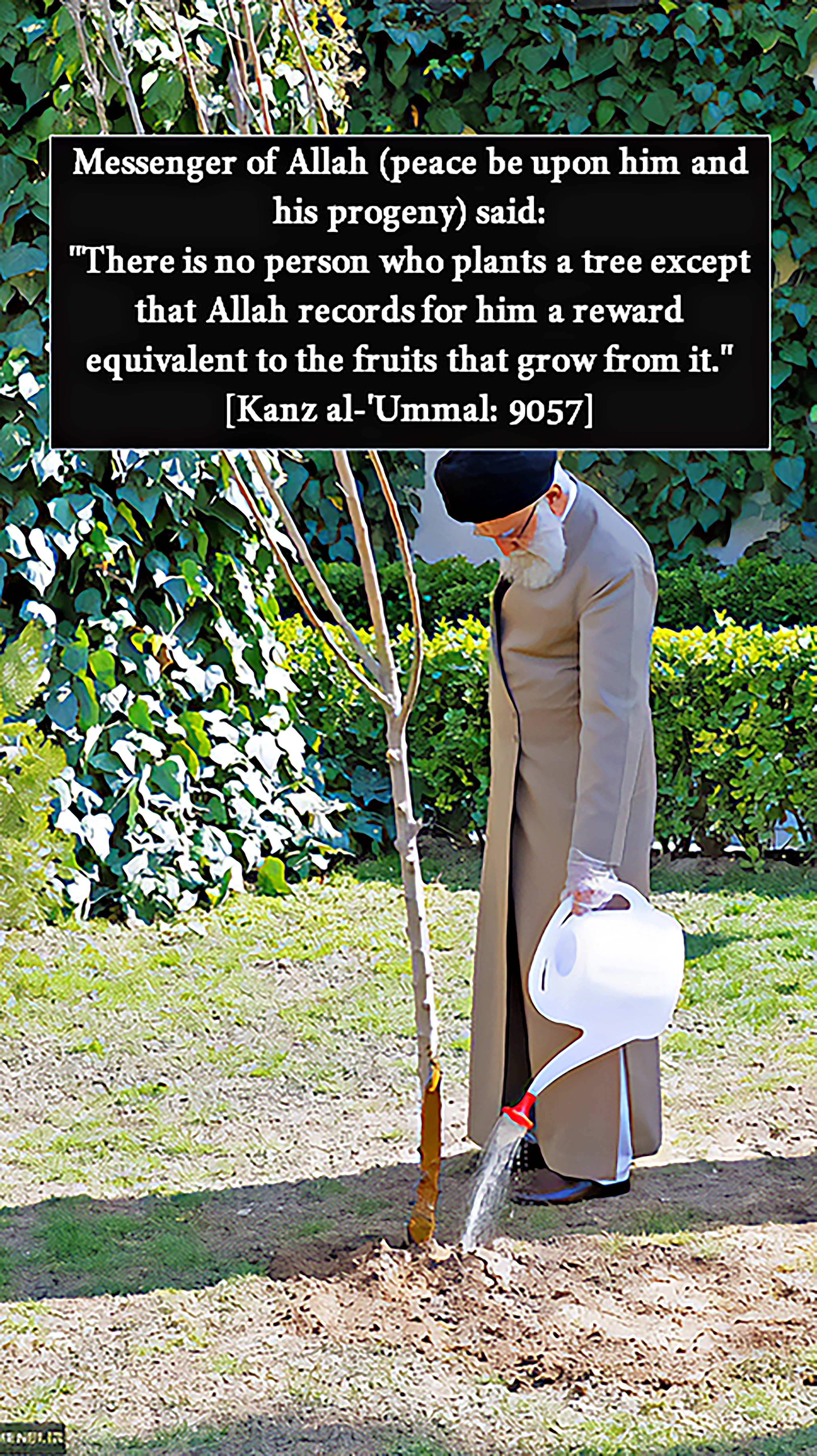
"Whoever plants a tree and patiently maintains it and tends to it until its fruition, every single fruit consumed from that tree is regarded by Allah as charity [on his behalf]." (Kanz al-Ummal, no. 9081)
This highlights that the act of planting is not merely a momentary action but a sustained commitment requiring patience and care, with rewards proportional to the effort invested.
2.2 Planting Even at the Last Hour
Perhaps the most powerful demonstration of the importance of planting comes from a remarkable Prophetic tradition:
"When the Last Hour comes, if any of you happens to be holding a seedling in his hand, then if he is able to, let him not stand until he has planted it." (Kanz al-Ummal, no. 9056)
This hadith conveys several profound lessons:
Hope and responsibility: Even in the face of the world's end, one should continue doing good
Selflessness: The act of planting benefits others, not just the planter
Divine reward: The act retains its value regardless of worldly circumstances
Stewardship: Human responsibility toward creation continues until the very end
Imam Ali (peace be upon him) further emphasized the importance of utilizing resources:
"Whoever has available water and land, and still he is poor and needy, should expect to be deprived from God’s mercy!" (Bihar al-Anwar, volume 103, page 65)
2.3 The Reward for Watering Trees
The compassion embedded in Islamic environmental ethics extends to the care of plants:
"Whoever waters a date or lote tree it is as if he has given a drink to a thirsty believer."
(Wasa’il al-Shi‘a, Volume 17, p. 42.)
This tradition equates nurturing plants with the humanitarian act of quenching thirst, demonstrating the interconnectedness of all forms of life in Islamic ethics.
2.4 Protection of Trees in Sacred Areas
The Prophet's practical protection of trees is evidenced by his declaration about Mecca's sanctity:
"Indeed, Allah (swt), the Mighty and Majestic, sanctified Mecca 'on the day He created the heavens and the earth.' Its vegetation is not to be uprooted, its trees are not to be cut, its game is not to be disturbed, and its lost property is not to be picked up except by one who announces it."
(Man La Yahduruh al-Faqih (Vol. 2) by Shaykh Mu?ammad b. Ali al-Saduq, Book 3, Chapter 2, Hadith #21)
When asked about the best type of wealth, the Prophet Muhammad (peace be upon him) responded:
"What one cultivates for himself and has paid its alms-tax when he picks it."
(Al-Khisal by Shaykh Mu?ammad b. Ali al-Saduq, Book 5, Chapter 85, Hadith #4)
This definition of the best wealth establishes several criteria:
- Personal labor: Cultivated by one's own hands
- Care and maintenance: Properly tended
- Fulfillment of obligations: Payment of zakat and other dues
Part Three: The Teachings of the Ahl al-Bayt – Agriculture as the Most Beloved Profession
3.1 Imam Ja'far al-Sadiq on the Virtue of Farming
Imam Ja'far al-Sadiq (peace be upon him) provided extensive teachings that elevate agriculture to the highest spiritual rank:
"There is no occupation more beloved to Allah than agriculture, and every single prophet that Allah sent down was a farmer except Prophet Enoch [Idris] (a.s.) who was a tailor."
(Mustadrak al-Wasa'il, v. 13, p. 461, no. 15898)
This tradition establishes agriculture as a prophetic profession, linking those who engage in farming to the noble lineage of the prophets. The exception of Prophet Idris (Enoch) as a tailor does not diminish tailoring but highlights the unique spiritual significance of farming.
Imam al-Sadiq further described farmers with remarkable titles:
"The farmers are the treasures of mankind for they plant and harvest the good things that Allah has made grow. On the Day of Resurrection, they will occupy the best and nearest position [to Allah] and will be called the blessed ones." (al-Kafi, v. 5, p. 261, no. 7)
This declaration establishes several key points:
Farmers as treasures: They are indispensable to human civilization
Planting goodness: Their work directly participates in divine creation
Highest station: They will be closest to Allah on Judgment Day
Blessed ones: They receive a special title of honor
When asked about farming being disliked (makruh), Imam al-Sadiq responded emphatically:
"Cultivate and plant! By Allah (swt), people have not engaged in any work more lawful and pure than this. By Allah (swt), they will continue to cultivate crops and date palms even after the emergence of the Dajjal." (Man La Yahduruh al-Faqih, Vol. 3, Book 2, Chapter 14, Hadith #18)
When Imam al-Sadiq (peace be upon him) was asked about farmers? He replied: "They are the planters of Allah's treasures in His earth. And there is no work more beloved to Allah than farming. Allah did not send any prophet except that he was a farmer, except for Idris (peace be upon him) as he was a tailor."
(Wasa'il al-Shia Vol. 17, Section 1, Chapter 10, Hadith 21933)
Imam Jafar al-Sadiq (peace be upon him) further emphasized the purity of farming: "Sow and plant, for by Allah people have not done any work that is more halal or better than that."
(al-Kafi by Shaykh al-Kulayni, Volume 5, Page 260)
3.2 Imam al-Baqir on the Best Occupation
Imam Muhammad al-Baqir (peace be upon him) narrated from his father: "The best of occupations is tilling the land, the produce of which is eaten by both the good-doer and the wrongdoer. That which the good-doer eats will seek forgiveness on his [i.e. the grower's] behalf, and that which the wrongdoer eats will curse him [i.e. the wrongdoer]. The birds and animals eat thereof too." (al-Kafi, v. 5, p. 260, no. 5)
This narration reveals a fascinating spiritual dynamic:
Universal provision: The produce feeds both righteous and sinful
Forgiveness through the righteous: When the virtuous eat, they pray for the farmer
Self-condemnation through the sinful: When the wicked eat, it becomes a witness against them
Ecological benefit: Animals and birds also share in the sustenance
3.3 Imam Ali on Utilizing Resources
Imam Ali ibn Abi Talib (peace be upon him) strongly emphasized the responsibility to utilize available resources: "Whoever has available water and land, and still he is poor and needy, should expect to be deprived from God’s mercy!" (Bihar al-Anwar, volume 103, page 65)
In an agricultural society, land and water are the two basic means of production and self-sufficiency. If a person has both, he has the tools to work, grow food, earn a living, and avoid poverty.
If someone has the resources and opportunity to work and support himself, but he neglects them out of laziness, waste, or poor management, and then falls into poverty and need, he has no real excuse. His poverty is self-inflicted.
Lessons
1. Work is part of faith.
Islam does not praise laziness or dependence while a person is able to work.
2. Use the resources you have.
Land, water, skills, health, and time are trusts from God. Leaving them unused without a valid reason is blameworthy.
3. Poverty caused by negligence is different from poverty caused by hardship.
If someone is poor because of illness, calamity, or lack of opportunity, Islam commands mercy and help. But if someone has means and still becomes needy because of neglect, that is a serious fault.
4. Agriculture is honourable.
So this hadith is a strong call to work, produce, cultivate, and not waste what God has given. It underscores that poverty in the presence of resources is blameworthy, as it reflects a failure to exercise the stewardship (khilafah) entrusted to humanity.
The Imams themselves exemplified agricultural work. Imam Ali was known for personally cultivating land, planting trees, and digging canals. The example of the Commander of the Faithful, Imam Ali (peace be upon him), who personally engaged in farming and used the wealth earned from his labor to manumit a thousand slaves, serves as a powerful testament to the virtue, dignity, and spiritual rewards associated with agricultural work and earning an honest living.
Imam Jafar al-Sadiq (peace be upon him) said: "The Commander of the Faithful, peace of Allah be upon him, freed a thousand slaves through the toil of his own hands." (Jamie 'Ahadith Alshiyeat V: 19 P: 296)
Imam Baqir (peace be upon him) said: "Ali, peace be upon him, freed a thousand slaves" (Eubudiat Ahl Albayt V: 1 P: 80)
He used a shovel and cultivated the soil, and he manumitted a thousand slaves from wealth earned by his own labour.
Imam Ja'far al-Sadiq was seen working in his garden with his own hands, refusing assistance:
It is narrated from Al-Fadl ibn Abi Qurrah: We entered upon Abu Abdullah (peace be upon him) while he was working in his garden.
We said: 'May Allah (swt) make us your ransom! Let us work for you, or let the servants handle it.'
Imam (peace be upon him) replied: 'No, leave me to it, for I desire that Allah (swt), the Almighty and Majestic, sees me working with my own hands and seeking lawful sustenance, even if it causes hardship to myself.'
(Man La Yahduruh al-Faqih (Vol. 3) by Shaykh Mu?ammad b. Ali al-Saduq, Book 2, Chapter 1, Hadith #30)
The prophet and imams used to work hard and toil.
It is narrated that Ali Ibn Hamza observed Imam Musa al-Kazim (peace be upon him) engaged in strenuous physical labor, ploughing and sowing his own ?eld, although even the legs of the Imam were sweating. When questioned by Ali Ibn Hamza, who offered to have servants perform the task instead, Imam Musa al-Kazim (peace be upon him) provided a response that elucidates the profound significance of his actions: The Messenger of Allah (peace be upon him and his family), Amir Al-Mu’minin (peace be upon him) and all his ancestors used to plough and sow their ?elds themselves. This is the profession of all prophets, their successors and the righteous persons from their nations." This statement, through the example of Imam Musa al-Kazim (peace be upon him), directly answers the implied question of who was better than he and his father. It indicates that the individuals referred to are Prophet Muhammad (peace be upon him and his family), Imam Ali (peace be upon him), and the preceding infallible Imams. Their consistent engagement in manual labor, particularly farming, establishes it as a sacred and divinely approved practice, marking it as the inherent work of prophets, their successors, and the righteous.
It is narrated from Al-Hasan ibn Ali ibn Abi Hamzah, from his father, who said: I saw Abu Al-Hasan (peace be upon him) working in his land, and his feet were soaked in sweat. I said to him, 'May I be your ransom! Where are the men (to assist you)?'
Imam (peace be upon him) replied: 'O Ali, one who is better than me and my father worked with his hands in his land.'
I asked him, 'Who is that?'
He said: 'The Messenger of Allah (swt) (peace be upon him and his family), Commander of the Faithful, and my forefathers (peace be upon them)-all of them worked with their hands, and it is the work of the prophets, the messengers, and the righteous.
(Man La Yahduruh al-Faqih (Vol. 3) by Shaykh Mu?ammad b. Ali al-Saduq, Book 2, Chapter 1, Hadith #28)
Part Four: The Concept of Tawakkul (Reliance on Allah) in Agriculture
4.1 Farmers as Models of Reliance
Imam Ja'far al-Sadiq provided a remarkable interpretation of the Quranic verse: "And on Allah do the believers rely"[Quran 3:160], refers to the farmers.’ (Bihar al-Anwar, v. 103, p. 66, no. 16)
Similarly, regarding the verse: "And upon Allah let those who trust put their trust" [Quran 14:12], he said: They are the farmers." (Wasa'il al-Shia Vol. 17, Section 1, Chapter 10, Hadith 21935)
This interpretation highlights that farmers embody the essence of tawakkul (reliance on Allah). They work diligently—ploughing, sowing, and tending—yet fully recognize that the outcome depends entirely on factors beyond their control: rain, soil fertility, and the divine permission for growth. They demonstrate the perfect balance between effort (sa'y) and trust (tawakkul).
4.2 The Divine Choice of Farming for Prophets
The wisdom behind Allah choosing farming for His prophets is explained in the traditions:
"Allah, most Majestic, most Glorious, has chosen farming and plantation for His prophets so that they will not dislike the drops falling from the sky." (Al-Kafi, Volume 5, Book 2, Chapter 124, Hadith #1)
This profound reasoning reveals that engagement with farming fosters appreciation for nature's blessings, particularly rainfall. A farmer intimately understands the vital importance of every drop of rain and thus develops gratitude for what others might consider an inconvenience.
The Imams taught specific supplications for planting, reflecting this balance of effort and reliance. When sowing seeds, one should:
Imam Jafar al-Sadiq (peace be upon him) said, "When you like to plant something, take a handful of seed, face al-Qiblah (al-Ka’bah) and say, “Have you seen what you cultivate? Do you cultivate it or We are the ones who cultivate.” (56:62-63) Then say, “In fact Allah is the cultivator” three times then say, “O Lord, make it blessed grain and provide us safety in it.” Then spread the handful from your hand on the plain ground.’” (Al-Kafi (Vol. 5) by Shaykh Mu?ammad b. Ya qub al-Kulayni, Book 2, Chapter 126, Hadith #1)
This practice transforms agriculture from a purely worldly activity into an act of worship, acknowledging Allah as the true source of growth and sustenance.
4.4 The Dual Nature of Sustenance
Imam Ali explained the two types of sustenance:"There are two types of sustenance: the sustenance that you seek out, and the sustenance that seeks you out, which even if you do not pursue it, it pursues you." (Nahjul Balaghah, Letter 31)
This classification emphasizes that while some provisions will reach a person regardless, active seeking through legitimate means is both commanded and rewarded.
Part Five: Environmental Ethics and Stewardship
5.1 The Prohibition of Environmental Corruption
The Quran strongly condemns environmental destruction as a form of corruption (fasad):
"Eat and drink from the provision of Allah, and do not commit abuse on the earth, spreading corruption." (Quran 2:60)
"And do not desire corruption in the land. Indeed, God does not like corruptors." (Quran 28:77)
"Corruption has appeared on the sea and land due to what has transpired by the hands of men."
(Quran 30:41)
Common Message of the Three Verses
Sustenance is from God and must be enjoyed lawfully.
Corruption is forbidden—whether in action, intention, or desire.
God does not love corruptors; He loves those who act justly and do good.
The purpose of consequences is to bring people back to God, not merely to punish.
These verses directly link human actions to environmental degradation, establishing that pollution, deforestation, and ecological destruction are not merely practical problems but moral and spiritual violations.
5.2 The Prohibition of Cutting Fruit Trees
The Quran says, “And when he goes away, he strives throughout the land to cause corruption therein and destroy crops and animals. And Allah does not like corruption.” (Quran 2:205)
- “To cause corruption therein”
The word is fasad, meaning mischief, ruin, injustice, and disorder in society or nature.
- “And destroy crops and animals”
In Arabic, the verse says al-harth wa al-nasl.
- Al-harth refers to crops, agriculture, and cultivation.
- An-nasl refers to offspring or progeny—often understood as livestock and also human descendants.
So destroying crops and animals means destroying food, livelihoods, and future generations. It is an attack on both present resources and future life.
- “And Allah does not like corruption”
This is a clear statement that God does not love those who spread corruption. The Arabic term is al-mufsid?n—those who cause corruption.
Deeper lessons
1. Outward words are not enough.
A person may speak beautifully, but if his actions destroy lives and resources, he is corrupt in God’s sight.
2. Destroying crops and animals is a major sin.
Islam strongly protects agriculture, livestock, and natural resources. Destroying them without just cause is considered spreading corruption on earth.
3. Corruption harms both people and the earth.
This verse links corruption to the destruction of food, economy, and life itself. It is not only a spiritual problem; it is also an environmental and social crime.
4. This verse is a foundation for Islamic environmental ethics.
It is one of the reasons why Islamic teachings prohibit cutting down fruit trees, burning crops, killing animals needlessly, or polluting water—even during war.
5. God’s love is with those who reform, not those who corrupt.
The Quran repeatedly contrasts islah—reform and improvement—with fasad—corruption and ruin. A believer is called to be a source of life, justice, and goodness.
Imam Ja'far al-Sadiq issued a specific warning:
"Do not cut down fruit trees, for Allah will pour down punishment unto you." (al-Kafi, v. 5, p. 264, no. 9)
- Fruit trees are a source of sustenance
They provide food for people, animals, and future generations. Cutting them down unjustly removes a means of provision that God has placed on earth.
- Destroying them is a form of corruption
Islam forbids causing harm and spreading corruption on the earth. Destroying useful vegetation is seen as a serious offense because it harms both creation and human welfare.
- The warning of punishment is severe
The phrase “Allah will pour down punishment” indicates that this is not a small matter. It is a sin with real consequences because it involves destroying blessing and harming others.
Human beings are stewards of the earth, not owners with absolute right to destroy. Trees, plants, and natural resources are trusts from God. They may be used lawfully, but they should not be wasted or destroyed without right.
Even in warfare, Islam prohibited cutting down fruit trees, burning crops, killing non-combatants, and destroying wells. This shows that Islam values life, provision, and the preservation of the earth even in times of conflict.
So the saying teaches:
- Do not destroy what benefits others.
- Do not waste God’s provision.
- Do not spread corruption on earth.
- Severe punishment awaits those who unjustly harm creation.
This severe warning highlights the sanctity of fruit-bearing trees, which provide sustenance not only for humans but for animals and birds as well.
In another narration, Imam al-Sadiq stated: "Do not cut fruit trees, lest Allah pours down torture upon you heavily." (Wasa'il al-Shia by al-Hurr al-Amili, Volume 19, Page 39)
5.3 Protection of Trees and Agriculture in Warfare
The Prophet Muhammad's teachings on the protection of the environment are so comprehensive that they extend even to times of war. He instructed his commanders: "Do not betray, do not commit excess, do not mutilate, do not kill children or hermits in mountains, do not burn palm trees or drown them with water, do not cut fruit-bearing trees, do not burn crops for you may need them later, do not slaughter livestock that are edible except what you need to eat." (Wasa'il al-Shia Vol. 15, Section 1, Chapter 15, Hadith 19986)
This protection extends to:
Fruit trees: Specifically protected from destruction
Water sources: Not to be poisoned or polluted
Crops and fields: Not to be burned
Animals: Not to be killed except for food
Imam Ali (peace be upon him) said, "The Prophet (S) prohibited poisoning the land of the polytheists."
(al-Kafi, v. 5, p. 28, no. 2)
5.4 Conservation and Resource Use
Islam emphasizes moderation and avoidance of waste in resource use:
"And eat and drink and be not extravagant; surely He does not love the extravagant." (Quran 7:31)
This verse addresses the children of Adam and reminds them of proper conduct, especially in relation to food, drink, and enjoyment of lawful things. It comes after a mention of taking adornment at places of worship and enjoying good things without crossing limits.
The verse teaches that eating and drinking are permitted and even encouraged, but they must be done without excess.
Key terms
- Eat and drink
This shows that enjoying lawful provision is not blameworthy. Islam does not require extreme asceticism or denying the body its needs.
- Do not be extravagant
The Arabic word is tusrifu, from israf, meaning:
- wastefulness
- excess
- going beyond proper limits
- spending or consuming more than is needed
- He does not love the extravagant
The Arabic is al-musrif?n—those who habitually waste, overconsume, or cross boundaries. God does not love such people.
What does “extravagance” include?
Scholars explain that israf in eating and drinking includes:
- Eating or drinking too much beyond need
- Wasting food and throwing it away
- Consuming harmful things
- Using resources carelessly
- Spending excessively on luxury while neglecting duty
- Overindulging to the point of harming health or faith
So the verse protects both the body and society, because wastefulness and overconsumption lead to harm.
Lessons
1. Balance is central in Islam
Islam teaches moderation. A believer eats and drinks, but does not make pleasure the goal of life.
2. Waste is a sin
Wasting food, water, or resources is not a small matter. It is a form of ingratitude for God’s provision.
3. God does not love the wasteful
Just as God does not love corruptors, He does not love those who waste. This shows that how we use resources matters to God.
4. This applies beyond food
The principle extends to wealth, time, energy, natural resources, and even speech. Anything used beyond its proper limit can become israf.
In short:
Enjoy God’s blessings, but do not cross the limits. True thankfulness is shown through balance and responsible use.
Prophet warned even against excessive use of water during ablution, demonstrating that conservation is a spiritual principle that applies to all aspects of life: "Ablution (wudu) is a mud (a specific measure), and ghusl (ritual washing) is a saa' (a larger measure). There will come people after me who will underestimate these amounts, and those will be contrary to my Sunnah.
The one who adheres to my Sunnah will be with me in the enclosure of holiness (Paradise)."
(Man La Yahduruh al-Faqih (Vol. 1) by Shaykh Mu?ammad b. Ali al-Saduq, Book 1, Chapter 8, Hadith #70)
Imam Jafar al-Sadiq (peace be upon him) warned: "Whoever exceeds in wudu is like one who performs it deficiently." (Wasa'il al-Shia Vol. 1, Section 8, Chapter 31, Hadith 1164)
Imam al-Sadiq emphasized the importance of avoiding waste:
"Economizing is something that Allah Azzawajal loves, and wastefulness is something that Allah abhors, even you throwing away a kernel, for it may be good for something, and even pouring out the leftover of your drink." (al-Kafi by Shaykh al-Kulayni, Volume 4, Page 52)
5.5 The Earth's Purifying Property
Islamic jurisprudence recognizes the earth's natural purifying capacity. Imam al-Sadiq affirmed:
"Indeed Allah made earth a purifier just as He made water a purifier." (Wasa'il al-Shia Vol. 3, Section 6, Chapter 23, Hadith 3934)
This recognition of the earth's innate purity establishes a responsibility to maintain it and not overwhelm its natural systems with pollution.
5.6 Responsibility as Stewards (Khalifah)
The Islamic concept of human responsibility toward the environment is rooted in the role of Khalifah (steward). Humans are designated as Khalifah (caretakers or stewards) of the Earth. This role entails a profound responsibility to protect and preserve the natural world, rather than acting as overlords.
The Quran states: "And do no mischief on the earth, after it has been set in order." (Quran 7:56)
Imam Muhammad Baqir (peace be upon him) explained this verse:"‘O Muyassar, verily the earth used to be in a state of disorder, so Allah (azwj) Mighty and Majestic Corrected it by His (azwj) Prophet (saww), therefore He (azwj) Said:“[7:56] Do no mischief on the earth, after it hath been set in order'"
Part Six: Agricultural Practices and Economic Justice
6.1 Zakat on Agricultural Produce
The Quran commands: "Eat from its fruits when it yields and give His Right on the day of its harvest." (Quran 6:141)
The Imams explained this "right" as the charity given at harvest time. Imam Muhammad Baqir (peace be upon him) described the proper manner: "giving the poor person handful after handful, and from the harvest handful after handful until it is finished." (Wasa'il al-Shia Vol. 9, Section 5, Chapter 13, Hadith 11819)
This establishes:
Timeliness: Charity is given immediately at harvest
Generosity: Giving from the produce directly
Consideration: Not harvesting at night so the poor can come
The Prophet specifically advised Imam Ali: "O Ali, you must not allow that farmers be oppressed before you." (Al-Kafi (Vol. 5) by Shaykh Mu?ammad b. Ya qub al-Kulayni, Book 2, Chapter 140, Hadith #2)
This directive establishes:
Protection of farmers' rights
Prevention of exploitation
Justice in agricultural relations
Part Seven: The Spiritual Significance of Specific Plants
7.1 The Date Palm
The date palm holds a special place in Islamic tradition. The Quran mentions it in numerous verses, mentioning them approximately 20 times. These mentions highlight dates as signs of God's creation, bounty, and power.
Divine Gifts and Bounties (Quran 6:141, Quran 16:67): The Quran speaks of God producing gardens, date palms, crops, olives, and pomegranates as divine gifts. Believers are instructed to partake of their fruit when ripe and avoid extravagance. Commentaries interpret these passages as signs intended to prompt reflection, gratitude, and recognition of God's immense bounty. In Surah An-Nahl (Quran 16:67), it is noted that from the fruits of date palms and grapes, people obtain both sustenance and intoxicants, presented as a sign for those who understand.
The Miracle of Maryam and the Date Palm (Quran 19:23-26): A particularly prominent mention is in the story of Maryam (peace be upon her) during the birth of Prophet Isa (Jesus). After childbirth, she was instructed: "And shake towards you the trunk of the palm tree, it will drop on you fresh ripe dates, so eat and drink and be comforted." (Quran 19:25). This event is highlighted as a miracle of divine provision and abundance, demonstrating God's power to bring forth life and sustenance in challenging circumstances. It serves as a profound sign of God's care and support for Maryam.
often paired with grapes. Its significance includes:
Complete food: Highly nutritious and sustaining
Healing properties: Mentioned for its medicinal benefits
Prophetic association: The Prophet loved dates and recommended them
Paradise symbolism: Mentioned in descriptions of Paradise
Imam al-Baqir stated: "Dates are the most pure food."
(Al-Kafi (Vol. 6) by Shaykh Mu?ammad b. Ya qub al-Kulayni, Book 5, Chapter 97, Hadith #1)
Imam Jafar al-Sadiq (peace be upon him) said: "If there was any food better than fresh dates, Allah would have fed it to Mary." (Wasa'il al-Shia Vol. 21, Section 6, Chapter 33, Hadith 27415)
The olive tree and its oil are repeatedly mentioned in the Quran:
The Oath "By the Fig and the Olive" (Quran 95:1): The Quran begins Surah At-Tin with a solemn oath: "By the fig and the olive." This oath emphasizes the sacredness of everything belonging to Allah, whether it is a fruit or a blessed ground, and highlights the nobility of Allah's creation. According to a narration from Muhammad bin al Fazl Yassar, this oath refers to Imam Hasan (peace be upon him) and Imam Husayn (peace be upon him), respectively, symbolizing their significance in Islamic tradition. The mention of these symbols along with Mount Sinai emphasizes the importance of the message that follows, particularly concerning the creation of man and the consequences of his actions.
The "Blessed Tree" and the Light Verse (Quran 24:35): One of the most significant mentions is in the "Light Verse," where Allah refers to "the tree" as a blessed tree, an Olive, neither of the east nor of the west:
"...lit from a blessed olive-tree, neither of the east nor of the west." (Quran 24:35). This verse is interpreted metaphorically. The comparison of Ibrahim (peace be upon him) to an olive tree highlights its moderation and balance, signifying that it does not lean to any extremity. It is "neither eastern nor western" in the sense that it is middle and balanced, much like the laws of retaliation and blood money in Islam. In the context of Islamic prophecy, "the tree" is interpreted as a parable for Prophet Muhammad (peace be upon him and his progeny) and his progeny. Tafseer Al Saafi and Bayan Al Sa'ada explain the "blessed tree" as referring to the Prophet Muhammad and his knowledge, which has been placed in the heart of his successor 'Ali ibn Abi Talib (peace be upon him). The phrase "lit from a blessed olive-tree" is also interpreted to refer to Muhammad bin Ali (peace be upon him), who is considered to be the blessed tree.
Tree from Mount Sinai (Quran 23:20): The Quran also mentions "a tree that grows out of Mount Sinai, which produces oil and a condiment for those who eat." (Quran 23:20). This highlights the olive tree's specific practical use as both a source of oil and a food condiment, further emphasizing its blessings and benefits.
The olive symbolizes:
Blessing: Its oil is described as "blessed"
Healing: The Quran speaks of its healing properties
Light: The olive oil in the parable of light
The Quran swears by the fig: "By the fig and the olive" (Surah Al-Tin 95:1)
The Oath "By the Fig and the Olive" (Quran 95:1): The most direct mention of the fig in the Quran is in Surah At-Tin, which begins with the solemn oath, "By the fig and the olive." This oath underscores the sacredness of everything that belongs to Allah, whether it is a fruit or a blessed ground. It highlights the nobility of Allah's creation and the idea that all things emanate from His realm of command and creation. The mention of these symbols alongside Mount Sinai serves to emphasize the profound importance of the message that follows, particularly concerning the creation of humanity and the consequences of its actions.
Divine Bounties and Sustenance (Quran 6:141, Quran 13:4): While figs are not explicitly listed in these verses, the Quran generally refers to various fruit trees and crops as signs of God's greatness and gifts for humanity.
"And God it is who causes gardens to grow, [both] trellised and untrellised, and palm trees and crops of different [kinds of] food and olives and pomegranates, similar and dissimilar. Eat of [each of] its fruit when it yields and give its due [Zakah] on the day of its harvest. And be not excessive. Indeed, God does not like those who commit excess." (Quran 6:141). This verse encourages gratitude and responsible consumption of all natural bounties, implicitly including fruits like the fig within the broader category of "crops of different kinds of food."
Surah Ar-Ra’d (Quran 13:4) also speaks of diverse neighboring tracts on earth, including gardens of grapevines, various crops, and palm trees, all irrigated with the same water yet yielding different tastes. This diversity is presented as "signs for those who understand," encompassing the wide array of fruits and plants like the fig.
Fig Tree in Jannah: The Quran also alludes to the presence of fig trees in the Garden of Jannah. This further elevates the status of the fig, associating it with the ultimate reward for believers.
This oath indicates the profound significance of these fruits in divine revelation.
The pomegranate is also mentioned as one of the fruits of Paradise. The Holy Quran references pomegranates as a divine bounty and a sign of God's power and generosity.
As a Heavenly Fruit: The Quran mentions the pomegranate as one of the specific fruits that will be available in Heaven. It states: "And the pomegranate, similar and dissimilar." This verse highlights the pomegranate's presence in Paradise, associating it with the ultimate reward for believers.
Divine Bounties on Earth: While not explicitly listing pomegranates in every verse about fruits, the Quran generally refers to various fruit trees and crops as signs of God's greatness and gifts for humanity, encouraging reflection on the diversity and goodness of creation. The general context of fruits like "gardens of palm trees and grapes" includes the idea of God providing diverse sustenance.
Spiritual and Symbolic Significance
Pomegranates carry deep spiritual symbolism in Islamic tradition, emphasizing their purity, divine origin, and protective qualities.
A Seed from Paradise: A central and frequently repeated theme in Islamic traditions is that every pomegranate contains at least one seed from Paradise.
Abdullah ibn Abbas narrated that God’s Prophet (S) said, “Whenever God’s Prophet (S) had any pomegranates he (a.s.) would not share it with anyone and said, In each pomegranate there is a seed from Paradise.”
( Uyun akhbar al-Rida (Vol. 2) by Shaykh Mu?ammad b. Ali al-Saduq, Book 1, Chapter 1, Hadith #151)
Imam Jafar al-Sadiq (peace be upon him) said, "There is nothing I hate sharing more than pomegranate and in every pomegranate there is one seed from paradise, thus when an unbeliever eats it, Allah, most Majestic, most Glorious, sends an angel to take it from him.’”
(Al-Kafi (Vol. 6) by Shaykh Mu?ammad b. Ya qub al-Kulayni, Book 5, Chapter 101, Hadith #5)
This belief elevates the pomegranate to a sacred status, suggesting a direct link to the divine realm.
"In both are fruits and palms and pomegranates." (Surah Al-Rahman 55:68)
Its mention alongside dates in descriptions of Paradise highlights its special status.
Part Eight: The Ecological and Social Benefits of Agriculture
Islamic teachings recognize the environmental benefits of planting and cultivation:
- Air purification: Plants and trees purify the air
- Water regulation: Trees play a role in the water cycle
- Soil preservation: Roots prevent erosion
- Biodiversity: Agriculture supports various species
- Climate moderation: Trees provide shade and regulate temperature
Plants and trees are essential components of the environment, bringing life and blessings to the land. Their presence signifies vibrancy and fertility, contributing positively to the ecological balance.
Agriculture contributes to social well-being through:
- Food security: Provides sustenance for communities
- Economic stability: A source of lawful livelihood
- Community cohesion: Shared agricultural activities strengthen bonds
- Intergenerational benefit: Trees benefit future generations
- Reduction of idleness: Productive work prevents social problems
Farming and planting are described as acts of worship and ongoing charity, and they encourage protecting plant life, even in contexts such as war.
The Quranic emphasis on dates, grapes, olives, and pomegranates reflects their recognized health benefits:
Dates: Rich in nutrients, recommended for childbirth
Grapes: A "natural pharmacy" with multiple benefits
Olive oil: Beneficial for health
Pomegranates: Beneficial for various conditions
Part Nine: Contemporary Applications
9.1 Environmental Stewardship Today
The Islamic principles of environmental stewardship have significant contemporary relevance:
- Climate action: Reducing emissions and protecting ecosystems
- Reforestation: Planting trees to combat deforestation
- Sustainable agriculture: Practices that preserve soil and water
- Waste reduction: Avoiding extravagance and pollution
- Responsible consumption: Mindful use of resources
Islamic teachings strongly encourage planting trees and regards cutting trees as prohibited unless there is necessity, emphasizing that this is especially crucial in arid regions.
9.2 The Role of Trees in Addressing Climate Change
The Prophetic encouragement to plant trees, even at the Last Hour, takes on new significance in the context of climate change. Planting trees:
Absorbs carbon dioxide: Mitigates greenhouse gas emissions
Prevents soil erosion: Protects agricultural land
Supports biodiversity: Provides habitats for species
Regulates water cycles: Prevents floods and droughts
Provides shade: Reduces urban heat effects
Islamic principles encourage lawful innovation in agriculture:
Sustainable technologies: Water-efficient irrigation
Crop diversification: Following the Quranic appreciation of variety
Organic practices: Avoiding harmful chemicals
Community farming: Cooperative agricultural models
9.4 Food Security and Self-Sufficiency
Islamic teachings encourage communities to work toward food security:
Local production: Reducing dependence on imports
Seasonal consumption: Appreciating seasonal produce
Reducing waste: Following the Quranic prohibition of extravagance
Charity distribution: Sharing produce with the needy
Part Ten: The Date Palm and the Neighbor – A Story of Justice and Generosity
One of the most powerful stories illustrating Islamic values of justice and generosity involves a date palm tree and a poor neighbor:
A man owned a date palm tree, a branch of which extended into the courtyard of his poor neighbor, who had several children. During the harvest, dates would fall into the poor man's yard. The hungry children would pick them up to eat. However, the owner, characterized by extreme greed, would forcibly retrieve the dates from the children, even inserting his finger into their mouths to extract the dates they were eating.
Unable to bear this injustice, the poor man complained to the Prophet Muhammad (peace be upon him and his family). The Prophet offered the owner a date palm tree in Paradise in exchange for the problematic tree, but the owner refused, stating his preference for his worldly tree due to its delicious dates.
A noble companion named Abu Dahda witnessed this exchange and, moved by the poor family's plight, asked the Prophet if the promise would apply to him if he acquired the tree. Receiving an affirmative answer, Abu Dahda purchased the tree for forty of his own date palms and gifted it to the Prophet, who then gave it to the poor neighbor and his children.
10.2 Connection to Surah al-Layl
This incident is reported as the cause of revelation for Surah al-Layl (Chapter 92). The Surah contrasts two types of individuals:
For Abu Dahda (The Generous and Pious):
"Then as for him who gives (in charity) and fears (Allah), And (in all sincerity) testifies to the Best, We will ease him to the state of ease."(Quran 92:5-7)
"And the pious would be kept away from it [the blazing Fire], The one who gives his wealth and purifies, And there is no favour for anyone with him to be Recompensed for, Except (he is) seeking the Face of his Lord, the most Exalted, And soon he will be pleased."(Surah al-Layl 92:17-21)
"But as for he who withholds and considers himself free of need And denies the best [reward], We will ease him toward difficulty And his wealth will not avail when he perishes." (Quran 92:8-11)
10.3 Key Lessons from the Story
The Rights of Neighbors: The Prophet actively intervened to protect the poor neighbor's rights
True Generosity vs. Miserliness: Attachment to worldly possessions can lead to loss of eternal rewards
Prophetic Protection of the Weak: The Prophet stood firmly on the side of the harmed party
The Value of a Single Act of Sacrifice: One act of generosity can pave the way to Paradise
Part Eleven: The Consecrated Tree (Shajarat Tayyiba) in Islamic Tradition
11.1 The Parable of the Good Tree
The Quran presents a profound parable:
"Have you not considered how Allah sets forth a parable of a good word (being) like a good tree, whose root is firm and whose branches are in heaven; yielding its fruit in every season by the permission of its Lord…"(Quran 14:24-25)
11.2 Interpretation as the Ahl al-Bayt
In Shia Islamic tradition, this "good tree" is interpreted as referring to the Prophet Muhammad and his pure Household:
Imam Jafar al-Sadiq (peace be upon him) was asked about the words of Allah. “a blessed tree which has firm roots and branches rising up into the sky.” (14:24) The Imam (a.s.) said that the The Holy Prophet (s.a) said, “The root is Amir al-Mu’minin Ali (a.s.) and the branches are the Imams from their (Amir al-Mu’minin (a.s.) and The Holy Prophet (s.a) descendants and the knowledge of Imams stand for the fruits. Their faithful followers represent the leaves of such tree.” The Imam (a.s.) asked,“Is there anything else in the tree?”I said, “No, there is nothing else there. The Imam (a.s.) then said, “By Allah, when a faithful is given a child a leave grows in the tree and when a faithful dies a leave falls off the tree.” (Al-Kafi (Vol. 1) by Shaykh Mu?ammad b. Ya qub al-Kulayni, Book 4, Chapter 108, Hadith #78)
The symbolism includes:
Root: The Prophet Muhammad
Stem/Trunk: Imam Ali
Twig: Lady Fatima
Branches: The Imams from the progeny of Muhammad and Ali
Fruits: The knowledge and guidance of the Imams
Leaves: The Shias (followers)
In contrast, the "evil word" is likened to:
"An evil tree pulled up from the earth's surface; it has no stability." (Surah Ibrahim 14:26)
This represents:
Falsehood and disbelief
Enemies of the Ahl al-Bayt
Lack of firm foundation
Instability and eventual collapse
Imam Baqir (peace be upon him) specifically identified the "evil tree" as referring to Bani Umayyah.
Part Twelve: Reflection and Practical Guidance
12.1 The Spiritual Significance of Planting
Planting and agriculture in Islam are not merely economic activities but acts of worship with profound spiritual dimensions:
- Following the prophets: Every prophet except Idris was a farmer
- Trust in Allah: Farmers exemplify reliance on divine providence
- Continuous charity: Every benefit from a planted tree is recorded as charity
- Environmental stewardship: Care for creation is a form of worship
- Providing for creation: Feeding others, human and animal, is an act of goodness
12.2 Practical Guidance for Muslims
Based on Islamic teachings, Muslims are encouraged to:
- Plant trees: Whether as individuals or through community initiatives
- Support agriculture: Through lawful trade and investment
- Protect the environment: Avoiding pollution and waste
- Pay dues: Fulfilling zakat and charity obligations from produce
- Teach others: Sharing knowledge about the Islamic value of agriculture
- Practice moderation: Using resources without extravagane
- Respect nature: Avoiding harm to trees, animals, and ecosystems
12.3 Du'as (Supplications) for Planting
The Imams taught specific supplications for planting:
"When you like to plant something, take a handful of seed, face al-Qiblah (al-Ka’bah) and say, “Have you seen what you cultivate? Do you cultivate it or We are the ones who cultivate.” (56:62-63) Then say, “In fact Allah is the cultivator” three times then say, “O Lord, make it blessed grain and provide us safety in it.” Then spread the handful from your hand on the plain ground.’” (Al-Kafi (Vol. 5) by Shaykh Mu?ammad b. Ya qub al-Kulayni, Book 2, Chapter 126, Hadith #1)
Other recommended supplications include:
Acknowledging Allah as the true grower
Seeking blessing for the produce
Requesting safety and protection
Expressing gratitude for sustenance
12.4 The Legacy of the Prophets and Imams
The prophets and Imams left a legacy of agricultural engagement that serves as a model for believers:
Prophet Nuh: Planted trees after the flood
Prophet Musa: His people were farmers
Prophet Dawud: Worked as a craftsman
Prophet Muhammad: Encouraged and protected agriculture
Imam Ali: Personally cultivated land
Imam al-Baqir: Gave farm earnings in charity
Imam al-Sadiq: Worked with his own hands in the garden
Conclusion: The Timeless Message of Islamic Agriculture
The Islamic teachings on agriculture and tree planting present a comprehensive vision where spiritual devotion, environmental stewardship, economic prosperity, and social justice converge. The Quranic verses that describe nature as signs of Allah's power, the Prophetic traditions that establish planting as continuous charity, and the teachings of the Ahl al-Bayt that elevate agriculture to the most beloved profession collectively form a unified message.
This message is profoundly relevant today. In an era of climate change, deforestation, and environmental degradation, the Islamic emphasis on planting trees, preserving nature, and avoiding corruption in the land offers both spiritual guidance and practical solutions. The Prophetic instruction to plant even at the Last Hour challenges complacency and calls for hope, responsibility, and action regardless of circumstances.
The hadith of Imam Ja'far al-Sadiq, with which we began, encapsulates this whole vision:
"Cultivate and plant trees. By God, people have not done any action more lawful and purer than this."
This is not merely a statement about agriculture but a declaration of the highest form of human endeavor—one that combines worship, charity, stewardship, provision, and hope. It is a call to engage with creation in a manner that reflects the divine attributes of creativity, mercy, and providence.
As Muslims and as humanity, we are invited to be cultivators of the earth—not as exploiters but as caretakers, not as consumers but as stewards, not as passive observers but as active participants in the divine drama of life and growth. The tree we plant today may provide shade, fruit, and oxygen for generations to come, and every benefit derived from it will continue to be recorded as charity, long after we have left this world.
This is the timeless message of Islamic agriculture: that in planting, we participate in divine creation; in nurturing, we embody divine mercy; and in sharing the fruits, we manifest divine justice. It is a message of hope, responsibility, and enduring goodness that remains as relevant today as it was fourteen centuries ago.
Comprehensive Summary of Key Principles
Quranic Foundations
|
Principle |
Evidence |
|
Nature as divine signs |
Surah Al-An'am 6:141, Surah An-Nahl 16:11 |
|
Water as source of life |
Surah Qaf 50:9-11 |
|
Allah as true grower |
Surah Al-Waqi'ah 56:63-64 |
|
Good tree parable |
Surah Ibrahim 14:24-25 |
|
Prohibition of corruption |
Surah Al-Baqarah 2:60, Surah Ar-Rum 30:41 |
|
Teaching |
Reference |
|
Planting as charity |
Mustadrak al-Wasail, v. 13, p. 460 |
|
Plant even at Last Hour |
Kanz al-Ummal, no. 9056 |
|
Reward for watering trees |
Aspects of Environmental Ethics |
|
Protection in warfare |
Wasa'il al-Shia Vol. 15, Chapter 15 |
|
Imam |
Teaching |
|
Imam al-Sadiq |
Agriculture most beloved occupation; farmers are treasures of mankind |
|
Imam al-Baqir |
Best occupation is tilling the land |
|
Imam Ali |
Utilize resources; protect farmers |
|
Imam al-Kazim |
Farming is profession of prophets |
|
Principle |
Application |
|
Prohibition of cutting fruit trees |
Divine punishment threatened |
|
Conservation of resources |
Avoid extravagance |
|
Protection in warfare |
Do not burn crops or trees |
|
Stewardship (Khilafah) |
Responsible care for creation |
This article is based on Islamic sources including the Holy Quran, al-Kafi, Man La Yahduruh al-Faqih, Mustadrak al-Wasa'il, Kanz al-Ummal, Wasa'il al-Shia, Safinat'ul-Bihar, Bihar al-Anwar, and other classical works of Islamic scholarship.
References
Quranic References
Surah Al-Baqarah (2)
- 2:60 - "Eat and drink from the provision of Allah, and do not commit abuse on the earth, spreading corruption."
- 2:205 - "And when he goes away, he strives throughout the land to cause corruption therein and destroy crops and animals. And Allah does not like corruption."
Surah Al-An'am (6)
- 6:141 - "And He it is who produces gardens, trellised and untrellised, and the palm trees, and the crops of different foods, and the olives, and the pomegranates resembling and without resemblance. Eat from its fruits when it yields and give His Right on the day of its harvest, and do not be extravagant. He does not Love the extravagant ones."
Surah Al-A'raf (7)
- 7:31 - "And eat and drink and be not extravagant; surely He does not love the extravagant."
- 7:56 - "And do no mischief on the earth, after it has been set in order."
Surah Ibrahim (14)
- 14:12 - "And upon Allah let those who trust put their trust"
- 14:24-25 - "Have you not considered how Allah sets forth a parable of a good word (being) like a good tree, whose root is firm and whose branches are in heaven, yielding its fruit in every season by the permission of its Lord? And Allah sets forth parables for men that they may be mindful."
- 14:26 - "An evil tree pulled up from the earth's surface; it has no stability."
Surah An-Nahl (16)
- 16:11 - "He causes to grow for you thereby herbage, and the olives, and the palm trees, and the grapes, and of all the fruits; most surely there is a sign in this for a people who reflect."
- 16:67 - Mention of fruits of date palms and grapes as signs for those who understand.
Surah Maryam (19)
- 19:23-26 - The story of Maryam and the date palm, including: "And shake towards you the trunk of the palm tree, it will drop on you fresh ripe dates, so eat and drink and be comforted." (19:25)
Surah Al-Mu'minun (23)
- 23:20 - "A tree that grows out of Mount Sinai, which produces oil and a condiment for those who eat."
Surah An-Nur (24)
- 24:35 - The "Light Verse": "...lit from a blessed olive-tree, neither of the east nor of the west."
Surah Al-Rum (30)
- 30:41 - "Corruption has appeared on the sea and land due to what has transpired by the hands of men."
Surah Qaf (50)
- 50:9-11 - "And We send down blessed water [rain] from the sky, then We produce therewith gardens and grain [every kind of harvests] that are reaped. And tall date-palms, with ranged clusters. A provision for [Allah's] servants. And We give life therewith to a dead land. Thus will be the Resurrection [of the dead from the graves]."
Surah Al-Rahman (55)
- 55:10-12 - "And the earth, He has set it for living creatures. Therein are fruits and date-palms with sheathed clusters. And grain with husk and fragrance."
- 55:68 - "In both are fruits and palms and pomegranates."
Surah Al-Waqi'ah (56)
- 56:63-64 - "Have you considered what you cultivate? Are you its growers or are We the Growers?"
Surah At-Tin (95)
- 95:1 - "By the fig and the olive"
Surah Al-Layl (92)
- 92:5-7 - "Then as for him who gives (in charity) and fears (Allah), And (in all sincerity) testifies to the Best, We will ease him to the state of ease."
- 92:8-11 - "But as for he who withholds and considers himself free of need And denies the best [reward], We will ease him toward difficulty And his wealth will not avail when he perishes."
- 92:17-21 - "And the pious would be kept away from it [the blazing Fire], The one who gives his wealth and purifies, And there is no favour for anyone with him to be Recompensed for, Except (he is) seeking the Face of his Lord, the most Exalted, And soon he will be pleased."
- 3:160 - "And on Allah do the believers rely"
- 28:77 - "And do not desire corruption in the land. Indeed, God does not like corruptors."
Hadith and Teaching References
Al-Kafi by Shaykh Mu?ammad b. Ya qub al-Kulayni
- Volume 1, Book 4, Chapter 108, Hadith #78 - Commentary on the "good tree" parable, with Imam al-Sadiq explaining: "The root is Amir al-Mu'minin Ali (a.s.) and the branches are the Imams from their descendants and the knowledge of Imams stand for the fruits. Their faithful followers represent the leaves of such tree... By Allah, when a faithful is given a child a leave grows in the tree and when a faithful dies a leave falls off the tree."
- Volume 4, Page 52 - Imam al-Sadiq: "Economizing is something that Allah Azzawajal loves, and wastefulness is something that Allah abhors, even you throwing away a kernel, for it may be good for something, and even pouring out the leftover of your drink."
- Volume 5, Page 260 - Foundational hadith: "Plant and sow, for by God, people have never done anything more lawful or better than it." (Imam Ja'far al-Sadiq)
- Volume 5, Page 260, no. 5 - Imam al-Baqir: "The best of occupations is tilling the land, the produce of which is eaten by both the good-doer and the wrongdoer. That which the good-doer eats will seek forgiveness on his [i.e. the grower's] behalf, and that which the wrongdoer eats will curse him [i.e. the wrongdoer]. The birds and animals eat thereof too."
- Volume 5, Page 261, no. 7 - Imam al-Sadiq: "The farmers are the treasures of mankind for they plant and harvest the good things that Allah has made grow. On the Day of Resurrection, they will occupy the best and nearest position [to Allah] and will be called the blessed ones."
- Volume 5, Page 264, no. 9 - Imam al-Sadiq: "Do not cut down fruit trees, for Allah will pour down punishment unto you."
- Volume 5, Book 2, Chapter 124, Hadith #1 - Explanation that Allah chose farming for His prophets so they will not dislike the drops falling from the sky.
- Volume 5, Book 2, Chapter 126, Hadith #1 - Supplication for planting: "When you like to plant something, take a handful of seed, face al-Qiblah (al-Ka?bah) and say, 'Have you seen what you cultivate? Do you cultivate it or We are the ones who cultivate.' (56:62-63) Then say, 'In fact Allah is the cultivator' three times then say, 'O Lord, make it blessed grain and provide us safety in it.' Then spread the handful from your hand on the plain ground."
- Volume 5, Book 2, Chapter 140, Hadith #2 - Prophet's advice to Imam Ali: "O Ali, you must not allow that farmers be oppressed before you."
- Volume 6, Book 5, Chapter 97, Hadith #1 - Imam al-Baqir: "Dates are the most pure food."
- Volume 6, Book 6, Chapter 8, Hadith #1 - Imam Muhammad al-Baqir: "There is no water on earth with which water of the sky is not mixed."
- Volume 6, Book 5, Chapter 101, Hadith #5 - Imam al-Sadiq: "There is nothing I hate sharing more than pomegranate and in every pomegranate there is one seed from paradise, thus when an unbeliever eats it, Allah, most Majestic, most Glorious, sends an angel to take it from him."
- Volume 5, p. 28, no. 2 - Imam Ali: "The Prophet (S) prohibited poisoning the land of the polytheists."
Man La Yahduruh al-Faqih by Shaykh Mu?ammad b. Ali al-Saduq
- Volume 2, Book 3, Chapter 2, Hadith #21 - Prophet's declaration: "Indeed, Allah (swt), the Mighty and Majestic, sanctified Mecca 'on the day He created the heavens and the earth.' Its vegetation is not to be uprooted, its trees are not to be cut, its game is not to be disturbed, and its lost property is not to be picked up except by one who announces it."
- Volume 3, Book 2, Chapter 1, Hadith #28 - Imam Musa al-Kazim: "The Messenger of Allah (swt) (peace be upon him and his family), Commander of the Faithful, and my forefathers (peace be upon them)-all of them worked with their hands, and it is the work of the prophets, the messengers, and the righteous."
- Volume 3, Book 2, Chapter 1, Hadith #30 - Imam al-Sadiq, when offered assistance in his garden: "No, leave me to it, for I desire that Allah (swt), the Almighty and Majestic, sees me working with my own hands and seeking lawful sustenance, even if it causes hardship to myself."
- Volume 3, Book 2, Chapter 14, Hadith #18 - Imam al-Sadiq: "Cultivate and plant! By Allah (swt), people have not engaged in any work more lawful and pure than this. By Allah (swt), they will continue to cultivate crops and date palms even after the emergence of the Dajjal."
-Book 1, Chapter 8, Hadith #70 - Prophet warned even against excessive use of water during ablution, demonstrating that conservation is a spiritual principle that applies to all aspects of life: "Ablution (wudu) is a mud (a specific measure), and ghusl (ritual washing) is a saa' (a larger measure). There will come people after me who will underestimate these amounts, and those will be contrary to my Sunnah. The one who adheres to my Sunnah will be with me in the enclosure of holiness (Paradise)."
Wasa'il al-Shia by al-Hurr al-Amili
- Volume 3, Section 6, Chapter 23, Hadith 3934 - Imam al-Sadiq: "Indeed Allah made earth a purifier just as He made water a purifier."
-Volume 1, Section 8, Chapter 31, Hadith 1164 Imam Jafar al-Sadiq: "Whoever exceeds in wudu is like one who performs it deficiently."
- Volume 9, Section 5, Chapter 13, Hadith 11819 - Imam Muhammad Baqir on giving charity at harvest: "giving the poor person handful after handful, and from the harvest handful after handful until it is finished."
- Volume 15, Section 1, Chapter 15, Hadith 19986 - Prophet's instructions to commanders: "Do not betray, do not commit excess, do not mutilate, do not kill children or hermits in mountains, do not burn palm trees or drown them with water, do not cut fruit-bearing trees, do not burn crops for you may need them later, do not slaughter livestock that are edible except what you need to eat."
- Volume 17, p. 42 - "Whoever waters a date or lote tree it is as if he has given a drink to a thirsty believer."
- Volume 17, Section 1, Chapter 10, Hadith 21933 - Imam al-Sadiq: "They are the planters of Allah's treasures in His earth. And there is no work more beloved to Allah than farming. Allah did not send any prophet except that he was a farmer, except for Idris (peace be upon him) as he was a tailor."
- Volume 17, Section 1, Chapter 10, Hadith 21935 - Imam al-Sadiq's interpretation of Quran 14:12 ("And upon Allah let those who trust put their trust"): "They are the farmers."
- Volume 19, Page 39 - Imam al-Sadiq: "Do not cut fruit trees, lest Allah pours down torture upon you heavily."
- Volume 21, Section 6, Chapter 33, Hadith 27415 - Imam al-Sadiq: "If there was any food better than fresh dates, Allah would have fed it to Mary."
Mustadrak al-Wasail
- Volume 13, p. 460, no. 15892 - Prophet Muhammad: "Every single Muslim that plants or cultivates anything of which humans, animals or birds may eat from is counted as charity towards them on his behalf."
- Volume 13, p. 461, no. 15898 - Imam al-Sadiq: "There is no occupation more beloved to Allah than agriculture, and every single prophet that Allah sent down was a farmer except Prophet Enoch [Idris] (a.s.) who was a tailor."
Kanz al-Ummal
- No. 9056 - Prophet Muhammad: "When the Last Hour comes, if any of you happens to be holding a seedling in his hand, then if he is able to, let him not stand until he has planted it."
- No. 9081 - Prophet Muhammad: "Whoever plants a tree and patiently maintains it and tends to it until its fruition, every single fruit consumed from that tree is regarded by Allah as charity [on his behalf]."
Bihar al-Anwar
- Volume 103, page 65 - Imam Ali: "Whoever has available water and land, and still he is poor and needy, should expect to be deprived from God's mercy!"
- Volume 103, p. 66, no. 16 - Imam al-Sadiq's interpretation of Quran 3:160 ("And on Allah do the believers rely") as referring to farmers.
Al-Khisal by Shaykh Mu?ammad b. Ali al-Saduq
- Book 5, Chapter 85, Hadith #4 - Prophet Muhammad, when asked about the best type of wealth: "What one cultivates for himself and has paid its alms-tax when he picks it."
Uyun akhbar al-Rida by Shaykh Mu?ammad b. Ali al-Saduq
- Volume 2, Book 1, Chapter 1, Hadith #151 - Abdullah ibn Abbas: "Whenever God's Prophet (S) had any pomegranates he (a.s.) would not share it with anyone and said, In each pomegranate there is a seed from Paradise."
Eubudiat Ahl Albayt
- Volume 1, Page 80 - Imam Baqir: "Ali, peace be upon him, freed a thousand slaves"
Jamie 'Ahadith Alshiyeat
- Volume 19, Page 296 - Imam al-Sadiq: "The Commander of the Faithful, peace of Allah be upon him, freed a thousand slaves through the toil of his own hands."
Nahjul Balaghah
- Letter 31 - Imam Ali: "There are two types of sustenance: the sustenance that you seek out, and the sustenance that seeks you out, which even if you do not pursue it, it pursues you."
Other Islamic Sources Referenced
- Safinat'ul-Bihar - Classical Islamic reference work
- Tafseer Al Saafi - Quranic commentary
- Bayan Al-Sa'ada - Quranic commentary
Summary of Key Sources
Primary Sources
1. The Holy Quran
2. Al-Kafi by Shaykh Mu?ammad b. Ya qub al-Kulayni
3. Man La Yahduruh al-Faqih by Shaykh Mu?ammad b. Ali al-Saduq
4. Wasa'il al-Shia by al-Hurr al-Amili
5. Mustadrak al-Wasa'il by al-Nuri
6. Kanz al-Ummal by al-Muttaqi al-Hindi
7. Bihar al-Anwar by al-Majlisi
8. Al-Khisal by Shaykh Mu?ammad b. Ali al-Saduq
9. Uyun akhbar al-Rida by Shaykh Mu?ammad b. Ali al-Saduq
10. Nahjul Balaghah
Secondary Sources Referenced
- Jamie 'Ahadith Alshiyeat
- Eubudiat Ahl Albayt
- Safinat'ul-Bihar
- Tafseer Al Saafi
- Bayan Al-Sa'ada
Quranic verses and hadiths of Ahl al-Bayt (peace be upon them) and sayings in Arabic, Persian and English.
https://eitaa.com/noorunalanoor
https://www.youtube.com/@110Inspire
https://youtube.com/@mustafaabbas4668?si=EnSIkaIECMiOmarE