Posted by Mustafa Abbas on August 20, 2026 | Views: 250 | Ratings: 115
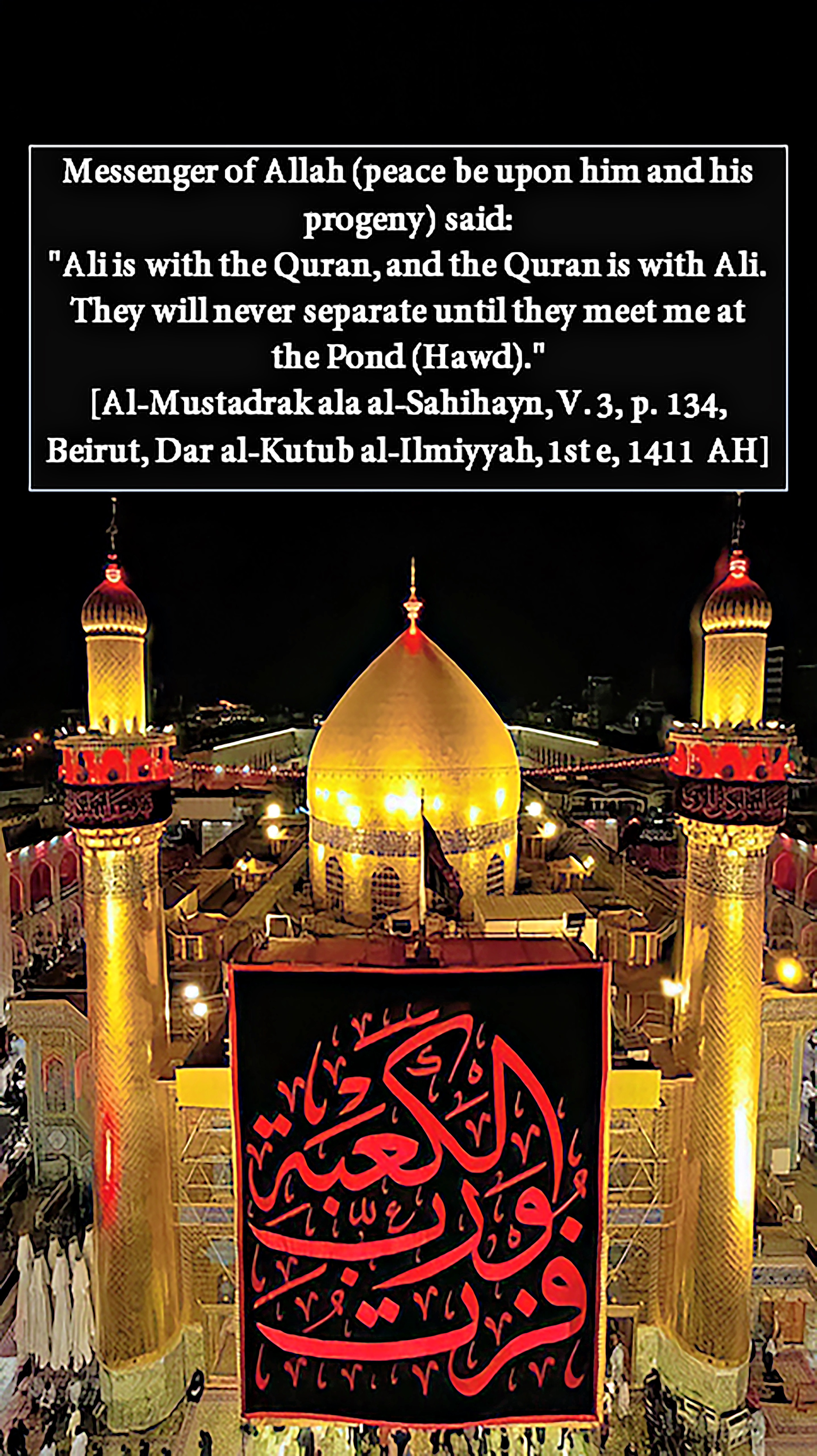
Download article from link below at the end
The Ahl al-Bayt: Divine Guides, The Ark of Salvation, and the Straight Path
A Comprehensive Study of the Prophetic Household in Islamic Tradition
Introduction
In the vast expanse of Islamic theology and tradition, few subjects hold as much significance and depth as the status and role of the Ahl al-Bayt—the purified Household of Prophet Muhammad (peace be upon him and his progeny). The Prophet himself established their unparalleled position through profound declarations and analogies that have echoed through fourteen centuries of Islamic history. His comparisons of the Ahl al-Bayt to Noah's Ark and the Gate of Hitta among the Children of Israel are not mere rhetorical flourishes but foundational teachings that define the very essence of guidance and salvation in Islam.
This comprehensive article explores the multifaceted role of the Ahl al-Bayt as divine guides, protectors of the faith, authentic interpreters of revelation, and the essential means of attaining salvation. Drawing from the rich traditions preserved in both Sunni and Shia sources, we will examine the theological, spiritual, and practical implications of adhering to the Prophet's Household and the grave consequences of turning away from them.
Part One: The Foundational Declaration
The Prophetic Tradition
The Holy Prophet Muhammad (peace be upon him and his progeny) declared:
"The similitude of my household among you is that of the Ark of Noah: whoever boards it is saved, and whoever lags behind it is drowned, and the similitude of my household is that of the Gate of Hitta among the Children of Israel." (Kanz al-Ummal, 34170)
This single statement encapsulates the essential role of the Ahl al-Bayt in guiding humanity toward salvation and divine mercy. It establishes them as both a vessel of safety in turbulent times and a gateway to divine forgiveness.
The Significance of the Two Analogies
The Prophet's choice of these two analogies is remarkably significant. The Ark of Noah represents salvation from destruction, while the Gate of Hitta represents forgiveness and divine mercy. Together, they establish the Ahl al-Bayt as the complete means of spiritual deliverance—saving believers from both the punishment of sins and the perils of misguidance.
Part Two: The Ark of Noah—A Vessel of Salvation
The Meaning of the Analogy
The comparison of the Ahl al-Bayt to Noah's Ark carries profound theological significance. In the story of Prophet Noah (peace be upon him), the Ark was the exclusive means of physical salvation from the universal flood. Those who boarded it were saved; those who remained outside perished. Similarly, the Ahl al-Bayt are presented as the spiritual Ark of Salvation for the Muslim community.
Salvation from Perdition
Just as Noah's Ark saved its passengers from the physical flood, the Ahl al-Bayt offer salvation from:
1. Misguidance and Deviation
Those who resort to the Ahl al-Bayt in matters of creed, deriving the principles and branches of religion from their virtuous Imams, are saved from the darkness of error. They are protected from the intellectual confusion that afflicts those who navigate the treacherous waters of religious interpretation without divine guidance.
2. The Torment of Hellfire
Following their guidance protection from divine punishment in the hereafter. Whoever resorts to them in matters related to the creed, deriving the branches and basics of religion from their virtuous Imams, will certainly be saved from the fire of hell.
3. Sins and Lowly Desires
Their teachings provide a shield against the temptations that lead to spiritual ruin. Those who "embark" upon this Ark find refuge from the "seas of sins and lowly desires" that threaten to drown the soul.
The Comprehensive Nature of Salvation
The salvation offered through the Ahl al-Bayt is comprehensive, encompassing:
Aspect Salvation Through Ahl al-Bayt
Intellectual Protection from doctrinal error and misguidance
Spiritual Purification from sins and attainment of divine pleasure
Aspect Salvation Through Ahl al-Bayt
Practical Correct understanding and implementation of religious duties
Deliverance from the torment of Hellfire and attainment of paradise Eschatological
The Authority of the Ahl al-Bayt
The analogy implies that the Ahl al-Bayt are the authoritative source for understanding the religion. Whoever resorts to them in matters related to the creed, deriving the branches and basics of religion from their virtuous Imams, will certainly be saved. This establishes them as:
The True Interpreters of Islamic Doctrines: Possessing profound knowledge that enables correct understanding
The Guardians of Religious Knowledge: Preserving the authentic teachings of Islam
The Standard of Truth: Serving as the criterion by which correct belief and practice are measured
The Consequences of Abandoning the Ark
The metaphor carries a stark warning: those who reject, abandon, or lag behind the Ahl al-Bayt face spiritual destruction. Like those who refused to board Noah's Ark and drowned, those who turn away from the Ahl al-Bayt are "submerged in the torment of hellfire and eternal perdition."
The consequences include:
1. Spiritual Drowning
Being lost in misguidance and error, unable to find the path to truth
2. Eternal Destruction
Facing divine punishment in the hereafter without hope of salvation
3. Ingratitude and Tyranny
Perishing in the "paths of insubordination and rebellion," having rejected divine guidance
Protection from Dissension
The Ahl al-Bayt serve as a safeguard against religious discord. The Prophet stated that his "household saves people from disagreements and conflicts." They are likened to "stars that protect mankind from losing its way in travel," serving as a safeguard against discord in religious matters. If a tribe differs from them, "they will all then differ and become the party of Satan."
Part Three: The Gate of Hitta—A Door to Forgiveness
The Historical Context
The second analogy refers to the "Gate of Hitta" mentioned in the Holy Quran:
" And [recall] when We said, "Enter this city and eat from it wherever you will in [ease and] abundance, and enter the gate bowing humbly and say, 'Relieve us of our burdens.' We will [then] forgive your sins for you, and We will increase the doers of good [in goodness and reward]." (Quran 2:58)
Understanding "Hitta"
The term /hittah/ philologically means "the descent of something from upward." In the context of the verse, it represents a request for divine mercy and remission of sins—a plea for the "putting down of a heavy burden of sin." The Children of Israel were instructed to:
1. Enter a specific town (identified as Areyha, a city in Syria, or Bayt al- Maqdis/Jerusalem)
2. Enter through its gate in humility, prostrating
3. Utter "Hitta," signifying their plea for forgiveness
This act of humility and repentance was made a direct cause for the forgiveness of their sins and an increase in reward for those who performed good deeds.
The Spiritual Significance of the Gate
The Gate of Hitta represented:
1. Humility before Allah's Greatness
Submission to His judgment and commands
2. Seeking Forgiveness
Acknowledgment of sin and a plea for divine mercy
3. A Means of Salvation
A direct cause for sins to be forgiven and abundant reward to be received
The Ahl al-Bayt as the Gate of Hitta
The Prophet's comparison establishes the Ahl al-Bayt as the spiritual Gate of Hitta for the Muslim nation:
1. A Means of Forgiveness and Salvation
Just as entering the physical Gate of Hitta led to forgiveness for the Children of Israel, loving, honoring, and following the guidance of the Ahl al-Bayt becomes a means of forgiveness and salvation for the Muslim community. Imam Sharafuddeen al-Aamily states that "Allah has made the love for Ahl al-Bayt a cause for this nation to be forgiven, much like entering the Gate of Hitta with humbleness was a cause for forgiveness."
2. A Symbol of Humility and Submission
Engaging with the Ahl al-Bayt in matters of faith is akin to the humility and submission demonstrated by the Children of Israel at the Gate of Hitta. It signifies an acceptance of Allah's chosen path and His representatives.
3. A Criterion for Faith
The comparison implies a clear distinction between belief and disbelief. It is stated that "whoever enters through this door [the Imams] is a believer, and whoever comes out of it becomes an unbeliever." This highlights the fundamental role of acknowledging and following the Imamate of the Ahl al-Bayt in one's faith.
The Superiority of the Ahl al-Bayt's Gate
Ja`far b. Muhammad b. Masrur (rh) narrated to us. He said: Al-Husayn b. Muhammad b. `Amer narrated to us from his uncle `Abdullah b. `Amer from Muhammad b. Abi `Umayr from Aban b. `Uthman rom Aban b. Taghlub from `Ikrama from Ibn `Abbas. He said: The Messenger o Allah (s) said: "Whoever takes on my religion, travels my path, and follows my tradition should prefer the Imams of my Ahl al-Bayt over the rest of my Nation, for their likeness in my Nation is like that of the Gate of Remission for the Children of Israel." (Al-Amali by Shaykh Muhammad b. Ali al-Saduq, Book 1, Chapter 17, Hadith #11)
While the Children of Israel's gate was made of wood planks, the Ahl al-Bayt are "the truth-tellers, the Faithful, the guides, higher and loftier." This living, spiritual, and intellectual door to divine mercy far surpasses any physical structure.
Imam Ali as the Gate of Knowledge and Forgiveness
Imam Ali ibn Abi Talib (peace be upon him) is explicitly identified as the "Gate of Hitta." The phrase 'Gate of Hitta' refers to Ali son of Abu Talib, and whoever enters through it (i.e., follows Ali) is a believer, and whoever exits it (i.e., leaves Ali) is an apostate."
This is reinforced by the well-known Prophetic tradition: "I am the city of knowledge & Ali is its gate so who so ever intends to acquire knowledge must come through the gate"(Jamia Saghir Vol. 1, P 415, Hadith 2705)
This statement signifies that Prophet Muhammad (peace be upon him and his progeny) is the source of all knowledge, and Imam Ali (peace be upon him) is the indispensable gateway to access and comprehend that knowledge.
Part Four: The Inseparability of the Quran and the Ahl al- Bayt
The Hadith of Thaqalayn (The Two Weighty Things)
The Prophet Muhammad (peace be upon him and his progeny) declared on multiple occasions—including during the Farewell Pilgrimage, at Ghadir Khum, and on his deathbed: "Oh people! I have left among you something which if you get (hold of) it, you will not go astray: The book of Allah (Quran) & my progeny, household" (Sunnan At Trimzi AlHadith 4036)
This declaration, known as the Hadith of Thaqalayn, establishes the Ahl al-Bayt as co¬equal and inseparable with the Holy Quran, guaranteeing guidance and protection from misguidance for those who adhere to both.
The Implications of the Hadith
1. Inseparable Guidance
The Hadith affirms that the Ahl al-Bayt and the Quran are inseparable, always remaining together until they meet the Prophet on the Day of Judgment. This co-equality with the Quran, which is inherently infallible, necessitates the Ahl al-Bayt's infallibility to provide consistent and error-free guidance.
2. Authentic Source of Reference
The Ahl al-Bayt are designated as the authentic source of religious and intellectual reference for Muslims after the Prophet's passing. For them to serve as a reliable reference alongside the Quran, they must be free from error and corruption, thus infallible.
3. Protection from Deviation
The Hadith guarantees that adhering to both the Quran and the Ahl al-Bayt prevents the Ummah from going astray. This promise of unwavering guidance inherently requires the Ahl al-Bayt themselves to be infallible.
The Quran as the Greatest Source of Knowledge
If the Qur'an is the greatest source of knowledge for the Muslims, the progeny of the Prophet also have such a status and position. If resorting to the Qur'an is a means of finding guidance and avoiding the Qur'an results in deviation from the path of righteousness, then the same is true for the Ahlul-Bayt.
The Ahl al-Bayt as Interpreters of the Quran
The Ahl al-Bayt are the "divinely authorized custodians and teachers of the Quran," entrusted with interpreting and explaining Islamic knowledge and traditions. They serve as authorities in religious teachings, providing a reliable and inerrant source for the Prophet's Sunnah.
Their role includes:
Clarifying Divine Revelation: They are the beacons that impart the knowledge of the Quran to the people.
Distinguishing Between Metaphorical and Precise Verses: They possess God- endowed knowledge enabling them to interpret both the clearly defined (muhkam) and ambiguous (mutashabih) verses.
Preserving Quranic Integrity: They are the infallible guardians of the Quran, ensuring that its original text and meaning are not corrupted or distorted.
Providing Authentic Interpretation: No human beings other than the Ahl al-Bayt are immune from misunderstanding and misinterpreting the Divine Book.
The "Living Quran"
The Ahl al-Bayt are described as the "living Quran" and the "walking Quran," embodying and exemplifying the teachings of the divine book. Their lives, actions, and character convey the unfathomable knowledge of the Quran and demonstrate its practical application.
Part Five: Infallibility (Ismah) of the Ahl al-Bayt
The Concept of Ismah
Ismah (infallibility) is a spiritual state attributed to the Ahl al-Bayt, signifying that their actions are not merely in accordance with truth but are personifications of truth itself. This implies immunity from:
Error and forgetfulness
Sin and disobedience to Allah
Fault or corruption in knowledge and deeds
Greed, jealousy, anger, and lustful desires
The Meaning of Infallibility
Infallibility encompasses two primary meanings:
1. Infallible from Error
Perceiving everything correctly, executing it correctly, and conveying knowledge and insight to people without any fault, ignorance, or error in understanding or interpretation.
2. Infallible from Sin
Being entirely free from committing any sins, whether willingly or unwillingly, minor or major.
The state of Ismah is not an inability to sin, but rather a divine protection and a profound level of virtue and wisdom. While an infallible individual retains the freedom to sin, they have reached such a high station that they no longer desire to commit forbidden acts or slip into error.
Proofs of Infallibility
1. Ayat al-Tatheer (The Purification Verse)
"Allah only desires to keep away the uncleanness from you, O people of the House, and to purify you a thorough purifying." (Quran 33:33)
This verse signifies Allah's will to cleanse the Ahl al-Bayt from all forms of impurity, sin, and error. The use of the exclusive particle "innama" and the emphatic infinitive "tatheera" suggests a unique and absolute purification for a specific group.
The Verse Implies:
Complete Purity: The Ahl al-Bayt are cleansed and pure of sin, free from all kinds of impurities, defects, and moral or spiritual imperfections.
Absolute Infallibility: Every sin is uncleanness, and committing sins does not agree with their purification. Therefore, they are infallible.
Divine Protection: Allah's intention is not merely to remove existing impurity but to prevent any impurity from coming near them.
2. Hadith al-Kisa (The Tradition of the Cloak)
The Prophet gathered Imam Ali, Lady Fatima, Imam Hasan, and Imam Husayn under his cloak and prayed:
By this isnad from Ibrahim b. Muhammad al-Thaqafi. He said: Isma`il b. Aban al-Azdi informed us. He said: `Abdullah b. Khirash al-Shaybani narrated to us from al-`Ulum b. Hushub from al-Taymi. He said: I visited `A’isha, and she narrated to us that she saw the Messenger of Allah (s) praying for `Ali, Fatima, al-Hasan, and al-Husayn (as). He was saying: O Allah! These are my Ahl al-Bayt, so remove uncleanliness from them and purify them with a thorough purification. (Al-Amali by Shaykh Muhammad b. Ali al-Saduq, Book 1, Chapter 72, Hadith #5)
This tradition, narrated in both Sunni and Shia sources, identifies the specific individuals included in the Ahl al-Bayt and affirms their divine purification.
3. Logical Necessity
The very role assigned to the Ahl al-Bayt—as providers of absolute guidance leading to guaranteed salvation—logically necessitates their infallibility:
The Hadith of Safina: States that "whoever embarks and rides this Ark will be saved, while those who do not will be misguided."
The Promise of Salvation: If following them guarantees salvation, they must be infallible, as following fallible guides would lead to misguidance rather than guaranteed salvation.
The Preservation of Religion: The weighty responsibility of guiding the community and guarding the Shari'ah can only be entrusted to those divinely protected from error.
4. Divine Selection
Allah's wisdom necessitates that His chosen guides be infallible to effectively fulfill their role and ensure the integrity of the divine message:
Necessity for Trustworthy Guidance: The grand role and duties of divine guides demand that they be protected from sinning or failing in their responsibilities.
Authenticity of Message: Ismah ensures the purity and consistency of the guidance provided, preventing deviation or error in religious matters.
Perfect Role Models: Prophets and Imams must be exemplary persons, having followed all divine injunctions in their personal lives.
5. Intellectual Arguments
The human intellect itself leads to the conclusion of the necessity of infallibility:
Undermining Trust: If a Prophet or Imam could commit sins or make errors, it would fundamentally undermine trust in their teachings.
Defeating the Purpose of Guidance: People would be unable to fully believe in or implement a religion conveyed by someone they cannot entirely trust.
Logical Contradiction: If a Prophet or Imam could commit a sin or issue a wrong command, it would create a logical contradiction—obeying them in that instance would mean disobeying God.
6. Statements of the Imams
The Imams themselves affirmed their infallibility:
Imam Zayn al-Abidin (peace be upon him) said, ‘An Imam from among us can only be infallible. Infallibility is not an outward physical feature that can be noticed which is why it must be documented [in the Qur’an or traditions].’ He was then asked, ‘O son of the Prophet, and what does infallible mean’ to which he replied, ‘It refers to one who clings fast to the rope of Allah, and the rope of Allah is the Qur’an. They do not separate from each other until the Day of Resurrection, and the Imam guides to the Qur’an and the Qur’an guides to the Imam, which is the purport of Allah’s saying [in the Qur’an] “Verily this Qur’an guides to what is most upright”[Qur’an 17:9].’(Ma’ani al-Akhbar, p. 132, no. 1)
The infallible Imam is prevented by Allah from all acts which Allah has prohibited according to Imam al-Sadiq (peace be upon him): We were told by Ali bin Fadl bin Abbas al-Baghdadi, in Ray, the one known as Abu’l-Hasan al-Hanouti, that he said: We were told by Ahmad bin Muhammed bin Ahmad bin Sulayman bin Harith, that he said: We were told by Muhammed bin Ali bin Khalaf al-‘Attar, that he said: We were told by Hussain al-Ashqar, that he said: I said to Hisham bin Hakam: What is the meaning of your saying: «The Imam is not but Infallible»? He said: I asked Abu Abdillah, peace be upon him, about that, to which he said. The Infallible is the one who refrains, through Allah, from all the prohibitions of Allah. Verily, Allah, Blessed and Exalted is He, said: «And he who adheres to Allah, has certainly been guided to a Straight Path.» (3:101) (Maani al-Akhbar by Shaykh Muhammad b. Ali al-Saduq, Book 1, Chapter 64, Hadith #2)
The Significance of Infallibility
The infallibility of the Ahl al-Bayt holds immense theological significance:
1. Guarantee of Authentic Guidance
Ismah ensures the purity and consistency of the guidance provided by the Imams, preventing any deviation or error in religious matters after the Prophet's demise. They are the authentic source of the Sharia and the correct interpretation of the Quran and Hadith .
2. Preservation of Divine Message
The Ahl al-Bayt are the infallible preservers and propagators of the divine message, safeguarding its integrity and ensuring its continuity for all generations. Their teachings are consistent, free from contradictions, and provide a reliable source of divine knowledge.
3. Perfect Role Models and Exemplars
Being infallible, the Ahl al-Bayt serve as perfect role models and conduits of God's guidance. Their lives and actions embody the true message of Islam, making them ideal examples for humanity to follow in seeking spiritual purity and closeness to God.
4. Distinction and Authority
The emphasis on their infallibility distinguishes the Ahl al-Bayt from other historical figures, highlighting their unique and consistent guidance. This quality is a basic principle for the Imamate, asserting that the Imam, as the guide over the nation, must be infallible to ensure the smooth running of Islamic affairs.
5. Divine Will and Wisdom
The concept of Ismah reflects Allah's wisdom and His ongoing care for humanity, ensuring that there is always a perfectly guided leader to clarify religious matters and lead people on the straight path.
Part Six: The Concept of Walayah (Guardianship)
The Meaning of Walayah
Walayah (guardianship) attributed to the Ahl al-Bayt signifies their divinely granted authority, leadership, and comprehensive guardianship over the Muslim community. It encompasses:
Spiritual Authority: Guiding believers toward truth and righteousness
Intellectual Authority: Providing authentic interpretation of divine teachings
Social Authority: Leading the community in all religious and temporal matters
Divine Mandate
Through their Walayah, Allah has promulgated the teachings of Islam and rectified people's lives. This indicates that their guardianship is not merely a human appointment but a divine decree, essential for the proper establishment and preservation of Islam.
Imamate and Leadership
The Ahl al-Bayt hold a significant position due to their "right of Imamate, loyalty, and educational leadership on all human beings." Their Walayah is their legitimate authority to lead the Ummah in all religious and temporal matters, guiding individuals toward truth and righteousness.
Characteristics of a Divine Leader (Imam)
Imam Ja'far ibn Muhammad as-Sadiq (peace be upon him) enumerated ten special attributes of a Divine Leader:
1. Immaculateness (Ismah) : Freedom from sin and error
2. Most Knowledgeable : Possessing the most comprehensive knowledge among people
3. Most Pious : Exemplifying the highest degree of piety
4. Most Knowledgeable of the Quran : Having the deepest understanding of the divine book
5. Known Trustee : Being explicitly designated as the trustee by the previous Divine Leader
6. Miracle : Possessing the ability to perform miracles
7. Reasoning : Exhibiting profound wisdom and logical discourse
8. Heart Does Not Sleep : While the body rests, the heart remains vigilant and connected to divine knowledge
9. No Shadow : Being created from divine light, they cast no shadow
10. Sees Back as Well as Front : Possessing profound insight, seeing beyond ordinary perception
Source of Submission and Obedience
The Ahl al-Bayt are considered "manifestations of the Majesty and Sovereignty of the All-Highest Lord to whom we must submit and offer our humble obedience." Their Walayah necessitates submission and obedience from the believers, as following them is akin to obeying divine command, leading to one's happiness and prosperity.
Protection Against Discord
The Ahl al-Bayt protect the nation against dissension in religious matters. Their Walayah serves as a safeguard against disagreements and ensures unity on the correct path, as "if a tribe among the Arabs differs... from them, they will all then differ and become the party of Satan."
The Verse of Walayah (Quran 5:55)
"Your ally is none but Allah and [therefore] His Messenger and those who have believed - those who establish prayer and give zakah, and they bow [in worship]."
This verse is interpreted as referring to Imam Ali (peace be upon him), who gave zakat while in the state of ruku'. It establishes that the authority and guardianship of Allah, His Messenger, and the Imams (who are the believers referred to) are interconnected and obligatory to follow.
The Verse of Obedience (Quran 4:59)
"O you who have believed, obey Allah and obey the Messenger and those in authority among you. And if you disagree over anything, refer it to Allah and the Messenger, if you should believe in Allah and the Last Day. That is the best [way] and best in result."
According to the Imams of Ahl al-Bayt, the phrase "those with (Divine) Authority" (Ulul- Amr) refers specifically to the Imams, who are the divinely appointed successors of the Prophet. Their obedience is equivalent to obedience to Allah and His Messenger.
Part Seven: The Ahl al-Bayt as the Straight Path
Embodiment of the Path
Imam al-Baqir (peace be upon him) explicitly stated that the (Ahl al-Bayt) are the Road and the Straight Path towards Allah.
Ahmad ibn Mahran has narrated from ‘Abd al-‘Azim ibn ‘Abdallah al-Hasani from ibn abu‘Umayr who has said the following. “Asbat Bayya‘ al-Zattiyy has said that once he was in the presence of abu ‘Abdallah (peace be upon him) when a man asked him about the meaning of the following words of Allah, the Most Holy, the Most High. “In this there is evidence (of the Truth) for the distinguished ones. (15:75) That town lies on a road which still exists (15:76) The Imam (peace be upon him) said, “We are the distiguished people and the (right) path is with us.” (Al-Kafi (Vol. 1) by Shaykh Muhammad b. Yaqub al-Kulayni, Book 4, Chapter 28, Hadith #1)
The Ahl al-Bayt are not merely guides to the Straight Path; they embody it. Their comprehensive knowledge of Allah makes them "truly the straight path of Allah."
Interpretation of "Guide Us to the Straight Path"
Imam al-Sadiq (peace be upon him), commenting on the verse "Guide us to the Straight Path" (1:6), explained:
We were told by Ahmad bin Ali bin Ibrahim bin Hashim, may Allah grant him mercy, that he said: We were told by my father, from my grandfather, from Hammad bin Isa, from Abu Abdillah, peace be upon him, with regards to the saying of Allah, Exalted and Glorious is He: «Guide us the Straight Path» (1:5). He said: It is the Commander of the Believers, peace be upon him, and conscious knowledge of him, and the proof that it is the Commander of the Believers, peace be upon him, is His saying, Exalted and Glorious is He: «And indeed, he is in the Foundation of the Book, for us, certainly, Ali, the wise.» (43:4) [1] And it is the Commander of the Believers, peace be upon him, in the Foundation of the Book, in His saying, Exalted and Glorious is He: «Guide us the Straight Path». (Maani al-Akhbar by Shaykh Mu?ammad b. Ali al-Saduq, Book 1, Chapter 22, Hadith #3)
The Straight Path in the World and the Hereafter
Imam al-Sadiq (peace be upon him) explained "al-Siraat" as a course towards the cognition (Marifah) of Allah, consisting of two paths:
The Path in the World: The Imam whose obedience is obligatory. Whoever recognizes him and emulates his guidance in this world will cross the path in the hereafter (the bridge over Hell).
The Path in the Hereafter: A bridge over hellfire that one must cross to reach paradise. Whoever recognizes the Imam in the world and emulates his guidance will cross over the path in the hereafter. Whoever does not recognize the Imam in the world will misstep on the path in the hereafter and will fall into hellfire.
Without the Ahl al-Bayt, There Is No Straight Path
Without Ahl al-Bayt, there will be neither straight path in the meaning of the Holy Quran nor any understanding of its subtleties.
The Quran and the Ahl al-Bayt are "interdependent with no separation between them." One cannot truly grasp Allah's decrees or achieve His pleasure and nearness without their spiritual power and guidance.
The Quran Guides to the Imam
The verse "Indeed, this Qur'an guides to that which is most suitable" (17:9) is interpreted by Imam Jafar al Sadiq (peace be upon him) said, “It guides to the Imam.” (Al-K?fi (Vol. 1) by Shaykh Mu?ammad b. Ya?q?b al-Kulayn?, Book 4, Chapter 26, ?ad?th #2)
This shows the direct link between the guidance of the Quran and the guidance provided by the Imams.
Part Eight: The Consequences of Adherence and Opposition
For Those Who Follow
Those who adhere to the Ahl al-Bayt:
Attain salvation and protection from suffering
Receive divine forgiveness and mercy
Achieve happiness and prosperity in this world and the hereafter
Remain on the Straight Path leading to Allah's pleasure
Are guided out of darkness into light
Are counted among the party of Allah
Will be resurrected with the Prophet on the Day of Judgment
The Promise of Guidance
Prophet Muhammad (peace be upon him and his family) guaranteed: "I am leaving among you the two heavyweights, the book of Allah and my progeny Ahl al-Bayt, and they will not be separated until they come to me at the lake-fount, as long as you hold on to them you will not be misguided." (Bihar al-Anwaar by Allamah Majlisi, Volume 2, Page 226)
Prophet Muhammad (peace be upon him and his family) said: "I leave behind in your midst the two weighty things, as long you hold on to them you will not go astray after me: the Book of Allah and my descendants …(Mujam al-A?adith al-Mutabara by Shaykh Muhammad Asif Mu?sini Book 2, Chapter 5, Hadith #12)
The Blessings of Following the Ahl al-Bayt
Had people followed the guidance of the Ahl al-Bayt, they would have received:
"Countless blessings from above and below"
No loss of Divine obligations
No disputes about the Divine command
Unity and harmony in the community
For Those Who Reject
Those who reject or oppose the Ahl al-Bayt face severe consequences:
In This World
Are "drowned in the sea of ingratitude"
"Perish in the paths of tyranny"
Are "led to darkness and misguidance"
Become "the party of Satan"
Fall into disagreement and conflict
In the Hereafter
Face "the torment of hellfire and eternal perdition"
Are "submerged in the torment of hellfire"
Are deprived of the Prophet's intercession
Face the wrath of Allah
Die the "death of ignorance" (Jahiliyyah)
The Death of Ignorance
Prophet Muhammad (peace be upon him and his family) warned:
"One who dies without an Imam, he will die the death of ignorance." (Sharh Al-Kafi, Volume 8, Page 64)
Prophet Muhammad (peace be upon him and his family) said, "Whoever dies without knowing his Imam has died a pagan [pre-Islamic] death." (Bihar al-Anwar Volume: 23, Page: 76)
Prophet Muhammad (peace be upon him and his family) said, "Whoever dies without having an Imam has died a pagan [pre-Islamic] death." (Kanz al-Ummal, no. 464)
This phrase, "dying the death of ignorance" (Jahiliyyah), carries profound implications:
1. Disbelief, Polytheism, and Hypocrisy
This death is equated with "death of Kufr (disbelief) and Shirk (polytheism)."
2. Error and Misguidance
Such an individual is considered to have died "in error," "misguidance," or "straying."
3. Unaccepted Faith and Deeds
Their faith and deeds are not accepted by Allah.
4. Spiritual Darkness
Being in "spiritual darkness" akin to the idolaters of the pre-Islamic era.
Part Nine: The Ahl al-Bayt as Sources of Divine Knowledge
Treasurers and Repositories of Allah's Knowledge
The Ahl al-Bayt are:
The treasurers of divine knowledge
Imam Muhammad Baqir (peace be upon him) said: “By Allah, we are the treasurers of Allah in His heavens and on His earth, not over gold or silver, but over His knowledge.” (Al-Kafi (Vol. 1) by Shaykh Muhammad b. Yaqub al-Kulayni, Book 4, Chapter 11, Hadith #2)
The interpreters of the Divine Book
Imam Muhammad Baqir (peace be upon him) said: “may Allah take my soul in service for your cause, what are you?” The Imam (peace be upon him) said, “We are the treasurers of the knowledge of Allah. We are the translators of the revelations of Allah. We possess complete Divine authority over all that is under the heavens and those above the earth.” (Al-Kafi (Vol. 1) by Shaykh Muhammad b. Yaqub al-Kulayni, Book 4, Chapter 11, Hadith #3)
Imam Muhammad Baqir (peace be upon him) said: "Knowledge is a light that Allah casts into the heart of whomever He wishes." (Misbah al-Shari'ah wa Miftah al-Hakikah by Attributed to Imam al-Sadiq (as), Volume 0, Page 16)
The Nature of Their Knowledge
1. Divine and Immediate
The knowledge possessed by the Imams is divine, immediate, direct, and unmediated by external means. It is a light that Allah casts into the heart of whomever He wishes.
2. Comprehensive and Absolute
Their knowledge is comprehensive and absolute, covering all aspects of existence within the bounds of what Allah chooses to impart.
3. Inherited
Each Imam inherits the knowledge of the preceding Imam and, ultimately, from the Prophet Muhammad (peace be upon him and his progeny).
4. Intuitive and Divinely Inspired
Their knowledge is of a "perceptive rather than learnable type," being "intuitive and divinely inspired."
5. Infallible
Their knowledge is naturally gifted and infallible, free from error and forgetfulness.
The Scope of Their Knowledge
The Imams possess knowledge of:
The Past and Future: "What was and what will be," including all happenings of the future, lineages, and changes taking place in every time and age
All Existence: What is in the heavens and the earth, what is in wet and dry forms
The Quran: Its tafsir (interpretation) and ta'wil (esoteric interpretation), nasikh (abrogating) and mansookh (abrogated) verses, muhkam (decisive) and mutashabih (allegorical) verses
Religious Law: Explanation and commandments of the Holy Qur'an
The Unseen: A specific type of ilm al-ghayb that Allah chooses to impart
Unique Texts
The Imams possess crucial written sources of knowledge:
1. Mushaf Fatima
Contains information about all future happenings and the names of all rulers until the Day of Resurrection. It includes knowledge from the Prophet and communications from angels to Lady Fatima after her father's passing.
2. Kitab Ali (The Book of Ali)
Contains extensive information, including religious laws (halal and haram) and detailed guidance.
3. Al-Jami'ah and Al-Jaffar
These books are exclusive to the Imams and contain comprehensive knowledge, including information from previous Prophets.
These texts are exclusive to the Imams and are currently preserved with Imam Al-Hujjah (peace be upon him), to be revealed upon his reappearance.
The Two Kinds of Divine Knowledge
Imam Muhammad al-Baqir (peace be upon him) clarified that Allah has two kinds of knowledge:
1. Knowledge Hidden with Allah
A knowledge that is treasured with Allah and hidden. No one among His creation has seen into it or knows about it except for Him alone. From this hidden knowledge, Allah can exercise Bad?' (divine alteration in fate)
2. Knowledge Taught to His Angels and Messengers
A knowledge that Allah has taught to His angels and messengers. The Imams also possess this knowledge; as Imam Muhammad al-Baqir (as) said: "Allah Azzawajal has two kinds of knowledge, knowledge that no one knows except Him, and knowledge that He has taught His angels and messengers, and whatever He has taught His angels and messengers, we know it." (al-Kafi by Shaykh al-Kulayni, Volume 1, Page 256)
Part Ten: The Ahl al-Bayt as the Keys of Mercy and Lamps of Guidance
God’s Prophet Muhammad (peace be upon him and his family) said, “The stars are the safeguards for the residents of the heavens, and the members of my Household are the safeguards for my nation.” (Uyun akhbar al-Ri?a (Vol. 2) by Shaykh Muhammad b. Ali al-Saduq, Book 1, Chapter 1, Hadith #14)
Amir al-Mu’minin Ali (peace be upon him) said the following. “We, the Ahl al-Bayt (family of the Holy Prophet), are the tree of the prophet-hood, the station of the Messenger-ship of (Allah), the center wherein the angels interchange, the house of blessings and the mine of knowledge.” (Al-Kafi (Vol. 1) by Shaykh Muhammad b. Yaqub al-Kulayni, Book 4, Chapter 31, Hadith #2)
Imam Ali (peace be upon him) said, "We are the tree of prophethood, staying place of (Divine) Message, descending place of angels, mines of knowledge and the sources of wisdom. " (Nahj al-Balaghah, Sermon 109)
Imam Jafar al Sadiq (peace be upon him) said: “O Khaythama, we are the tree of prophet-hood, the house of blessings, the keys to wisdom, the mine of knowledge, the station of the Messenger-ship of (Allah), the center wherein the angels interchange and the place for the secrets of Allah. We are the trust of Allah among the people and we are the great Sanctuary of Allah. We are the promised responsibility of Allah and we are His covenant. Whoever remains true to our covenant he has remained true to the covenant of Allah. Whoever disregards his covenant with us he has disregarded his covenant and responsibility towards Allah.” (Al-Kafi (Vol. 1) by Shaykh Muhammad b. Yaqub al-Kulayni, Book 4, Chapter 31, Hadith #3)
Al-Husayn ibn Muhammad has narrated from MuAlia ibn Muhammad from al-Washsha’ from Asbat ibn Salim who has said that Haythamm asked Imam abu ‘Abdallah (peace be upon him), while I was there, about the meaning of the words of Allah, “Through the signs and with the star people do find their way.” (16:16) The Imams (peace be upon him) said, “Star is the Messenger of Allah (s.a) and the signs are the Imams (peace be upon him)” (Al-Kafi (Vol. 1) by Shaykh Muhammad b. Yaqub al-Kulayni, Book 4, Chapter 17, Hadith #2)
Ibrahim ibn Harun al-Hiti said: Muhammad ibn Ahmad ibn Abu al-Thalj said: Ja`far ibn Muhammad ibn al-Husayn al-Zuhri said: Ahmad ibn Sabih said: Zarif ibn Nasib said, on the authority of `Isa ibn Rashid, That Muhammad ibn `Ali ibn al-Husaynwas asked to interpret the Word of the Mighty and High: As a niche in which is a lamp.” He explained: The niche is the Light of Knowledge contained in the Chest of the Prophet. The lamp is in a glass; the glass is the chest of `Ali. The knowledge of the Prophetwas transferred to `Ali’s Chest. The glass is as if it were a brightly shining star, lit from a blessed olive-tree. He added: Light, neither eastern nor western. He said: “Neither Jewish nor Christian.’ The oil whereof almost gives light though fire touches it not. He said: “The learned from the Progeny of Muhammad more or less give knowledge before they are even asked. Light upon light, meaning an Imam, endorsed through the light of knowledge and wisdom, one after another, from the Progeny of Muhammad, and that is from Adamto the Day of Judgement. These successors were appointed by Allah, the Mighty and High, as His Caliphs on Earth and His Proofs for His Creation. The Earth is not free at any time from at least one of them. The proof of this statement can be found in the words of Abu Talib regarding the Messenger of Allah: Muhammad! You are the Trustworthy, the Lord, and the Magnanimous Master, For the noble, the best, the generous, and the pure in lineage. You are the Most Auspicious of the fortunate surrounded by the luckiest. Since the time of Adam there has always been amongst us a divinely-guided successor. I have recognized you as the truthful in words that is not refuted. You spoke the truth when you were but a beardless child. He (Abu Talib) says: “You spoke with knowledge as a child, even before anything was revealed to you. You were like Abraham who told his people as a youth: Surely I am clear of what you set up (with Allah); and like Jesus when he spoke from his cradle that Surely I am a servant of Allah; He has given me the Book and made me a prophet; and He has made me blessed wherever I may be. In a similar poem, Abu Talib said the following regarding the Messenger of Allah: There is no one like him among men, master of kinsfolk. If they compare him at the time when he becomes manifested, Then the Lord of the servants endorsed him by His Light, And made apparent the righteousness of the religion which will not be short-lived. Hesays in it: The fair faced one for the sake of whom one prays for rain. He is a spring for the orphans, and a safeguard for the helpless. The perishing children of Hashim circumambulate around him (to be his ransom), Hence, they are in ease, and excess with him. He is the Balance of Truth which does not break a promise, even for a grain of barley. And he is a Balance of Justice whose measurement does not go astray. (Al-Tawhid by Shaykh Muhammad b. Ali al-Saduq, Book 2, Chapter 15, Hadith #4)
Keys of Mercy
The Ahl al-Bayt are the means through which divine mercy is accessed and distributed to humanity. They are the "keys to Allah's wisdom," and through them, "the doors of wisdom are opened."
Destination of the Prophetic Mission
The purpose and objectives of Prophet Muhammad's mission find their culmination and continuation in them. They are "the center of the Divine mission" and "the destination of the divine revelation."
Source of Knowledge
They are the fundamental "source of knowledge" for humanity, providing "spiritual guidance and wisdom" that is not accessible to others.
Additional Attributes
The Ahl al-Bayt are also described as:
The Tree of Prophethood: "We are the tree of the prophet-hood, the station of the Messenger-ship of (Allah)."
The House of Blessings: "The house of blessings" and "the house of mercy."
The Mines of Knowledge: "The mines of knowledge and the springs of wisdom."
The Lamps of His Mercy: "Lamps in the darkness," "torches in the darkness," and "stars in the sky" that provide guidance.
The Strongholds of God's Commandments: "Shelters for His teachings, forts for Heavenly Books, and lofty Citadels to defend His religion."
Guiding Signs: "His guiding signs on the earth for His nations."
Proofs of Allah: "The Hujjat (proof) of Allah upon the heavens and the earth."
The Manifestation of Divine Attributes
The Ahl al-Bayt are considered the "manifestation of Allah's Attributes, endowed with features of the prophets as well as morality and faith of the Holy Prophet." They embody:
The perfection of virtues and knowledge mentioned in the Quran
Cleanliness from all sins
Infallibility
Perfection in all human virtues
Knowledge of what was, what is, and what will be till Qiyamat
The Imam as the Link Between Allah and Creation
The Imams are described as "the doors between Allah and His creation" and "the cause of Allah whereby one can reach Allah." They are:
The Guide Between Allah and Creation: The straight road and path of salvation
The Vicegerents and Representatives: Allah's vicegerents and stewards over the world
The Medium of Divine Grace: The means of receiving Allah's bounties and mercy
The Reflection of Divine Attributes: The wisdom, beauty, mercy, and justice of the Imam are a reflection of Allah's divine attributes
Part Eleven: The Ahl al-Bayt in Islamic Theology
The Necessity of Imamate
The concept of Imamate (divinely appointed leadership) is a fundamental pillar of Islamic theology. An Imam is:
Divinely Appointed: Not chosen by people but by Allah
A Continuation of Prophethood: Possessing all the qualities of a Prophet, save for receiving revelation
A Guide in All Affairs: Leading humanity in religious, political, social, and economic matters
An Infallible Teacher: Ensuring the clarity and preservation of divine teachings
The Rational Need for an Imam
The need for an Imam is rooted in rational arguments:
1. Human Fallibility
Human beings are fallible and prone to error. They need an infallible guide to lead them on the right path.
2. Preservation of Religion
An infallible Imam is needed to preserve the divine message and prevent deviation from the path of God.
3. Prevention of Infinite Regress
If the Imam himself were fallible, he would require another Imam to guide him, leading to an infinite regress. Therefore, the ultimate guide must be infallible.
4. Trust in Guidance
People cannot fully trust the teachings of a fallible guide. An infallible Imam provides certainty and conviction.
The Two Kinds of Imams in the Quran
Imams of Guidance (A'immat al-Huda)
"And We made them leaders guiding by Our command. And We inspired to them the doing of good deeds, establishment of prayer, and giving of zakah; and they were worshippers of Us." (Quran 21: 7)
A number of our people has narrated from Ahmad ibn Muhammad from al-Husayn ibn Sa‘d from Muhammad ibn al-Fudayl who has said that he asked abu ‘Abdallah (peace be upon him) about the meaning of the following verse of the Holy Quran. “In fact, the Quran consists of illustrious verses that exist in the hearts of those who have knowledge. . .” (29:49) The Imams (peace be upon him) said, “They are the Imams (peace be upon him) exclusive of all others.” (Al-Kafi (Vol. 1) by Shaykh Muhammad b. Yaqub al-Kulayni, Book 4, Chapter 23, Hadith #5)
These are the leaders appointed by Allah who guide humanity by His command. They:
Prioritize Allah's commands over their own desires
Are divinely appointed and infallible
Perform good deeds, establish prayer, pay zakat, and worship Allah alone
Possess patience and certainty in Allah's signs
Have a deep and thorough understanding of the Quran
Are accompanied by angels
Imams of Misguidance (A'immat ad-Dalal)
Imam Ali (peace be upon him) said, "Verily the most evil of people in the sight of Allah is the tyrannical leader who himself has gone astray and through whom others go astray. He abolishes established practices and revives abandoned innovations." (Nahjul Balaghah, Sermon 164)
Imam Ali (peace be upon him) said, "Among all the people the most detested before Allah are two persons. One is he who is devoted to his self. So he is deviated from the true path and loves speaking about (foul) innovations and inviting towards wrong path. He is therefore a nuisance for those who are enamoured of him, is himself misled from the guidance of those preceding him, misleads those who follow him in his life or after his death, carries the weight of others’ sins and is entangled in his own misdeeds." (Nahjul Balaghah, Sermon 17)
Imam Ali (peace be upon him) said in his description of the hypocrites, "I warn you of the hypocrites, because they are themselves misguided and misguide others, and they have slipped and make others slip too" (Nahjul Balaghah, Sermon 194)
These are leaders who invite people to the Fire, following their own desires and rejecting divine commands. They:
Prioritize their own desires over Allah's commands
Act in disobedience to Allah and His Messengers
Call to the Fire and promote evil
Are accompanied by satans
Are cursed in this world and the Hereafter
The Distinction in Practice
The fundamental difference lies in whose command they prioritize:
Destination of Followers Salvation Hellfire
Part Twelve: The Ahl al-Bayt and the Straight Path (As¬Sirat al-Mustaqim)
Definition of As-Sirat al-Mustaqim
Imam al-Sadiq (peace be upon him) said, "The straight path is the Commander of the Faithful, Ali (peace be upon him)." (Ma’ani al-Akhbar, p. 32, no. 2)
Imam al-Sadiq (peace be upon him) said regarding the meaning of ‘the path’, "It is the way to the inner knowledge of Allah, Mighty and Exalted, and there are actually two paths – one in this world and one in the Hereafter. As for the path in this world’s life, it is the Imam whom one is obliged to obey. He who acknowledges him in this world and follows his guidance will be able to [successfully] cross the path of the Hereafter, which is a bridge outstretched over the Fire." (Bihar al-Anwar, v. 24, p. 11, no. 3)
"As-Sirat al-Mustaqim" (The Straight Path) is a fundamental theme in the Quran, representing the path of truth, righteousness, and ultimate salvation. It is characterized by:
Permanence and luminosity
Wideness and balance
Avoiding both excess and deficiency
Leading to closeness to Allah and His pleasure
Consistency and coherence, never failing to guide
Quranic Mentions of the Straight Path
The Quran mentions "Sirat" over 40 times, often referring to it as the "Sabeel" (way) leading to Allah. Key verses include:
Surah Al-Fatiha (Qura 1:6): "Guide us on the straight path."
Surah al-Mu'minoon (Quran 23:73): "And indeed, you invite them to a straight path."
Surah Hajjar (Quran 15:41): "[Allah] said, "This is a path [of return] to Me [that is] straight."
Surah Ya-Sin (36), Surah al-Shura (42), Surah al-An'am (6), and Surah al-Nisaa (4) also mention Al-Sirat al-Mustaqim.
Surah Bani Isra'il (Quran 17:9): "Indeed, this Qur'an guides to that which is most suitable and gives good tidings to the believers who do righteous deeds that they will have a great reward."
The Ahl al-Bayt as the Embodiment of the Straight Path
According to numerous narrations, the "Sirat al-Mustaqim" is directly embodied by the Holy Prophet and his pure household, the Ahl al-Bayt:
Imam Ali (peace be upon him) as the Straight Path:
We were told by Ahmad bin Ali bin Ibrahim bin Hashim, may Allah grant him mercy, that he said: We were told by my father, from my grandfather, from Hammad bin Isa, from Abu Abdillah, peace be upon him, with regards to the saying of Allah, Exalted and Glorious is He: «Guide us the Straight Path» (1:6). He said: It is the Commander of the Believers, peace be upon him, and conscious knowledge of him, and the proof that it is the Commander of the Believers, peace be upon him, is His saying, Exalted and Glorious is He: «And indeed, he is in the Foundation of the Book, for us, certainly, Ali, the wise.» (43:4) [1] And it is the Commander of the Believers, peace be upon him, in the Foundation of the Book, in His saying, Exalted and Glorious is He: «Guide us the Straight Path». (Maani al-Akhbar by Shaykh Muhammad b. Ali al-Saduq, Book 1, Chapter 22, Hadith #3)
We were told by my father, may Allah grant him mercy, that he said: We were told by Muhammed bin Ahmad bin Ali bin Silt, from Abdullah bin Silt, from Yunus bin Abdul-Rahman, from those he mentioned, from Ubaidullah bin Halabi, from Abu Abdillah, peace be upon him, that he said: The Straight Path is the Commander of the Believers, Ali, peace be upon him. (Maani al-Akhbar by Shaykh Muhammad b. Ali al-Saduq, Book 1, Chapter 22, Hadith #2)
The Prophet's Sermon of Ghadeer:
"O people, I am the straight path of the Almighty Allah, following whom is the order of God and after me it is Ali and after him, his descendants from his progeny."
Refer: Ghadir Tradition, The Expressive Evidence For Guardianship | Al-Islam.org
Wilayat (Guardianship) as the Straight Path
The concept is further tied to the "Wilayat-e-Ali (peace be upon him)," implying firmness on his path. The supplication for the "straight path" in Surah Al-Fatiha is interpreted as asking to follow the role model of those whose obedience Allah has made obligatory, namely the Imams.
Following the path of Wilayat, love, and obedience to the Holy Imams is considered:
The path of salvation
The path to Paradise
The path of those upon whom Allah has bestowed His grace
The path that leads to Allah's pleasure
The Two Paths: This World and the Hereafter
Imam Sadiq (peace be upon him) explained "al-Siraat" as a course towards the cognition (Marifah) of Allah, consisting of two paths:
The Path in This World
The Imam whose obedience is obligatory. Whoever recognizes him and emulates his guidance in this world will cross the path in the hereafter. Conversely, whoever does not recognize the Imam in this world will falter on the path in the hereafter and fall into hellfire.
The Path in the Hereafter
A bridge over hellfire that one must cross to reach paradise. For believers, it is the path towards heaven, which is straight and does not deviate towards the Fire.
Part Thirteen: The Ahl al-Bayt as the People of Remembrance (Ahl al-Dhikr)
The Meaning of Ahl al-Dhikr
"Ahl al-Dhikr" (People of the Reminder) is a term used in the Quran:
"So ask the people of Dhikr if you do not know." (Quran 16:43)
"Dhikr" in this context refers to:
The Holy Quran: The Quran itself is called "Dhikr," signifying its role as a reminder and source of divine wisdom
The Holy Prophet Muhammad (peace be upon him and his progeny): The Prophet is also referred to as "Dhikr," as he is the embodiment and explainer of the divine remembrance
Knowledge: In some traditions, "Dhikr" is interpreted to mean knowledge itself
Who are the Ahl al-Dhikr?
According to numerous Islamic traditions, particularly from the Ahl al-Bayt, this term primarily refers to the Holy Prophet and his Ahl al-Bayt. They are identified as the ones who possess deep knowledge and understanding of the Holy Quran, its meanings, and are perpetually conscious of Allah.
Statements of the Imams
Imam Muhammad al-Baqir (peace be upon him):
Muhammad ibn Yahya from Muhammad ibn al-Husayn from Safwan ibn Yahya from al-‘Ala‘ ibn Razin from Muhammad ibn Muslim who ha said that he said the who has said the following to abu Ja‘far (peace be upon him). “These are people who think that the words of Allah, the Most Holy, the Most High. ‘Ask the people of Dhikr if you do not know,’ refers to the Jews and the Christians.” The Imams (peace be upon him) asked, “Do they call you to their religion?” He (Muhammad ibn Muslim) has aid that the Imams (peace be upon him) “Said, with his hand (pointing) to his chest, ‘We are the People of Dhikr (reminders of Allah) and we are the ones who must be asked questions.’” (Al-Kafi (Vol. 1) by Shaykh Muhammad b. Yaqub al-Kulayni, Book 4, Chapter 20, Hadith #7)
Imam Ja'far al-Sadiq (peace be upon him):
Al-Husayn ibn Muhammad has narrated from Mu‘alla ibn Muhammad from Muhammad ibn ’Uwarma from Ali ibn Hassa’n from his uncle ‘Abd al-Rahman ibn Kathir said that he asked I asked Imam abu ‘Abdallah (peace be upon him) about the meaning of the following words of Allah. “Ask the people of Dhikr if you do not know.” (Quran 16:43) The Imams (peace be upon him) said, “Prophet Muhammad (peace be upon him and his family) is ‘Dhikr’ and we are the people of ‘Dhikr who will be asked.” I also asked about, “It is a Dhikr for you and for your people and you all will be asked questions.’ (43:44) The Imams (peace be upon him) said it is a reference to us. We are the people of Dhikr and we will be asked questions.” (Al-Kafi (Vol. 1) by Shaykh Muhammad b. Yaqub al-Kulayni, Book 4, Chapter 20, Hadith #2)
The Refutation of Alternative Interpretations
Initially, some interpretations suggested that "Ahl al-Dhikr" referred to the People of the Book (Jews and Christians), whom Muslims were to consult. However, this interpretation was refuted by the Imams.
Role and Significance of the Ahl al-Dhikr
As the Ahl al-Dhikr, the Ahl al-Bayt play several crucial roles in the Muslim community:
1. True Interpreters of Faith
They are the ultimate authority for understanding and explaining the Holy Quran and Islamic teachings. They possess the knowledge of the Quran's inner and outer meanings, preventing distortions in its interpretation.
2. Sources of Guidance
They are the designated individuals whom Muslims are commanded to ask for guidance and knowledge when they are unsure. Their guidance leads to truth and prevents deviation.
3. Guardians of the Prophet's Legacy
They preserve and transmit the authentic teachings of the Holy Prophet, serving as a reliable and pure source of his Sunnah.
4. Perpetual Consciousness of Allah
The Ahl al-Dhikr are characterized by their constant awareness of Allah, their immaculate character, and their divinely purified status.
Part Fourteen: The Ahl al-Bayt as the Firmly Rooted in Knowledge
The Meaning of "Firmly Rooted in Knowledge"
The phrase "firmly rooted in knowledge" (R?sikh?n fil 'Ilm) is derived from the Holy Quran:
" And no one knows its [true] interpretation except Allah. But those firm in knowledge say, "We believe in it. All [of it] is from our Lord." (Quran 3:7)
To be "firmly rooted in knowledge" signifies having an understanding of Allah and His signs that is deeply established, immune from doubt and suspicion. Such individuals possess complete awareness and total understanding, ensuring that their interpretation is accurate and reliable.
The Ahl al-Bayt as the Firmly Rooted in Knowledge
The Holy Prophet (peace be upon him and his progeny) and the infallible Imams from his Household as the primary and most authoritative referents of "those firmly rooted in knowledge."
Imam Jafar al Sadiq (peace be upon him) said the following. “We are the people well-grounded in knowledge and we are the ones who know how to interpret it.” (Al-Kafi (Vol. 1) by Shaykh Muhammad b. Yaqub al-Kulayni, Book 4, Chapter 22, Hadith #1)
Imam Muhammad al-Baqir (peace be upon him):
"Go east and go west and you will not find true knowledge except something that came from us, Ahl al-Bayt." (al-Kafi by Shaykh al-Kulayni, Volume 1, Page 399)
The Nature of Their Knowledge
The knowledge possessed by the Ahl al-Bayt is characterized as:
1. Divine Endowment
Their knowledge is not merely acquired but is a divine gift. They are the "mines of knowledge" and "fountainheads of wisdom."
2. Inherited from the Prophet
They inherited knowledge directly from the Holy Prophet Muhammad (peace be upon him and his progeny). The Prophet referred to them as "treasurers of My Knowledge after you."
3. Knowledge through Piety (Taqwa)
Their immense piety grants them a "furqan" (discernment) as per Quran 8:29, allowing them to distinguish truth from falsehood.
"O you who have believed, if you fear Allah, He will grant you a criterion and will remove from you your misdeeds and forgive you. And Allah is the possessor of great bounty." (Quran 8:29)
4. Knowledge of the Quran's Interpretation (Ta'wil)
They possess knowledge of the inner, hidden dimensions and commentary of the Quran.
5. Comprehensive Awareness
They are aware of the past and the future ("what was", "what is", and "what will be" till Qiyamat), familiar with all languages, and have knowledge of Divine Books.
6. Purity (Infallibility)
They are described as "thoroughly purified" by Allah, "clean of all sins," and "infallible," which makes them the most reliable source of knowledge.
Roles and Functions
The Ahl al-Bayt's role as "those firmly rooted in knowledge" imbues them with several critical functions:
1. Custodians and Interpreters of the Holy Quran
They are the ultimate authorities for interpreting the Quran, especially its ambiguous verses (mutash?bih?t). Their understanding encompasses both the literal and deeper, inner meanings of the divine word.
2. Sources of True Guidance and Spiritual Leadership
They are the "gates of divine knowledge," "guides to Heaven," "lanterns of Islam," and "guides of humanity."
3. Preservers and Transmitters of Islamic Knowledge
They are the guardians of the Prophet's legacy, entrusted with preserving and transmitting Islamic knowledge and traditions.
4. Models for Humanity
The Ahl al-Bayt are considered "models for human beings to follow," possessing "perfect virtues" and a "noble status."
5. Ultimate Authorities in All Branches of Knowledge
They are described as the "ultimate authorities on all branches of knowledge, physical as well as spiritual."
Part Fifteen: The Qur'anic Foundation of the Ahl al-Bayt's Authority
The Verse of Purification (Ayat al-Tatheer)
" Allah intends only to remove from you the impurity [of sin], O people of the [Prophet's] household, and to purify you with [extensive] purification." (Quran 33:33)
This verse is a primary proof for the infallibility and purity of the People of the House. It explicitly states Allah's desire to cleanse them from every impurity, defect, and sin, and to thoroughly purify them.
The Significance:
Divine Will for Purity: Allah's explicit desire to keep all forms of "uncleanness" away from the Ahl al-Bayt
Implication of Infallibility: Being purified from all uncleanness and sins implies that they are infallible
Exceptional Spiritual Status: This verse is a testament to their exceptional spiritual status and a virtue bestowed upon them by Allah
The Verse of Mubahala (Quran 3:61)
This verse, which commands the Prophet to call upon his sons, women, and himself for mutual cursing (mubahala) with the Christians of Najran, is interpreted as referring to
Imam Ali, Lady Fatima, Imam Hasan, and Imam Husayn. This establishes their unique status and their designation as the Prophet's "selves."
The Verse of Love for Near Kin (Quran 42:23)
"I do not ask you for this message any payment [but] only good will through kinship."
This verse signifies:
A Wajib Command: Allah has made love for the Prophet's near relatives an obligatory command
The Prophet's Only "Reward": The only "reward" he asks is the love and affection for his family members
Fundamental Aspect of Faith: This love is not optional but a fundamental aspect of faith
The Identity of the "Near Relatives":
When asked about who these near relatives were, Prophet Muhammad (peace be upon him and his family) replied, "They are Ali, Fatimah, and their two sons." This clarifies that the verse refers specifically to Imam Ali, Lady Fatima, Imam Hasan, and Imam Husayn.
The Verse of Wilayah (Quran 5:55)
"Only Allah is your Wali, and His Messenger, and the believers who establish prayer and give zakat while they are in ruku' (bowing)."
This verse is interpreted as referring to Imam Ali (peace be upon him), who gave zakat while in the state of ruku'. It establishes that the authority and guardianship of Allah, His Messenger, and the Imams (who are the believers referred to) are interconnected and obligatory to follow.
The Verse of Obedience (Quran 4:59)
"O you who have believed, obey Allah and obey the Messenger and those in authority among you."
(Ulul- Amr) refers specifically to the Imams, who are the divinely appointed successors of the Prophet. Their obedience is equivalent to obedience to Allah and His Messenger.
Conclusion: The Ahl al-Bayt as the Complete Means of Salvation
Summary of Their Role
The Ahl al-Bayt, the purified Household of Prophet Muhammad (peace be upon him and his progeny), hold a central and indispensable position in Islam. They are:
1. The Ark of Salvation
The exclusive means of rescue from spiritual perdition and misguidance. Just as Noah's Ark was the sole refuge from the devastating flood, the Ahl al-Bayt offer salvation from the torrents of worldly trials, intellectual confusion, and the torment of Fire.
2. The Gate of Hitta
The doorway to divine forgiveness and mercy. Just as entering the Gate of Hitta with humility and seeking forgiveness was a path to pardon for the Israelites, submitting to and following the Ahl al-Bayt leads to divine forgiveness and guidance for the Muslim community.
3. The Straight Path
The living embodiment of the path to Allah. Their comprehensive knowledge of Allah makes them "truly the straight path of Allah," and their guidance leads to the cognition of Allah and eternal salvation.
4. Infallible Guides
Perfectly trustworthy sources of religious knowledge. Their immunity from error, sin, and forgetfulness ensures the purity and consistency of their guidance, making them the authentic source of Sharia and the correct interpretation of the Quran and Hadith .
5. Authentic Interpreters
The divinely appointed custodians and teachers of the Quran and Sunnah. They possess a unique capacity for interpreting the inner, hidden dimensions of divine knowledge, ensuring that humanity always has access to the full spectrum of divine wisdom.
6. Protectors from Discord
The safeguard against deviation and division. Their Walayah serves as a safeguard against disagreements and ensures unity on the correct path, protecting the nation from dissension in religious matters.
The Consequences of Adherence and Opposition
For Those Who Follow:
Attain salvation and protection from suffering
Receive divine forgiveness and mercy
Achieve happiness and prosperity in this world and the hereafter
Remain on the Straight Path leading to Allah's pleasure
Are counted among the party of Allah
For Those Who Reject:
Are "drowned in the sea of ingratitude"
"Perish in the paths of tyranny"
Face "the torment of hellfire and eternal perdition"
Are "led to darkness and misguidance"
Become "the party of Satan"
The Final Word
The Prophet's analogies of Noah's Ark and the Gate of Hitta establish the Ahl al-Bayt as the divinely appointed means of salvation, guidance, and forgiveness for the Muslim community. Adherence to their teachings and leadership is not merely recommended but essential for spiritual well-being in this world and the hereafter. Those who follow them will be saved; those who turn away will be lost.
This is the clear and unequivocal message of the Prophet Muhammad (peace be upon him and his progeny) to his community. It is a message that has been preserved in the authentic traditions of both Sunni and Shia sources, a message that transcends sectarian divisions and calls all Muslims to recognize the unparalleled status and role of the Prophet's purified Household.
"The similitude of my household among you is that of the Ark of Noah: whoever boards it is saved, and whoever lags behind it is drowned, and the similitude of my household is that of the Gate of Hitta among the Children of Israel." (Kanz al-Ummal, 34170)
May the peace and blessings of Allah be upon Muhammad and his purified Household, and may we all be counted among those who adhere to their guidance and attain salvation.
Here are all the extracted references rearranged with Quranic references first (ordered by Surah number), followed by the Hadith and other scholarly references (preserving their original relative order).
References
Quranic References (Ordered by Surah)
1. Quran 1:5-6 - "Guide us to the Straight Path"
2. Quran 2:58 - "And [recall] when We said, 'Enter this city...'"
3. Quran 3:7 - "And no one knows its [true] interpretation except Allah..."
4. Quran 3:61 - Verse of Mubahala
5. Quran 4:59 - "O you who have believed, obey Allah and obey the Messenger and those in authority among you"
6. Quran 5:55 - "Your ally is none but Allah and [therefore] His Messenger and those who have believed..."
7. Quran 8:29 - "O you who have believed, if you fear Allah, He will grant you a criterion..."
8. Quran 15:41 - "[Allah] said, 'This is a path [of return] to Me [that is] straight'"
9. Quran 15:75-76 - "In this there is evidence (of the Truth) for the distinguished ones..."
10. Quran 16:16 - "Through the signs and with the star people do find their way"
11. Quran 16:43 - "So ask the people of Dhikr if you do not know"
12. Quran 17:9 - "Verily this Qur'an guides to what is most upright"
13. Quran 21:73 - "And We made them leaders guiding by Our command..."
14. Quran 23:73 - "And indeed, you invite them to a straight path"
15. Quran 29:49 - "In fact, the Quran consists of illustrious verses that exist in the hearts of those who have knowledge"
16. Quran 33:33 - "Allah only desires to keep away the uncleanness from you, O people of the House..."
17. Quran 42:23 - "I do not ask you for this message any payment [but] only good will through kinship"
18. Quran 43:4 - "And indeed, he is in the Foundation of the Book, for us, certainly, Ali, the wise"
19. Quran 43:44 - "It is a Dhikr for you and for your people and you all will be asked questions"
Hadith and Scholarly References
1. Kanz al-Ummal, 34170 - "The similitude of my household among you is that of the Ark of Noah..."
2. Kanz al-Ummal, no. 464 - "Whoever dies without having an Imam has died a pagan death"
3. Sunnan At Trimzi, AlHadith 4036 - Hadith of Thaqalayn
4. Jamia Saghir Vol. 1, P 415, Hadith 2705 - "I am the city of knowledge & Ali is its gate"
5. Al-Amali by Shaykh Muhammad b. Ali al-Saduq, Book 1, Chapter 17, Hadith #11 - "Whoever takes on my religion..."
6. Al-Amali by Shaykh Muhammad b. Ali al-Saduq, Book 1, Chapter 72, Hadith #5 - Hadith al-Kisa
7. Al-Kafi (Vol. 1) by Shaykh Muhammad b. Yaqub al-Kulayni, Book 4, Chapter 11, Hadith #2 - "We are the treasurers of Allah..."
8. Al-Kafi (Vol. 1) by Shaykh Muhammad b. Yaqub al-Kulayni, Book 4, Chapter 11, Hadith #3 - "We are the treasurers of the knowledge of Allah..."
9. Al-Kafi (Vol. 1) by Shaykh Muhammad b. Yaqub al-Kulayni, Book 4, Chapter 17, Hadith #2 - "Star is the Messenger of Allah and the signs are the Imams"
10. Al-Kafi (Vol. 1) by Shaykh Muhammad b. Yaqub al-Kulayni, Book 4, Chapter 20, Hadith #2 - "Prophet Muhammad is 'Dhikr' and we are the people of 'Dhikr'"
11. Al-Kafi (Vol. 1) by Shaykh Muhammad b. Yaqub al-Kulayni, Book 4, Chapter 20, Hadith #7 - "We are the People of Dhikr"
12. Al-Kafi (Vol. 1) by Shaykh Muhammad b. Yaqub al-Kulayni, Book 4, Chapter 22, Hadith #1 - "We are the people well-grounded in knowledge"
13. Al-Kafi (Vol. 1) by Shaykh Muhammad b. Yaqub al-Kulayni, Book 4, Chapter 23, Hadith #5 - "They are the Imams exclusive of all others"
14. Al-Kafi (Vol. 1) by Shaykh Muhammad b. Yaqub al-Kulayni, Book 4, Chapter 26, Hadith #2 - "It guides to the Imam"
15. Al-Kafi (Vol. 1) by Shaykh Muhammad b. Yaqub al-Kulayni, Book 4, Chapter 28, Hadith #1 - "We are the distinguished people and the (right) path is with us"
16. Al-Kafi (Vol. 1) by Shaykh Muhammad b. Yaqub al-Kulayni, Book 4, Chapter 31, Hadith #2 - "We, the Ahl al-Bayt, are the tree of the prophet-hood..."
17. Al-Kafi (Vol. 1) by Shaykh Muhammad b. Yaqub al-Kulayni, Book 4, Chapter 31, Hadith #3 - "O Khaythama, we are the tree of prophet-hood..."
18. Al-Kafi by Shaykh al-Kulayni, Volume 1, Page 256 - "Allah has two kinds of knowledge..."
19. Al-Kafi by Shaykh al-Kulayni, Volume 1, Page 399 - "Go east and go west and you will not find true knowledge except from us"
20. Ma'ani al-Akhbar by Shaykh Muhammad b. Ali al-Saduq, Book 1, Chapter 22, Hadith #2 - "The Straight Path is the Commander of the Believers, Ali"
21. Ma'ani al-Akhbar by Shaykh Muhammad b. Ali al-Saduq, Book 1, Chapter 22, Hadith #3 - "Guide us the Straight Path... It is the Commander of the Believers"
22. Ma'ani al-Akhbar by Shaykh Muhammad b. Ali al-Saduq, Book 1, Chapter 64, Hadith #2 - "The Infallible is the one who refrains, through Allah, from all the prohibitions"
23. Ma'ani al-Akhbar, p. 132, no. 1 - "An Imam from among us can only be infallible"
24. Ma’ani al-Akhbar, p. 32, no. 2 - "The straight path is the Commander of the Faithful, Ali"
25. Al-Tawhid by Shaykh Muhammad b. Ali al-Saduq, Book 2, Chapter 15, Hadith #4 - Commentary on the Verse of Light
26. Uyun akhbar al-Rida (Vol. 2) by Shaykh Muhammad b. Ali al-Saduq, Book 1, Chapter 1, Hadith #14 - "The members of my Household are the safeguards for my nation"
27. Misbah al-Shari'ah wa Miftah al-Hakikah, Volume 0, Page 16 - "Knowledge is a light that Allah casts into the heart"
28. Nahj al-Balaghah, Sermon 17 - "Among all the people the most detested before Allah are two persons"
29. Nahj al-Balaghah, Sermon 109 - "We are the tree of prophethood..."
30. Nahj al-Balaghah, Sermon 164 - "Verily the most evil of people in the sight of Allah is the tyrannical leader"
31. Nahj al-Balaghah, Sermon 194 - "I warn you of the hypocrites..."
32. Bihar al-Anwar by Allamah Majlisi, Volume 2, Page 226 - "I am leaving among you the two heavyweights..."
33. Bihar al-Anwar, v. 24, p. 11, no. 3 - "The path in this world's life, it is the Imam whom one is obliged to obey"
34. Bihar al-Anwar, Volume 23, Page 76 - "Whoever dies without knowing his Imam has died a pagan death"
35. Mujam al-Ahadith al-Mutabara by Shaykh Muhammad Asif Muhsini, Book 2, Chapter 5, Hadith #12 - "I leave behind in your midst the two weighty things..."
36. Sharh Al-Kafi, Volume 8, Page 64 - "One who dies without an Imam, he will die the death of ignorance"
37. Ghadir Tradition, The Expressive Evidence For Guardianship | Al-Islam.org - "O people, I am the straight path..."
Qur'anic verses and hadiths of Ahl al-Bayt (peace be upon them) and sayings in Arabic, Persian and English.
https://eitaa.com/noorunalanoor
https://www.youtube.com/@110Inspire
https://youtube.com/@mustafaabbas4668?si=EnSIkaIECMiOmarE
https://youtube.com/@mustafaabbas8978?si=EMJylUW9_zruJx95